Contact Person: Mr.Li
Mobile: +86-18509252400
Wechat: 18509252400
Email: info@mudsolidscontrol.com
Address: No.2 Huochang Road, Yangling District,Xianyang City, Shaanxi Province, China
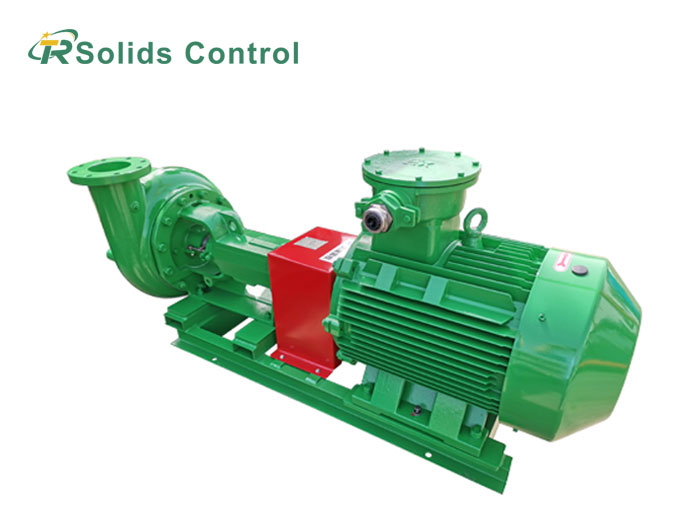
The centrifugal sand pump is widely used for transferring drilling fluids, slurries, and other abrasive liquids containing solid particles. In oilfield drilling operations, it is an important part of the drilling fluid circulation system, providing the required flow and pressure for solids control equipment.
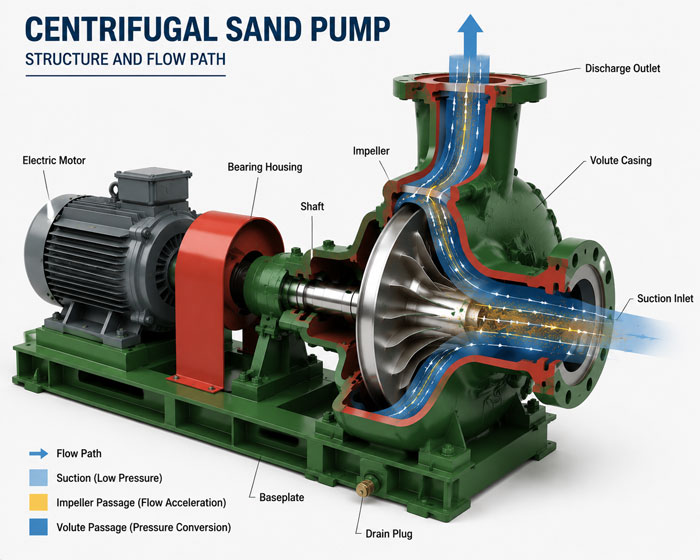
Understanding the centrifugal pump working principle starts with the relationship between mechanical energy and hydraulic energy. A centrifugal sand pump uses an electric motor to rotate the impeller at high speed. The rotating impeller applies centrifugal force to the fluid, increasing its velocity. The pump casing then converts this velocity into pressure energy, allowing drilling fluid to move continuously through the circulation system.
Unlike standard centrifugal pumps designed mainly for clean liquids, centrifugal sand pumps are developed for abrasive fluid handling. Their internal flow passages, impeller design, and wear-resistant components are optimized for drilling mud containing sand particles, drill cuttings, and other solids.
In oil and gas drilling, HDD mud recycling, and slurry transportation applications, centrifugal sand pumps provide stable fluid transfer between different processing stages and support continuous system operation.
Drilling fluid is a key working medium in oil and gas drilling operations. It carries drilled cuttings to the surface, cools the drill bit, lubricates drilling tools, and helps maintain wellbore stability.
During drilling, the returning mud contains various solid particles generated from the formation, including drill cuttings, sand particles, and other unwanted solids. These particles must be removed through a solids control system to maintain proper drilling fluid properties.
TR centrifugal sand pump is installed in the fluid transfer process between the mud tank and solids control equipment. It provides the hydraulic power required to move drilling fluid from one stage to another, supplying equipment such as desanders, desilters, and mud cleaners.
The operating process begins when drilling fluid stored in the mud tank enters the suction side of the centrifugal sand pump. As the motor drives the impeller, centrifugal force accelerates the fluid and increases its pressure. The pressurized drilling fluid is then delivered to solids control equipment, where unwanted solids are separated. After treatment, the processed drilling fluid returns to the circulation system for reuse in drilling operations.
This means the centrifugal sand pump is not an independent unit but a key fluid transfer component within the overall drilling fluid circulation system.
The operation of a centrifugal sand pump is based on the interaction between the impeller, pump casing, and internal flow passages. The working process includes three main stages: fluid intake, energy transfer, and pressure conversion.
When the motor starts, rotational power is transmitted through the pump shaft to the impeller. As the impeller rotates, a low-pressure area forms near the center of the impeller eye, allowing drilling fluid to enter the pump chamber through the suction port.
The suction performance depends on several operating conditions, including:
Fluid density;
Mud viscosity;
Suction line design;
Pump installation conditions.
Proper inlet conditions help reduce cavitation risk and maintain stable pump performance during continuous operation.
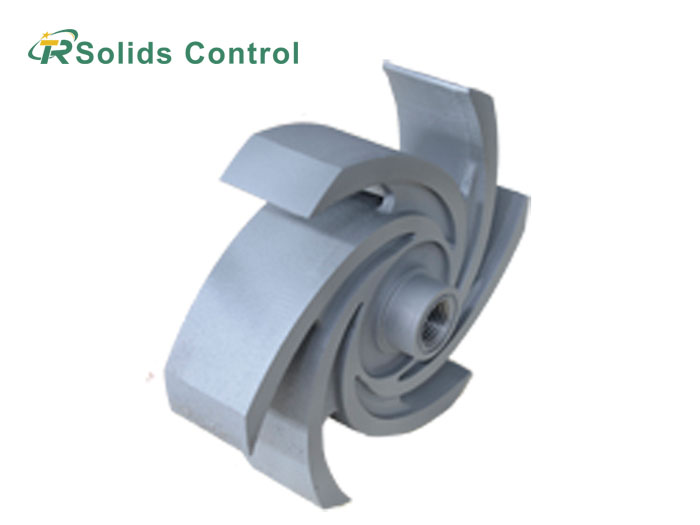
The impeller is the primary component responsible for generating centrifugal force and transferring energy to the fluid.
As drilling fluid enters the rotating impeller, the curved blades push the fluid outward from the center. During this process, mechanical energy from the motor is converted into kinetic energy within the fluid.
The fluid gains:
Increased velocity;
Higher rotational energy;
Greater movement toward the pump outlet.
For drilling mud applications, impeller design must balance hydraulic efficiency with solids handling capability. Because drilling fluids contain abrasive particles, the impeller must provide sufficient flow clearance while resisting wear.
Common impeller designs include:
Open impeller: Suitable for fluids with higher solid concentrations and larger particles;
Semi-open impeller: Provides a balance between efficiency and solids passage capability;
Wear-resistant impeller: Designed for abrasive drilling and slurry applications.
After passing through the impeller, the high-speed fluid enters the pump casing.
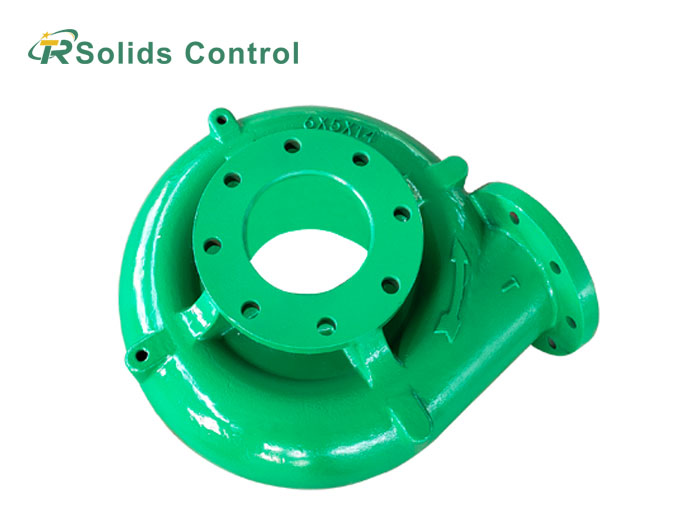
Most centrifugal sand pumps use a volute casing design. The increasing cross-sectional area inside the casing reduces fluid velocity while converting kinetic energy into pressure energy.
This hydraulic conversion allows the pump to deliver drilling fluid with sufficient pressure to downstream equipment.
The casing design influences:
Hydraulic efficiency;
Pressure stability;
Energy consumption;
Internal wear rate.
The pump head design determines how effectively the centrifugal sand pump handles drilling fluids containing solids.
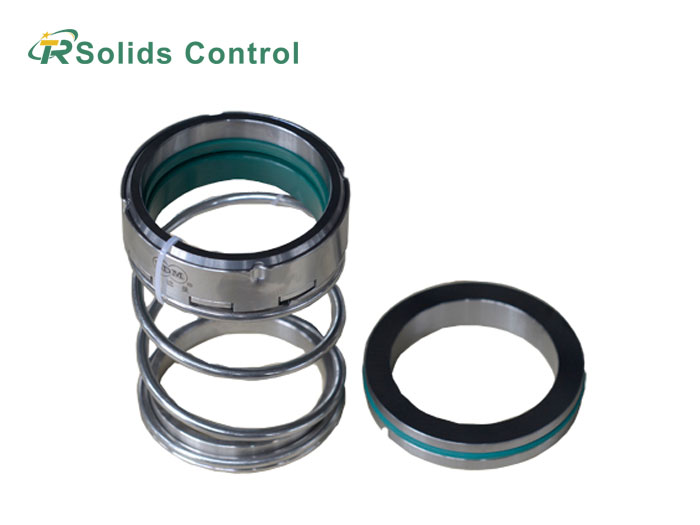
The main components inside the pump head include the pump casing, impeller, mechanical seal, shaft, bearing assembly, suction port, and discharge port.
Each component has a specific function in maintaining fluid movement and protecting the pump during abrasive service conditions.
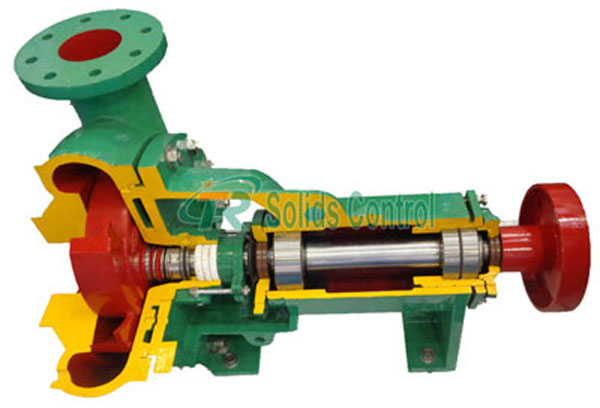
| Component | Function |
| Impeller | Generates centrifugal force and transfers mechanical energy to the drilling fluid |
| Pump Casing | Guides fluid flow and converts velocity energy into pressure energy |
| Mechanical Seal | Prevents leakage and protects rotating components |
| Pump Shaft | Transfers motor power to the impeller |
| Suction & Discharge Ports | Control fluid intake and pressurized fluid output |
Drilling mud has different characteristics from clean water. It contains abrasive solids, has variable viscosity, and may operate under changing temperature and pressure conditions.
These characteristics require pumps with stronger solids handling capability and improved wear resistance.
TR centrifugal sand pump is designed with larger internal flow passages to reduce blockage caused by drill cuttings and sand particles. Wear-resistant materials are commonly used in critical components such as the impeller and casing to extend service life under abrasive conditions.
Stable discharge pressure is also important because downstream solids control equipment depends on consistent fluid supply. Fluctuating flow conditions may reduce separation efficiency and affect overall system performance.
Centrifugal sand pumps are commonly used in:
Oil and gas drilling fluid systems;
Solids control equipment;
HDD mud recycling systems;
Slurry transportation applications.
In drilling operations, the pump transfers mud between tanks and processing equipment within the drilling mud system to maintain continuous circulation.
In HDD projects, centrifugal sand pumps handle recycled drilling fluids containing soil particles and construction debris.
In industrial slurry applications, they provide a reliable solution for transferring abrasive fluids where standard pumps may experience excessive wear.
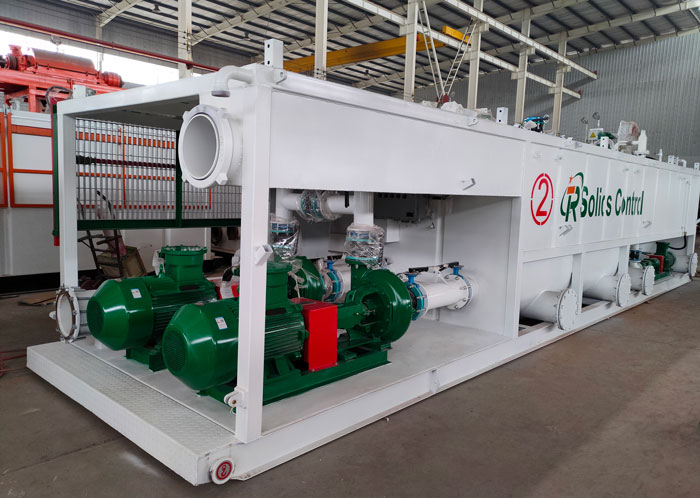
The actual performance of a centrifugal sand pump depends on matching the pump design with operating conditions.
Important factors include:
Flow rate;
Pump head;
Drilling fluid density;
Solid concentration;
Operating temperature;
Fluid characteristics.
The pump selected according to actual operating requirements provides better hydraulic performance and reduces unnecessary wear on internal components.
During long-term operation, several issues may affect centrifugal sand pump performance.
Low discharge pressure may occur due to impeller wear, insufficient fluid supply, or air entering the suction system.
Excessive vibration is commonly related to shaft misalignment, bearing wear, or rotating component imbalance.
Fluid leakage is often associated with mechanical seal damage or worn sealing surfaces.
Regular inspection of the impeller, casing, mechanical seal, and operating parameters helps identify problems early and reduces unexpected downtime.
| Comparison | Centrifugal Sand Pump | Standard Pump |
| Fluid Type | Drilling mud, slurry, and fluids containing solids | Clean liquids and low-solid fluids |
| Design Focus | Solids handling capability and wear resistance | General hydraulic efficiency |
| Typical Applications | Oilfield drilling, solids control, slurry transfer | Industrial liquid transfer |
TR centrifugal sand pump is a key component in drilling fluid transfer and solids control systems. Its performance depends on the combined design of the impeller, pump casing, internal flow passages, and wear-resistant components.
By converting rotational energy into fluid pressure, the pump provides stable circulation of drilling fluids containing sand, cuttings, and other solid particles.
Selecting a suitable centrifugal sand pump based on operating conditions helps maintain efficient mud circulation, reduce component wear, and improve the reliability of the overall drilling fluid system.

Address: No.2 Huochang Road, Yangling District,Xianyang City, Shaanxi Province, China
Tel: +86-18509252400
Wechat: 18509252400
Email: info@mudsolidscontrol.com
Contact: Mr.Li
 +86-18509252400