Contact Person: Mr.Li
Mobile: +86-18509252400
Wechat: 18509252400
Email: info@mudsolidscontrol.com
Address: No.2 Huochang Road, Yangling District,Xianyang City, Shaanxi Province, China
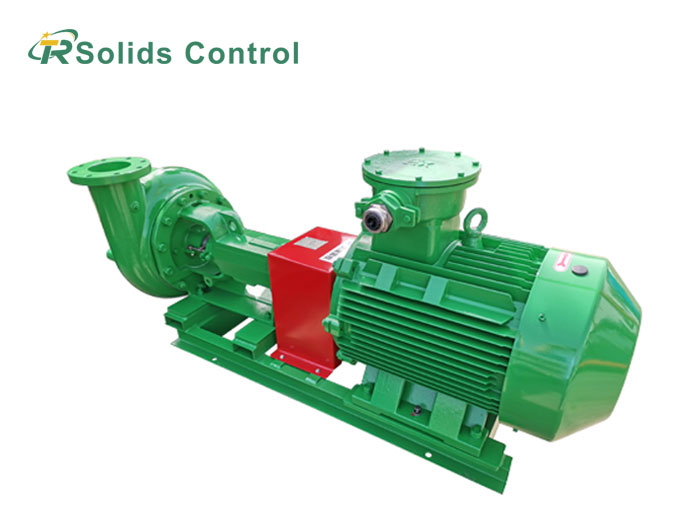
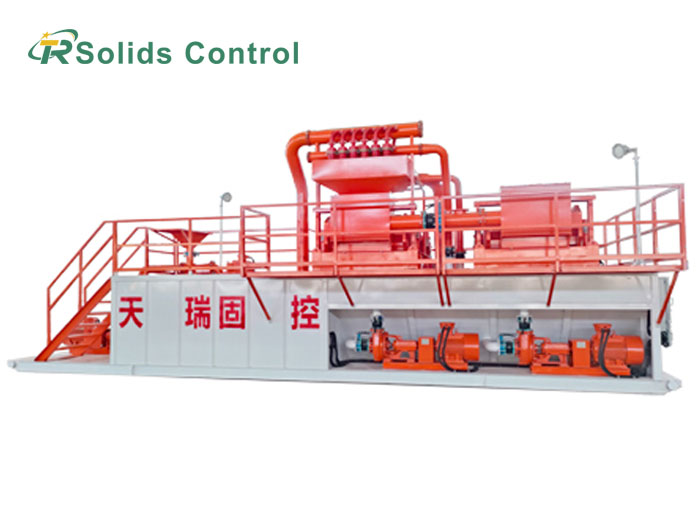
In drilling solids control systems, Mission centrifugal pumps often work under demanding conditions. They transfer drilling fluid containing sand and solids for applications such as desander feeding, desilter feeding, mud transfer, and mixing systems.
After long operation, many contractors face the same situation: pump performance starts to drop, the pump needs to be removed for inspection, and multiple wear parts show different levels of damage.
The question is usually not only which part wears first, but:
Should you replace only the Mission pump impeller, or order the shaft sleeve together?
From our experience supplying solids control equipment and pump parts, the decision is not only about which part wears first. For drilling contractors, the bigger concern is avoiding another shutdown after the pump has already been removed.
In many cases, checking the impeller and shaft sleeve together and preparing the required parts in one order is a practical way to reduce maintenance downtime.
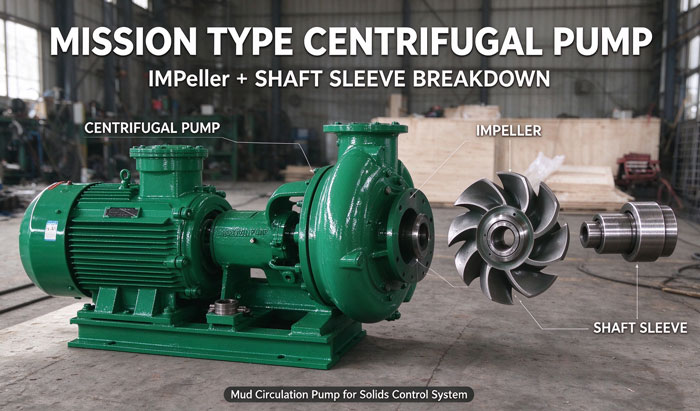
The answer depends on the actual condition of the pump.
Not every maintenance job requires replacing both parts. The right choice depends on what the inspection shows.
Replacing only the impeller can be a suitable option when:
The shaft sleeve surface has no obvious wear
The sealing area is still in good condition
The pump does not show leakage problems
The replacement part is easy to obtain
In this situation, a Mission pump impeller replacement may restore pump performance without adding unnecessary cost.
However, when the pump is already removed, many drilling contractors prefer to inspect and prepare both the impeller and shaft sleeve together.
The reason is simple: pump removal already requires labor, equipment, and production time. If the shaft sleeve also shows wear after the pump is opened, replacing it during the same maintenance window can avoid another shutdown later.
This is especially important for remote drilling locations, continuous drilling operations, or projects where spare delivery takes longer. A lower spare cost today does not always mean a lower maintenance cost if the pump needs to be opened again soon after.
The impeller and shaft sleeve do not always wear at the same speed.
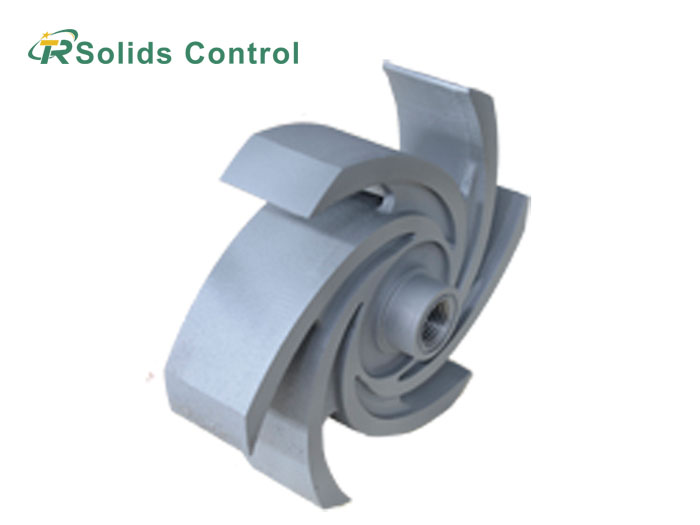
In abrasive drilling mud applications, the impeller often shows noticeable wear earlier because it directly handles the fluid containing solids.
Typical signs of impeller wear include:
Reduced discharge pressure
Lower flow performance
Longer transfer time
Reduced pump efficiency
The shaft sleeve follows a different wear pattern. Its condition is more related to the sealing area and operating conditions.
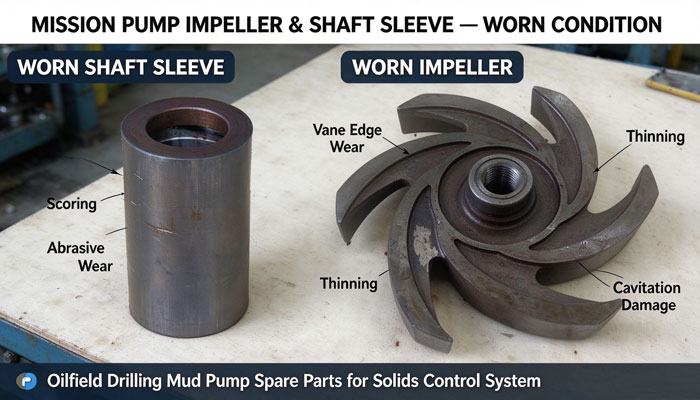
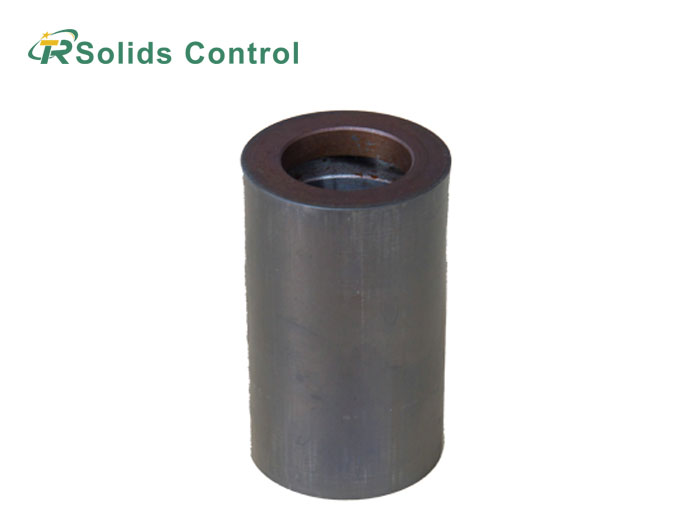
Common signs of centrifugal pump shaft sleeve wear include:
Leakage around the sealing area
Visible wear marks on the sleeve surface
More frequent seal-related maintenance
A worn shaft sleeve may not immediately reduce pump output, but it can create sealing problems if it is ignored after the pump has already been opened.
For this reason, contractors usually check both components during Mission pump maintenance instead of treating them as completely separate repairs.
Before ordering Mission pump spare parts, it is important to connect the symptoms with the possible worn components.
A decrease in pump performance is often related to impeller wear.
For solids control applications, reduced pump capacity can affect:
Mud circulation
Desander or desilter feeding
Overall solids removal performance
Checking the impeller is usually the first action.
If leakage appears near the sealing area, the shaft sleeve should be inspected.
For pumps using packing, frequent adjustment may hide sleeve wear until the pump is opened for maintenance.
If a pump repeatedly needs attention after short operating periods, replacing individual parts one by one may not be the most efficient approach.
For overseas drilling projects, preparing the correct Mission pump replacement parts before the next failure can save valuable operating time.
For drilling contractors, spare planning is often as important as the replacement itself.
A basic Mission pump maintenance order usually starts with:
The impeller is one of the main wear components affecting pump performance.
When wear becomes significant, replacement is often required to restore normal operation.
The Mission pump shaft sleeve should be considered when inspection shows wear, especially when the pump is already disassembled.
Replacing it together with the impeller can reduce the possibility of another maintenance shutdown.
Other wear-related parts should be considered based on the actual pump condition rather than replaced automatically.
Ordering the correct parts is especially important for overseas projects where incorrect parts can cause additional delays.
Before purchasing Mission Magnum parts, confirm:
Different pump models may require different impellers and shaft sleeves.
Always match the replacement parts with the actual pump configuration.
The replacement component should match the original size and installation requirements.
A pump used for drilling mud service experiences different wear conditions compared with a clean-water application.
Understanding the actual working environment helps select suitable replacement parts.
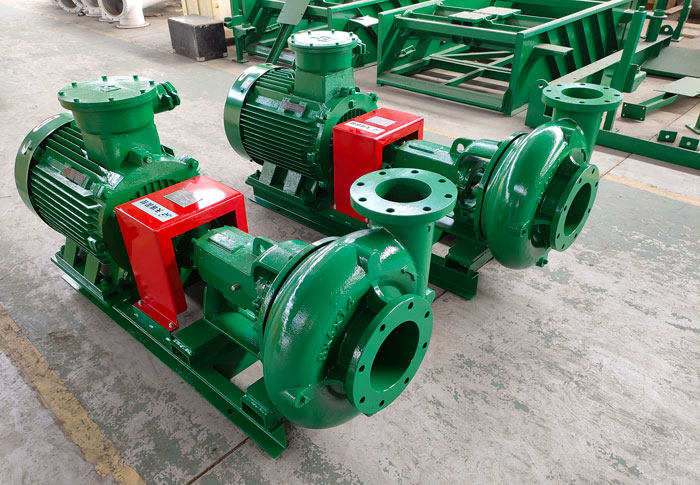
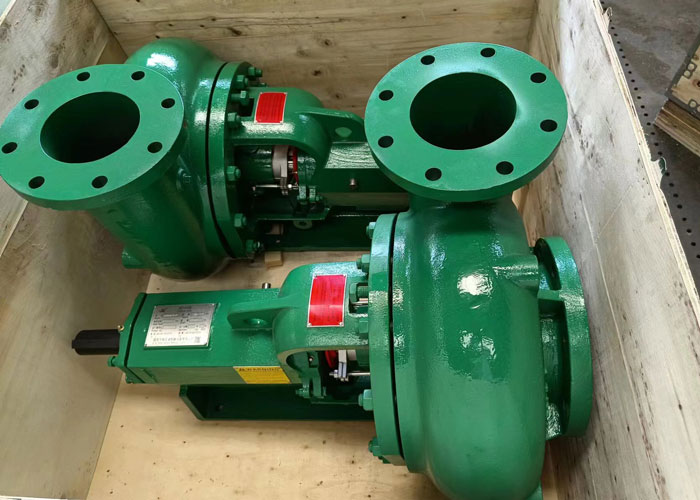
As a solids control equipment manufacturer, we work with drilling contractors who need reliable equipment operation in demanding field conditions.
When customers ask about Mission pump replacement parts, the main concerns are usually:
Which parts should be prepared before maintenance?
How can another shutdown be avoided?
How can the correct parts be selected the first time?
For drilling mud systems, Mission compatible wear parts such as impellers and shaft sleeves are commonly used with centrifugal pumps supporting solids control operations.
The most practical spare parts plan is based on actual pump inspection results, operating conditions, and the cost of downtime.
The Mission pump impeller and shaft sleeve do not always fail at the same time.
The impeller often shows performance problems first, while shaft sleeve wear may become visible during inspection.
For drilling contractors, the better replacement decision is not simply choosing the cheapest part to replace today.
It is considering:
Whether the pump is already removed
Whether related wear is visible
How much another shutdown will cost
How quickly replacement parts can reach the site
In many solids control applications, checking and ordering the impeller and shaft sleeve together is a practical way to reduce future downtime and keep the mud system running reliably.

Address: No.2 Huochang Road, Yangling District,Xianyang City, Shaanxi Province, China
Tel: +86-18509252400
Wechat: 18509252400
Email: info@mudsolidscontrol.com
Contact: Mr.Li
 +86-18509252400