Contact Person: Mr.Li
Mobile: +86-18509252400
Wechat: 18509252400
Email: info@mudsolidscontrol.com
Address: No.2 Huochang Road, Yangling District,Xianyang City, Shaanxi Province, China
A centrifuge can have a high GPM rating and still leave the rig with the same mud problem. In weighted mud, barite can be lost with the discharged solids. In unweighted mud, fine solids can keep accumulating even after hours of operation. The right setup depends on which solids need to be removed and what the mud needs to retain.
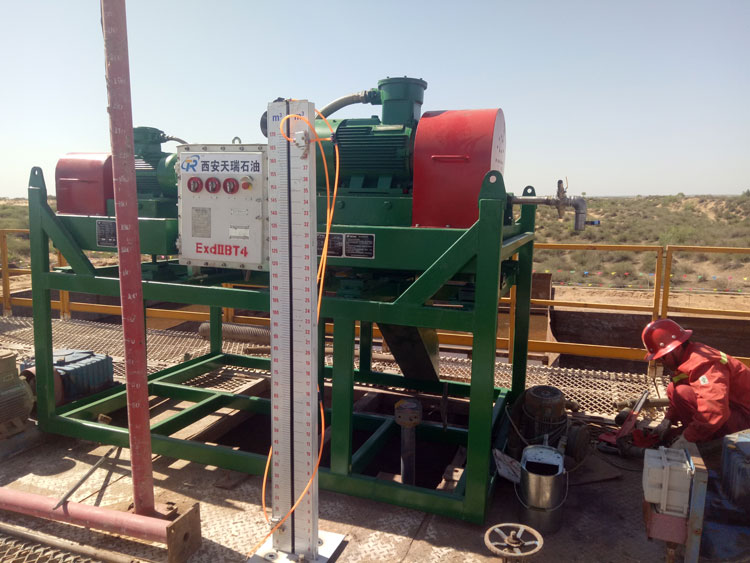
In weighted mud, barite recovery directly affects the cost of maintaining mud weight. Barite lost with discarded solids has to be replaced to keep the fluid at the required density.
Barite recovery usually uses lower bowl speeds than fine-solids removal. The aim is to recover usable barite while removing unwanted low-gravity solids (LGS). Feed rate and operating settings need to suit the mud. Pushing more mud through the centrifuge does not necessarily improve recovery; barite losses can rise if the unit is run outside its effective operating range.
With unweighted mud, the priority is to remove fine solids that build up and change the fluid's properties. Higher-speed operation is commonly used for this work. The result depends on the incoming solids and the operating conditions, not bowl speed alone.
If a weighted mud system needs both barite recovery and finer-solids removal, check whether one unit can meet both targets. If the two duties require different operating conditions, separate units may be the more practical choice.
The rig's circulation rate is not the same as the centrifuge feed rate. A centrifuge usually treats only part of the circulating mud, so sizing starts with the flow that needs processing and the solids load the system must control.
Mud properties affect what a rated flow figure means in practice. Density, viscosity, solids concentration and particle size all influence the results. A GPM rating based on one fluid does not guarantee the same performance with another. When comparing models, ask the supplier what mud conditions and operating settings the stated capacity assumes.
Running hours also affect the total volume treated. At the same feed rate, a unit running eight hours a day processes one-third as much mud as a unit running continuously for 24 hours. If fine solids enter the system faster than the centrifuge removes them, the solids load will continue to rise.
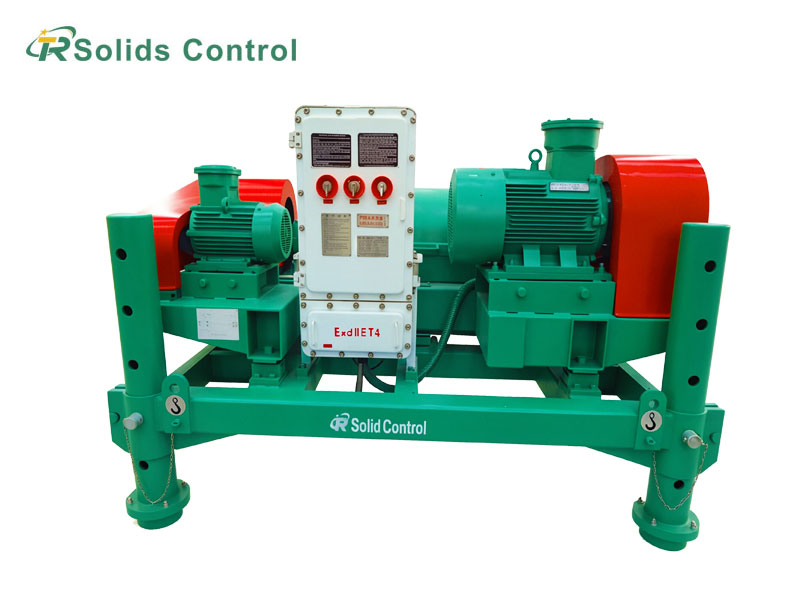
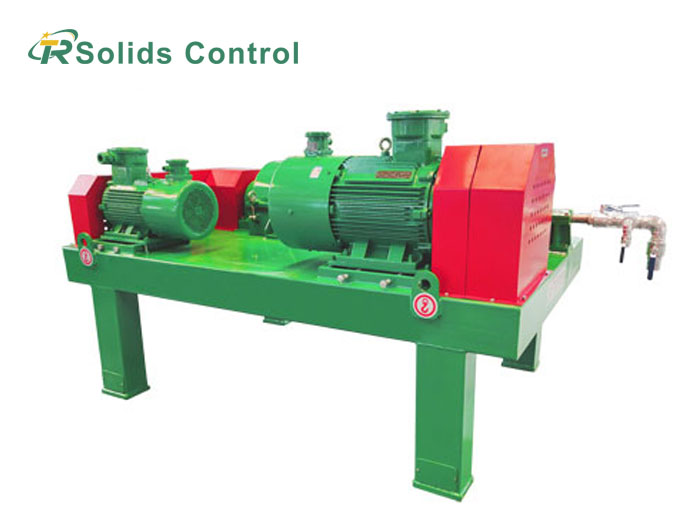
Compare the required feed rate with the unit's expected performance under your mud conditions. The specifications of a drilling mud decanter centrifuge are a useful starting point, but the rated GPM needs to be considered alongside the treatment target and actual operating conditions.
Rising fine-solids content does not automatically mean you need a larger centrifuge. Check how much mud the unit processes and how long it runs each day. If both are adequate, look at the mud properties and operating settings.
If solids content continues to climb despite long operating hours, the unit may not be processing enough mud to keep pace with the incoming solids load. It may also be failing to remove the particle sizes that need to be controlled. A drop in performance after increasing the feed rate points to another possibility: the unit may be receiving more mud than it can effectively process under those settings.
Barite losses require a separate check. Examine the discharged solids and compare the operating settings with the recovery target. Increasing throughput or installing a larger unit will not necessarily reduce barite loss if the operating conditions are unsuitable.
Low-speed operation is generally used for barite recovery, while high-speed operation is commonly used for fine-solids removal. These are typical applications, not fixed rules. Bowl speed is only one factor. Differential speed, feed rate and the consistency of the incoming mud also affect separation performance.
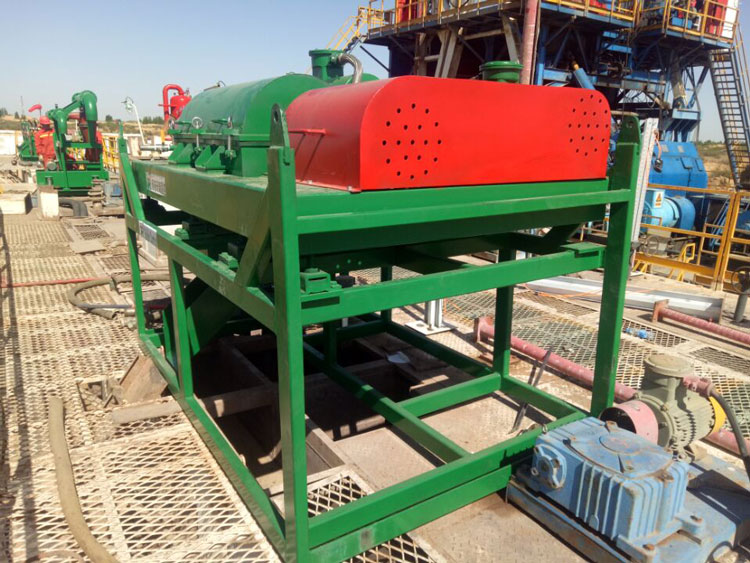
When discussing a centrifuge with a manufacturer, have these details ready:
Mud type: weighted or unweighted.
Mud weight, viscosity and solids loading, if known.
Estimated feed rate through the centrifuge, rather than the rig's total circulation rate.
Treatment target: barite recovery, fine-solids removal, or both.
Expected operating hours per day.
The problem on site, such as barite in the discharge, rising fine-solids content or inadequate solids removal.
If you are comparing centrifuges, share the mud properties, estimated feed rate and treatment target with TR Solids Control. These details provide a practical starting point for assessing a suitable drilling mud decanter centrifuge for your operating conditions.

Address: No.2 Huochang Road, Yangling District,Xianyang City, Shaanxi Province, China
Tel: +86-18509252400
Wechat: 18509252400
Email: info@mudsolidscontrol.com
Contact: Mr.Li
 +86-18509252400