Contact Person: Mr.Li
Mobile: +86-18509252400
Wechat: 18509252400
Email: info@mudsolidscontrol.com
Address: No.2 Huochang Road, Yangling District,Xianyang City, Shaanxi Province, China
Drilling cuttings are not always easy to move. Waste from a drilling operation can contain coarse rock fragments, fine solids, drilling fluid, oil and sticky material. Its composition may change as the formation and drilling conditions change.
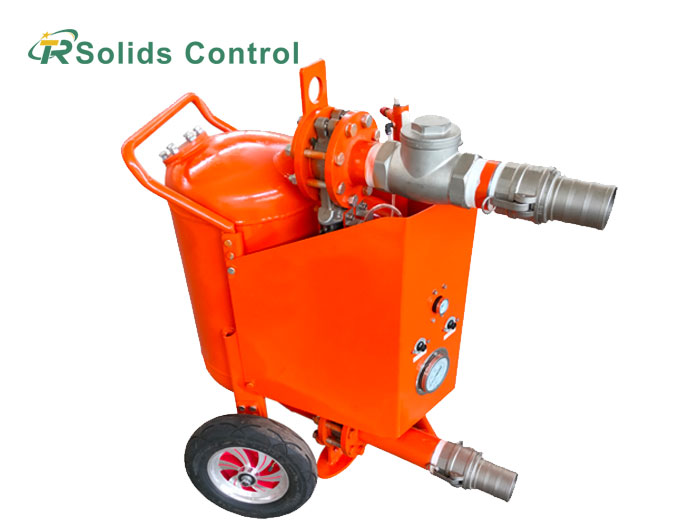
A Pneumatic Sludge Vacuum Pump uses compressed air to transfer this type of material. Vacuum draws the cuttings or sludge into a chamber, while compressed air pushes the collected material into the discharge line. The equipment is also referred to as a Pneumatic Vacuum Transfer Pump, describing the same vacuum-based suction and pneumatic discharge method.
This transfer method is useful when drilling waste is dense, abrasive or too difficult to handle as a conventional slurry.
The pump operates through alternating suction and discharge cycles.
During suction, the pneumatic control system creates negative pressure inside the chamber. The pressure difference draws drilling cuttings, sludge or solids-laden fluid from the collection point into the chamber.
Once the chamber reaches its filling level, the inlet closes. Compressed air enters the chamber and forces the collected material into the transfer pipeline. The chamber then returns to the suction cycle.
The material is collected in the chamber before being moved through the discharge line. Unlike a conventional slurry pump, the process does not rely on maintaining a continuous liquid flow through a rotating pumping mechanism. This makes the pneumatic method suitable for waste with a high solids load.
TR Solids Control uses this transfer principle in drilling waste systems where wet cuttings or sludge need to move between collection, storage and treatment equipment.
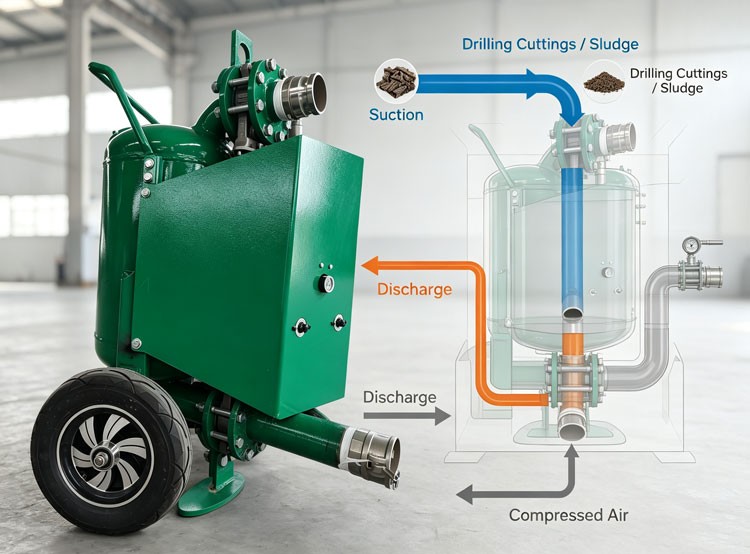
Drilling cuttings contain a mixture of solids and liquid, and their physical properties can vary considerably.
Rock fragments are often abrasive and irregular. Fine solids and clay can increase viscosity, while oil-contaminated cuttings may become sticky. At higher solids concentrations, the material can behave more like wet bulk solids than free-flowing slurry.
A Pneumatic Sludge Vacuum Pump collects the waste inside a chamber before discharge. The transfer process therefore does not depend on maintaining a continuous liquid flow through the pumping mechanism.
Changes in consistency can affect the required equipment configuration and operating range.
Particle size, moisture content, viscosity and material condition should be checked, particularly with large cuttings or highly sticky waste.
Some pneumatic vacuum transfer systems can handle solids concentrations of around 60–80% by weight. This is an application range rather than a fixed pump rating. Actual capacity depends on the waste properties and the complete transfer system.
A Pneumatic Vacuum Transfer Pump serves as the transfer stage in a drilling waste system. Separation and treatment are handled by other equipment.
Wet cuttings collected after solids control or waste treatment can be moved to a cuttings box, cuttings dryer or another downstream unit. The receiving equipment can be installed away from the collection point when the transfer line is properly sized for the material and duty.
Pneumatic transfer is useful where settled solids make gravity flow impractical. It can move dense waste without adding dilution water simply to improve flow, keeping the waste stream more concentrated for subsequent treatment.
For drilling waste projects, TR Solids Control can configure the transfer arrangement around the collection point, conveying route and downstream equipment used in a drilling waste management system.
The transfer pipeline directly affects system capacity.
Horizontal conveying distance, vertical lift, pipe diameter and the number of bends all contribute to pipeline resistance. These factors affect the required operating pressure and the transfer capacity of the Pneumatic Vacuum Transfer Pump.
The compressed-air supply must also match the transfer duty. Both available pressure and air volume should be checked against the pump's operating requirements throughout the cycle. An undersized compressor can limit actual transfer capacity even when the pump itself is correctly selected.
The pump does not require an electric motor immersed in the waste, which can simplify installation around wet pits and sludge collection areas. Oilfield installations still need to meet the site's electrical classification and applicable hazardous-area requirements.
Pipeline layout matters when abrasive cuttings are involved. Excessive bends, unsuitable pipe dimensions and unnecessary conveying distance can increase resistance and wear.
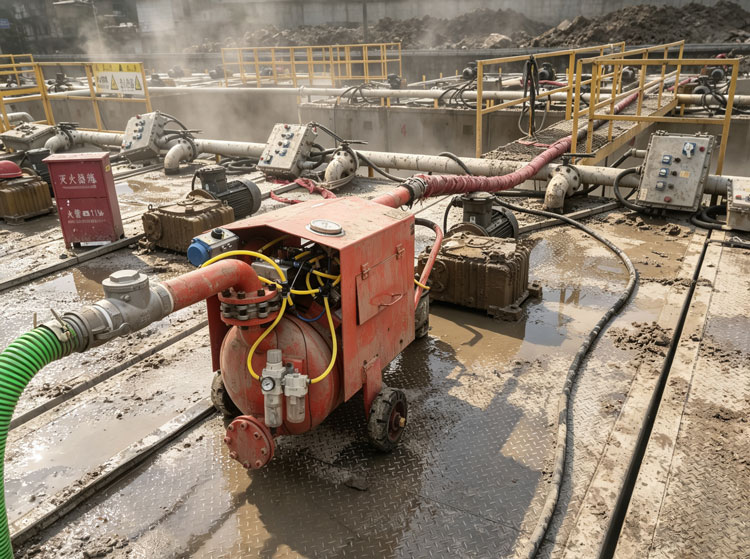
Start with the material and the transfer duty.
Material data should include solids concentration, maximum particle size and physical condition. Wet, oily, sticky and highly abrasive cuttings can require different configurations.
Transfer duty is determined by the required throughput, horizontal distance, vertical lift and pipeline arrangement. Available compressed-air pressure and air volume are needed to size the pneumatic system.
| Parameter | Information Required |
| Material | Drilling cuttings, sludge or mixed waste |
| Solids content | Approximate percentage by weight |
| Particle size | Maximum cuttings size |
| Material condition | Wet, sticky, oily or abrasive |
| Target throughput | Required transfer rate |
| Conveying route | Horizontal and vertical distance |
| Pipeline layout | Diameter, length and bends |
| Air supply | Available pressure and air volume |
When the waste is difficult to characterize, particularly with oil-based cuttings or highly sticky material, testing an actual sample gives a more reliable basis for equipment selection.
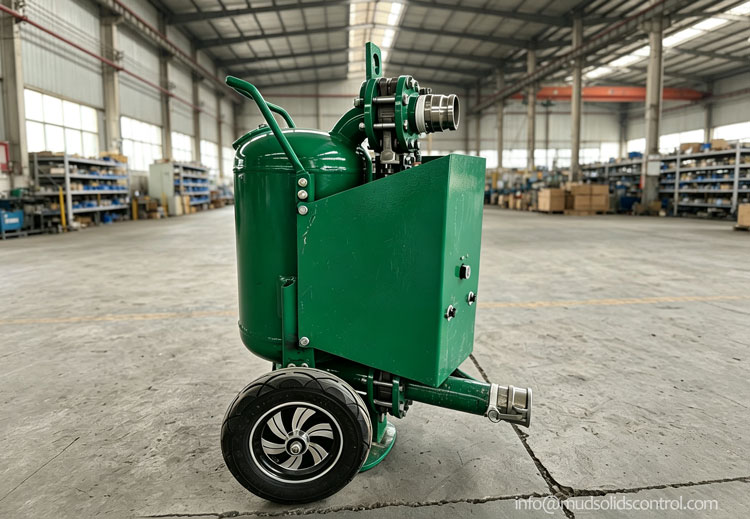
TR Solids Control manufactures solids control and drilling waste handling equipment for oilfield applications. The TR Sludge Vacuum Pump is built for transferring drilling cuttings, sludge and other high-solids waste where pneumatic vacuum transfer fits the material and site conditions.
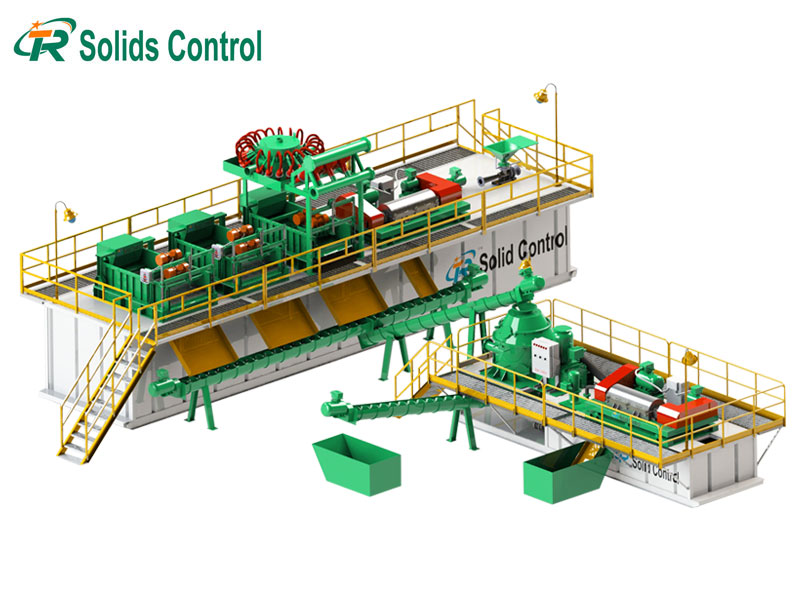
The pump can be integrated with cuttings dryers, screw conveyors, cuttings tanks and other equipment in a drilling waste handling system. The configuration is determined by the waste properties, required throughput, conveying route and pipeline layout.
Rather than selecting the pump separately, the transfer arrangement should be considered as a complete system, including the collection point, transfer pipeline and receiving equipment.
For a project with defined cuttings properties and a known transfer route, TR can review the operating conditions and recommend a suitable pneumatic transfer configuration as part of the TR solids control equipment range.
A Pneumatic Sludge Vacuum Pump provides a practical solution for moving wet drilling cuttings and high-solids sludge when conventional slurry transfer is not suitable.
Its application depends mainly on the waste characteristics, required throughput, conveying distance, pipeline configuration and available compressed air.
Cuttings properties, target throughput, conveying route, pipeline layout and air supply should be confirmed before final equipment selection.

Address: No.2 Huochang Road, Yangling District,Xianyang City, Shaanxi Province, China
Tel: +86-18509252400
Wechat: 18509252400
Email: info@mudsolidscontrol.com
Contact: Mr.Li
 +86-18509252400