Contact Person: Mr.Li
Mobile: +86-18509252400
Wechat: 18509252400
Email: info@mudsolidscontrol.com
Address: No.2 Huochang Road, Yangling District,Xianyang City, Shaanxi Province, China
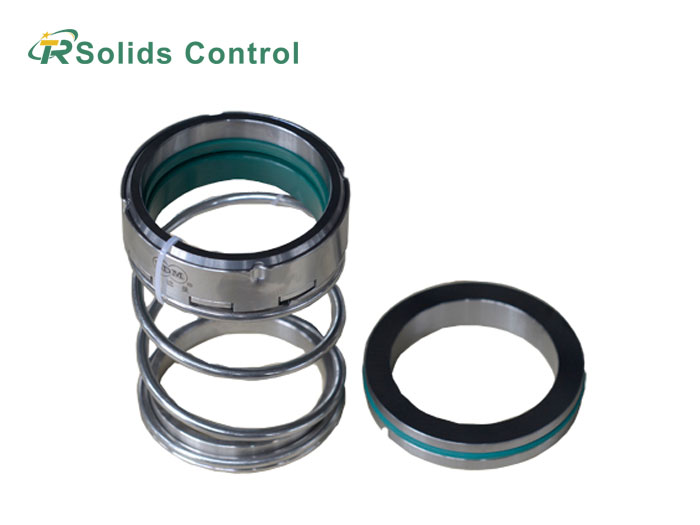
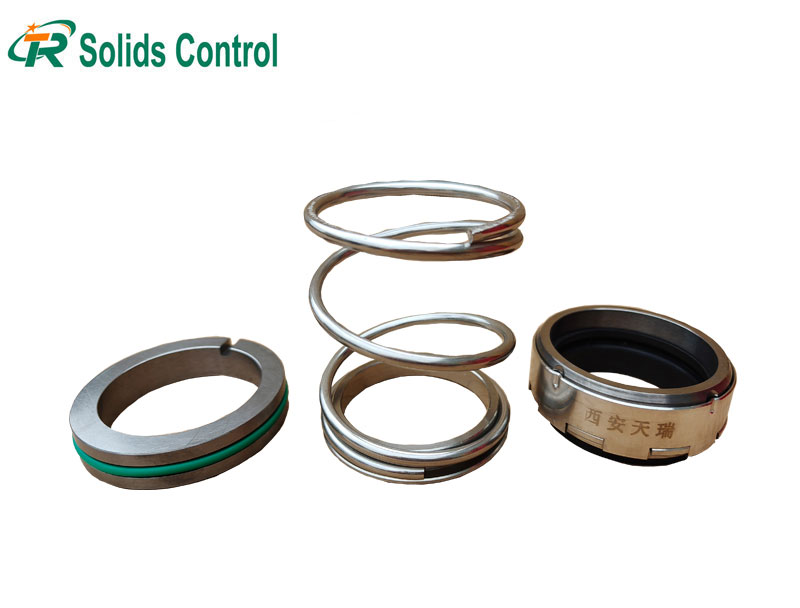
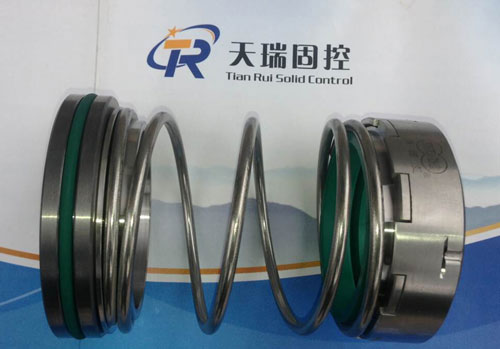
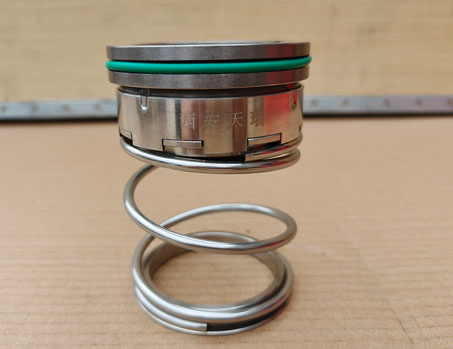
The mechanical seal is a critical component for centrifugal pumps used in oilfield solids control system. It prevents fluid leakage between the rotating shaft and the pump casing. It maintains pressure and protects the pump from contamination during operation.
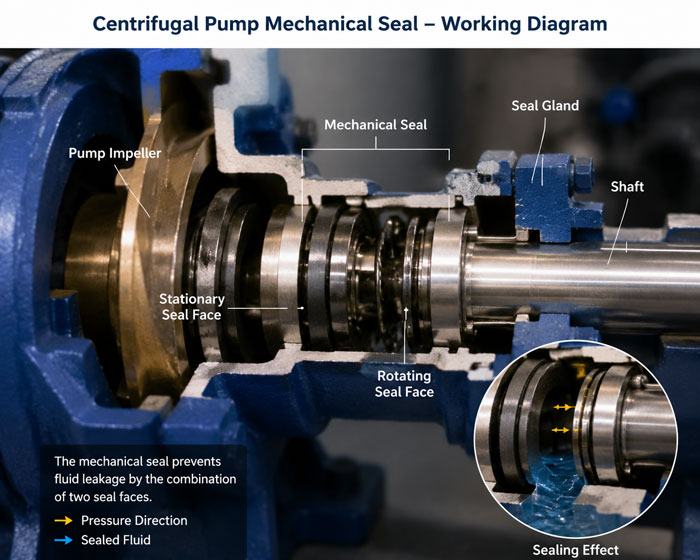
The seal assembly includes a rotating ring connected to the shaft and a stationary ring fixed inside the pump housing. The sealing faces are commonly made from carbon, ceramic, silicon carbide, or tungsten carbide to meet different operating requirements.
Additional sealing elements, such as O-rings, gaskets, and elastomers, prevent leakage through gaps around the seal assembly. A spring or bellows mechanism maintains the proper contact force between the sealing faces for reliable pump operation.
A mechanical seal works by forming a sealing interface between the rotating and stationary ring. During pump operation, fluid pressure and spring force keep the sealing faces in close contact while allowing the shaft to rotate smoothly.
The sealing faces form a barrier around the shaft area, preventing drilling fluid from leaking along the rotating shaft. This design allows centrifugal pumps to handle drilling fluids, slurry, and other abrasive media in oilfield operations.
| Mision Mechanical Seal Number | Description | Material |
| 22451-1 | Seal, Mechanical | Alloy, Carbide |
| Mision Mechanical Seal Number | Description | Material |
| H17444 | Seal, Mechanical | Alloy, Carbide |
Single Mechanical Seal
A simple and cost-effective seal design. It is used for low to medium pressure applications.
Double Mechanical Seal
Uses two sets of sealing faces. It provides better leakage control for high-pressure or hazardous fluid applications.
Cartridge Seal
Pre-assembled seal unit for easy installation. It simplifies maintenance and reduces installation errors. Commonly used in Mission pumps.
Pump Model Compatibility
Check the pump model and part number to ensure the correct mechanical seal specification.
Fluid Conditions
Select seal materials according to the fluid type, such as corrosive, abrasive, or viscous media.
Pressure and Temperature
Choose a seal rated for the pump's operating pressure and temperature.
Shaft Size
Match the seal size with the pump shaft dimensions for proper installation.
Installation Steps
Clean the pump shaft and housing before installation.
Lubricate secondary seals to prevent damage during assembly.
Align the sealing faces correctly and avoid over-tightening.
Maintenance Tips
Check for leakage or unusual noise during operation.
Replace secondary seals during pump overhauls.
Use seal support systems, such as flush plans, for harsh conditions.
Seal Leakage
Check for worn sealing faces, damaged O-rings, or incorrect installation.
Overheating
Verify lubrication and cooling conditions. Avoid dry running during operation.
Excessive Vibration
Inspect the pump for shaft misalignment or rotating component imbalance.
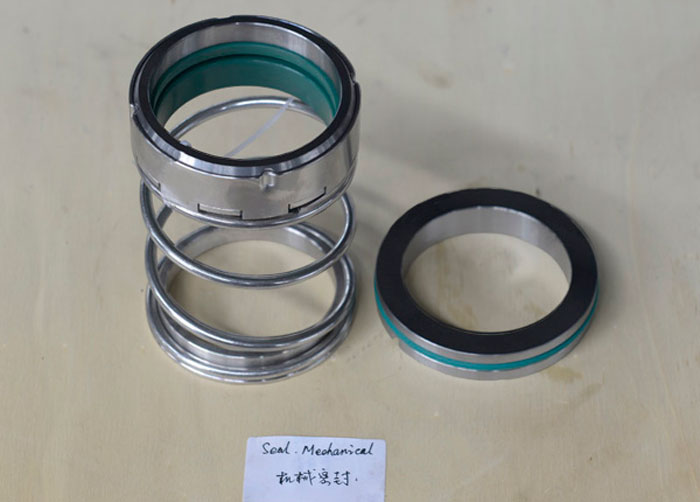
TR Solids Control manufactures mechanical seals and pump parts for Mission and 2500 MAGNUM centrifugal sand pumps.
The parts are interchangeable with original pump components. They match the original specifications and application requirements.
These parts help maintain pump performance and reduce downtime in oilfield drilling and solids control operations.

Address: No.2 Huochang Road, Yangling District,Xianyang City, Shaanxi Province, China
Tel: +86-18509252400
Wechat: 18509252400
Email: info@mudsolidscontrol.com
Contact: Mr.Li
 +86-18509252400