Contact Person: Mr.Li
Mobile: +86-18509252400
Wechat: 18509252400
Email: info@mudsolidscontrol.com
Address: No.2 Huochang Road, Yangling District,Xianyang City, Shaanxi Province, China
When a drilling mud decanter centrifuge starts discharging wetter solids, the first question is what changed. Either the feed is carrying more solids than it was, or the differential speed and pond depth no longer suit the mud you are running now.
For drilling contractors and oilfield service companies, wetter solids mean more liquid leaving with the waste, which pushes up hauling and disposal volume. On weighted mud jobs it also cuts into barite recovery. Before you touch a setting, look at what is going into the machine and how the machine is behaving.
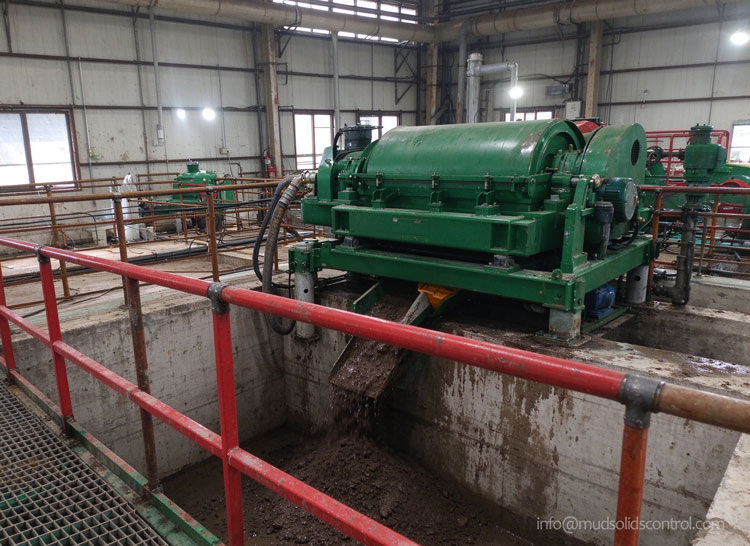
A centrifuge that was dropping dry solids last week and wet solids today has usually been handed a different mud. Feed rate up? Mud thicker? More fines circulating? Each of those changes separation with no adjustment made on the machine at all.
If the change came right after a feed rate increase, bring the feed back down and see whether the discharge recovers. If nothing about the feed changed, look at torque, vibration and the discharge itself for signs of a mechanical problem.
Get the feed steady before you go further. An adjustment made on top of a feed that is still moving tells you nothing about the adjustment.
Bowl speed sets the centrifugal force available for separation. Not every decanter lets you change it while running, and the usable range depends on both the machine design and the material.
Where bowl speed is adjustable, confirm it sits inside the range the manufacturer specifies before changing anything else. Turning it up to dry the solids is not a free move: it changes separation performance and machine loading at the same time.
If it is fixed, or already where it should be, move on to differential speed.
Differential speed is how fast the conveyor pushes separated solids toward the discharge. Too fast for the feed in front of you, and the solids leave the bowl before they have drained.
Lowering it usually dries the solids, but not always. With a heavy solids load, a lower differential lets material build up inside the bowl, and torque climbs with it.
Change one thing at a time, in small steps. Let the machine settle, then read solids dryness and torque together. If the solids stay wet while torque keeps rising, stop lowering the differential and go back to the feed load and how well solids are moving through the bowl. What you want is steady transport at the dryness the job calls for. Running at an unnecessarily low differential can allow solids to build up inside the bowl.
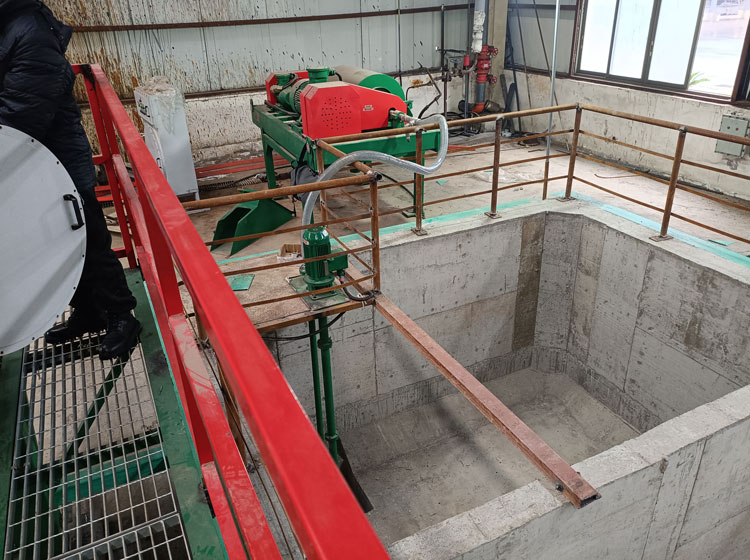
If differential changes are not moving the discharge, look at pond depth.
A deeper pond gives the liquid more room to clarify and leaves less beach exposed for solids to drain on. A shallower pond exposes more beach and can discharge drier solids, although liquid clarity may decline in the liquid it returns. Where that trade lands depends on your feed and the machine design.
Adjust within the range the manufacturer gives, then compare solids dryness against liquid quality with the feed held steady. If one only improves by making the other worse, the setting does not suit the job.
Wet solids that survive a check of feed, bowl speed, differential and pond depth point somewhere else: the load on the machine, or the machine itself.
Cut the feed back to a rate the machine has handled before and see if separation returns. If the feed is steady and it does not, inspect the conveyor, bowl and solids discharge area following the manufacturer's maintenance procedures. Wear or a partial blockage at the discharge holds solids in the bowl no matter what the settings say. Rising torque or unusual vibration calls for further investigation rather than more blind adjustments.
Write down feed rate, mud properties, settings, torque and what the discharge looks like. Two sets of readings, one before a change and one after, show you which change made the difference.
Barite recovery off weighted mud is not a maximum dryness exercise. Liquid quality and how much barite you hold on to weigh as heavily as the solids.
Drilling waste dewatering puts the emphasis on the other side: less liquid leaving with the solids is less volume to haul and dispose of. Either way, the settings still have to match the feed you have.
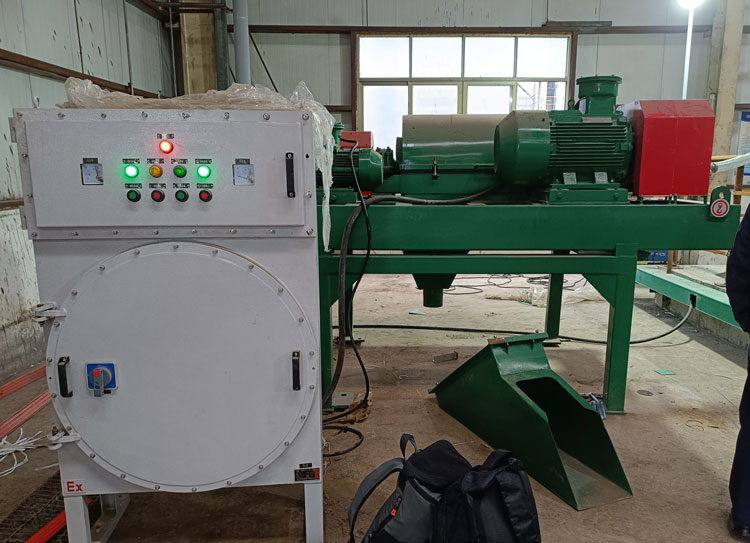
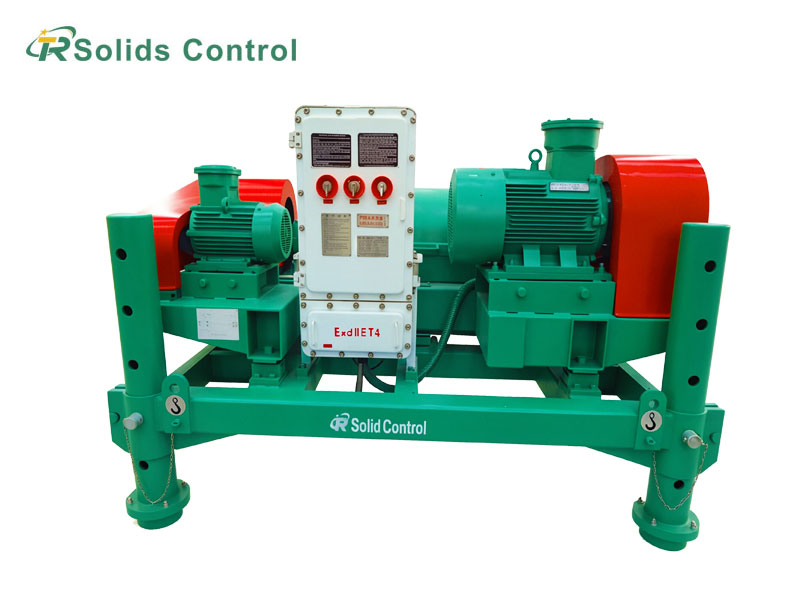
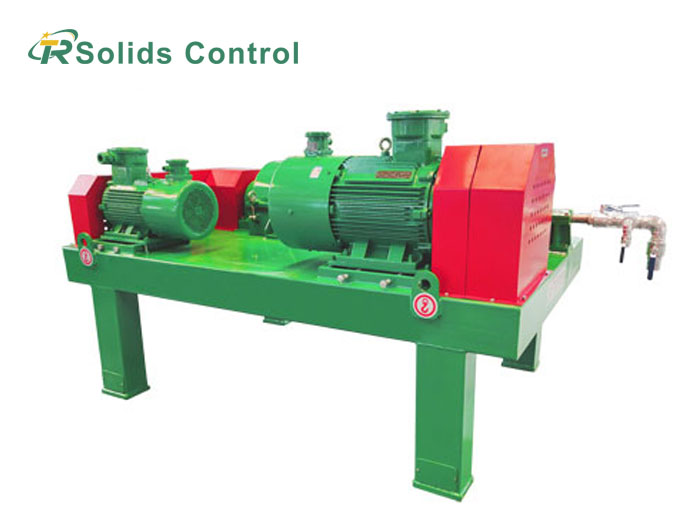
TR Solids Control manufactures drilling mud decanter centrifuges for drilling fluid solids control and drilling waste treatment. If the discharge stays wet, contact the TR team through the website and provide the feed rate, mud properties, current differential speed and pond depth, torque trend, and bowl speed if your model has it. These details give the team a more useful starting point for reviewing the operating conditions.
See our drilling mud decanter centrifuge for equipment details.

Address: No.2 Huochang Road, Yangling District,Xianyang City, Shaanxi Province, China
Tel: +86-18509252400
Wechat: 18509252400
Email: info@mudsolidscontrol.com
Contact: Mr.Li
 +86-18509252400