Contact Person: Mr.Li
Mobile: +86-18509252400
Wechat: 18509252400
Email: info@mudsolidscontrol.com
Address: No.2 Huochang Road, Yangling District,Xianyang City, Shaanxi Province, China
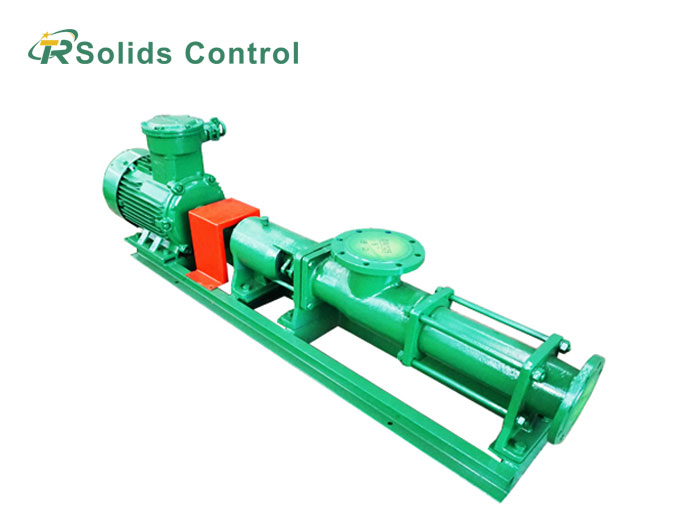
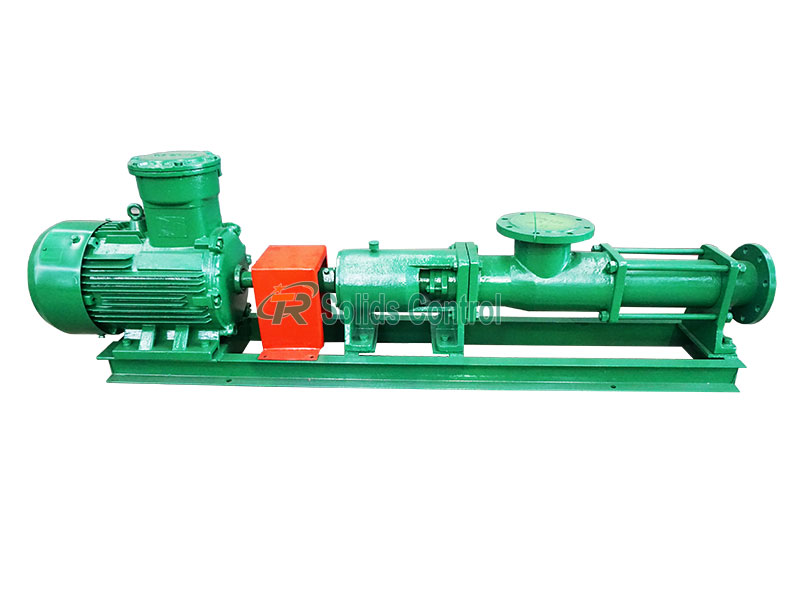
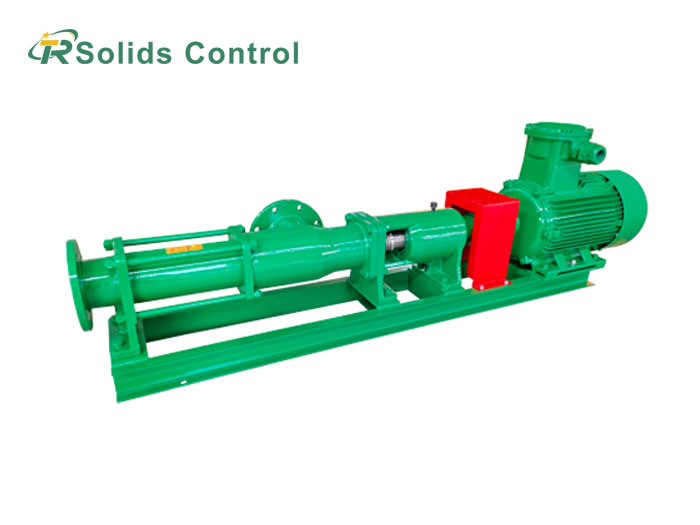
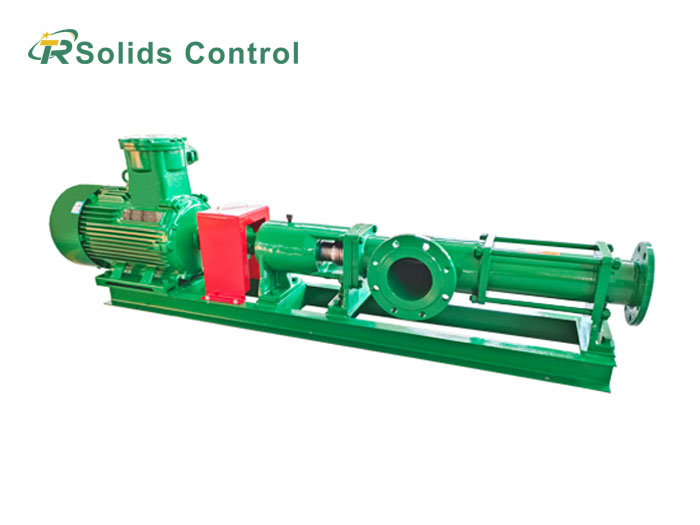
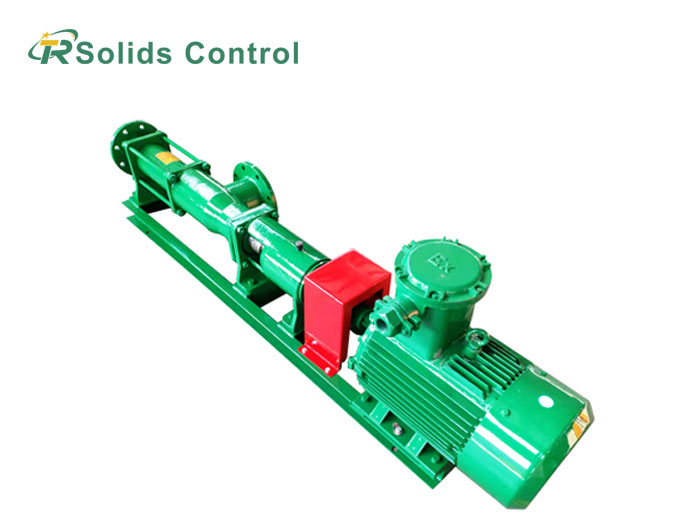
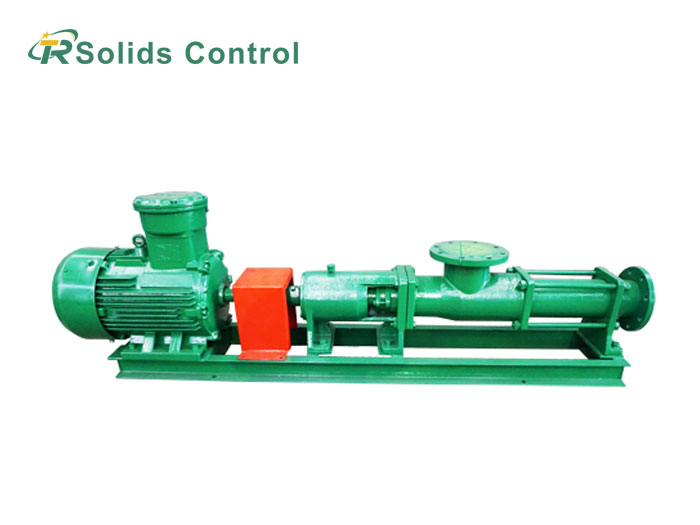
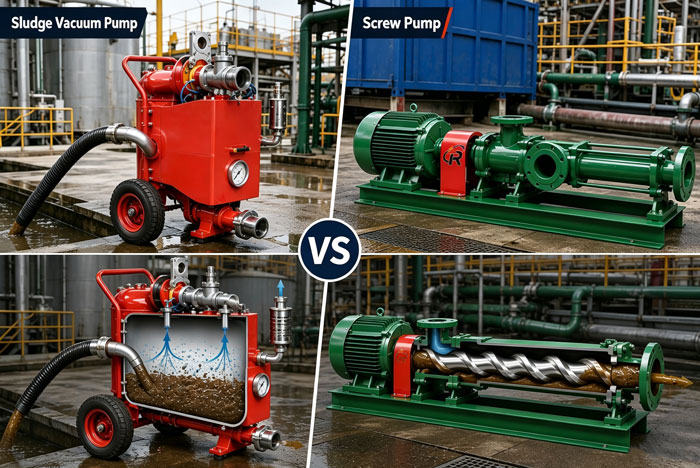
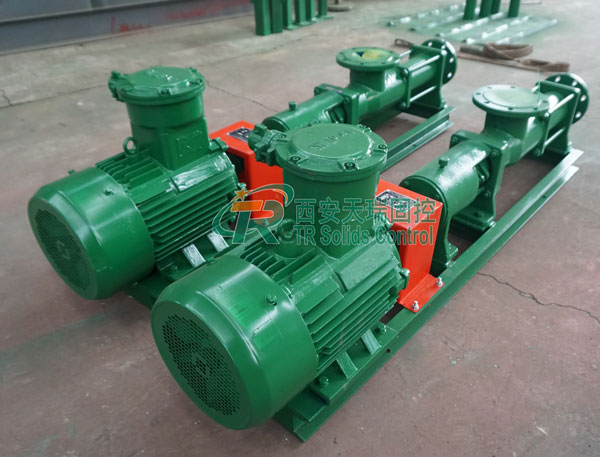
A screw pump is a positive displacement pump used to transfer viscous fluids, sludge and media with suspended solids. In solids control systems, it is commonly used to provide a controlled feed to decanter centrifuges.
The progressive cavity design handles high-viscosity fluids and suspended solids reliably. Its steady flow and solids-handling capability make it well suited for centrifuge feeding, sludge transfer, and other demanding fluid-handling applications.
TR supplies screw pumps for drilling fluid systems and wastewater treatment. Pump selection is based on four main factors: flow rate, pressure, fluid properties, and operating conditions.
Steady Flow: Delivers continuous, low-pulsation flow to stable system operation.
High Viscosity Handling: Reliably transfers thick fluids, sludge and abrasive slurry.
Effective Self-Priming: Maintains strong suction without continuous pre-flooding.
Low Shear Design: Gentle fluid transport minimises turbulence and fluid shear.
Adjustable Flow Rate: Variable pump speed enables precise flow matching to system demands.
Easy Maintenance: Compact and simple structure simplifies routine inspection and servicing.
Application Range: Ideal for drilling fluids, sludge, slurry and other viscous media.
The rotor turns inside the stator, forming a series of sealed cavities along the pump. As the rotor rotates, these cavities move continuously from the suction inlet to the discharge outlet, carrying the fluid at a controlled rate.
Operating on the positive displacement principle, the pump provides stable flow while conveying viscous media and fluids containing suspended solids.
| Model | Flow Rate | Pressure | Power | Inlet (Inch) | Outlet (Inch) | Ex Standard | Weight (Kg) | Dimension |
| TRG10A-040 | 10m³/h | 0.3Mpa | 4kw | 3 | 3 | ExdIIBt4/IECEX/A-TEX | 245 | 2245×320×550mm |
| TRG20A-055 | 20m³/h | 5.5kw | 3 | 3 | 323 | 2450×340×562mm | ||
| TRG30A-075 | 30m³/h | 7.5kw | 4 | 4 | 386 | 2761×370×600mm | ||
| TRG40A-110 | 40m³/h | 11kw | 5 | 5 | 454 | 3270×370×665mm | ||
| TRG50A-110 | 50m³/h | 11kw | 5 | 5 | 608 | 3790×400×782mm | ||
| TRG60A-150 | 60m³/h | 15kw | 5 | 5 | 649 | 3322×550×740mm | ||
| TRG70A-220 | 70m³/h | 22kw | 6 | 6 | 875 | 3740×420×785mm | ||
| TRG80A-220 | 80m³/h | 22kw | 6 | 6 | 875 | 3740×420×785mm | ||
| TRG90A-220 | 90m³/h | 22kw | 6 | 6 | 875 | 3740×420×785mm |
Drilling Fluid Centrifuge Feeding
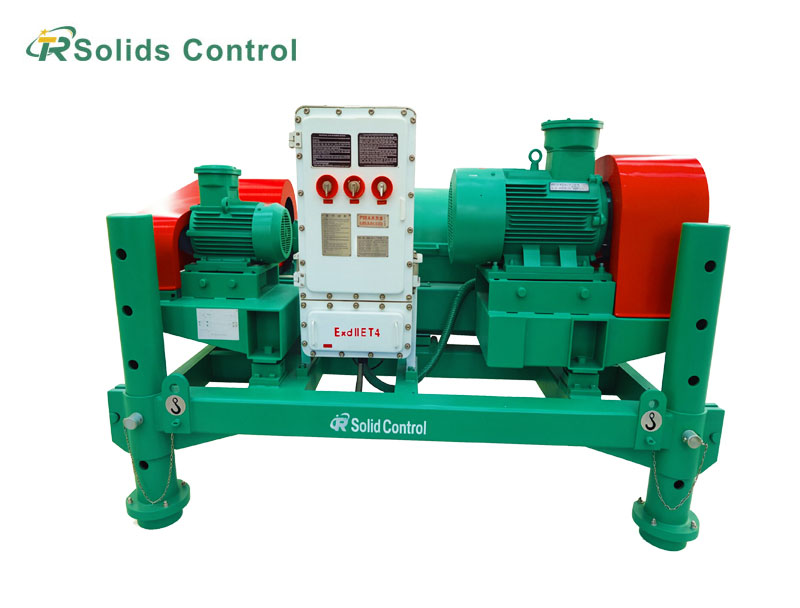
Provides a controlled, continuous feed to decanter centrifuges for consistent operation.
Drilling Waste Management
Transfers viscous drilling waste, sludge and recovered fluids between treatment equipment and storage tanks.
Wastewater Treatment
Transfers sludge and other high-viscosity materials in sludge handling and dewatering systems.
Mud and Slurry Transfer
Handles fluids containing suspended solids and materials that are difficult to transfer with conventional centrifugal pumps.
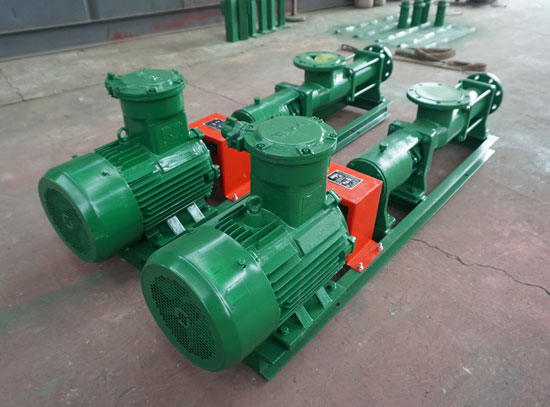
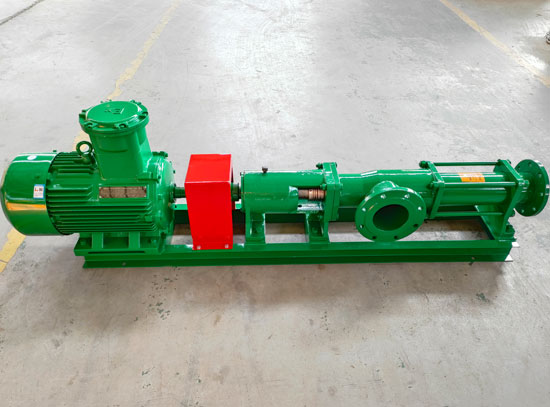
Match the pump to the centrifuge. Select a pump with enough capacity to meet the required feed rate, with some operating margin for changes in fluid properties. For example, a TRG30A-075 rated at 30 m³/h can be used to feed a decanter centrifuge processing 20–25 m³/h.
Consider the solids content. Higher solids loading increases wear on the rotor and stator. Step up one model size or reduce the VFD speed to extend stator life.
Check suction conditions. Screw pumps self-prime over several meters, but stator wear eats into that lift over time. Position the pump as close to the suction source as you can.
Plan for stator replacement. The stator wears first. How fast depends on solids loading, abrasiveness, and operating speed. A spare stator on site turns a multi-day outage into a few hours.
How do I choose the right screw pump size?
The main factors are required flow rate, discharge pressure, fluid viscosity, solids content and operating speed. Suction conditions should also be considered, especially when handling high-viscosity fluids.
Can screw pumps run dry?
No. Dry running can rapidly damage the pump, as the process fluid lubricates and cools the rotor and stator. The unit should not be operated without sufficient fluid.
What does routine maintenance involve?
Routine checks include the mechanical seal, bearings, coupling, rotor and stator. Inspection intervals depend on the pumped medium, solids content, operating hours and running conditions.

Address: No.2 Huochang Road, Yangling District,Xianyang City, Shaanxi Province, China
Tel: +86-18509252400
Wechat: 18509252400
Email: info@mudsolidscontrol.com
Contact: Mr.Li
 +86-18509252400