Contact Person: Mr.Li
Mobile: +86-18509252400
Wechat: 18509252400
Email: info@mudsolidscontrol.com
Address: No.2 Huochang Road, Yangling District,Xianyang City, Shaanxi Province, China
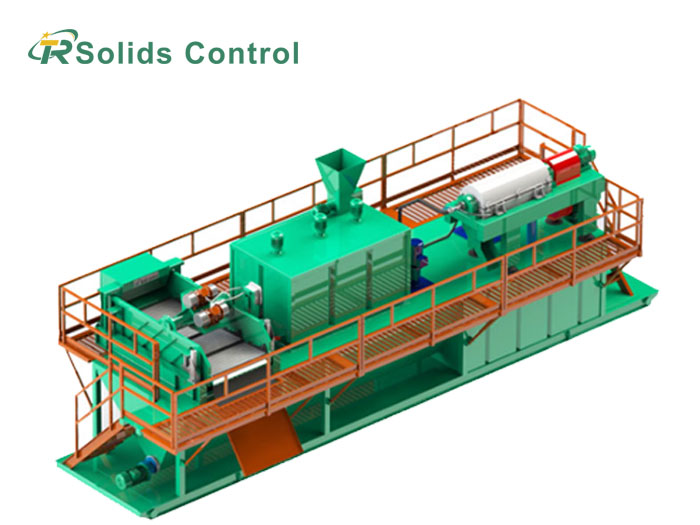
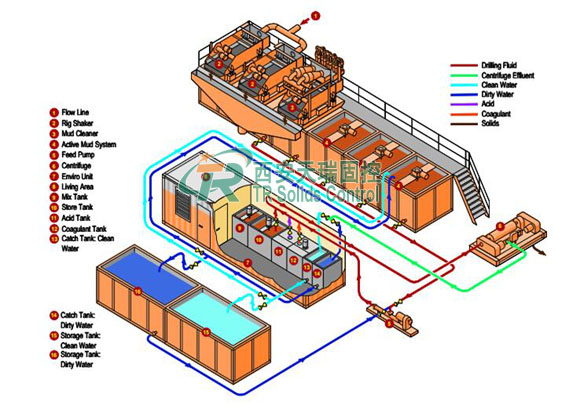
The Drilling Mud Dewatering System treats waste water-based drilling mud containing fine suspended and colloidal solids left after mechanical separation. Fine particles often remain in the waste mud after conventional mechanical separation, so additional dewatering is needed for some waste mud streams.
The package combines preliminary screening, chemical conditioning, and high-speed centrifugal separation.
After treatment, the separated liquid can be returned to the mud system if it meets the required quality for reuse. Dewatered solids are collected for further handling or disposal.
Removes fine and colloidal solids left after mechanical separation.
Cuts the amount of waste mud that needs to be stored, transported, or treated further.
Recovers liquid for reuse in mud preparation when the required quality is met.
Leaves dewatered solids that are easier to collect, transport, and handle.
The process has three main stages: mechanical screening, chemical conditioning and flocculation, followed by centrifugal separation.
Mechanical Screening
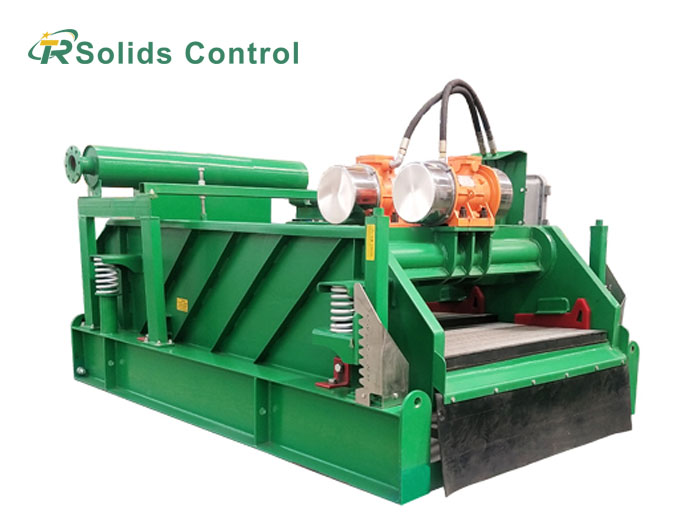
Waste mud first passes through the drying shaker for preliminary screening and free-liquid recovery before further treatment.
Chemical Conditioning & Flocculation
Selected treatment chemicals are added to the waste mud to agglomerate fine suspended and colloidal particles into larger flocs before centrifugal separation. Dilution water may be added when needed for the treatment process.
Centrifugal Separation
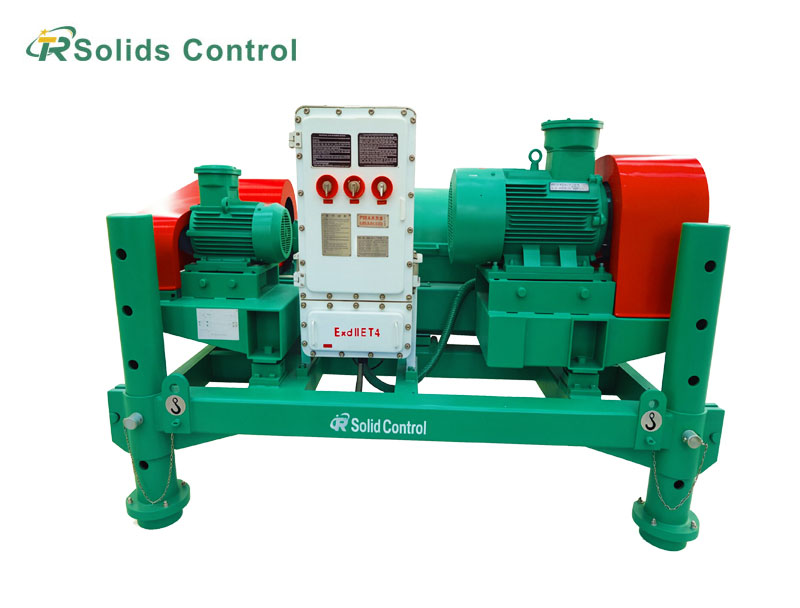
The conditioned slurry enters the high-speed centrifuge. Centrifugal force separates the flocculated solids from the liquid phase. The separated solids discharge from the centrifuge for collection, while the liquid phase is collected for reuse or further treatment.
Typical flow:
Waste Mud → Drying Shaker → Chemical Conditioning & Flocculation → High-Speed Centrifuge → Separated Solids + Recovered Liquid
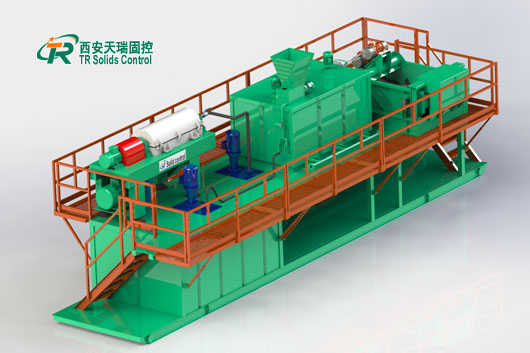
| Equipment | Quantity | Model / Size |
| Drying Shaker | 2 units | TRZS584G or TRZS703G |
| Shale Shaker Tank | 2 units | 2600 × 1700 × 1000 mm |
| High-Speed Centrifuge | 1 unit | TRLW355N1 or TRLW355NB-1 |
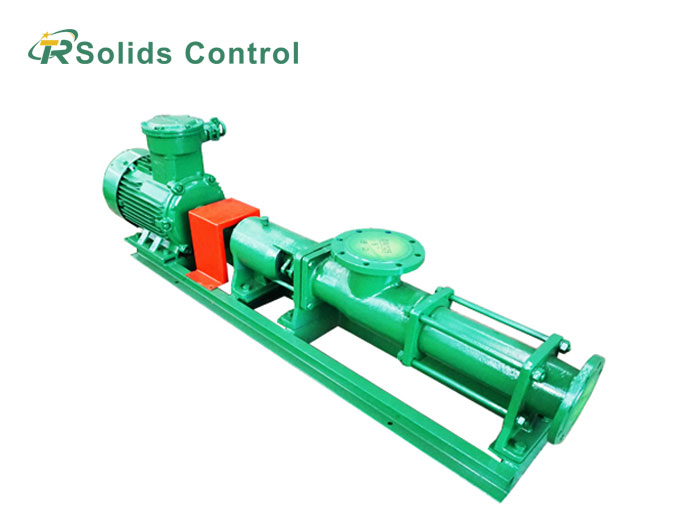
| Screw Pump | 1 unit | TRG30A-075 |
| Centrifuge Lifter | 1 unit | 4000 × 2200 × 1300 mm |
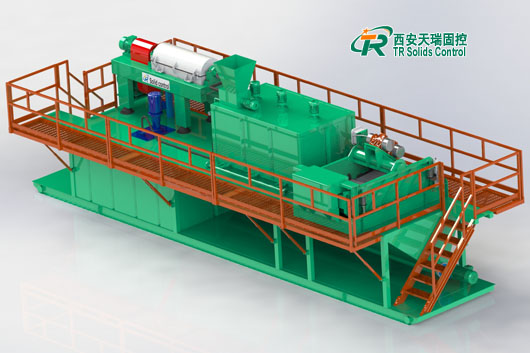
| Equipment | Quantity | Model / Size |
| Drying Shaker | 2 units | TRZS584G or TRZS703G |
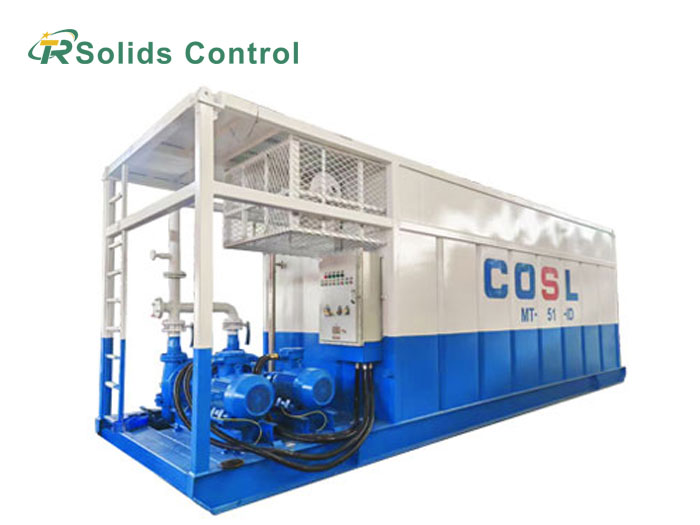
| Chemical Agent Tank | 2 units | 3200 × 1550 × 2500 mm |
| High-Speed Centrifuge | 1 unit | TRLW355N1 or TRLW355NB-1 |
| Screw Pump | 1 unit | TRG30A-075 |
| Mud Tank | 1 unit | 9000 × 2300 × 1300 mm |
Waste mud generated during oil and gas drilling.
Waste mud collected in shaker tanks, mud tanks, pits, or holding tanks.
Dewatering before solids transport, further treatment, or disposal.
The package works as a standalone unit or as part of a larger drilling waste management system.
Waste Mud Properties
Mud composition, solids concentration, particle size, and other feed characteristics determine the conditioning and separation requirements.
Chemical Conditioning
Waste mud samples should be tested before selecting the chemicals and dosing rates for the system.
Required Throughput
Size the system around the volume of waste mud generated and the required treatment rate.
Liquid and Solids Handling
Define how the recovered liquid and separated solids will be handled before selecting the system.
Site Conditions
Available footprint, power supply, and equipment layout affect the final configuration.
TR Solids Control, based in Xi'an, China, manufactures solids control and drilling waste management equipment, including individual units and integrated drilling mud dewatering systems.
Factory assembly, electrical wiring, inspection, and pre-delivery testing are completed before shipment.

Address: No.2 Huochang Road, Yangling District,Xianyang City, Shaanxi Province, China
Tel: +86-18509252400
Wechat: 18509252400
Email: info@mudsolidscontrol.com
Contact: Mr.Li
 +86-18509252400