Contact Person: Mr.Li
Mobile: +86-18509252400
Wechat: 18509252400
Email: info@mudsolidscontrol.com
Address: No.2 Huochang Road, Yangling District,Xianyang City, Shaanxi Province, China
A desander that dribbles instead of spraying is rarely a cone problem. Nine times out of ten the cones are in good shape and the centrifugal pump behind them cannot hold pressure where it counts. Desander feed pump sizing comes down to two numbers: the flow your cone bank needs, and the head you still have left at the manifold. Pipe run, motor rating, mud weight and where the pump sits all push on one of those two.
A desander is a fixed demand. Each hydrocyclone passes whatever reaches it, and separation holds only while the inlet pressure stays in its band. A 10-inch cone typically operates around 500 GPM at 75 ft of head. This is a common reference point for desander sizing, but actual performance changes with mud weight, solids loading, and operating conditions.
So the figure you size from is the cone count multiplied by what one cone passes. Two 10 inch cones want around 1,000 GPM at 75 ft, three want about 1,500. A desander feed pump should be selected to carry the total demand of all cones under the most demanding drilling condition, not only during normal operation. If the cone count is not settled yet, settle it first: What Size Desander Do I Need for My Mud Pump Rate?
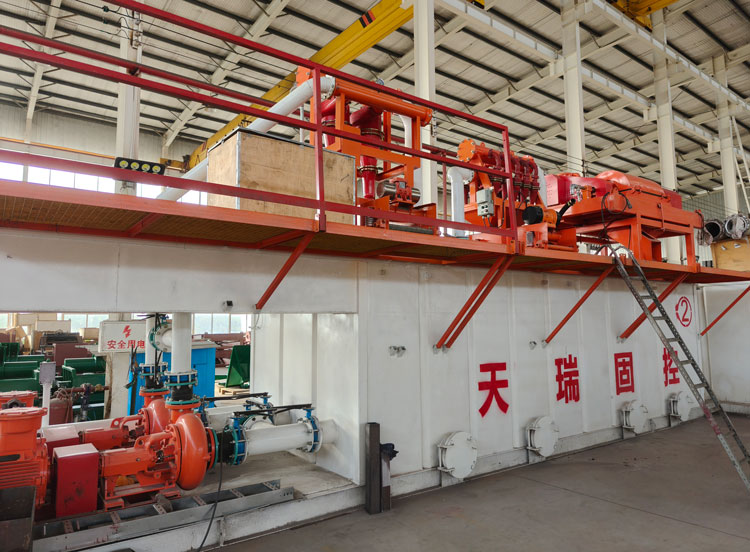
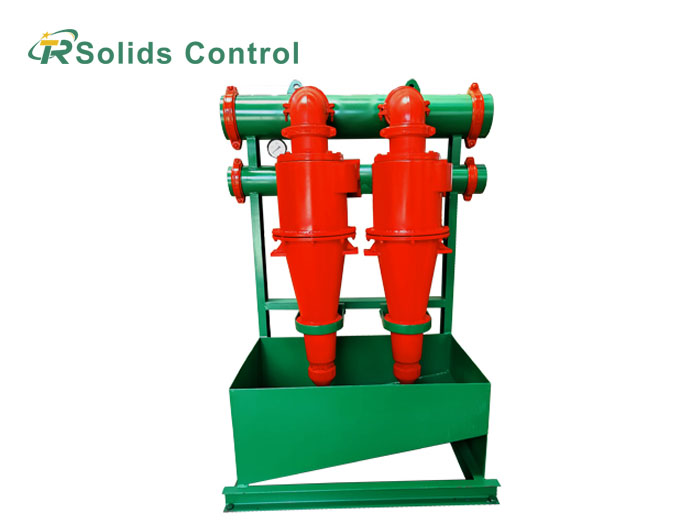
Two-cone desander bank fed by a horizontal centrifugal pump, showing the feed manifold.
Desander pump gpm and head by configuration, quoted at the manifold on unweighted water-based mud.
| Desander configuration | Flow the pump must hold | Head at the manifold | Pump class |
| 1 × 8 in cone | 60 m³/h (264 GPM) | 75 ft (23 m) | 4×3, around 15 kW |
| 2 × 8 in cone | 120 m³/h (528 GPM) | 75 ft (23 m) | 5×4, around 22 to 30 kW |
| 1 × 10 in | 120 m³/h (528 GPM) | 75 ft (23 m) | 5×4, around 30 kW |
| 1 × 12 in | 140 m³/h (616 GPM) | 75 ft (23 m) | 6×5, around 37 kW |
| 2 × 10 in | 240 m³/h (1,057 GPM) | 75 ft (23 m) | 8×6, around 55 kW |
| 2 × 12 in | 280 m³/h (1,233 GPM) | 75 ft (23 m) | 8×6, around 75 kW |
Two notes on those figures.
Leave 10 to 15 per cent on top of the flow. Impellers wear through a season, and a worn impeller makes less head than the curve you bought against. A desander feed pump ordered with no margin is the one that falls short in the last third of the well.
The kW column is rated on water. Motor load follows mud weight, so give your supplier the heaviest mud you expect to run. A 5×4 that is comfortable on water will trip on a 14 ppg system.
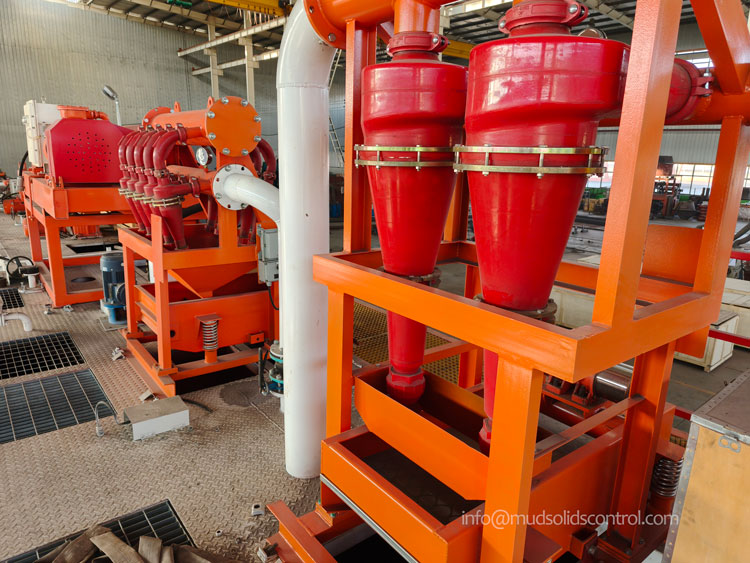
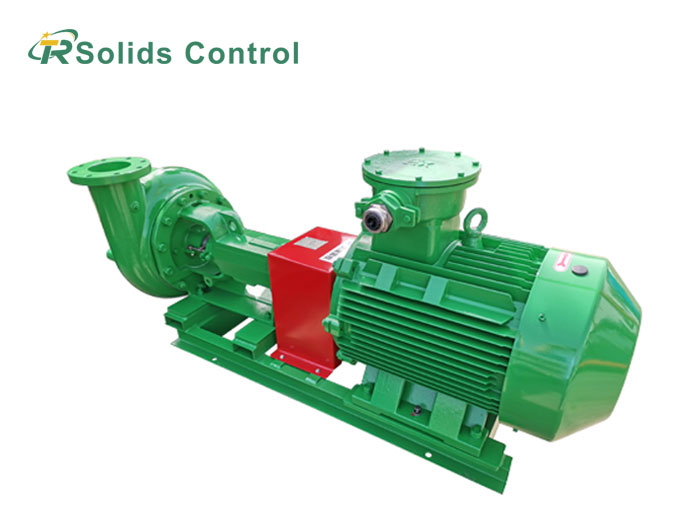
Centrifugal desander feed pump and motor mounted on a mud tank skid.
The head a desander feed pump has to make is the head at the equipment, not at its own discharge flange. Elbows, horizontal run, lift and the manifold bore each take a share, and the pump pays for all of it.
This is where the argument on the rig floor usually starts. The gauge on the pump discharge reads 40 psi, the cones are barely producing, and the desander gets the blame. Move the gauge onto the feed manifold and it reads 22. Twenty feet of line and four elbows ate the difference.
Fit a gauge as close to the cone bank as the layout allows, and read desander feed pressure there. Check the number against your own mud weight before you call it wrong: at 75 ft of head, a 10 ppg mud shows around 39 psi at the manifold and a 15 ppg mud closer to 58.
If the manifold will not come up to the number, straighten the line before you buy a bigger pump. One of those costs an afternoon. The other costs a purchase order and a larger motor.
A cone bank short of flow does not run at part performance. It drops out of its pressure band and the separation goes with it. Two cones on a pump that can only carry one will both sit low, and both will rope.
The field fix looks wrong and it works: blank off one cone. A single cone at 75 ft will usually outperform two running at 40. The same logic applies when you are specifying new equipment. Buy a pump that carries every cone you have, or buy the cone count your pump can feed. Blanking is also how you finish a well while the right desander feed pump is on order. Blank plates cost very little and belong in the container with the spare cones.
A correctly sized desander feed pump still has to be installed right, and two details decide whether it delivers what its curve says.
Liquid level comes first. A centrifugal pump will not prime itself. It needs to sit below the level in the suction compartment and stay below it as the tank draws down through the tour. Pumps put on the tank top because there was nowhere else are the ones that lose prime at every start.
The suction line is second. Keep it short, straight and generously sized, with no high point where air can collect. On a new install, most “no suction” calls trace back to one of these two rather than to the pump.
Give each hydrocyclone bank its own dedicated centrifugal pump. Open a branch to a desilter or a mixing hopper and the flow divides, manifold pressure drops, and both units lose pressure together. If you are running a desander and a desilter, budget for two pumps.
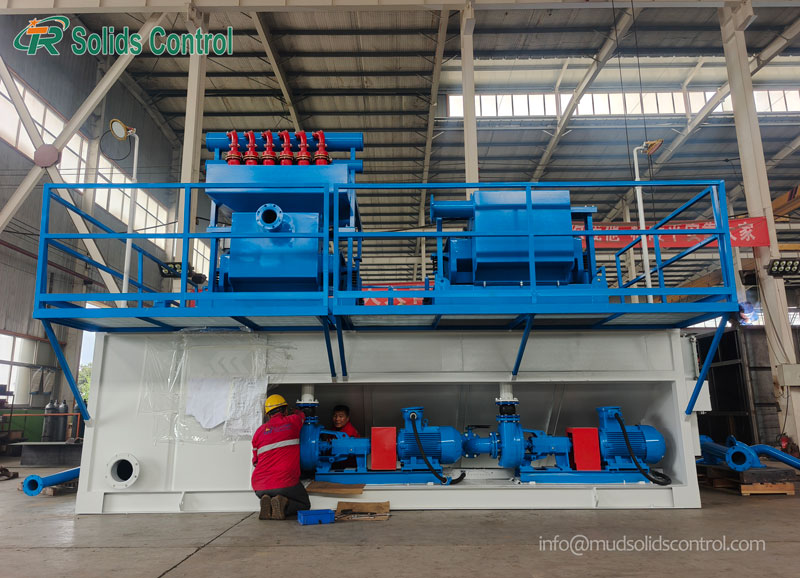
A pump that matches the nameplate will turn. The one you want holds 75 ft at the manifold with your heaviest mud in the hole on the day the shakers are loading up. Send us the cone count and cone size, the distance and height from tank to manifold, and the heaviest mud you plan to run, and we will confirm the duty point before you order. TR's centrifugal pump range covers desander and desilter feed duty, and the wet end parts interchange with Mission Magnum, so spares stay on the shelf you already keep.

Address: No.2 Huochang Road, Yangling District,Xianyang City, Shaanxi Province, China
Tel: +86-18509252400
Wechat: 18509252400
Email: info@mudsolidscontrol.com
Contact: Mr.Li
 +86-18509252400