Contact Person: Mr.Li
Mobile: +86-18509252400
Wechat: 18509252400
Email: info@mudsolidscontrol.com
Address: No.2 Huochang Road, Yangling District,Xianyang City, Shaanxi Province, China
When a slurry shield TBM loses days, the cause is usually on the surface rather than at the face: a separation plant that cannot clear what the cutterhead keeps sending it.
Sizing starts with two numbers that are easy to confuse. The first is how much slurry flows through the circuit. The second is how much solids has to come out of it. The discharge line on a large machine carries several thousand cubic metres an hour, while the face adds a few hundred cubic metres of excavated ground into that flow. A plant can be rated correctly for the first number and still fall behind on the second. Most do.
Start from the capacity range, then let the grading curve set the treatment stages.
Plants are built in capacity ranges aligned with the TBM they support, so start from the bored diameter rather than from a catalogue.
| Type of drive | Bored diameter | Plant capacity range | Treatment stages |
| Microtunneling and pipe jacking (AVN-type machines) | up to about 3 m | 120-360 m³/h | scalping screen, desander cones |
| Small slurry TBM, utility and outfall tunnels | 3-6 m | 360-800 m³/h | primary screen, desander and desilter cones |
| Metro and rail running tunnels | 6-10 m | 800-1,500 m³/h | double-deck screen, desander and desilter banks |
| Large road, rail and river crossings | 10-15 m and above | 1,500-3,000 m³/h | modular multi-train, with a centrifuge or filter press on the fines fraction |
Find your bored diameter and take that row as the starting point. Ground conditions move you one size either way. The margin on peak rate only moves you up.
A TBM slurry separation plant removes excavated solids from the slurry circuit so the same bentonite suspension can be pumped back to the face. European specifications often call it a slurry treatment plant, or STP. Same equipment, same way of quoting capacity.
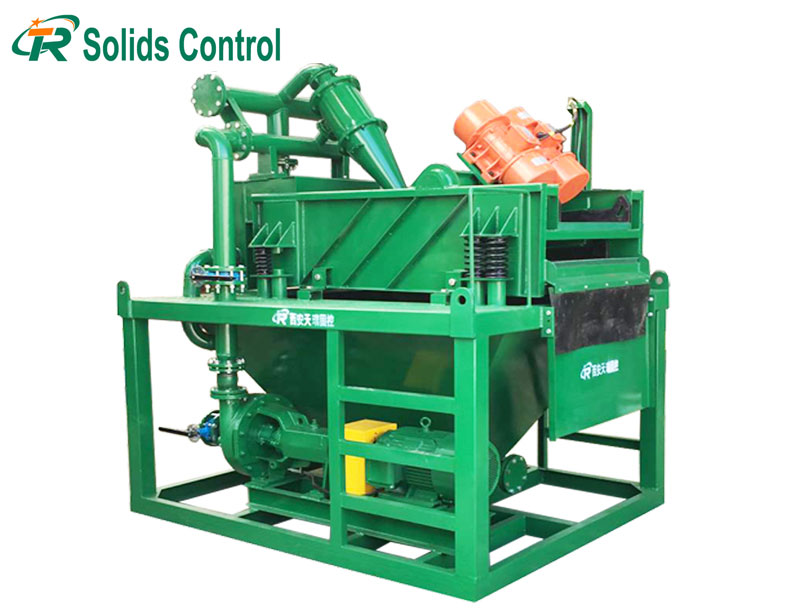
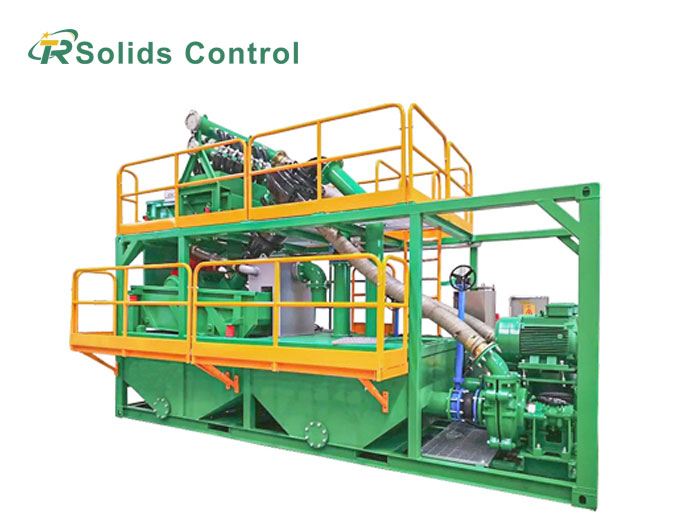
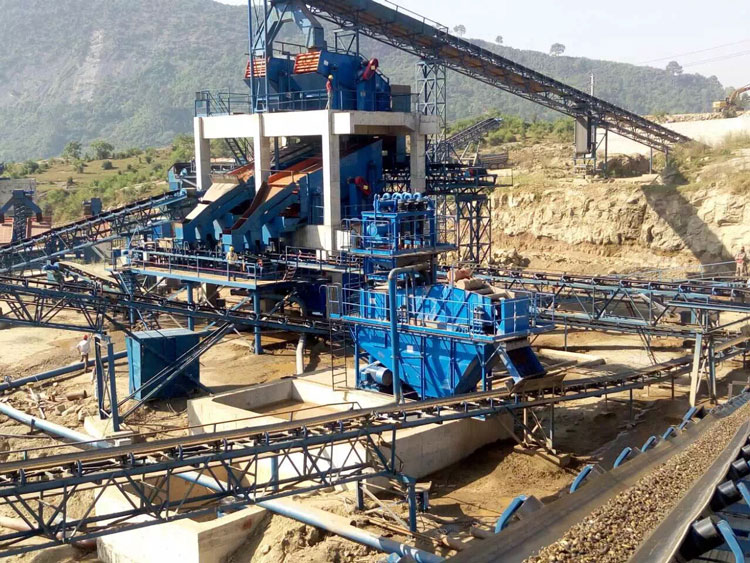
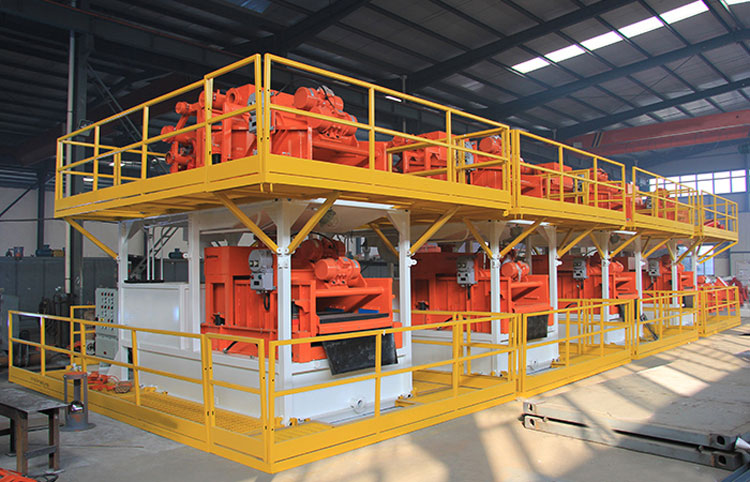
TR builds TBM slurry separation plants across the range in that table, from containerised units for pipe jacking drives to multi-train installations for large-diameter crossings. A 3,000 m³/h plant is not one machine. It is several modular trains running in parallel, so the number of containers and the lead time climb faster than the rated headline capacity suggests.
Two questions matter more than the table. What is the plant rated to discharge as solids rather than what it is rated to pass as flow? Capacity figures are hydraulic ratings, quoted on a low-solids feed. And does the figure cover the whole installation or a single train? On multi-train plants, that distinction decides whether the plant meets the duty.
Circulation flow is not the plant supplier's to choose either. It comes from the TBM's own slurry circuit: the discharge line diameter and the pump duty the machine was built around. The plant has to accept that flow without becoming the restriction in the line. A supplier who quotes without asking for it has sized against a machine rather than against your drive.
That settles the capacity range. The stages inside it are a separate decision, and two drives with the same bored diameter can need two different plants. The grading curve is the reason.
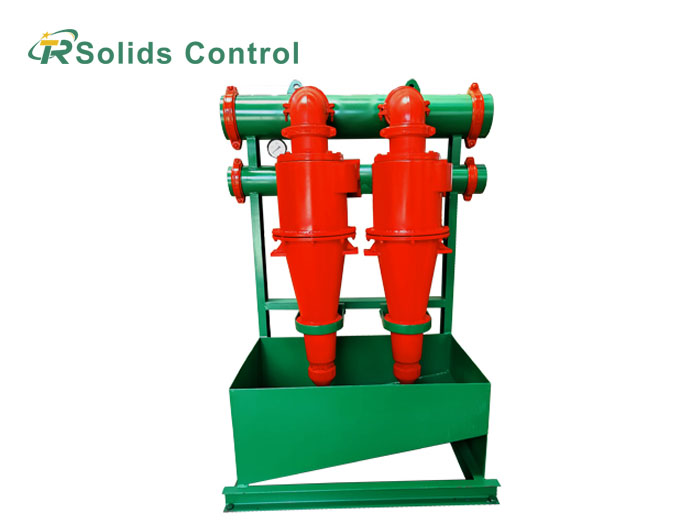
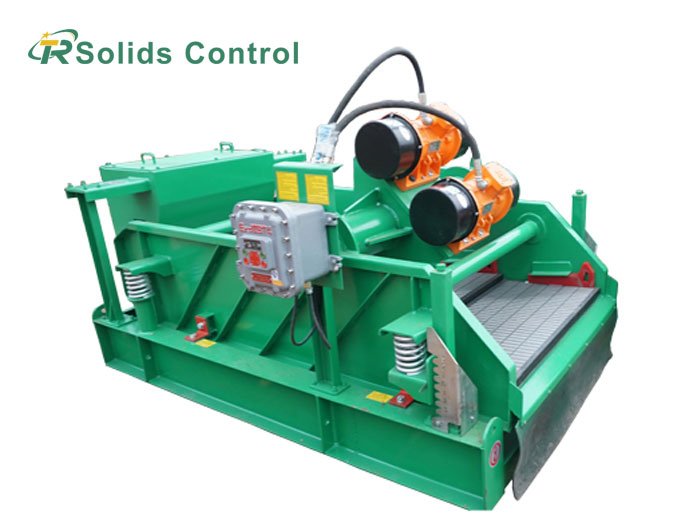
Coarse sand and gravel are the easy ground. A scalping screen and a bank of desander cones handle the bulk of the separation duty, and the discharged solids dewater well enough on a screen to go straight into trucks. Specify generous screen area and cone count here. The ground is abrasive, and wear on cones and screen panels erodes capacity steadily over a long drive.
Fine sand and silt shift the duty to the desilter stage. Cone count and feed pressure decide whether the plant keeps up. Fines in this size range remain in suspension, so whatever the plant fails to capture stays in the circuit and returns later as density you cannot bring down. Bentonite leaves with the overflow at the same time. On a slurry drive, bentonite recovery and fines control are the same specification decision.
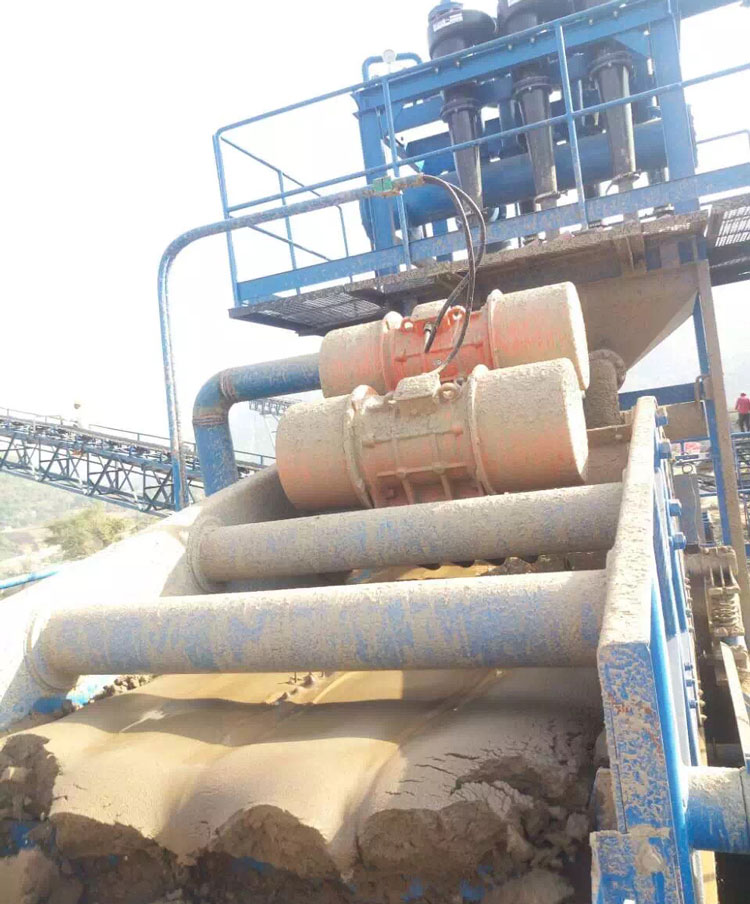
Clay is the ground that stops plants sized on the coarse fraction. Clay balls blind the screen, the finest fraction does not settle, and the slurry thickens until the plant is fed something heavier than it was specified for. On clay the fines stage stops being optional: TR specifies a decanter centrifuge with polymer dosing rather than more cones, and a filter press where moisture limits on disposal are tightest. Cones do not solve a clay problem.
Mixed ground along one alignment is the normal case, not the exception. Size for the worst stretch on the alignment rather than the average of the boreholes. Idle capacity in the good ground costs space on the site, nothing else.
Ground sets the treatment stages. The advance rate sets the size, and the rate to size on is the sustained rate the machine can hold in the best ground on the alignment, not the programme average.
The machine will find ground better than the geotechnical model predicted. When it does, it out-produces the programme, and that is the rate the plant has to hold. Convert it to excavated volume per hour and add 20 to 30 percent to the solids duty. Unexpected ground takes part of that margin, and so do fines that never fully leave the circuit. The exact percentage matters less than being able to state what it covers.
Advance arrives in bursts when the ground is good, and the plant has to take the peak of those bursts rather than the mean. Sizing tight and adding a train later costs more than specifying it up front, and a shortfall is not a line item you can point at. It comes out of advance rate on every shift of the drive.
Then check the rest of the chain, because a plant runs at the speed of its slowest part. Four items usually set that limit: the feed pumps, the cone count, the screen area, and the surge volume in the tanks. Adding cones to a plant whose feed pump cannot serve them buys nothing. Ask whoever is quoting to name the bottleneck out of those four, in writing.
Capacity and the treatment stages settle the process side. Three things on the surface then decide what you can build and run.
On an urban shaft site the plant is usually the biggest item on the surface, and the site is usually smaller than the drawing suggested. Containerised modules and double-deck screens exist for that reason: they buy capacity without buying area. Settling lagoons are not available on most of these sites, so whatever the cyclones miss has to be handled mechanically. TR supplies containerised units for confined shafts as standard, partly for the footprint and partly because the plant moves to the next shaft once the drive finishes.
Power at the shaft sets a ceiling on the fines stage. A centrifuge and a filter press are both significant loads, and a supply that cannot carry them takes that stage off the table before the process side is settled.
Spoil disposal deserves a say at specification stage, because haulage and tipping are charged on weight or volume and both are driven by how much water is left in the separated solids. Find out what moisture content your disposal route needs before you fix the spoil dewatering stage. Drier discharged solids cut the truck count more than any other single choice in the plant, and it is cheaper to specify than to add later.
Six inputs turn a catalogue quote into a plant sized for your drive:
TBM make, model and bored diameter
Sustained advance rate in the best ground on the alignment, plus the programme average
Slurry circulation flow and discharge pump duty, both available from your TBM supplier
Grading curve or soil description along the alignment, including the worst section
Area and power available at the shaft
Spoil disposal route, with any moisture or classification limits
Send those and a manufacturer can size the stages and price the wear and disposal consequences. Send the diameter alone and you get a catalogue number. That holds until the ground changes.
Peak advance rate, grading curve, and a written statement of where the plant will bottleneck. With those three the TBM sets the pace. Without them the plant sets it, and the shortfall gets logged as difficult ground.

Address: No.2 Huochang Road, Yangling District,Xianyang City, Shaanxi Province, China
Tel: +86-18509252400
Wechat: 18509252400
Email: info@mudsolidscontrol.com
Contact: Mr.Li
 +86-18509252400