Contact Person: Mr.Li
Mobile: +86-18509252400
Wechat: 18509252400
Email: info@mudsolidscontrol.com
Address: No.2 Huochang Road, Yangling District,Xianyang City, Shaanxi Province, China
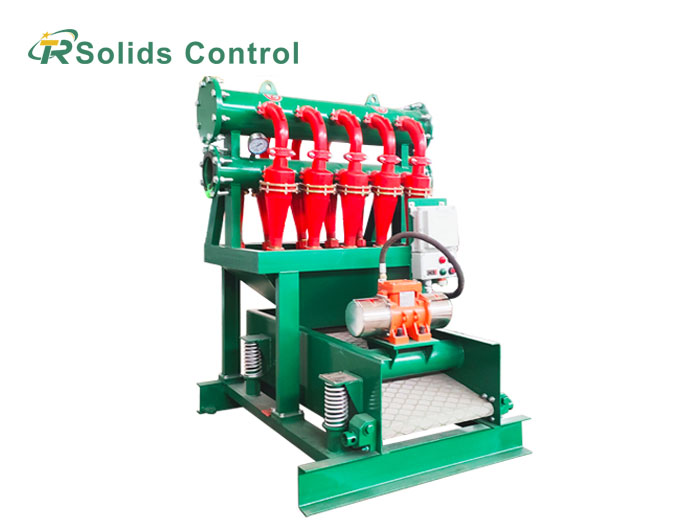
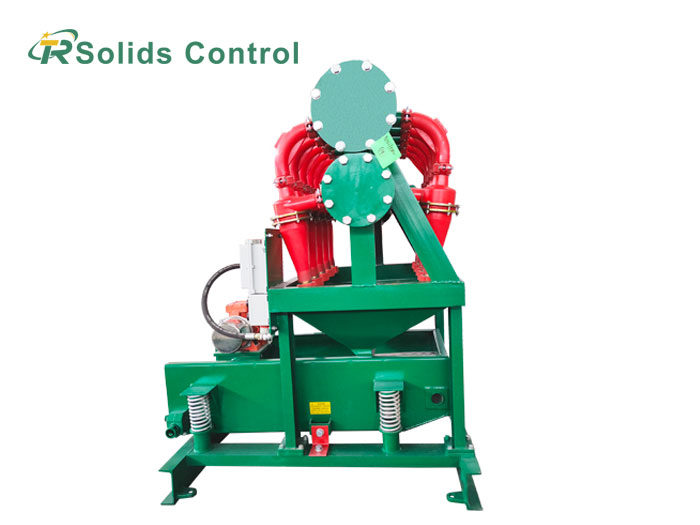
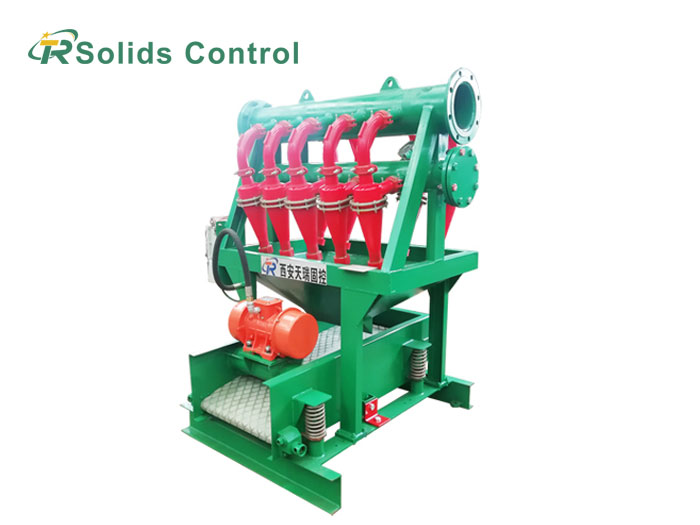
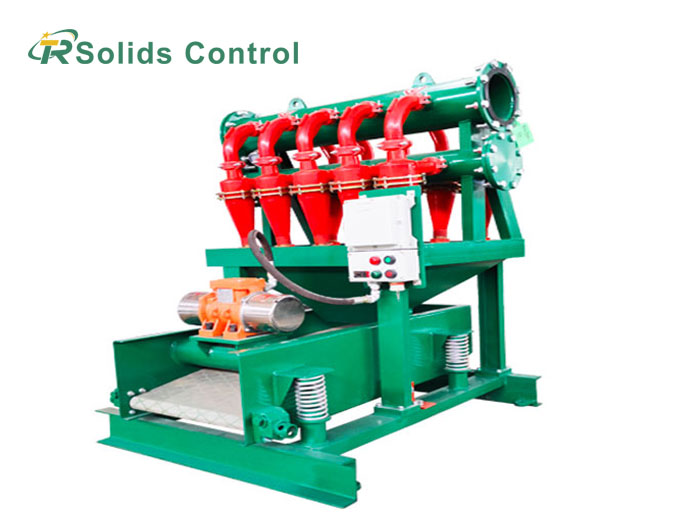
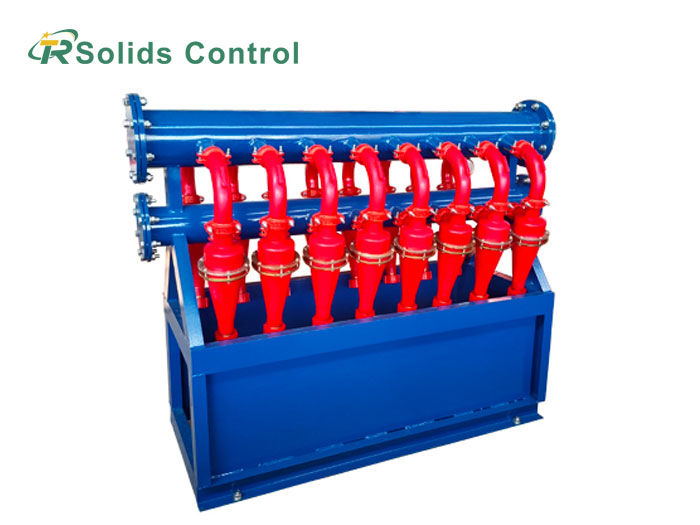
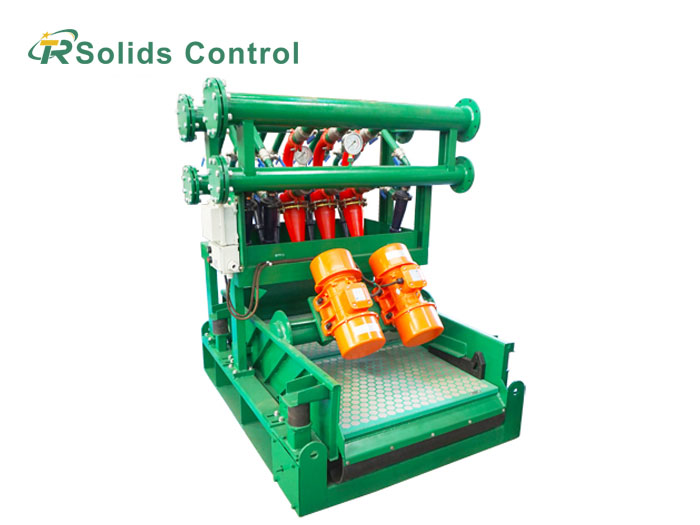
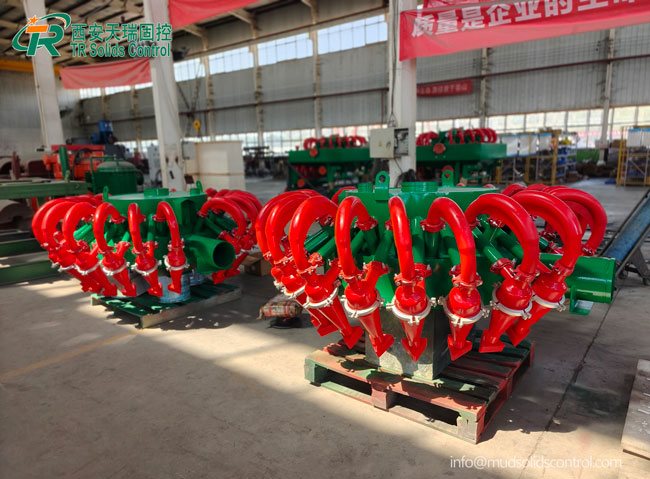
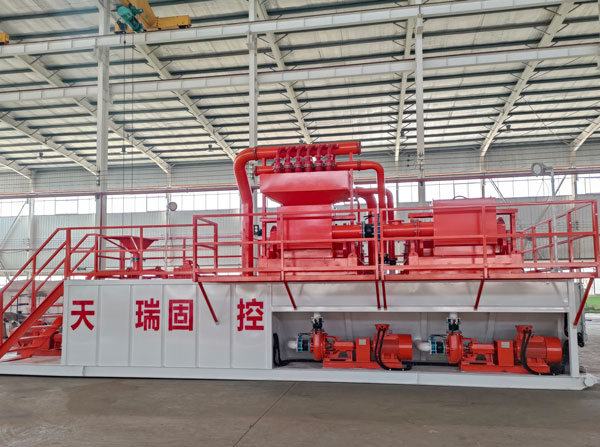
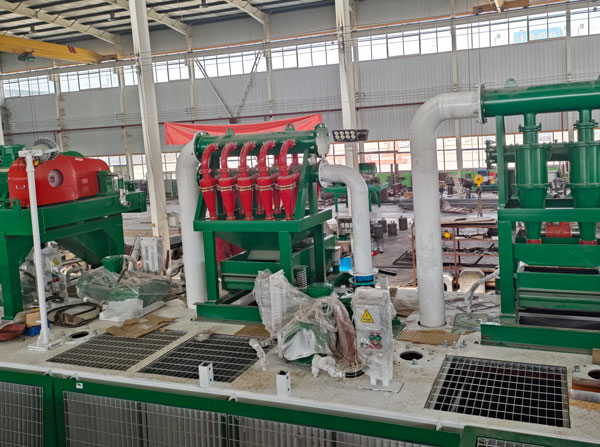
The Mud Desilter removes fine drilled solids from drilling fluid downstream of the mud desander. This keeps fine solids from building up in the circulating system and helps control fine-solids loading in the mud.
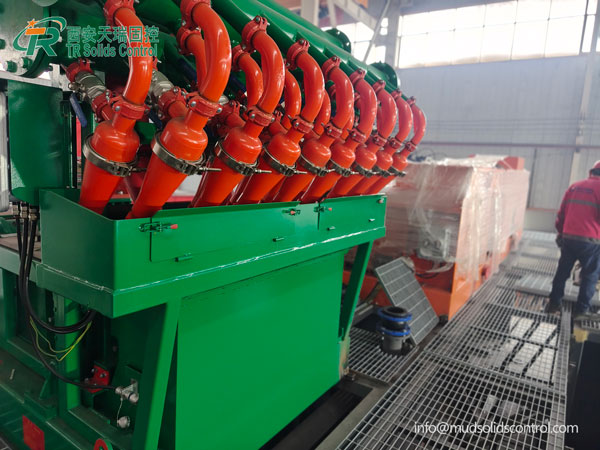
Six standard configurations cover flow rates from 60 to 300 m³/h, using 4 to 20 4-inch (DN100) hydrocyclones. The specified separation range is approximately 15–44 μm, depending on operating conditions.
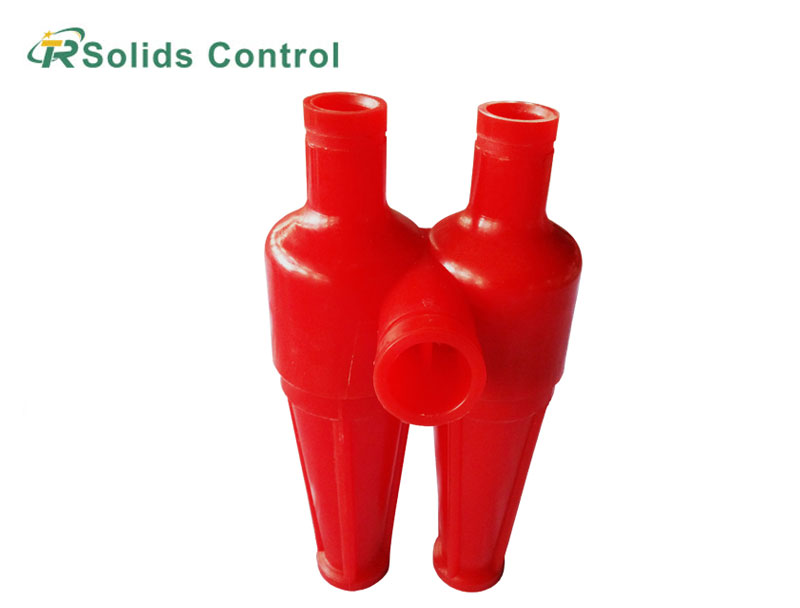
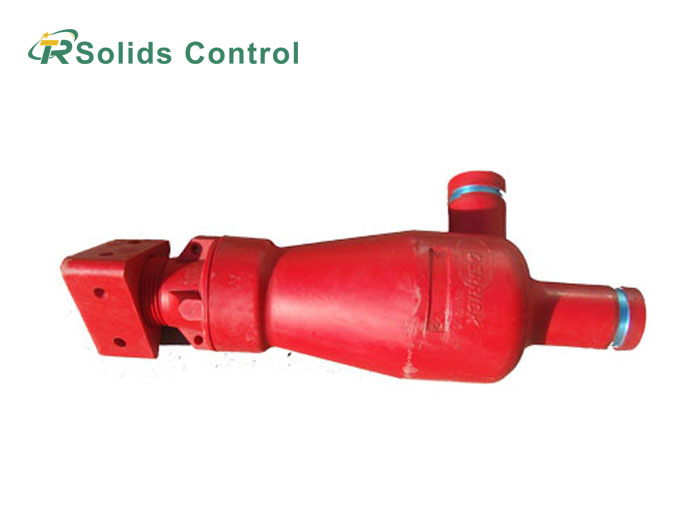
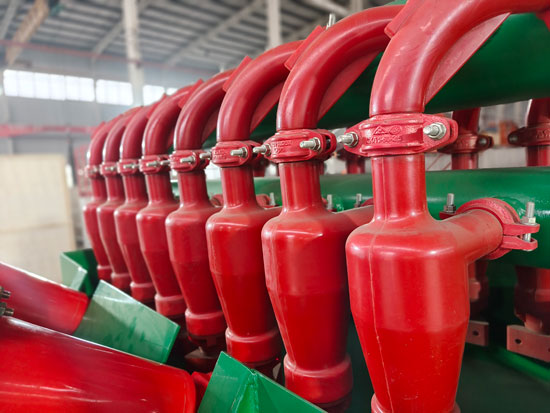
Hydrocyclone materials: Polyurethane or high-chrome cast iron.
Clamp-connected hydrocyclones: Quick removal for inspection and replacement.
Hydrocyclone valve control: Ball valves at the hydrocyclone inlets and outlets allow flexible cone selection.
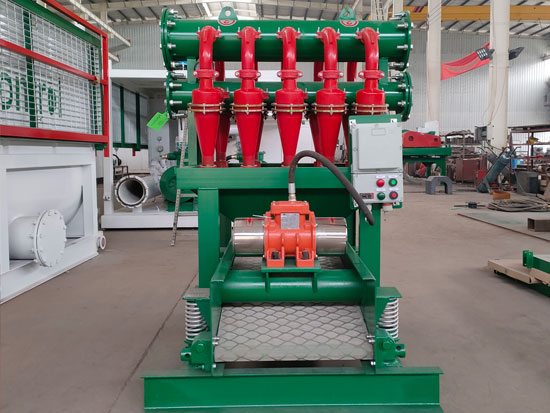
Optional underflow screen: Available for solids dewatering and mud recovery.
Replacement compatibility: Compatible with selected Derrick and SWACO cone assemblies.
| Model | TRCN100-4N | TRCN100-6N/8N | TRCN100-12N/16N | TRCN100-20N |
| Capacity | 60m³/h | 90 m³/h / 120m³/h | 180m³/h / 240m³/h | 300m³/h |
| Cyclone Specs | 4in(DN100) | 4in(DN100) | 4in(DN100) | 4in(DN100) |
| Cyclone Qty | 4cones | 6cones / 8cones | 12cones/16cones | 20cones |
| Working Pressure | 0.25-0.4mPa | |||
| Inlet Size | DN125mm | DN125mm | DN150mm | DN150mm |
| Outlet Size | DN150mm | DN150mm | DN200mm | DN200mm |
| Separation | 15um-44um | |||
| Bottom Shaker | TRZS60/N/A | TRZS60/N/A | TRZS583/N/A | TRZS583/N/A |
| Dimension | 1510×1160×2000mm | 1510×1360×2250mm | 1835×1230×1810mm | 1835×1230×1810mm |
| Weight | 550kg | 560kg/580kg | 1150kg | 1950kg |
The optional underflow screen separates discharged solids from part of the drilling fluid, helping recover usable mud and reduce liquid carried out with the solids.
The screen box uses a mechanical synchronized lifting mechanism for even raising and lowering. Martin or OLI vibrator motors are available for the screen drive.
The screen model varies with the desilter configuration. Confirm the required screen arrangement with TR when ordering.
Drilling fluid enters each hydrocyclone under pressure and forms a swirling flow. Centrifugal force drives denser solids toward the cone wall, where they move downward and discharge through the underflow apex.
The liquid-rich stream reverses direction and exits through the vortex finder as overflow. If an underflow screen is fitted, the discharged solids pass over the screen while part of the drilling fluid is recovered.
Shale Shaker → Desander → Desilter → Decanter Centrifuge
The desilter handles the finer solids remaining after desanding. A decanter centrifuge may follow when the system requires further fine-solids separation or solids recovery.
Oil & Gas Drilling
Used in conventional drilling fluid solids control systems to control fine solids that remain in circulation.
Fine formation solids can accumulate in recirculated bentonite or polymer-based mud. The desilter removes this fraction before the mud returns to the bore.
Geothermal Drilling
Geothermal drilling systems can use the desilter as an additional fine-solids separation stage.
Bored Pile & Tunneling
Removes fine sand and formation solids from recirculated slurry in bored piling, tunneling and microtunneling operations.
Flow Rate
Size the unit from the maximum circulating flow rate. Each 4-inch hydrocyclone handles about 15 m³/h under rated conditions.
For example, a 120 m³/h system requires 8 hydrocyclones. Allow some spare capacity so the unit can remain in operation during maintenance.
Mud and Solids Conditions
Check mud density, viscosity and solids concentration before choosing the hydrocyclone configuration and material.
Feed Pressure and Piping
TR Mud Desilters operate at 0.25–0.4 MPa. Check the actual pressure at the hydrocyclone inlet, not only the pump's rated pressure.
Match the feed and outlet connections to the existing mud system, especially for retrofit installations.
What is the difference between a desander and a desilter?
A desander removes coarser sand-sized solids, while a desilter removes finer solids from drilling fluid.
How many hydrocyclones does a drilling fluid desilter need?
The required number depends mainly on flow rate. TR models are available with 4 to 20 4-inch hydrocyclones.
What feed pressure does the desilter require?
TR Mud Desilters operate at 0.25–0.4 MPa. Check the pressure at the hydrocyclone inlet under actual flow conditions.
Can individual hydrocyclones be isolated?
Yes. Ball valves at the hydrocyclone inlets and outlets allow operators to select the number of working hydrocyclones.
TR Solids Control manufactures mud desilters, hydrocyclones and other solids control equipment in China. API-certified equipment is available for oil & gas drilling, HDD, geothermal and CBM applications.
TR supplies the desilter as a standalone unit or as part of a complete mud recycling or solids control system. Retrofit units can also be matched to existing installations.
Send TR your mud flow rate, mud properties and system dimensions for a custom desilter layout.

Address: No.2 Huochang Road, Yangling District,Xianyang City, Shaanxi Province, China
Tel: +86-18509252400
Wechat: 18509252400
Email: info@mudsolidscontrol.com
Contact: Mr.Li
 +86-18509252400