Contact Person: Mr.Li
Mobile: +86-18509252400
Wechat: 18509252400
Email: info@mudsolidscontrol.com
Address: No.2 Huochang Road, Yangling District,Xianyang City, Shaanxi Province, China
In drilling fluid solids control systems, efficiently removing fine solids is critical for drilling safety and operational efficiency. Choosing between shale shaker and mud cleaner (desander/desilter unit) requires a precise match between particle size distribution and equipment separation mechanisms.
According to API standards, drilled solids are classified by particle size: sand (>74 μm), silt (2–74 μm), and clay (<2 μm). The primary solids control device, the shale shaker, removes large cuttings (>74 μm) through high‑frequency vibration. Its separation efficiency is affected by vibration parameters, screen mesh size, and fluid rheology. In contrast, mud cleaner combines hydrocyclone separation with fine‑mesh shaker screen. The desander hydrocyclone targets 44–74 μm particles, while desilter hydrocyclones handle 15–44 μm particles. The underflow then discharges onto the bottom shaker for dewatering, enabling deep removal of micron‑sized solids.
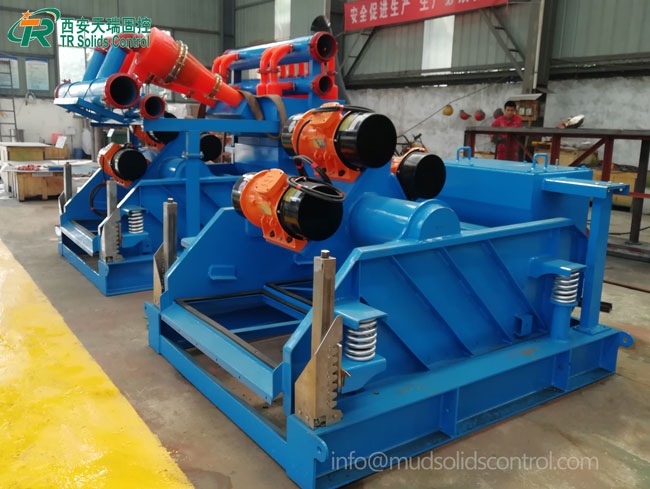
Shale shakers achieve solid-liquid separation through screen interception. For particles larger than the screen mesh size, the separation efficiency can reach more than 90%. However, when dealing with fine solids, if fine-mesh screen (> 200 mesh) is used, problems such as difficult cuttings discharge, short screen life, and sharp drop in processing capacity become prominent. Relying solely on shale shaker is difficult to efficiently remove harmful solids below 30μm, and it is prone to "mud running" or "screen clogging" phenomena.
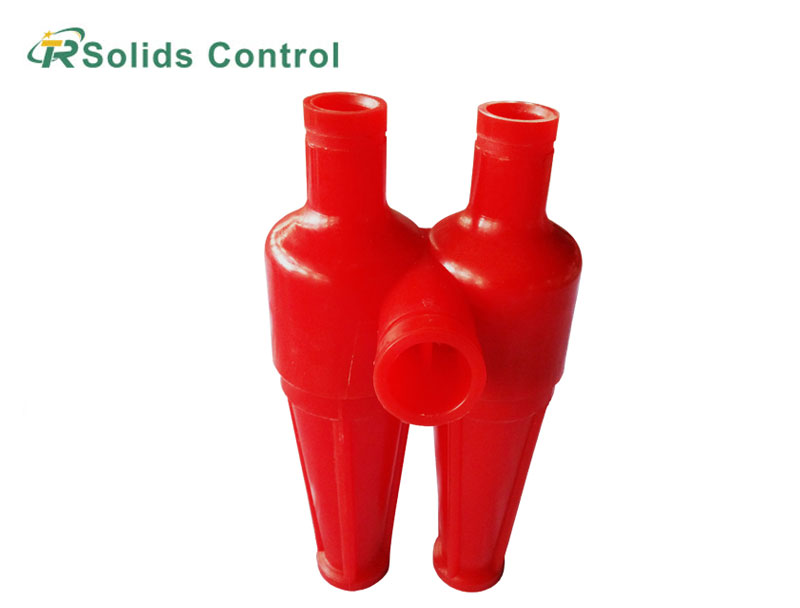
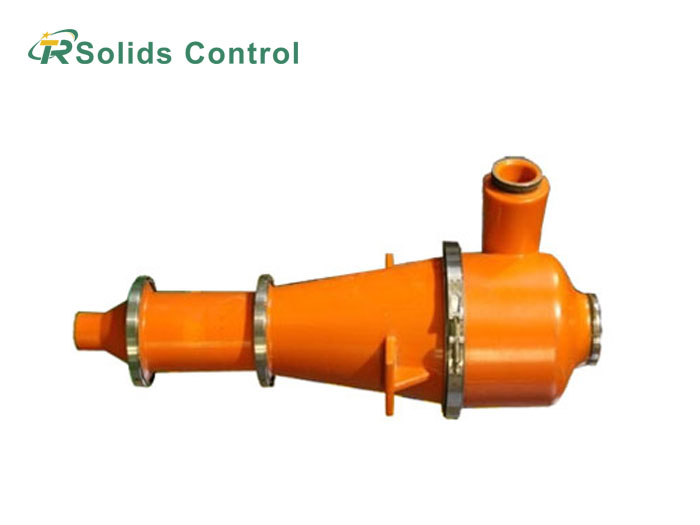
Mud cleaner is actually desander-desilter unit, composed of a set of small-diameter hydrocyclones (desanders and desilters) superimposed on the fine-mesh shale shaker. Its working process is as follows: drilling fluid first enters the cyclones, where medium and fine particles are separated by centrifugal force; the underflow slurry containing solids then falls onto the lower shale shaker for dehydration.
Precise Classification:Cyclones can stably separate particles of 10μm~74μm, with efficiency much higher than that of a single shale shaker.
Reduced Screen Burden: Most large particles have been discharged by the cyclones, and the lower shale shaker only needs to process the concentrated fine-grained underflow, allowing the use of the finer screen without affecting the processing capacity.
From a system perspective, the shale shaker acts as the first line of defense, protecting downstream equipment from large particle abrasion. The mud cleaner then plays the bridging role, providing pre‑treated mud for fourth‑stage equipment such as centrifuges, preventing ultra‑fine solids from clogging the centrifuge drum. In demanding applications like high‑pressure jet drilling, this staged approach can keep harmful solids below 3%, outperforming any single device.
In practical applications, the shale shaker is more suitable as the pre-treatment equipment to remove large-grain cuttings and reduce the burden for subsequent fine solids separation. With the separation accuracy of more than 15μm, compact integrated structure, and 20-30% mud recovery rate advantage, the mud cleaner has become a key equipment for fine solids control. Especially in scenarios with high requirements for drilling fluid performance such as shale gas drilling and deep-sea drilling, the mud cleaner can effectively control the fine solid content, avoiding problems such as increased drilling fluid viscosity and wellbore instability caused by it.
If the project has strict control requirements for fine solids (especially in the range of 20~74μm) in the drilling fluid, the mud cleaner (desander-desilter combo) is more suitable than using shale shaker alone. Through the synergistic effect of cyclonic centrifugation and vibration screening, it achieves efficient removal of fine particles, while avoiding the processing capacity bottleneck caused by large screens. For occasions where coarse particle separation is the main focus and the solid control indicators are loose, the shale shaker is still an economical and reliable choice. It is recommended that the on-site decision be made comprehensively based on drilling fluid performance, solid particle size analysis results, and cost budget.
The equipment selection for fine solids control should not be limited to the performance comparison of the single device, but the "shale shaker + mud cleaner" processing system: using the shale shaker to complete the pre-screening of coarse particles, and then using the mud cleaner to achieve in-depth classification of micron-level particles, forming a continuous solid control closed loop from 74μm to 15μm. This combined strategy not only conforms to the law of solid particle size distribution but also maximizes the technical characteristics of various equipment, making it the optimal solution in the current drilling fluid treatment field.

Address: No.2 Huochang Road, Yangling District,Xianyang City, Shaanxi Province, China
Tel: +86-18509252400
Wechat: 18509252400
Email: info@mudsolidscontrol.com
Contact: Mr.Li
 +86-18509252400