Contact Person: Mr.Li
Mobile: +86-18509252400
Wechat: 18509252400
Email: info@mudsolidscontrol.com
Address: No.2 Huochang Road, Yangling District,Xianyang City, Shaanxi Province, China
A ZJ50 rig does not come with one standard solids control package. The right setup depends on mud flow, formation, well profile, mud properties, and solids loading.
For a conventional ZJ50 drilling operation, a practical starting point is two shale shakers, one vacuum degasser, desander and desilter stages, one medium-speed decanter centrifuge, and around 160-180 m³ of effective mud tank volume.
The actual equipment arrangement changes with drilling conditions. An undersized system can become a bottleneck when the flow rate or solids load increases. Oversizing adds equipment, footprint, cost, and maintenance work.
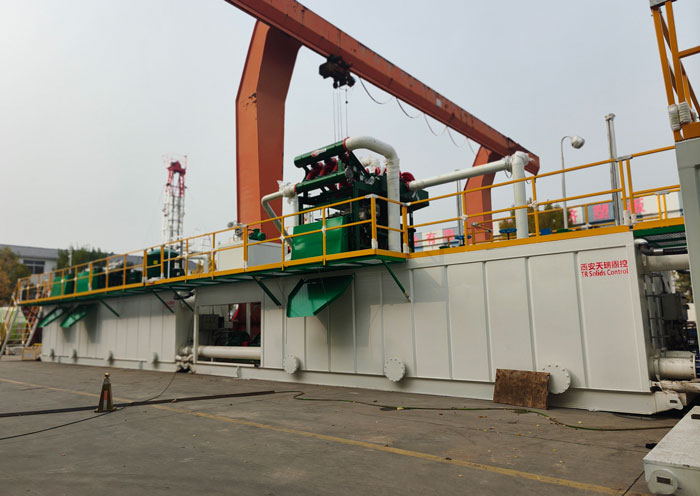
For a conventional ZJ50 operation, circulation may be around 28-40 L/s, with an effective mud tank volume in the 160-200 m³ range. These figures are planning values rather than fixed requirements. Maximum circulation rate and expected solids loading are more important when sizing the equipment.
A typical solids control flow path is:
Shale shaker → vacuum degasser → desander → desilter → decanter centrifuge
The shaker removes the larger cuttings first. The hydrocyclone stages then handle smaller drilled solids, while the centrifuge provides additional fine-solids separation when required.
The rig model alone is not enough to determine the equipment list. The main separation stages need to be matched to the maximum expected drilling flow, solids loading, and mud properties.
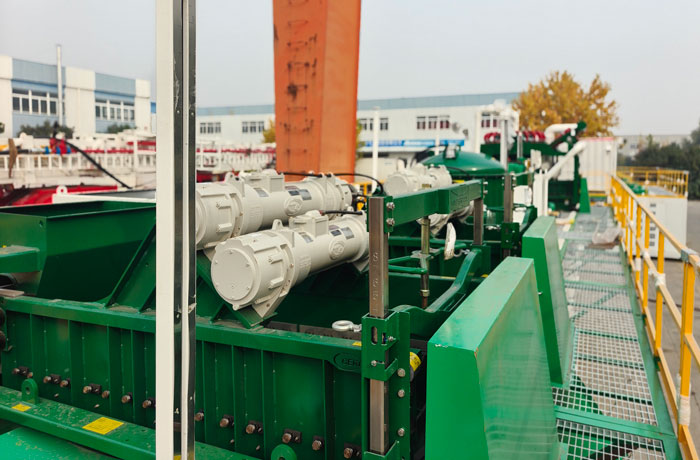
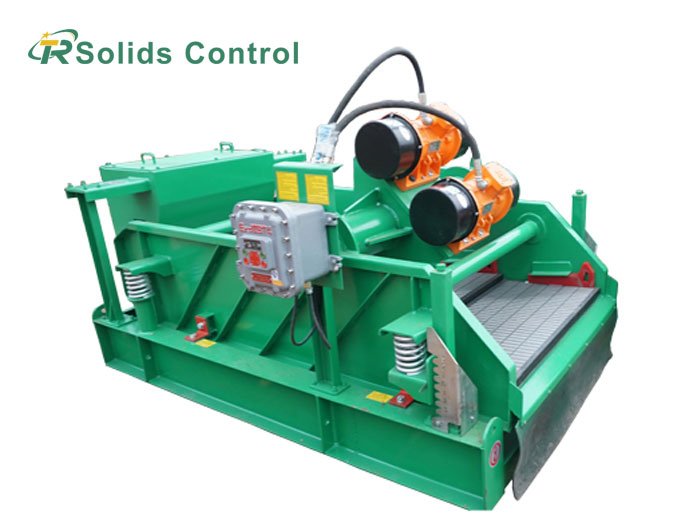
The shaker takes the largest solids load in the system. Cuttings returning from the well need to be removed here before they reach the hydrocyclones.
Two shale shakers running in parallel are a practical starting point for many conventional ZJ50 setups. A processing rate of around 60 m³/h or more per shaker can be used as a guide, depending on the actual mud flow and screen selection.
Screen selection has a direct effect on shaker performance. A finer screen can remove smaller particles, but it may blind more easily or restrict flow when mud and cuttings conditions are unfavorable. Formation, cuttings size, mud properties, and solids loading all need to be considered.
For critical wells or continuous drilling operations, a spare shaker can reduce downtime when maintenance is required.
The vacuum degasser normally sits after the shakers and before the hydrocyclone stages. It removes entrained gas from the drilling mud before the mud continues through the solids control system.
A unit rated around 240 m³/h is a practical starting point for this flow range. Actual sizing depends on the maximum mud flow and expected gas loading, particularly when drilling through gas-bearing formations.
After the shaker, the mud still carries smaller drilled solids. The desander and desilter handle these solids in two hydrocyclone stages. The desander removes the coarser fraction first, followed by the desilter for finer solids.
Ten-inch hydrocyclones are commonly used for desanding, while four-inch hydrocyclones are typically used for desilting.
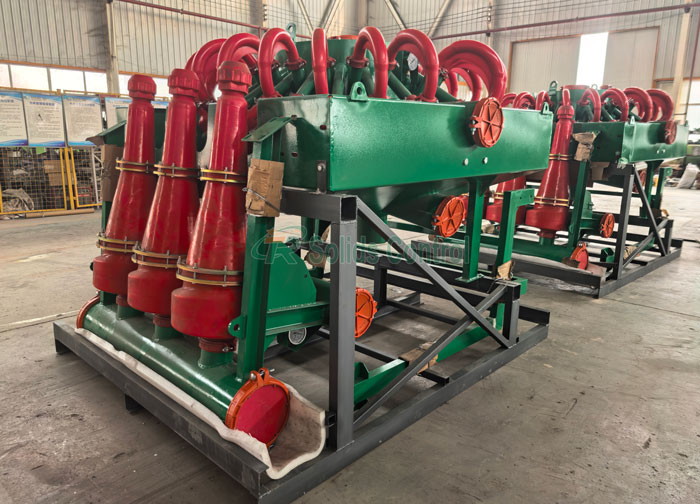
For a typical ZJ50 setup, two 10-inch desander cones with a combined flow of around 240 m³/h, and 12 x 4-inch desilter cones with a combined flow of around 180 m³/h, can be considered.
A desander may target solids around 74 μm and above, depending on hydrocyclone design and operating conditions. Actual separation performance changes with feed pressure, mud properties, solids loading, and cone configuration.
More cones do not automatically mean better separation. The feed pump must provide the flow and pressure required by the selected cones, so the hydrocyclones and pump need to be selected as one system.
Fine solids can continue to build up in the active mud, especially during long drilling intervals, high-solids formations, or operations using high-density mud.
One medium-speed centrifuge may be sufficient for a conventional vertical well with moderate solids loading. A second unit becomes more useful when the solids load is higher, horizontal sections are long, or backup equipment is important.
Mud weight, viscosity, solids concentration, required separation performance, and processing rate all influence centrifuge selection.
The supporting equipment connects the separation stages and keeps the drilling fluid moving through the system.
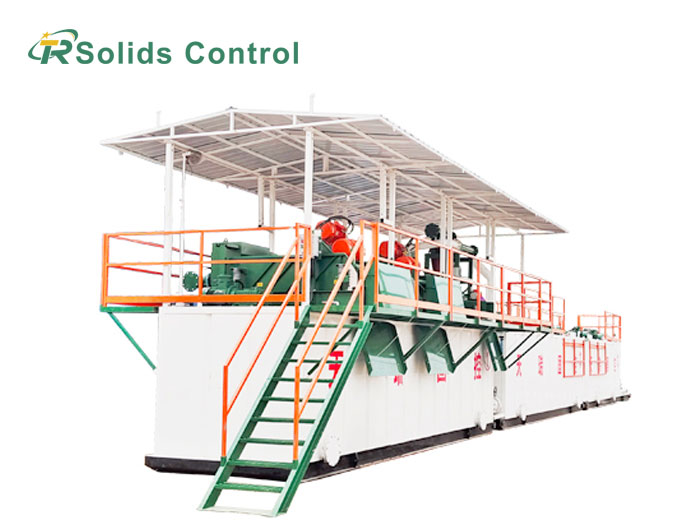
Tank volume depends on the mud program and the space allocated to active, reserve, weighting, and mixing tanks. For many ZJ50 applications, total effective volume falls within the 160-200 m³ range, with standard arrangements often using 160-180 m³ and heavier-duty systems moving toward 180-200 m³.
Around 6-8 mud agitators may be used depending on tank dimensions and mud properties. A jet mud mixer can be included for preparing bentonite, weighting agents, and other drilling additives.
Pumps, valves, and piping need to be sized together with the main separation equipment. For overseas projects, motor voltage, frequency, hazardous-area classification, and control requirements need to be confirmed before manufacturing. Where required, explosion-proof motors and electrical controls can be specified for the solids control equipment.
The equipment arrangement needs to change when the solids load or mud program changes.
A conventional vertical well with moderate solids loading can usually use parallel shaker operation, degassing, hydrocyclone separation, and one centrifuge sized to the actual mud system.
There is little value in adding equipment merely because the rig is rated for 5,000 m-class drilling.
Long horizontal sections, sandy or gravel formations, high-density mud, and high cuttings production place greater demands on solids control.
Higher solids loading usually calls for more separation capacity at the point where solids enter the system. High-density or long horizontal drilling can put more pressure on fine-solids control, making an additional centrifuge useful.
Depending on the operation, the response may be an additional shaker, more hydrocyclone cones, a second centrifuge, or additional backup equipment. The right choice depends on where the solids load is coming from and how much downtime the site can tolerate.
The following configurations can be used as a starting point for system planning, not as fixed ZJ50 standards.
For conventional drilling conditions:
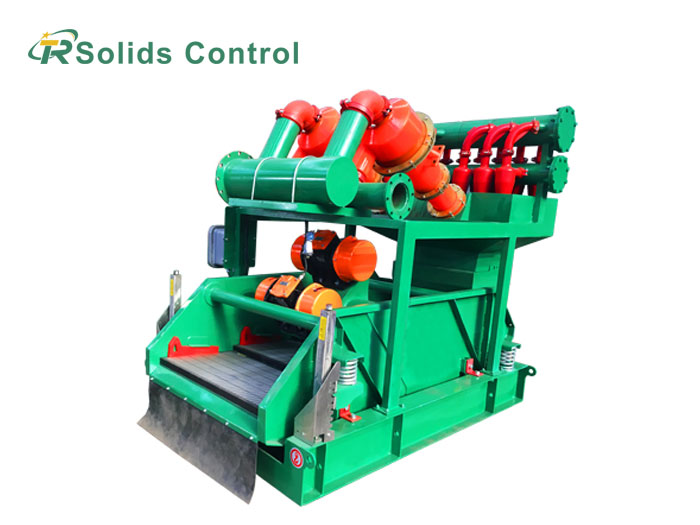
2 double-deck shale shakers
1 vacuum degasser
10-inch desander
4-inch desilter
1 medium-speed decanter centrifuge
6-8 mud agitators
1 jet mud mixer
160-180 m³ effective mud tank volume
Heavy-Duty Configuration
For higher solids loading or more demanding mud programs:
3 shale shakers
1 vacuum degasser
Desander and desilter stages
1 medium-speed + 1 high-speed decanter centrifuge
8 mud agitators
1-2 jet mud mixers
180-200 m³ effective mud tank volume
The additional equipment is most useful when higher solids loading, longer drilling sections, or maintenance requirements justify the extra capacity.
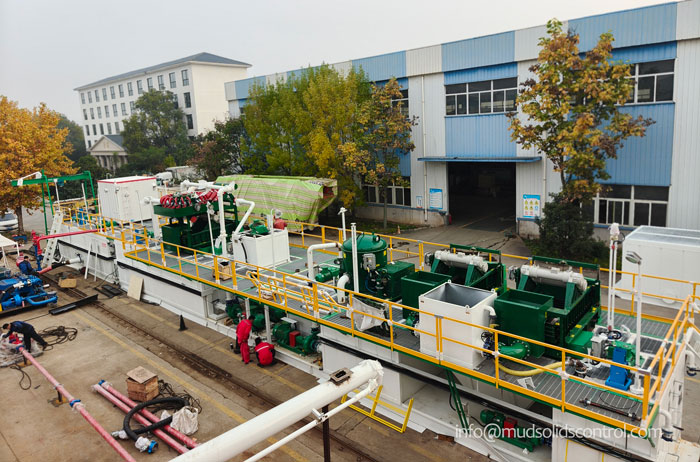
The rig model alone is not enough to size the system. A supplier will normally need:
Maximum circulation rate: the highest expected drilling flow, not only the normal operating rate.
Well profile: vertical, directional, or horizontal.
Formation conditions: especially sand, gravel, unstable formations, or high cuttings production.
Mud properties: expected mud weight, viscosity, and solids loading.
Mud tank volume: active, reserve, weighting, and mixing capacity.
Electrical requirements: voltage, frequency, and hazardous-area classification.
Site limitations: footprint, lifting capacity, transportation, and installation conditions.
These details provide the basis for selecting the shakers, hydrocyclones, centrifuge, tanks, pumps, and supporting equipment.
When comparing quotations, look beyond the equipment count. Processing rates, pump requirements, tank arrangement, and backup provisions give a clearer picture of how the package will perform on site.
Sizing the System Around Normal Flow
Use the maximum expected drilling flow as the main reference, with enough margin for changes in operating conditions. A system selected too close to the normal rate can become a bottleneck when the pump rate increases.
Selecting Equipment by Quantity Alone
Equipment quantity alone is not a reliable basis for system selection. Selection needs to follow the actual flow, solids loading, mud properties, and required separation performance.
Ignoring Hydrocyclone Feed Pressure
The number of cones is only part of the equation. The pump must provide stable flow and the pressure required by the selected hydrocyclones.
Treating the Mud Tank as Just Storage
The tank is part of the circulation system. Poor compartment arrangement can allow treated mud to mix back with dirty mud and reduce the effectiveness of the separation stages.
Designing for Equipment Footprint but Not Maintenance
Screens need to be changed, and pumps, hydrocyclones, and centrifuges need access for inspection and maintenance. Working space needs to be included in the layout from the start.
The final equipment list needs to be confirmed against the actual well conditions before manufacturing. A properly sized ZJ50 solids control system provides the required solids separation without adding equipment the operation does not need.

Address: No.2 Huochang Road, Yangling District,Xianyang City, Shaanxi Province, China
Tel: +86-18509252400
Wechat: 18509252400
Email: info@mudsolidscontrol.com
Contact: Mr.Li
 +86-18509252400
.jpg)