Contact Person: Mr.Li
Mobile: +86-18509252400
Wechat: 18509252400
Email: info@mudsolidscontrol.com
Address: No.2 Huochang Road, Yangling District,Xianyang City, Shaanxi Province, China
The most common casing replacement problems surface at installation: bolt holes that do not line up, flange dimensions that differ from the old part, or an impeller running with the wrong clearance. None of it shows in a catalog photo. Two casings can look almost identical and still differ in the dimensions that decide whether the pump goes back together.
On a drilling fluid system, wear is the other half of the problem. Sand, barite, drilled cuttings, and other abrasive solids gradually wear the casing and the impeller inside it.
Before we quote a replacement casing, we check the condition of the wet end first, then confirm the pump configuration and the dimensions that matter for installation.
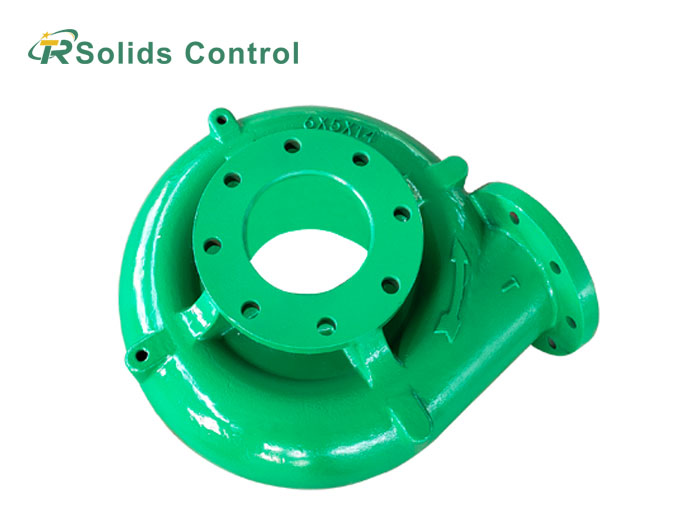
Casing wear is rarely uniform. On a centrifugal pump handling drilling mud, the volute, suction inlet, and discharge passage are commonly exposed to heavy wear as abrasive solids pass through the pump. Deep grooves, erosion, local thinning, and damaged sealing or mounting surfaces all point to a casing that has seen significant service wear.
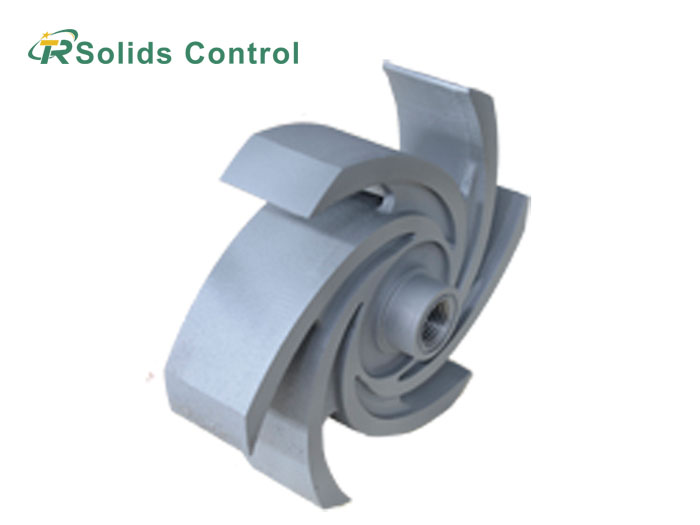
Inspect the impeller at the same time. Check the vanes and the eye for the same kind of wear. If the impeller has been running against a heavily worn casing, fitting a new casing around an already-worn impeller leaves half the problem inside the pump.
Watch the impeller-to-casing clearance as well. As the casing and impeller wear, the gap grows. A wider clearance allows more internal recirculation and can reduce pump head and efficiency.
The condition of both parts sets the scope of the repair. A worn casing with a sound impeller calls for one order. When both show substantial wear, replacing the impeller together with the casing is usually more practical.
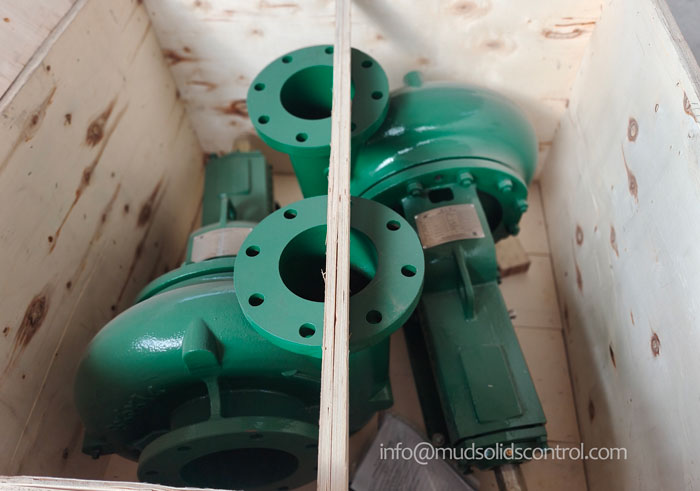
The nameplate is the quickest way to identify the right casing. Record the manufacturer, model, serial number, and size, plus the casing part number or casting number if there is one.
This matters most when the pump has been rebuilt at some point. The casing, impeller, or shaft arrangement currently on the pump may not match the original factory configuration, so the nameplate alone can point to the wrong part.
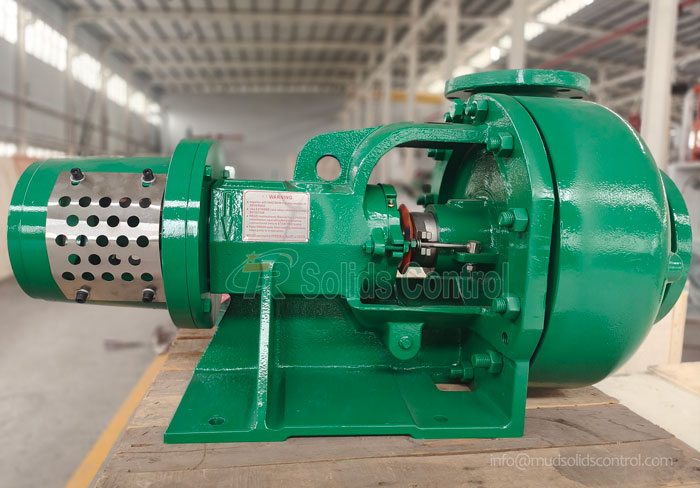
If the nameplate is gone, photographs work. Shoot the complete pump, then close-ups of the suction and discharge connections, the mounting feet, and the bolt arrangement.
Dimensions come next, because suction and discharge size alone does not guarantee the casing will fit an existing skid or piping layout. The measurements worth recording include:
Overall casing dimensions
Suction and discharge centerline positions
Mounting-foot dimensions
Bolt-hole diameter and spacing
Flange dimensions
Suction and discharge bolt patterns
The bolt pattern deserves particular attention. A casing can match the pump model and still refuse to install because the mounting or flange arrangement is different.
On an overseas order, confirming these dimensions before manufacturing takes a few minutes. Correcting a mismatch after the casing has shipped across an ocean takes far longer.
The original casing material is useful information, but it should not automatically decide the replacement.
Mud density, solids concentration, particle abrasiveness, and pump speed all affect how quickly a casing wears in drilling fluid service. When the previous casing wore out much faster than expected, review both the material selection and the operating conditions before ordering the same casing again.
Material choice also has to suit the pump design. A harder alloy is not automatically better if the rest of the wet end is built around a different material or operating condition.
Common casing materials offer different balances of wear resistance, toughness, and cost. The practical approach is to match the material to the fluid being handled and the way the pump is run, rather than automatically copying the old casing specification.
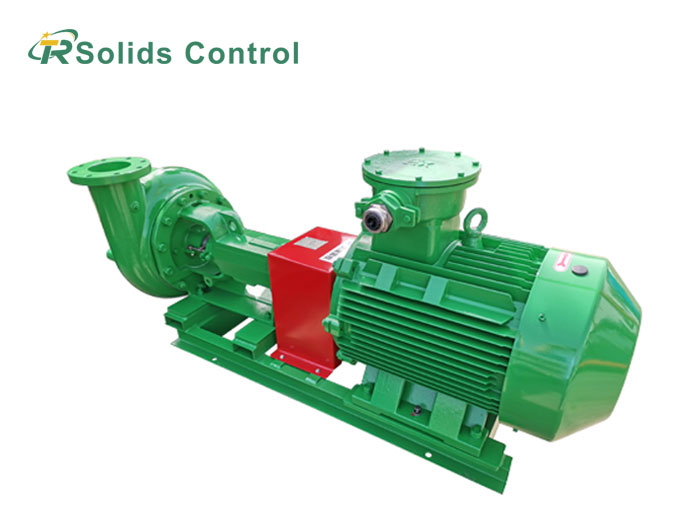
Mission-compatible centrifugal pumps are common in oilfield drilling and solids-control applications, so Mission compatibility often comes up in replacement-parts inquiries.
The term helps narrow down the configuration, but it does not confirm that the casing will fit. The casing still has to match the impeller, shaft arrangement, mechanical seal, and other mating components. Even within Mission-compatible pump ranges, the same nominal pump size does not always mean the same casing part number or configuration.
When replacing a Mission-compatible casing, give the supplier the existing pump model and whatever casing information is available: the part number if it is legible, photos, and key measurements. Documentation is often missing on pumps that have been through a rebuild.
With the casing off, the rest of the wet end is exposed and easy to inspect.
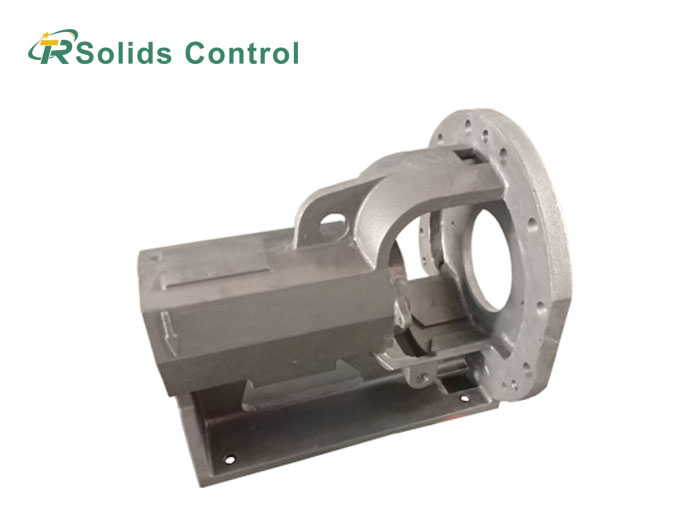
Look at the mechanical seal, shaft sleeve, and impeller before settling on a casing-only order. A new casing will not fix a leaking seal or compensate for a worn sleeve.
If the impeller and the rest are in good condition, replacing the casing alone is reasonable. When several wet-end components are near the end of their service life, changing them together can make more sense than taking the pump apart again a short time later.
The decision comes down to what is worn, how long the pump needs to run before the next overhaul, and how much downtime the operation can take.
A replacement inquiry does not need a complete engineering package. What we ask for is practical:
Pump manufacturer and model
Serial number, if available
Casing part number or casting number
Photos of the pump and casing
Suction and discharge sizes
Main casing and mounting dimensions
Bolt-hole spacing and pattern
Impeller information, if available
Fluid and solids conditions
Mission-compatible configuration, if applicable
Photos do most of the work when a pump has been rebuilt or the nameplate is unreadable. A shot with a tape measure across the key dimensions is enough for a first review; a dimensional drawing is better but rarely necessary at this stage.
This is the information we normally use to confirm a replacement casing before production, especially when the original pump has been rebuilt or modified.
TR supplies centrifugal pumps and replacement wet-end components for oilfield drilling and solids-control applications, including Mission-compatible configurations.
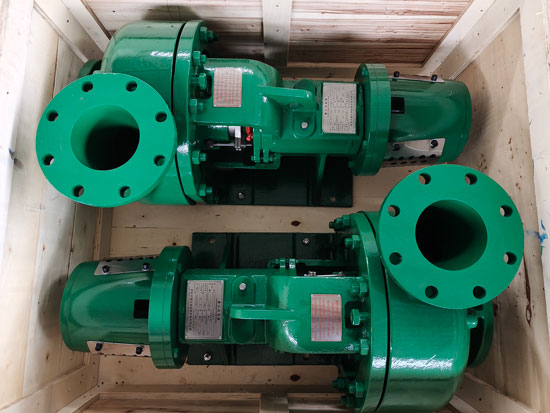
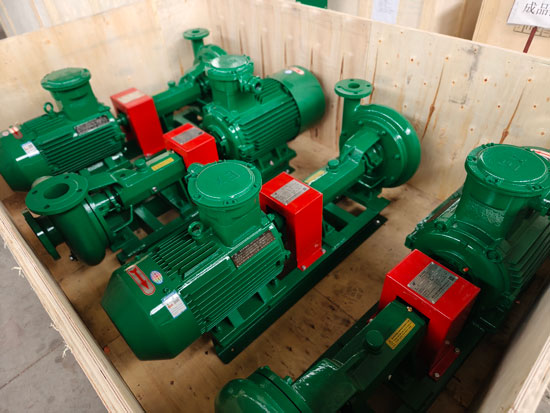
Most casing replacement problems trace back to something that was knowable at the ordering stage: a pump that no longer matches its nameplate, a bolt pattern that was never checked, or a material that did not suit the mud.
A few measurements and clear photographs can settle these points before manufacturing starts, which is where a mistake costs the least to fix.

Address: No.2 Huochang Road, Yangling District,Xianyang City, Shaanxi Province, China
Tel: +86-18509252400
Wechat: 18509252400
Email: info@mudsolidscontrol.com
Contact: Mr.Li
 +86-18509252400