Contact Person: Mr.Li
Mobile: +86-18509252400
Wechat: 18509252400
Email: info@mudsolidscontrol.com
Address: No.2 Huochang Road, Yangling District,Xianyang City, Shaanxi Province, China
Drilling means solids control. And solids control means dealing with cuttings and waste mud. With tightening environmental rules, especially the upcoming HJ 1461‑2026 standard this July, oil‑based cuttings cannot touch the ground. Base oil must be recovered from oil‑based mud. Solids Handling is critical here.
TR Solids Control (Xi'an TianRui) has been making solids control equipment for over 20 years: shakers, cutting dryers, centrifuges, non‑landing systems. The biggest lesson learned is that solids handling is not just about removing the trash. It is about recovering as much liquid as possible at every step, and getting the solids truly dry.
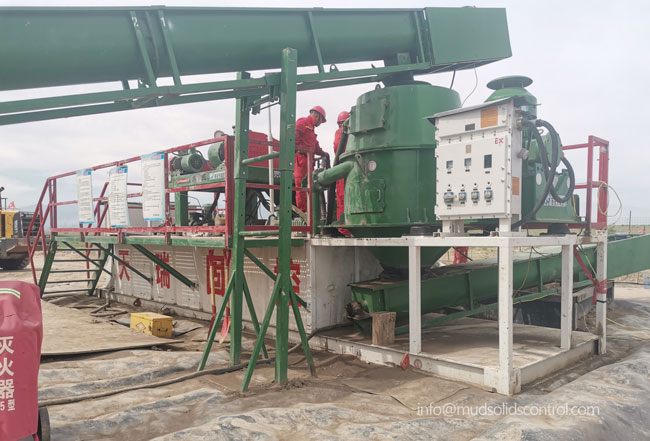
Drilled solids (cuttings, sand, fine particles) are the primary component of drilling waste. Without effective Solids Handling, these solids accumulate in drilling fluids, degrading performance, increasing equipment wear, and generating costly, eco-harmful waste.
Eco-friendly drilling waste management relies on efficient solids handling to control harmful solids in drilling fluid. TR Solids Control's systems separate, treat and repurpose drilled solids, converting waste into reusable resources.
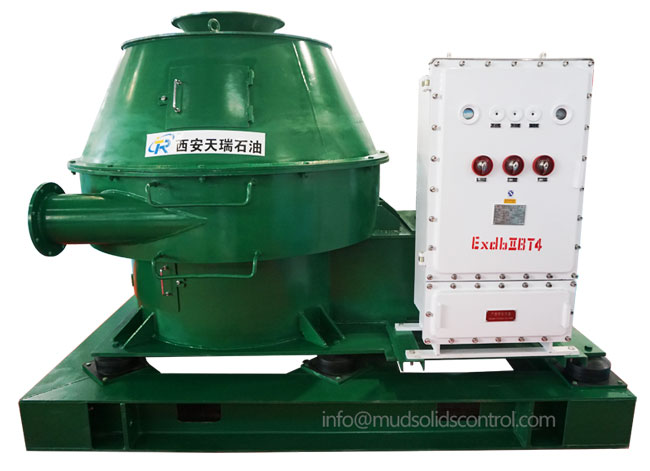
At an oil-based mud well in Karamay, Xinjiang, local environmental regulations demanded drilling cuttings oil content below 5% for transportation. Multiple solutions were tested, and two-stage solids handling (cutting dryer + high-speed centrifuge) delivered qualified results.
First stage: TRCD930 vertical cutting dryer
It processes cuttings from shale shakers, desanders and desilters. High-frequency vibration and centrifugal force remove free liquid, cutting cuttings oil content from about 20% to 6–8% and keeping solid moisture under 6%.
Second stage: TRLW600 series high-speed VFD centrifuge
It treats fine solids in discharged liquid from the cutting dryer. Running at 3,000–5,000 rpm, it separates 2–7 micron particles. Treated clean liquid can be directly recycled to the mud tank.
This two-stage setup forms TR's mud non-landing system. Cuttings are fully closed-conveyed, processed and bagged without ground contact. Multiple sets have been applied in Karamay, bringing lower transportation costs and smooth environmental compliance.
Oil‑based waste gets the spotlight, but solids handling for water‑based cuttings also matters. Standard HJ 1461‑2026 categorizes them as general industrial solid waste, requiring moisture below 60% for transportation. On-site piling is no longer permitted.
TR Solids Control adopts simple solution: run the cuttings through a dewatering shaker first. Free water drops out, moisture down to under 30%. The treated solids can be reused for road paving, brickmaking or cement kiln disposal. Early solid-liquid separation greatly simplifies subsequent waste treatment.
The centrifuge is the most precise equipment in the solids handling system. TR decanter centrifuges fit two mainstream applications:
Mid‑speed (TRLW355‑450) : 1,800–2,500 rpm, separating 15–44 micron particles. Used for barite recovery and regular mud treatment.
High‑speed (TRLW600) : 3,000‑5,000 rpm, with hydraulic differential. Removes particles down to 2‑7 microns. Ideal for fine recovery from oil‑based mud and deep treatment of oily sludge.
Many field operators run centrifuges without parameter adjustment, causing fluid loss or wet discharged cake. TR pre-sets differential speed and weir position based on mud type before delivery, requiring only minor on-site fine-tuning. Improper parameters will also burden downstream solids handling processes.
HJ 1461‑2026 sets principles: reduce waste at source, keep waste off the ground, prioritize oil recovery. TR's complete solids handling product matches these principles.
Shale Shaker (primary) removes large solids, protects downstream equipment.
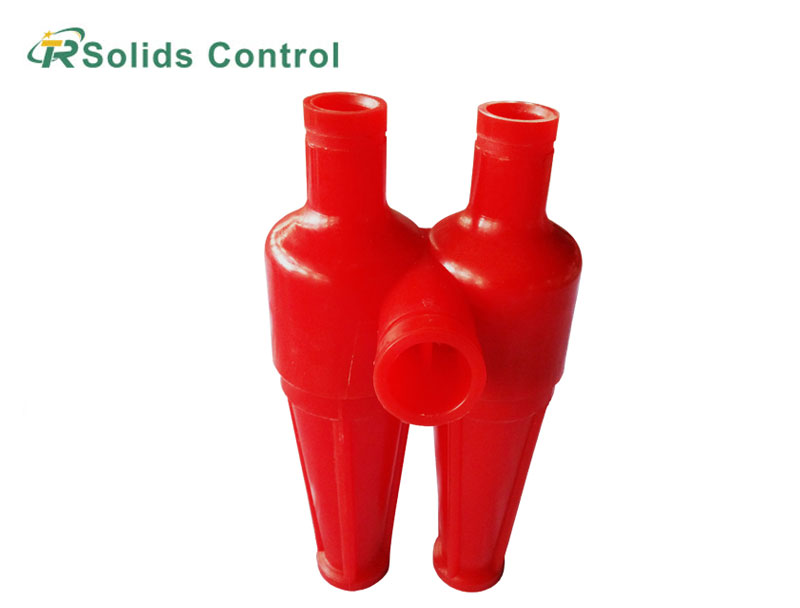
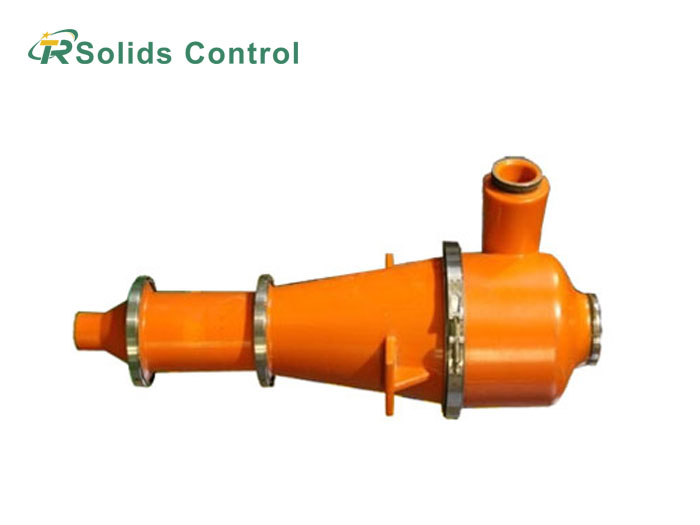
Desander and Desilter (secondary) handle medium particles.
Dryer and Centrifuge (tertiary) do the final recovery.
These three stages are not fixed. TR configures equipment based on the well depth, cuttings volume, and oil‑content target.
Last year, oil‑based non‑landing system was shipped to Xinjiang Drilling Waste Management. Oil‑based cuttings throughput around 2 tonnes per hour. The user's own test data after treatment: oil content on cuttings at 2.8%, moisture content at 5.6%. Recovered base oil was blended back into the active mud system. Mud properties did not change noticeably. The user's comment: "30% less cost than our previous outsourced treatment."
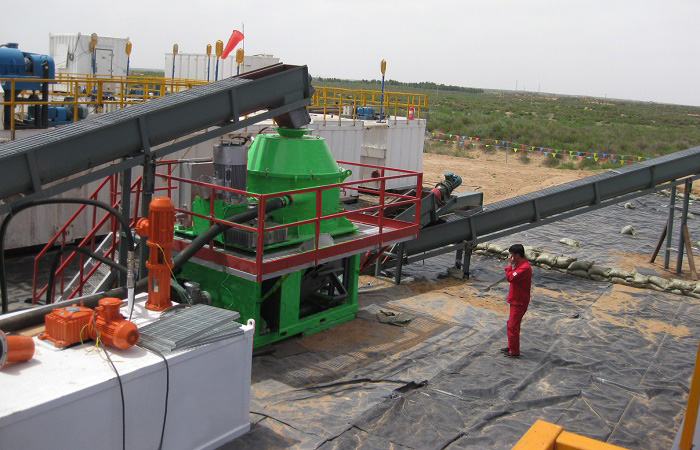
The whole system fits on one skid: cutting dryer, buffer tank, two screw pumps, and electrical controls. Connect power and the cuttings discharge line from the rig, and it runs.
Solids handling means separating solids from liquid. The cleaner you separate, the lower your downstream cost. TR Solids Control does this with reliable shakers,cutting dryer, centrifuges, and non‑landing systems, all API and ISO certified, it features advanced designs (dual-mode vibration for shakers, high-speed centrifuges for ultra-fine solids) that deliver high efficiency with minimal maintenance, reducing downtime and costs.
If you are struggling with oil content on cuttings above the limit, or want to discuss how to size a non‑landing system, just contact TR Solids Control.

Address: No.2 Huochang Road, Yangling District,Xianyang City, Shaanxi Province, China
Tel: +86-18509252400
Wechat: 18509252400
Email: info@mudsolidscontrol.com
Contact: Mr.Li
 +86-18509252400