Contact Person: Mr.Li
Mobile: +86-18509252400
Wechat: 18509252400
Email: info@mudsolidscontrol.com
Address: No.2 Huochang Road, Yangling District,Xianyang City, Shaanxi Province, China
A drilling program may use water-based mud (WBM) in the upper hole and switch to oil-based mud (OBM) or synthetic-based mud (SBM) for the deeper sections. Whether one solids control package can cover both, or whether part of it has to be reconfigured when the mud changes, is better settled before the specification goes out than after the equipment lands.
Usually most of it carries over. What shifts is the separation duty, the materials in contact with the mud, and what has to be done with the cuttings before disposal. These issues are easier and less costly to resolve during specification than after equipment arrives at the rig site.
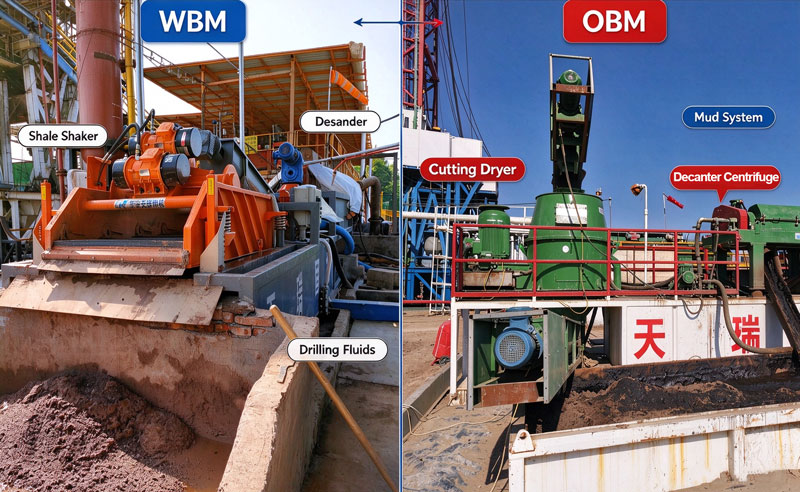
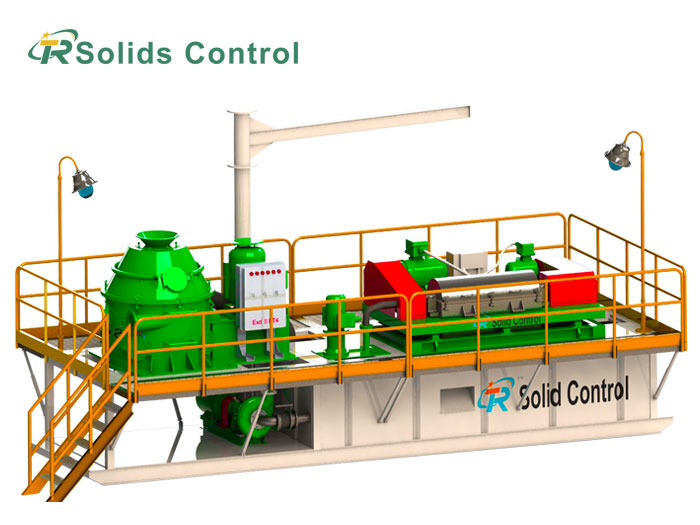
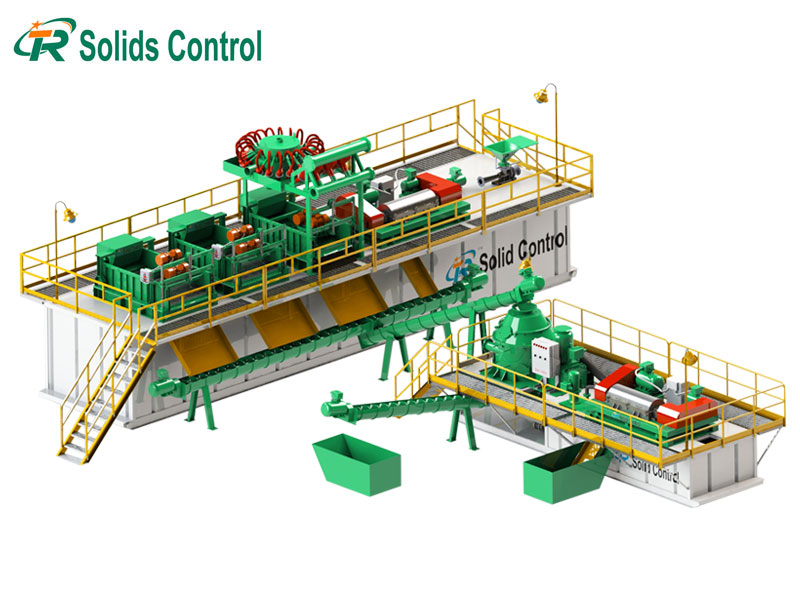
Changing mud systems rarely means buying a second set of primary equipment. More often the same shakers, hydrocyclones and centrifuges stay in service, running at a different duty, with different screens, different elastomers and a different arrangement behind them.
| Equipment or component | WBM considerations | OBM considerations |
| Shale shaker | Screen opening, flow rate, cuttings conveyance and fluid loss | Screen performance with the actual mud, drainage, cuttings discharge and base-fluid recovery |
| Desander and desilter | Unweighted fluid: cone size, operating pressure and required cut | Weighted section: usually bypassed, or run with an underflow screen to recover barite and base fluid |
| Decanter centrifuge | Fine-solids removal or another specified separation duty | Barite recovery, fine-solids removal or another defined duty |
| Mud-contact parts | Compatibility with the fluid and operating conditions | Compatibility with the base fluid, additives, temperature and operating conditions |
| Secondary treatment | Treatment and disposal requirements for discharged solids | Residual base-fluid targets, fluid recovery and cuttings handling requirements |
| Electrical equipment | Site power and applicable installation requirements | Site power; hazardous-area classification driven by base-fluid flash point and in-service contamination |
Shaker, hydrocyclones and centrifuge can serve both mud systems if the duties stay inside what the machines were built for. The questions worth asking sit nearer the edges: whether the separation point still makes sense on the second mud, whether the screens change with it, and whether anything downstream has to be added or swapped.
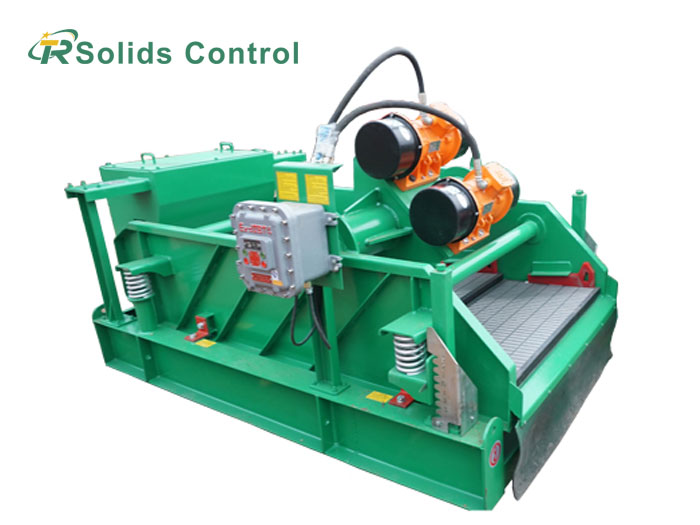
Finer is not better by default. A screen has to pass the expected flow and the expected cuttings load at the same time. When it cannot, the cost shows up as drilling fluid leaving with the cuttings, solids staying on the deck, or screens being changed more often than anyone planned for.
On WBM, the screen is normally judged against the required separation, the flow rate, and how much mud is lost with the discharged cuttings. Move to OBM and base-fluid recovery joins the calculation, along with how well oil-wet cuttings drain off the deck. Mud rheology and cuttings behaviour drive both cases, so the familiar rule that OBM needs a screen one or two API steps coarser than WBM is not universal. Some programmes go coarser. Others do not need to.
An API designation describes the cloth, not what that cloth will do on your deck. Screen selection has to be made against the flow, the solids load and the separation target together. In practice that means selecting on conductance and non-blank area, then checking the D100 cut point against the solids that have to go. Two cloths carrying the same API number can behave quite differently on the same deck, and the number says nothing about how much fluid the screen will pass.
Motion matters too. Linear, balanced elliptical and dual-motion machines convey cuttings differently, though changing motion type is not a reliable cure for blinding or wet discharges. Screen condition, how the feed spreads across the deck, how hard the unit is loaded and where the operating settings sit all deserve a look first.
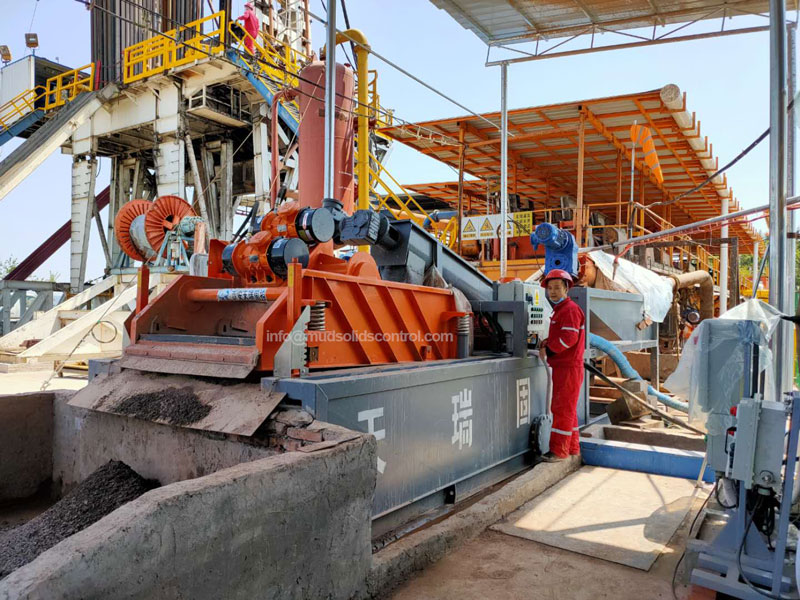
For more on how screen area relates to incoming flow, see shale shaker screen area sizing.
Hydrocyclones stay in the loop or leave it depending less on the base fluid than on whether the mud is weighted. The cones cannot tell barite from drilled solids, so on a weighted section they discard both. That stage is then bypassed, or run as a mud cleaner whose underflow screen sends the barite back to the active system.
OBM gives a second reason to change the arrangement. The underflow carries base fluid, and discharging that stream straight to waste is expensive. Screening it, or feeding it to a centrifuge, recovers it.
Worth catching early: the cones that worked through the upper hole can sit idle for the rest of the well, and what covers their function is a screen or a centrifuge, not a different set of cones.
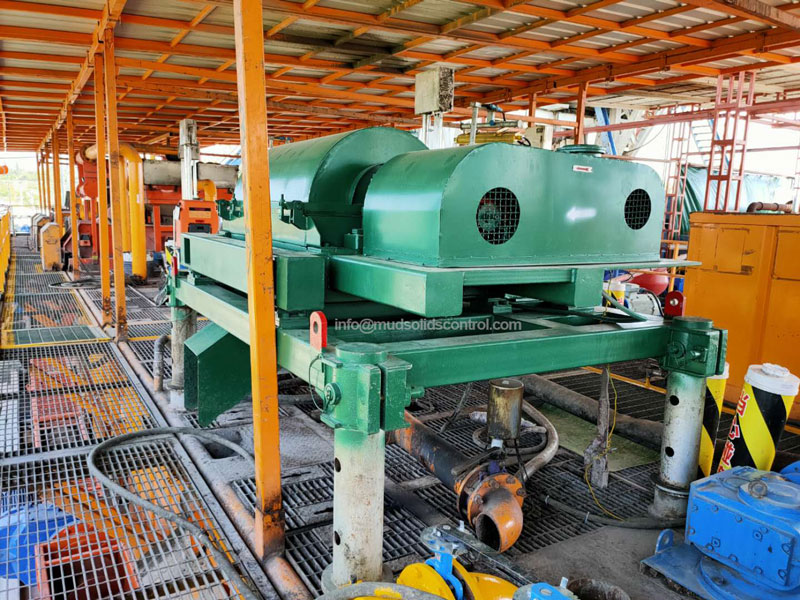
A centrifuge that spent the upper hole stripping fine solids can find itself recovering barite once the mud changes, and the reverse happens too. Set the objective first. The operating range follows from it, not the other way round.
Bowl speed attracts most of the discussion and is one variable among several. Differential speed, feed rate, pond depth, feed condition and the machine's own design all move the cut point and change the character of the discharged solids. None of them can be set with much confidence until someone decides which stream is product and which is waste.
On WBM the task is usually fines removal, holding the solids content of the circulating fluid inside limits. On OBM the same machine may be there to recover barite, to remove low-gravity solids, or to do a defined combination of both. Those are different separation problems, and the settings are not interchangeable between them. One machine can be switched from one duty to the other by changing settings, but it cannot run both at once. A section that needs barite recovery and fines removal at the same time means two centrifuges or a decision about which duty runs when. The duty belongs in the specification alongside the expected feed, the operating range required and where each separated stream goes. There is more detail in centrifuge capacity: barite recovery or fine-solids removal.
Materials are where assumptions get expensive. A seal that ran without trouble on water-based mud can fail early in a given OBM formulation, and temperature narrows the margin further. Base fluid, additive package and service temperature all bear on seals, gaskets, hoses, impeller and liner materials, and anything else the mud touches.
Check component by component rather than naming one elastomer for the whole package. NBR, HNBR, EPDM, polyurethane, stainless steel and carbon steel each have their own limits, and none of them covers every OBM. Compatibility is worth confirming against the fluid the rig intends to mix, at the temperature it will run, before the order goes in.
Electrical equipment follows the same logic. Motors, starters and instrumentation have to suit the site power supply and its hazardous-area classification, with certification checked against the project specification. Prior service on a WBM section does not establish that the same certification applies at the next installation.
The base fluid is what moves that requirement. Fresh base oil often sits above the classification threshold, but the mud picks up formation hydrocarbon in service and its flash point falls, so the shaker, the degasser and the active tanks around an OBM system are normally classified as hazardous areas even where the fresh fluid would not be.
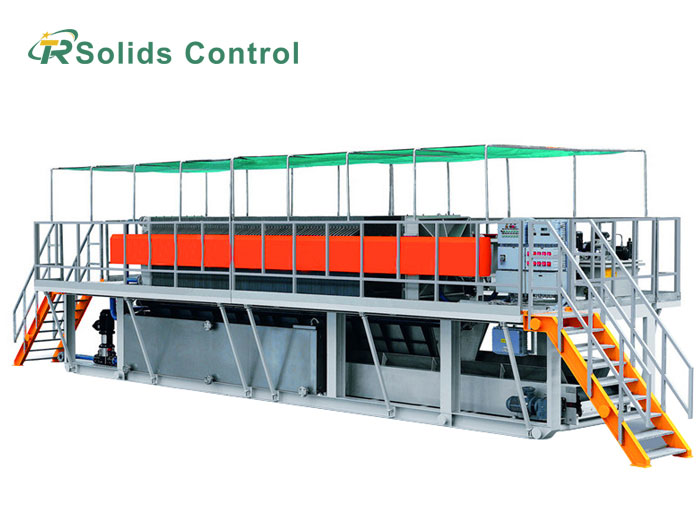
Past the primary equipment, the two systems diverge further. WBM waste commonly goes through a drying shaker or a filter press, depending on the character of the waste stream and how it will be disposed of.
With OBM and SBM, treatment may focus on recovering base fluid from the cuttings or reducing residual fluid before disposal. A cuttings dryer may be used when the existing arrangement cannot meet the required recovery or residual-fluid target. Cuttings volume, the value of the recovered fluid, the space available on the location and the terms of the disposal route all affect the arrangement.
The permitted oil-on-cuttings (OOC) level comes from the applicable regulations, permit, contract or project specification. Establish that limit before selecting the treatment equipment, because it determines how far the treatment train needs to go.
The WBM system and OBM system pages cover each configuration in more detail.
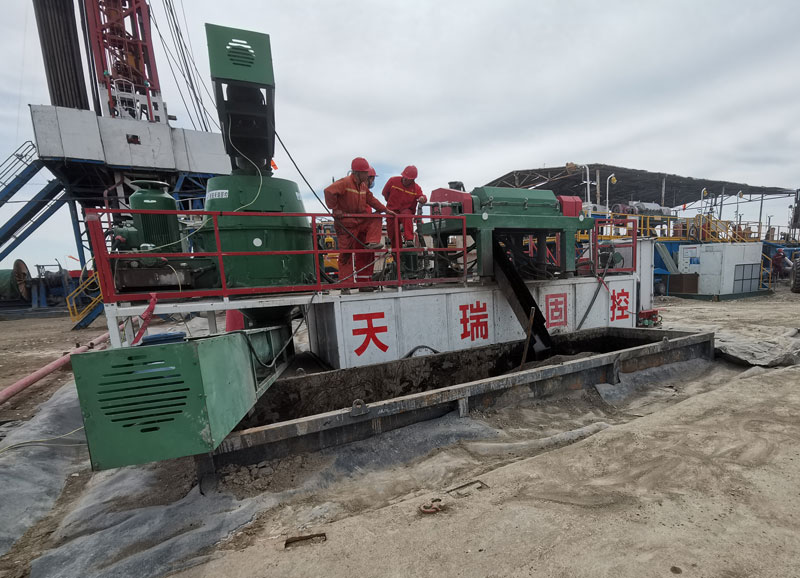
When a rig will run both mud types, the specification should say which units are expected to serve both sections and which ship as a separate configuration.
Before anything is ordered, write down the expectations for each drilling section: mud properties, flow rates, rheology and solids loading, together with the shaker screen sizes those conditions point to, whether the desander and desilter run on that section or get bypassed, and what each centrifuge is there to do. Elastomer and hose compatibility against the actual base fluid belongs next to that list, along with the site power supply and the area classification where the package will stand.
TR Solids Control manufactures solids control equipment and drilling fluid treatment systems for oilfield applications. On a mixed WBM/OBM programme, TR can review the equipment duties and treatment requirements and say which components are likely to carry across and which need a different configuration.

Address: No.2 Huochang Road, Yangling District,Xianyang City, Shaanxi Province, China
Tel: +86-18509252400
Wechat: 18509252400
Email: info@mudsolidscontrol.com
Contact: Mr.Li
 +86-18509252400