Contact Person: Mr.Li
Mobile: +86-18509252400
Wechat: 18509252400
Email: info@mudsolidscontrol.com
Address: No.2 Huochang Road, Yangling District,Xianyang City, Shaanxi Province, China
Drilling operators all know that the solid control work is about keeping mud clean of the drilling process, tasked with carrying cuttings to the surface, balancing formation pressure, lubricating drill tools, and stabilizing wellbore walls.
With drilling going deep, ultra-deep and offshore, rock cuttings and fine clay accumulate in drilling fluid, hurting safety and efficiency. Solids control separates these solids, stabilizes fluid performance and enables recycling to reduce waste.
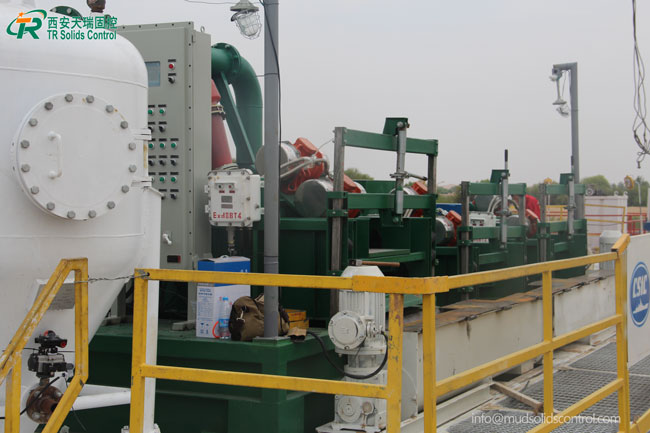
Our drilling fluid solids control system features an optimized five-stage purification process for closed-loop graded separation, ideal for onshore and offshore drilling. It upgrades the traditional four-stage principle with simpler design and better performance.
Shale Shaker (Primary Purification)
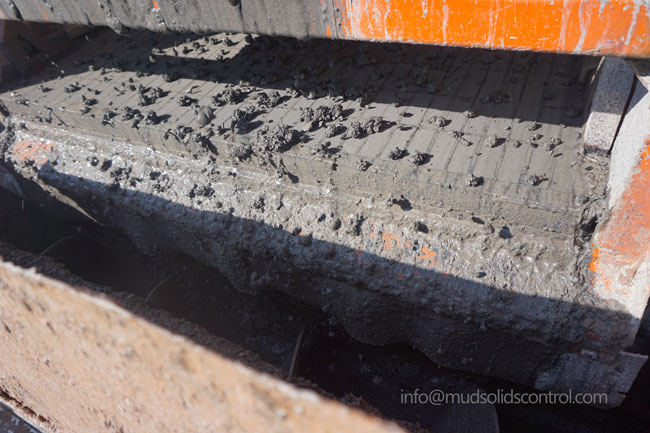
As the first defense line, our high-G linear motion shale shakers (around 7 Gs) are fitted with API 140–325 mesh screens. They separate large rock cuttings, removing about 75% of coarse solids by weight. This eases the load on downstream equipment and avoids abrasion and blockage of hydrocyclones and centrifuges. Using low-mesh screens in reactive formations will only increase the burden on subsequent processing.
Vacuum Degasser (Secondary Purification)
It removes gas intrusion from drilling fluid, stabilizes mud density and ensures stable operation of follow-up solids control equipment.
Desander & Desilter (Tertiary & Quaternary Purification)
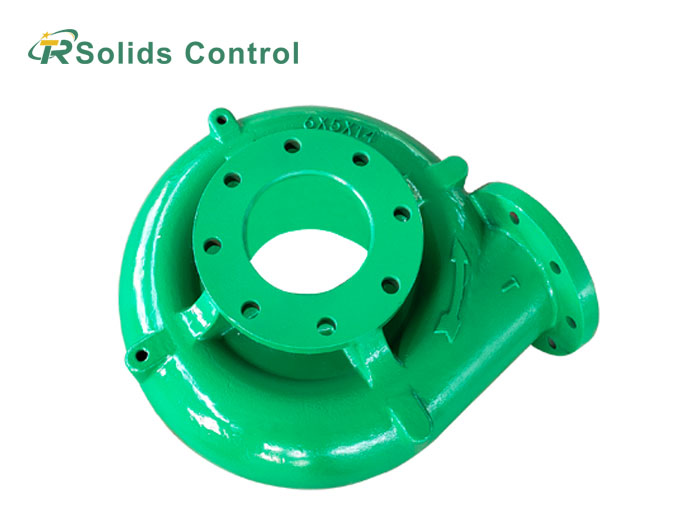
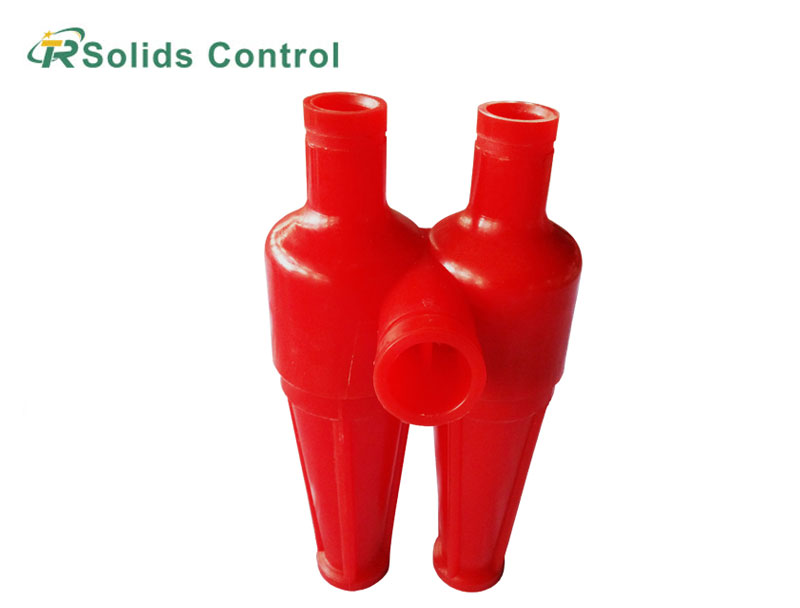
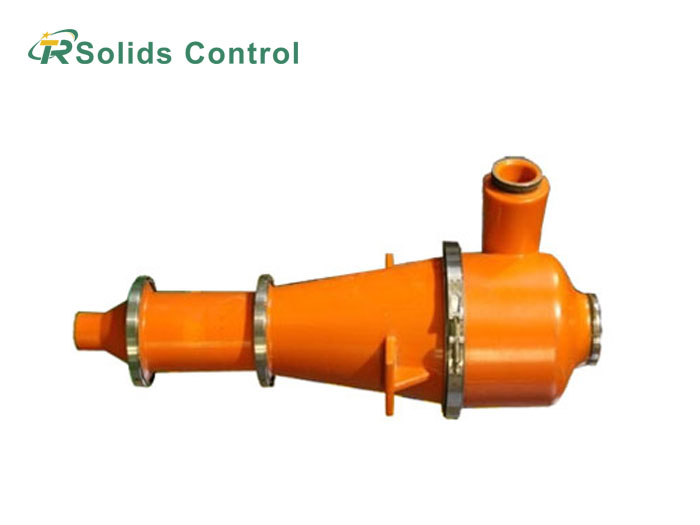
As hydrocyclone separators, 6-inch cones remove sand particles down to 40–60 µm, and 4-inch cones handle fine silt of 15–40 µm. Standard centrifugal pumps will shear solid particles and degrade separation performance; adopting an upstream low-shear pump can raise cyclone processing capacity by 30%.
Decanter Centrifuge (Final Fine Purification)
It separates ultra-fine solids of 2–10 µm and barite. Equipped with variable-frequency drives, it adjusts bowl speed and differential speed in real time according to mud weight and solid content. Field application achieved 92% barite recovery with only 12% liquid loss, ideal for deep wells and complex formations.
Low Gravity Solids (LGS): Mainly cuttings and fine clay, specific gravity 2.3–2.8 g/cm³.
High Gravity Solids (HGS): Barite, hematite and other weighting agents (SG ≥4.2 g/cm³), used to adjust mud density and balance formation pressure.
Low-shear pumps are essential for the whole system. They prevent large particles from being broken into fine, hard-to-remove debris, and reduce polymer costs by 15%–20%.
Based on rich oilfield experience, we adopt targeted technical measures to ensure stable solids control and accurate density regulation:
Match shale shaker screen mesh to formation cuttings, and keep desanders and desilters running at full load during drilling.
Combine mechanical separation with polymer flocculants to aggregate fine clay and improve fine solid removal efficiency.
Regularly clean mud and settling tanks and discharge inert solids in a timely manner to sustain drilling fluid performance.
Deploy skid-mounted integrated systems for offshore and high-temperature working conditions to adapt to limited space and harsh environments.
We strictly control drilling fluid density: water-based fluid at 1.14–1.50 g/cm³, oil/synthetic-based fluid at 1.20–1.68 g/cm³, and up to 2.20 g/cm³ and above for deep and complex wells. Density deviation shall not exceed 0.05 g/cm³ in non-reservoir sections and 0.03 g/cm³ in reservoir sections, preventing formation damage and well leakage.
Inline sensors track mud density, viscosity and sand content. When low-gravity solids exceed 5%, the system alerts drillers and auto-adjusts centrifuge speed or triggers dilution. This helped a North Sea operator reduce unplanned dilution by 40%.
Our low-shear jet dilution and chemical feeding system avoids blind, costly dilution. It mixes water, brine and polymers gently without shocking the mud system, cutting polymer consumption by 15–20%.
Dried cuttings from shale shakers and centrifuges feed directly into closed-loop waste skips or thermal desorption units. This reduces pit space and transportation costs while fully meeting environmental requirements.
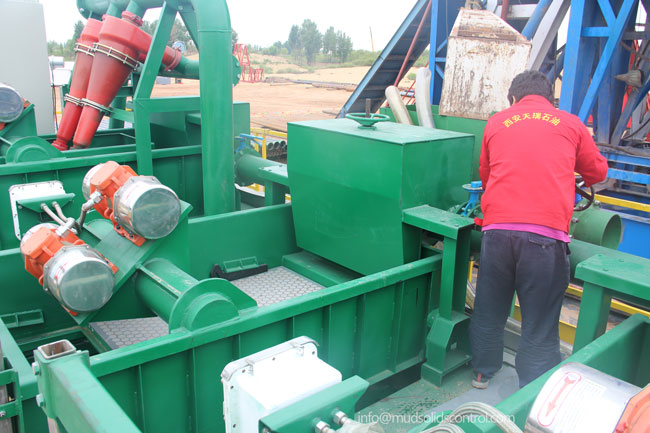
Here's what a standard skid‑mounted system looks like (we customise per well):
Capacity: 400 GPM (90 m³/h) for water‑based mud
Shaker screen area: ≥26 sq ft per unit, three units parallel
Desilter d50 cut: 15‑20 µm
Centrifuge: Up to 4,200 RPM, handles 60 m³/h at 15% max solids loading
Low‑shear pump: 80 m head, impeller tip speed under 10 m/s
Electrical: Exd IIC T4, 460V 60Hz or your local spec
Need something for oil‑based mud, closed loop, or arctic conditions? We've done those too.
As the oil and gas industry shifts to intelligent, green drilling, Drilling Fluid Solids Control is becoming more efficient, intelligent and integrated, with real-time monitoring, automatic parameter adjustment and closed-loop waste management. The average solids density should be ≥3.8; values below mean excessive LGS, requiring enhanced control.
Our efficient solutions enable safe, efficient, cost-effective and low-emission oil and gas exploration across onshore, deep/ultra-deep, offshore and coalbed methane wells.
Facing high dilution, low ROP or solids issues? Contact TR Solids Control for remote mud report reviews and suggestions. Email info@mudsolidscontrol.com or share your well depth, mud type and LGS (if known). We'll reply within a day.

Address: No.2 Huochang Road, Yangling District,Xianyang City, Shaanxi Province, China
Tel: +86-18509252400
Wechat: 18509252400
Email: info@mudsolidscontrol.com
Contact: Mr.Li
 +86-18509252400