Contact Person: Mr.Li
Mobile: +86-18509252400
Wechat: 18509252400
Email: info@mudsolidscontrol.com
Address: No.2 Huochang Road, Yangling District,Xianyang City, Shaanxi Province, China
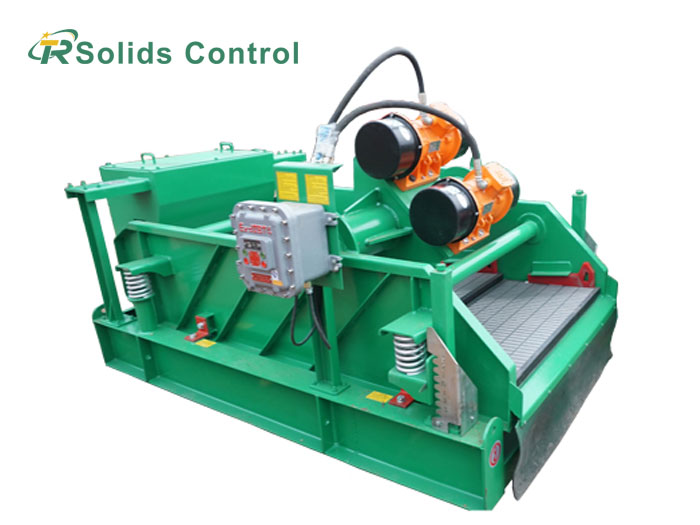
A shale shaker is the first stage of solids control. It takes the mud returning from the well, removes the drill cuttings, and passes the fluid on to the desanders, desilters and centrifuges behind it.
For high-solids drilling, decide first which of two limits you are up against: circulation rate, or the load of cuttings landing on the deck. The second one is what catches operations out. A unit carries your full pump output on a light load and falls well short of it once a fast interval puts a mat of cuttings across the screen. When that happens, the fix may be the screen mesh or the feed, not a bigger machine.
That distinction is where the selection starts.
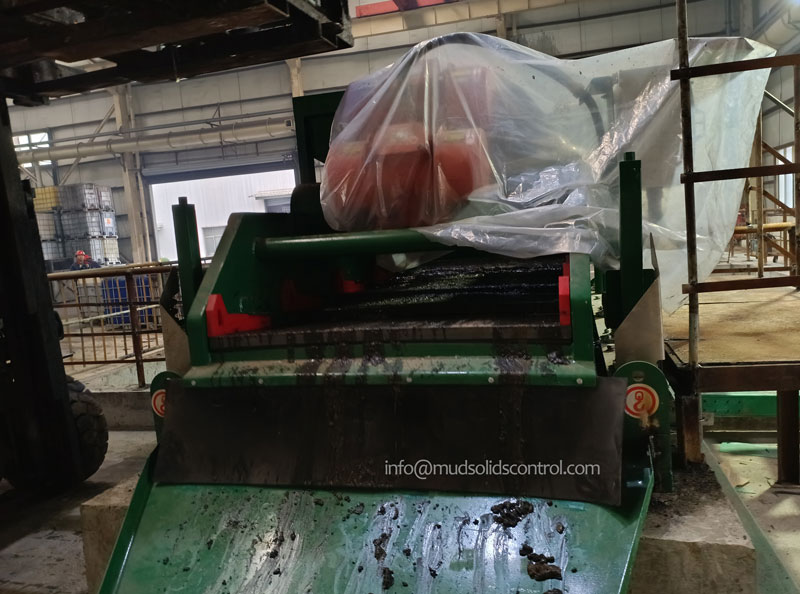
Circulation rate is the number most shakers are sold on, and it is the easier of the two limits to size for. Rate of penetration sets how fast cuttings reach the surface, and through a fast interval that rate climbs while the flow rate stays roughly where it was. The deck then has to carry more solids with the same fluid there to move them.
Capacity figures quoted for a shale shaker are usually measured on a light solids load, and often on a coarse screen. They hold up until more cuttings start covering the screen surface. How far a given unit drops under a heavier load depends on the mud system, the cuttings, and the mesh on the deck.
Ask whoever quotes you two questions: how the rated capacity was established, and on which screen. A capacity number without both answers does not tell you what the unit will do on your well.
Before changing anything, match what you see on the deck to what is most likely causing it.
| What you see | Likely cause | What to check first |
| Mud pooling on the deck, screens blinding repeatedly | Mesh too fine for the solids, or fluid cannot pass fast enough | Screen mesh and usable screen area, before equipment size |
| One section of the deck overloaded while another runs dry | Uneven feed across the deck or between units | Feed box, weir and valve settings |
| Fluid leaving with the discharged cuttings | Screen specification and peak solids load out of balance | Mesh against the cuttings load |
| Screens in good condition, feed even, still falling behind | Throughput capacity | Larger unit or an additional shaker |
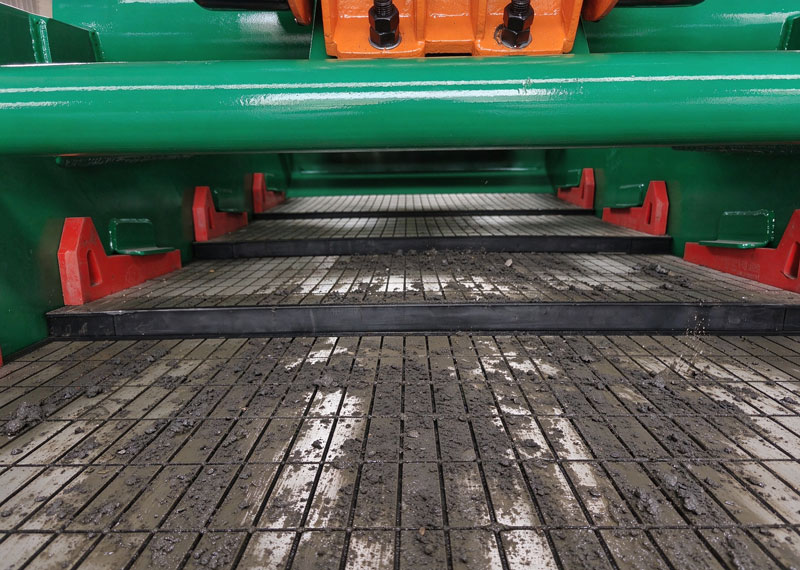
Fine or sticky solids cover the mesh openings or lodge in them, and fluid stops passing through. The instinct is to go finer, because finer separation is usually what the well needs. On a heavily loaded deck that instinct costs you: a finer mesh gives sticky solids more surface to hold on to and leaves less open area for the fluid, so the deck floods sooner rather than later.
Start with a screen that can handle the solids load, then move to finer separation as operating conditions allow. The right choice has to balance the required separation with the fluid throughput the screen can sustain.
Where you need both a fine cut and the volume, run a layered deck. A coarse panel on top takes the bulk of the solids, finer panels below do the separation. Two meshes in one footprint buy you more than one compromise mesh does.
When too much mud enters one section of the deck, that section overloads while the rest sits underused. The unit then reports as too small while a third of its screen area is doing nothing. Check the feed box, the weir and the valve settings before concluding anything about capacity.
Across several units, the split matters more than the total area installed. Two shakers fed unevenly will not outperform one fed properly.
If fluid is going over the end, the screen specification and the peak solids load are out of balance. A finer screen holds back more solids, passes less fluid, and blinds sooner. The specification has to meet the separation the downstream equipment needs without creating a second problem on the deck.
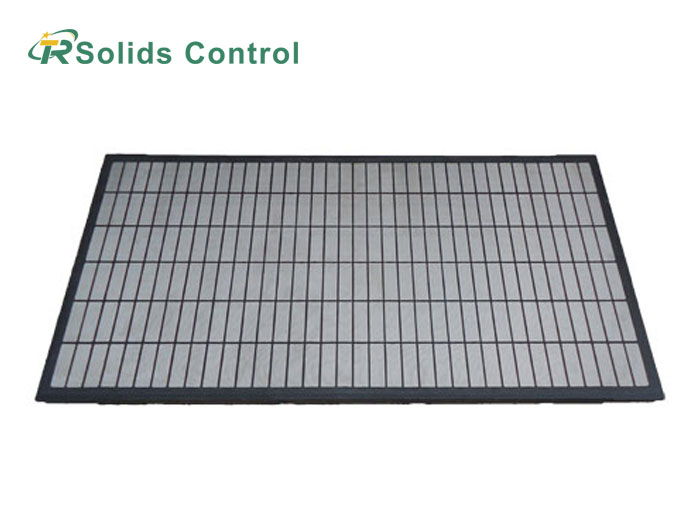
Under API RP 13C (ISO 13501), a screen carries three numbers on its label: the API screen number, conductance, and non-blanked open area. Two screens sold as the same mesh can differ on all three. Compare the shaker screen on the label rather than on the mesh count, particularly where the solids are fine or sticky.
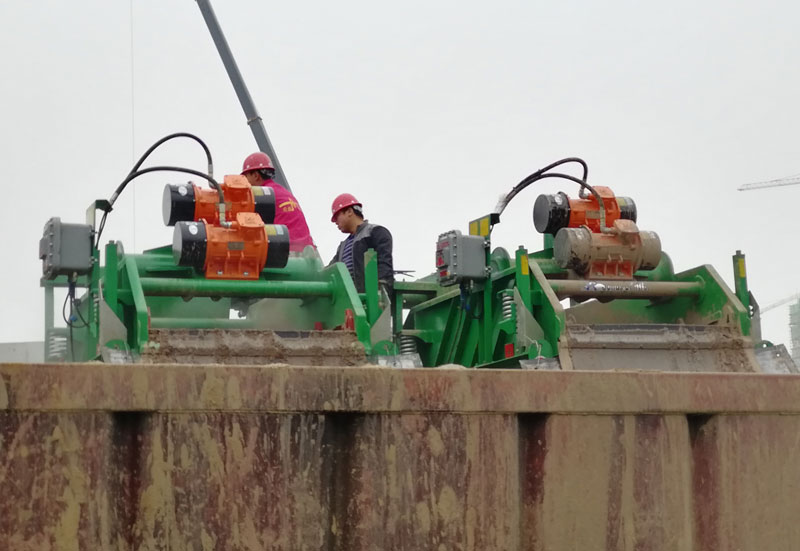
Sometimes. A different screen specification changes both fluid throughput and solids removal, but the choice has to account for the separation the downstream equipment needs, how much fluid you can afford to lose, and how quickly the mesh blinds on your cuttings. Where the limiting factor is total throughput or an uneven split, changing screens on its own will not fix it.
Two variables sit between the mesh and the size of the machine: the motion the deck describes, and the force behind it.
Linear motion conveys. It moves heavy or sticky cuttings off the end of the deck faster, which is what you want when the load arrives faster than it can be screened. Balanced elliptical motion resists blinding. It suits fine cuttings in viscous mud, where the screen blinds before it floods.
Which one suits your well depends on the character of the cuttings rather than the solids volume on its own. Suppliers disagree on this, so ask which mode a quoted capacity was measured in. A figure measured in the mode you are not buying is not a comparison.
On G-force, adjustable machines covering roughly 5 to 8G give the driller somewhere to go when the load changes mid-interval. Fixed-force units are cheaper and simpler. They are the right answer where the well programme is predictable.
If the screens are in good condition, the feed is even, and the unit still cannot carry the flow and the solids together, capacity is the constraint and a larger machine is the answer.
Adding a unit rather than replacing one is also worth pricing, since it adds screening area without disturbing what you have. What decides the outcome is the split. An uneven feed leaves one unit overloaded while the other runs underused, and you end up with the original problem plus a second machine.
On a new installation, work from expected peak flow, peak cuttings load, the space available, and how mud will reach each unit. Settle the number of shakers and the capacity of each together. Not one after the other.
On an existing rig the constraints come first. Space, existing piping, support structures and power supply decide whether a larger unit or an additional shaker can be installed at all. Check those before going further.
For more guidance on equipment quantity, see our article on how many shale shakers a drilling rig needs.
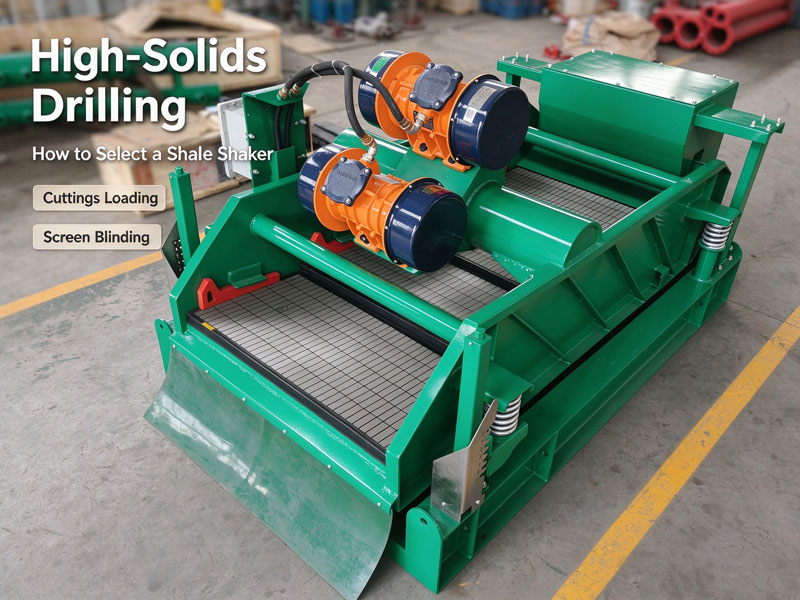
Two quotations can list similar rated capacities and still describe different machines. Before comparing prices, check what each offer includes and whether the two capacity figures were measured under comparable conditions.
Rated capacity. Ask how the capacity was established, at what flow, and on which screen. A figure quoted on a coarse mesh does not carry over to a fine one.
Mud and solids conditions. Confirm the proposal accounts for your flow rate, fluid type and peak cuttings load rather than a nominal figure. A design margin of 1.2 to 1.3 times maximum pump displacement is common practice across the industry, and worth confirming in writing.
Vibration mode and G-force. Establish which mode the quoted capacity was measured in, and whether the force is adjustable.
Feed arrangement. Where several units are included, establish how the incoming mud splits between them and who is responsible for the distribution box.
Installation requirements. Space, inlet and discharge connections, power supply, and hazardous-area classification for the site.
Where a quotation gives capacity but not screen area, close that gap before you compare. Published industry ranges put water-based mud at roughly 8 to 15 m³ per square metre of screen area per hour and oil-based mud closer to 5 to 10. A figure sitting well above those is not necessarily wrong. It is worth asking what it was measured on.
These are easier to settle before an order is placed than after the equipment reaches the site.
The selection comes back to four inputs: the flow you have to handle, the cuttings load you expect, the screen that load requires, and what the site will accept. Get the second one wrong and the other three will not rescue you.
TR Solids Control manufactures shale shakers and drilling fluid treatment equipment for oilfield applications. Send us your expected flow rate, drilling fluid type, anticipated cuttings load, and site requirements. We will tell you which of the two limits you are working against before we quote a machine.

Address: No.2 Huochang Road, Yangling District,Xianyang City, Shaanxi Province, China
Tel: +86-18509252400
Wechat: 18509252400
Email: info@mudsolidscontrol.com
Contact: Mr.Li
 +86-18509252400