Contact Person: Mr.Li
Mobile: +86-18509252400
Wechat: 18509252400
Email: info@mudsolidscontrol.com
Address: No.2 Huochang Road, Yangling District,Xianyang City, Shaanxi Province, China
A cone discharging a thick rope instead of a hollow spray is a sign that the underflow is not discharging properly. Excessive solids loading, a restricted apex or unsuitable feed pressure can all contribute. Separation performance may suffer, but the cause needs to be checked before changing the cone settings.
Hydrocyclone roping is the common name for that discharge, and it is one of the few hydrocyclone problems you can read on a rig without instruments. Walk to the cone bank and look. The discharge pattern narrows the cause down. From there, check manifold pressure, inspect the apex, and look at the upstream shaker before deciding whether the cone itself needs attention.
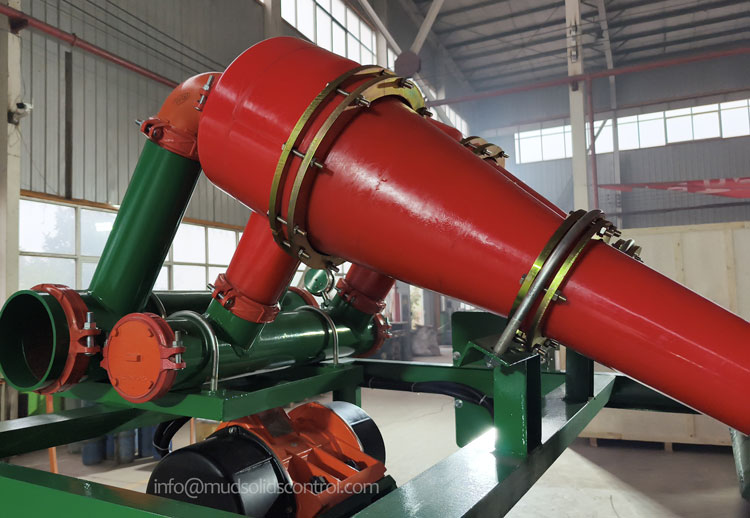
Work through the checks the way a solids control hand would at 2 a.m., and you reach the point where adjustment stops helping. Then it is hydrocyclone apex replacement, a different cone count, or a larger cone bank on the drilling fluid treatment line.
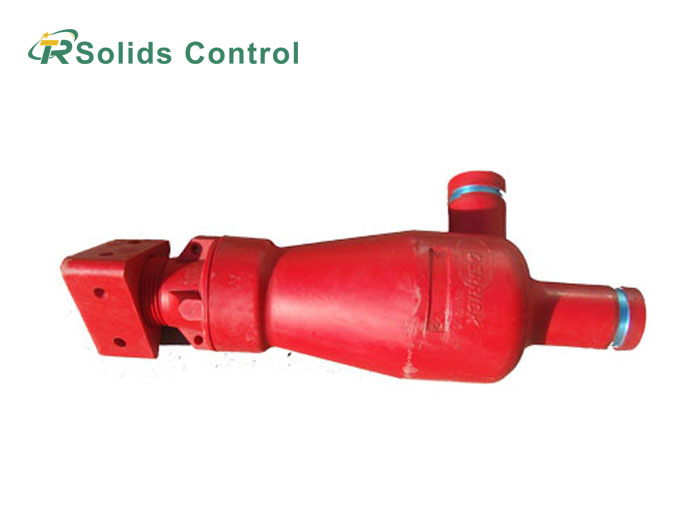
A cone running correctly discharges its underflow as a hollow cone, an umbrella with an open centre you can see through. Solids leave as a spray rather than a stream.
A rope discharge at the underflow is the opposite: a dense cylinder with no hollow centre, twisting and falling almost straight down. Some cones rope continuously. Others rope for a few seconds when the feed surges, and intermittent roping still counts.
Two other patterns get mistaken for it. A cone that stops discharging or only dribbles may have a blocked apex, but check the feed supply and inlet pressure before treating it as a blockage. That is drilling mud hydrocyclone plugging, and the cure is clearing the apex rather than resizing it. A cone throwing a wide, watery fan is usually running an apex that has worn open, which drops the pressure the cone holds and lets liquid leave with the solids. Neither gets the same fix as a rope.
Four common causes are worth checking first. More than one can be present at the same time. A torn shaker screen raises the solids load, the apex cannot pass it, and the cone ropes. Fix the wrong one and you get a day of relief before the rope comes back.
Feed pressure out of range. A cone needs inlet pressure to build the vortex, and running away from the range the manufacturer specifies changes how the cone separates. What that does to the discharge depends on the cone model, the solids content of the feed and the condition of the apex, so read pressure as one indication among several rather than a diagnosis on its own.
Apex too small, or partly blocked. The apex is the discharge orifice at the bottom of the cone, and its bore sets how much solids the cone can pass. Above that limit, material backs up in the lower cone and comes out as a rope, and the same thing happens when dried mud or scale has narrowed the bore.
More solids in the feed than the cone was sized for. Every bank has a design solids loading set by cone size, apex bore, and flow. When drilled solids loading rises, usually after a formation change or a faster section, cones that were comfortable an hour ago start roping. High solids concentration in hydrocyclone feed is the one an apex change on its own will not clear.
Shaker screens upstream are not holding. In a solids control system this is the same cause seen one stage earlier. A torn panel, a mesh too coarse for the formation, or a blinded screen passes fines straight into the cone feed, and the desilter then carries a load it was never sized for.
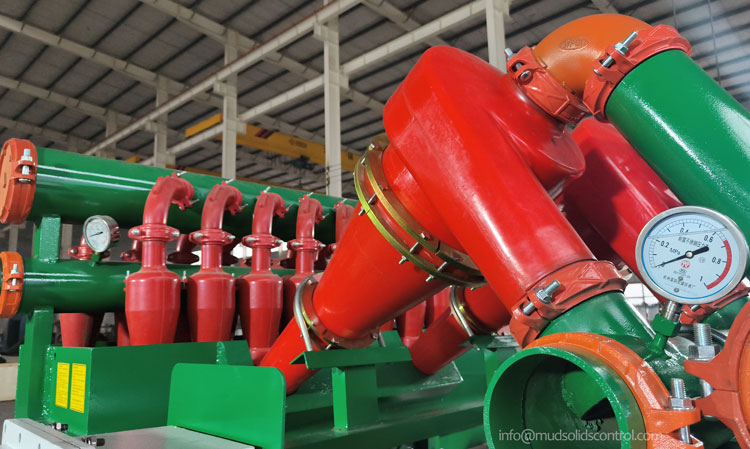
Work from the free checks to the ones that cost parts. Change one thing at a time, give the bank thirty to sixty minutes to settle, and look again. Two changes at once is how a crew spends a shift chasing a rope that came back.
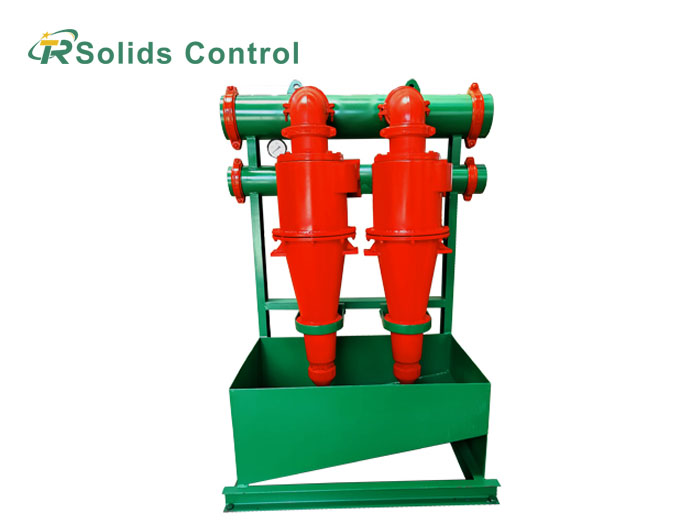
Read the gauge first. Desander and desilter manifolds often run in the region of 0.25 to 0.4 MPa, roughly 35 to 60 psi, at the inlet, but that is a reference point, not a standard. Work from the pressure your cone manufacturer specifies for the model. A reading below it has more than one candidate cause: too many cones, a worn pump, a restricted suction, or line losses. Check all four.
Take cones out of service until the gauge comes back into range. On a bank with isolation valves, temporarily taking some cones out of service may raise the inlet pressure at the remaining cones. Check the resulting pressure and flow against the manufacturer's operating range and the required circulation rate before continuing to run the bank that way. Whether eight in range beat ten roping depends on pump rate, cone model and solids load, so check it against your own circulation rate rather than assuming it. Counting cones against circulation rate is the same job as sizing a desander from your mud pump rate.
Clean the apex next. Isolate the roping cone, pull the apex, and hold it up to the light. Dried mud, scale, and debris all narrow the bore. If the bore is clear and the cone still ropes, the hydrocyclone apex is too small for what is arriving.
Step the apex up one size at a time, in the increments the manufacturer lists for that model. A 2 to 4 mm step on bore diameter is a starting point, not a rule, and what suits a 4 in desilter rarely suits a 10 in desander. A larger apex increases the available discharge opening, but it can also send more liquid out with the underflow. Check the discharge pattern and liquid loss after each adjustment rather than assuming that a larger opening will solve the problem. Aim for the setting where the discharge shows a hollow spray rather than a rope or a water fan.
Check the shaker if the cone ropes again. Look for torn panels, check the mesh against the formation, and check whether the screens are blinded and bypassing. If roping returns soon after an apex change, check the upstream shaker for torn or blinded screens. Also recheck feed pressure and solids loading before ruling out other causes.
Leave the pump until last, since it is the slowest of the four to rule out: a worn impeller, a suction line drawing air, or a blocked strainer will hold the manifold down however you set the cone valves.
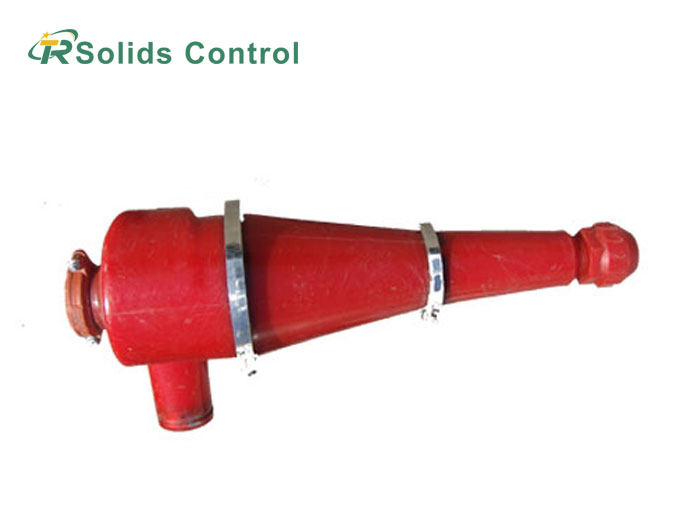
Cone size decides where in the drilled solids range each bank works. A hydrocyclone desander handles the coarser end, a hydrocyclone desilter the finer end. Both will rope when the solids load exceeds what they can discharge or the apex is restricted, so check the cause on the bank in front of you rather than assuming it from cone size.
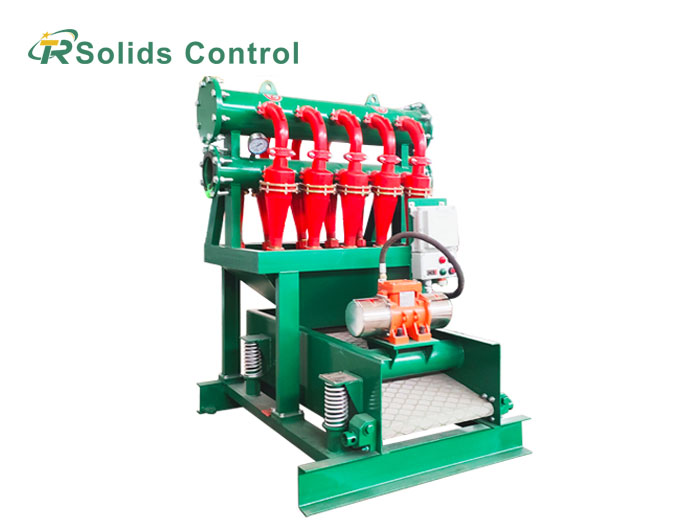
On a mud cleaner the cone bank sits over a fine recovery screen that catches the liquid and barite a correctly adjusted apex sends down with the solids. When the cones rope, the underflow may overload the recovery screen, increasing liquid carryover into the solids discharge. Check the apex condition and manifold pressure first, then inspect the screen for signs of overloading. Mud cleaner hydrocyclone maintenance still begins with the same two items: apex condition and manifold pressure.
| Hydrocyclone desander (10 in cones) | Hydrocyclone desilter (4 in cones) | Mud cleaner cone bank (4 in over screen) | |
| Quoted cut point | Commonly 45 to 74 µm | Commonly 20 to 44 µm | Set by the cones, 20 to 44 µm |
| What roping usually means | Sand volume above what the bank was sized for | Fines loading up, or pressure below range | Liquid and barite leaving with the solids |
| First check | Circulation rate against cone count | Manifold pressure, then apex bore | Apex bore, then screen condition |
A roping cone is separating badly. Which fraction of the solids reports to the overflow and which leaves with the underflow depends on the cone, the feed and the pressure it is running at, so there is no fixed split to assume. Efficiency drops and the split between underflow and overflow moves, and the result is a rising solids count while the equipment looks busy.
The cost depends on how long the problem continues and how much separation performance is lost. If fine solids continue to build up in the active mud system, mud properties can drift and additional dilution or chemical treatment may be needed. The cost depends on how long the problem continues and how much solids removal performance is lost. What that runs to depends on how long the problem continues and how much separation performance is lost along the way.
Roping changes how solids and liquid leave the cone. The resulting load on the recovery screen and the amount of mud lost with the discharged solids depend on the feed and operating conditions.
Two signals say adjustment has run out. One is a manifold that cannot reach its specified range with the correct cone count in service, which points at the feed side rather than the cones. The other is a bank correctly pressured and correctly apexed and still roping, because the solids load has outgrown it. That is a sizing problem, and settle it before ordering against a flow rate that no longer matches the well. See what to check before ordering a drilling desilter.
Apex wear is the ordinary reason to buy parts. The bore opens as the cone runs, and once it has opened far enough the cone stops cutting where it was set to cut. Measure the bore against its original size and you know whether the answer is a new apex or a whole cone. Order replacement apexes in the sizes specified for your bank and keep them on site. Having the right part on hand shortens the delay when an inspection confirms one needs changing.
The list a manufacturer needs from you is short. Cone size and count, the manifold pressure you can hold in practice, the apex bores you have tried, circulation rate, mud type and mud weight, and the screen mesh feeding the bank. With those six items a hydrocyclone manufacturer can size a bank or specify apexes, and the quote comes back matched to the rig instead of a catalogue page. Desander cone assemblies and apex options are the usual starting point for a replacement.
Roping is easier to prevent than to chase. Look at every underflow once a shift and read the manifold gauge while you are there, because pressure and pattern together answer most questions, and a written log of both catches a slow drift before it becomes a failure.
Put the apex on a schedule. Pull and measure bores on a fixed interval, and replace before the opening has grown enough to change the discharge. Spare apexes, seals and clamps are the wear items in any hydrocyclone solids control package. A bank without them runs roping for a week while the part sits in a warehouse.
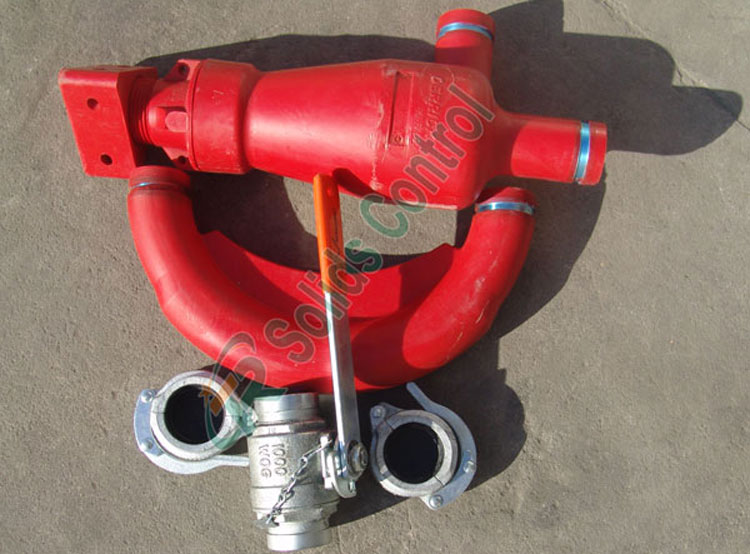
Hydrocyclone roping looks like a cone fault and is usually a pressure, apex, or load fault. The checks above start with what is free and end with what you have to buy. When the discharge, the gauge, the cone count, the apex and the screens all come back clean and the rope stays, the bank is too small for the well in front of you. That is a question for a solid control equipment supplier rather than the spare parts bin.

Address: No.2 Huochang Road, Yangling District,Xianyang City, Shaanxi Province, China
Tel: +86-18509252400
Wechat: 18509252400
Email: info@mudsolidscontrol.com
Contact: Mr.Li
 +86-18509252400