Contact Person: Mr.Li
Mobile: +86-18509252400
Wechat: 18509252400
Email: info@mudsolidscontrol.com
Address: No.2 Huochang Road, Yangling District,Xianyang City, Shaanxi Province, China
Plan on one shale shaker for roughly every 500 GPM of peak circulation on water-based mud, and closer to one for every 350 GPM once mud weight and viscosity climb. Add one more unit if the drilling contract does not let you stop for maintenance.
If you know your maximum circulation rate, the mud programme and whether a shaker can come offline, the number is a short lookup rather than a debate. The table below covers most drilling rigs, and the following sections explain when additional shaker capacity is needed.
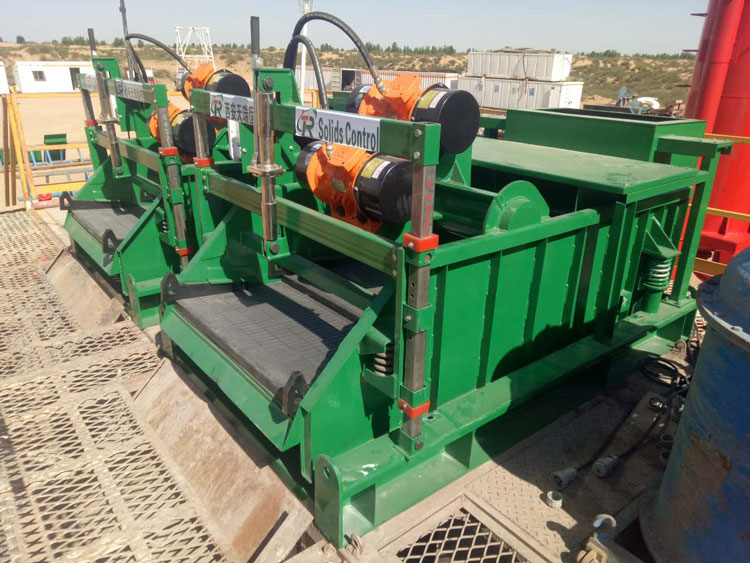
Match your maximum circulation rate to the table. Each capacity figure is the rated throughput of one shale shaker, and the required quantity refers to the number of units operating in parallel.
| Maximum circulation rate | Shale shakers | TR configuration | Total rated capacity |
| Up to 390 GPM (90 m³/h) | 1 | TRZS583 | 396 GPM (90 m³/h) |
| 390 to 530 GPM (90 to 120 m³/h) | 1 | TRZS584 | 528 GPM (120 m³/h) |
| 530 to 1,057 GPM (120 to 240 m³/h) | 2 | 2 × TRZS584 | 1,056 GPM (240 m³/h) |
| 1,057 to 1,584 GPM (240 to 360 m³/h) | 3 | 3 × TRZS584 | 1,584 GPM (360 m³/h) |
| Above 1,584 GPM (360 m³/h) | 3 to 4 | 2 × TRZS6316, or 4 × TRZS584 | 1,760 GPM (400 m³/h) |
Ratings are measured at a mud density of about 1.2 g/cm³, funnel viscosity around 45 seconds and a 40 mesh screen. Mud that is heavier or more viscous than that will not reach the published figure on the same panel, which is why each band stops short of the total rated capacity.
In rig applications:
A workover or service rig usually fits the first row.
A 1,000 to 1,500 HP land rig and a ZJ30-class rig normally require two shakers.
A 2,000 to 3,000 HP rig and most ZJ50 and ZJ70 packages commonly use three shakers.
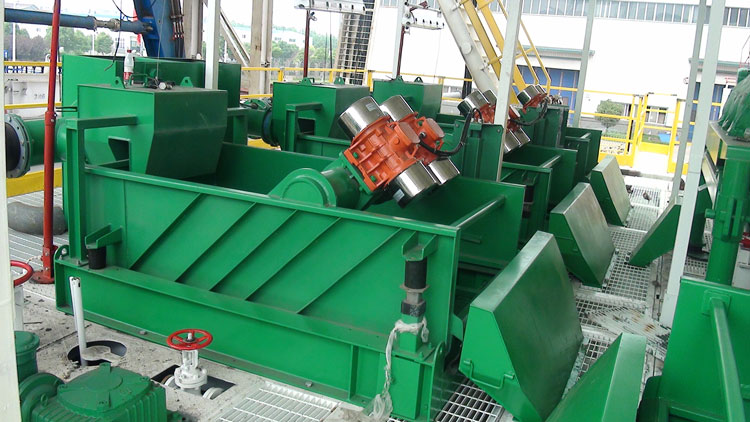
Long horizontal shale wells drilled at high ROP and high-spec offshore packages typically require three or four units because high circulation rates and heavy solids loading occur at the same time.
A balanced elliptical motion shaker changes the count at the top end. The TRPS585 is rated at 700 GPM, so two of them cover the 1,057 to 1,400 GPM range where three linear motion shakers would otherwise be specified. Specifying two instead of three leaves more room on the tank top and halves the number of vibration motors to service.
A mud pump does not deliver the same rate all day. Hole cleaning, bottoms-up after a trip and a fast-drilling soft section all push flow well above what a normal tour averages. Shakers sized around the average become the restriction exactly when the solids load is highest. The result may be drilling fluid flowing over the end of the screen instead of passing through the screening surface.
Pump displacement is not the figure to use. Liner size and stroke length give theoretical output, and what the pump actually delivers is lower. Take the peak rate from the pump curve, or from circulation data on the last wells the rig drilled.
Where the rate lands near a boundary, take the larger configuration. Two TRZS584 units sit at the top of the two-shaker band: a ZJ30 shale gas well circulating 240 m³/h ran on that pair with nothing left over. Anything above 240 m³/h on the same mud needs three.
Three factors reduce the practical capacity of a shaker:
Mud weight
Mud viscosity
Screen mesh size
Heavy, viscous mud drains through a screen more slowly and conveys cuttings less readily. As a working rule, if the programme runs mud weight above about 1.4 g/cm³ (11.7 ppg) or funnel viscosity above 60 seconds across a long interval, add one shaker to whatever the table gives you. Oil-based and synthetic-based mud behaves the same way, and disposal economics make losing fluid over the shaker more expensive than the extra unit costs.
Screen mesh works the same way. A TRZS584 holds 528 GPM on a coarse panel. Put 150 mesh or finer on the same deck for a sustained interval and usable throughput drops. If the mud programme calls for fine screens over a substantial section, order the extra unit rather than finding the shortfall on the well.
Formation type changes screen choice more than it changes the count. Gumbo and clay-rich sections blind screens and look like a capacity problem on the tank top, but another shaker will not fix them. The causes and the field fixes are covered separately in why shaker screens blind.
Capacity and redundancy are separate decisions, and contractors often collapse them into one.
Two shakers covering a 900 GPM programme have no margin the moment one stops. Isolate a unit for a motor change or a screen frame repair and the remaining one cannot hold the rate, so circulation either slows or untreated mud returns to the tanks.
Where downtime costs are high, or where the rig operates offshore, contractors often specify one additional shaker above the calculated requirement.
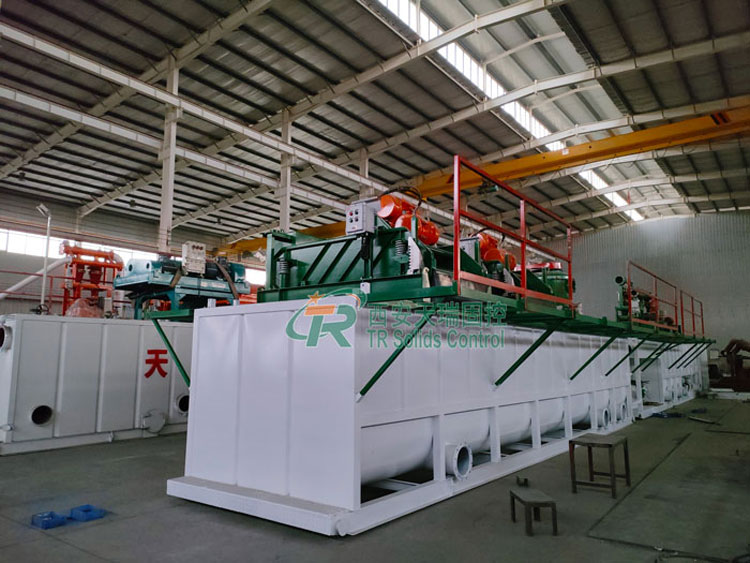
On land jobs where a short slowdown is acceptable, most contractors skip the spare and carry extra shaker screens and a spare vibration motor instead. That trade holds up as long as it is made before the equipment is built. Adding a fourth shaker to a finished skid means new manifold work and a wider tank-top footprint, and both cost more than specifying it up front.
Most shaker enquiries can be answered from five pieces of information: the maximum circulation rate the shakers have to receive, the mud type with its maximum weight and funnel viscosity, the finest screen mesh in the programme and the interval it runs over, whether full-rate operation has to continue with one unit offline, and the tank-top space available along with the site power supply and Ex requirement. For fleet orders, add the number of rigs and the delivery schedule.
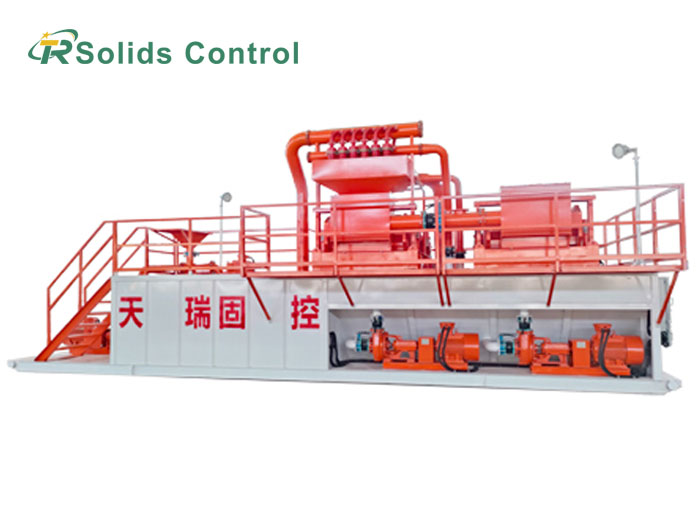
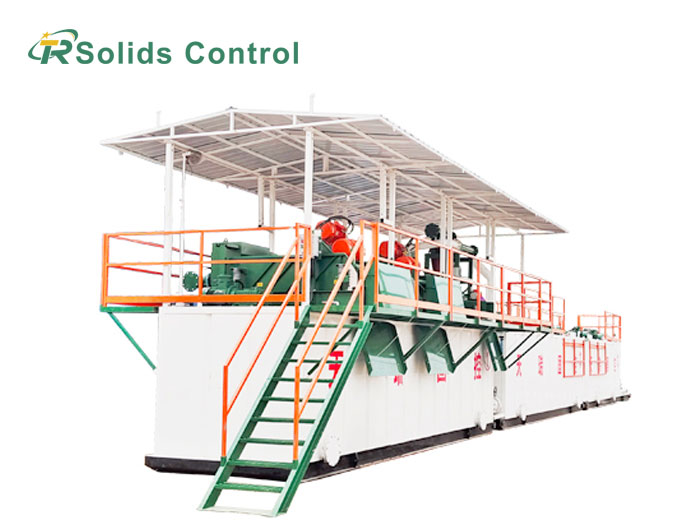
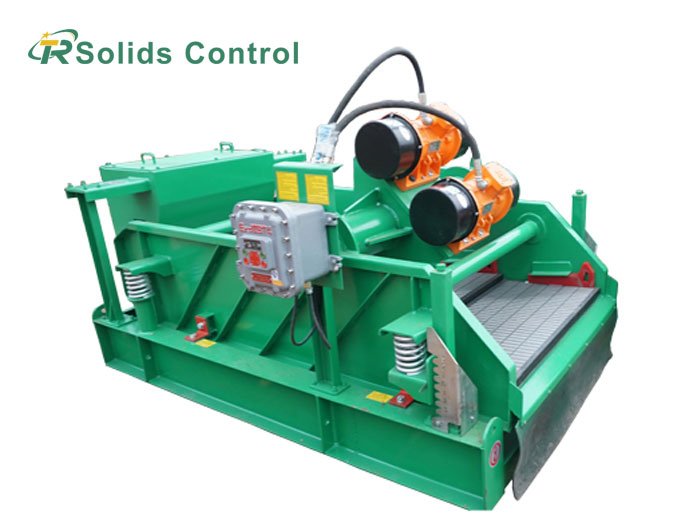
TR Solids Control builds linear motion, dual motion and balanced elliptical shakers, and supplies them as single units or on tandem and triple skids with the possum belly, manifolds and valve arrangements already fitted. Each configuration is checked against circulation rate, mud conditions and site layout before it is quoted.

Address: No.2 Huochang Road, Yangling District,Xianyang City, Shaanxi Province, China
Tel: +86-18509252400
Wechat: 18509252400
Email: info@mudsolidscontrol.com
Contact: Mr.Li
 +86-18509252400