Contact Person: Mr.Li
Mobile: +86-18509252400
Wechat: 18509252400
Email: info@mudsolidscontrol.com
Address: No.2 Huochang Road, Yangling District,Xianyang City, Shaanxi Province, China
A non-clog centrifugal pump on a drilling rig sees a very different service from a clean-water pump. Mud weight changes. Solids loading changes. Tank level moves during the job, and the same pump may feed a hydrocyclone package on one rig and a jet hopper or transfer line on another.
When flow or pressure drops, the pump often gets the blame first. A look at the suction arrangement, tank level, incoming solids, and actual downstream duty usually tells more about what is happening.
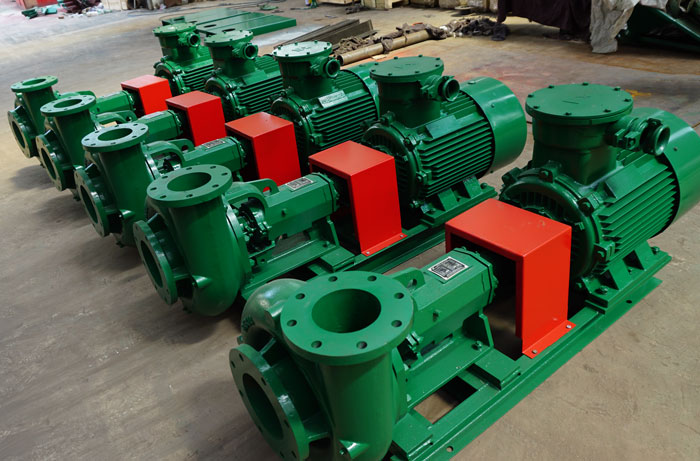
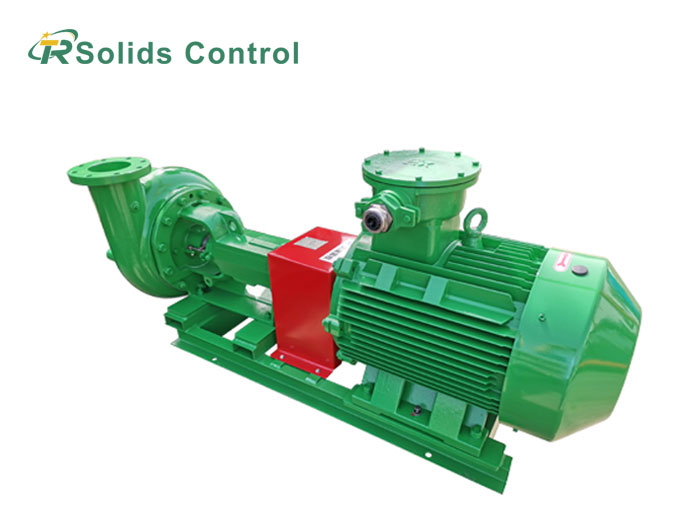
On a rig, the same horizontal centrifugal pump may be called a sand pump, desander feed pump, charging pump, or transfer pump. The name describes its position and duty in the mud system rather than a different pumping principle.
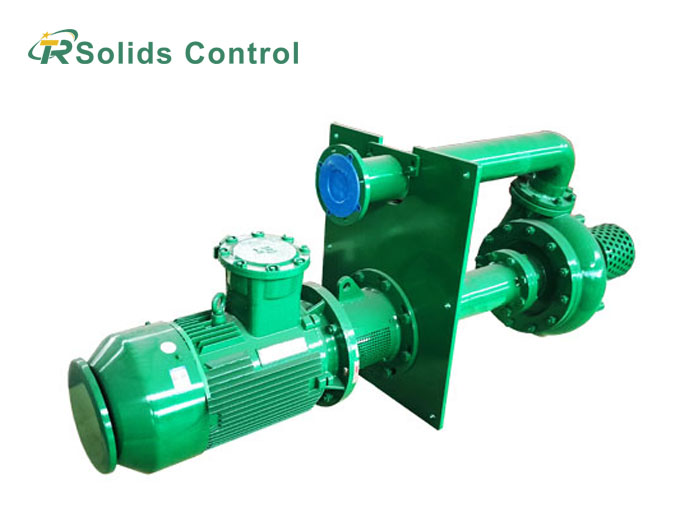
A non-clog centrifugal pump uses relatively open flow passages and typically an open or semi-open impeller. The wet end has to deal with abrasive solids, so the casing, impeller, wear plate, and shaft-sealing arrangement all matter. Mechanical seals with tungsten-carbide-faced surfaces are frequently used in abrasive service rather than seal arrangements intended for clean-water duty.
Non-clog does not mean the pump will pass anything that reaches the suction line. Large pieces of lost circulation material, sacks, rags, torn shaker-screen material, or a heavy slug of settled sand can still restrict the impeller.
The shaker sits upstream for a reason. It removes much of the coarse material before the mud reaches the suction tank. A pump plugging with screen debris may therefore be showing a solids-control problem upstream rather than a failure of the non-clog design.
A non-clog centrifugal pump is also not the same entity as the rig's triplex mud pump. The centrifugal pump provides relatively low-pressure, continuous flow for jobs such as charging, transfer, mixing, or hydrocyclone feed. The triplex pump is the high-pressure reciprocating mud pump used to circulate drilling fluid down the drillstring.
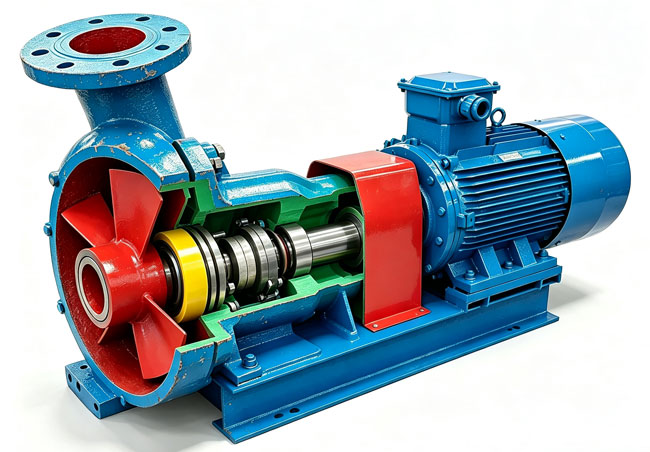
Mud properties change the pump duty as soon as the fluid moves away from clean-water conditions.
Mud density is the first obvious factor. At the same flow and head, heavier mud requires more shaft power. On a rig, that means higher motor current. A pump-motor combination with little power margin can start running hot or trip on overload after the mud weight is increased.
Viscosity changes the hydraulic performance as well. A thick, solids-laden mud can move the actual operating point away from the published water curve. The pump may deliver less flow or head than the water data suggests.
Sand creates a different problem over time. The impeller, casing and wear plate lose material as abrasive solids pass through the pump. As internal clearances increase, more fluid recirculates inside the casing and less reaches the discharge line.
Desander feed is a good example of why pump selection has to start with the equipment on the discharge side.
Take the hydrocyclone data first. A 10-in cone, for example, may be rated at around 500 gpm at its specified feed pressure or head. A 4-in cone may be around 80 gpm under its specified operating conditions. Those figures are examples rather than universal ratings; the cyclone manufacturer's data sheet controls the actual flow and feed-pressure requirement.
For a package with two 10-in cones, the starting flow calculation is: 500 gpm × 2 cones = 1,000 gpm
The pump still needs enough head to cover the hydrocyclone feed requirement plus the losses through the discharge pipe, valves, fittings, and elevation.
A useful field calculation is therefore:
Pump duty = cyclone flow requirement + system head losses + elevation requirement
The required pressure at the cyclone manifold is part of the duty as well. A pump that produces the right flow at its discharge nozzle can leave the cones underfed after pressure is lost in a long or undersized discharge line.
Cone diameter, cone count, rated flow, and required feed pressure give the pump supplier the starting point for the hydraulic calculation.
A charging pump sits on the suction side of the triplex mud pump. Its job is to keep the fluid end properly charged and maintain a stable supply of drilling fluid. If the charging line is restricted or the centrifugal pump cannot keep up with the suction demand, the triplex pump can develop unstable suction conditions.
The trip pump has a different job during tripping operations. It supplies drilling fluid to the trip tank or wellbore as pipe is pulled or run, keeping the well filled according to the pipe displacement. Trip-tank volume and the required fill rate therefore matter more here than hydrocyclone flow.
Jet hopper service is different again. The pump has to provide the flow and pressure needed across the hopper nozzle to create the mixing action. A pump that has plenty of catalogue flow can still miss the required jetting duty if its available head is too low.
Transfer duty is usually simpler, but the same hydraulic calculation still applies. The mud has to move from one tank or piece of equipment to another at the required rate, with enough head to overcome the piping system.
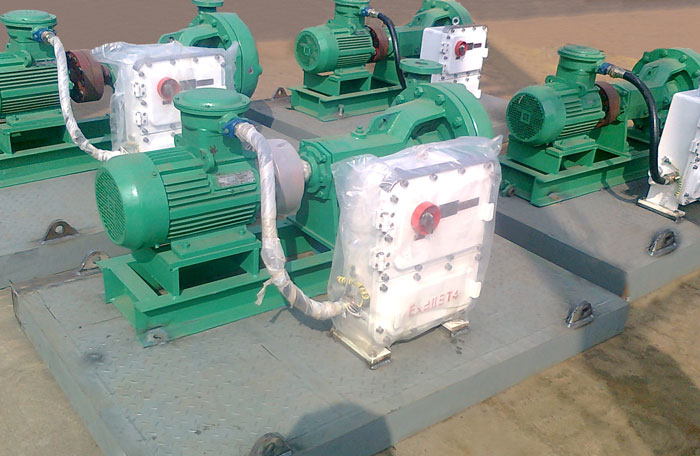
“A 60 hp centrifugal pump” is not a pump duty.
For a desander, start with the hydrocyclone diameter, quantity, rated flow, and feed pressure. For a jet hopper, use the nozzle requirement. For a charging pump, look at the triplex mud-pump requirement and suction arrangement.
Then work through the piping. Flow, total head, mud density, viscosity, and suction conditions give the real operating point. Motor power follows from that calculation.
One common field mistake is using the discharge valve to force a pressure reading. Closing the valve moves the pump along its curve. It does not create additional hydraulic capacity. If the selected pump cannot reach the required flow and pressure at the real duty point, throttling the valve only changes where the pump operates.
The pump curve needs to be checked at the required operating point, with the actual mud density used for the power calculation.
A pump installed below the tank outlet has a different suction condition from one mounted above it. As the mud level falls, the static head available at the pump suction falls too.
The piping between the tank and pump matters. A small tank outlet, long suction line, several elbows, a restrictive valve, or solids collecting around the inlet all increase suction losses.
That feeds directly into NPSHa, or net positive suction head available. If the available suction head falls too close to the pump's NPSH requirement, cavitation becomes a risk. The result can be unstable flow, vibration, noise, and eventually damage to the impeller.
The tank level is therefore worth recording during troubleshooting. A pump that runs normally with a full tank but becomes noisy or unstable near the low-level mark is giving a useful clue about the suction condition.
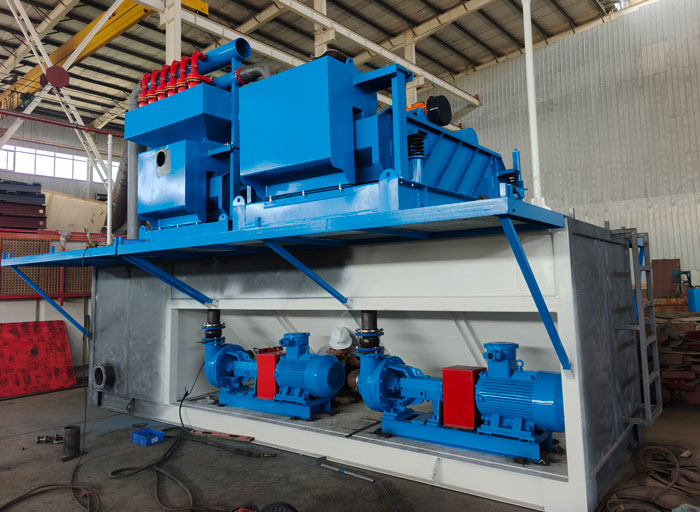
When separation quality drops, start with the feed conditions before pulling the hydrocyclones apart.
Compare the current flow and feed pressure with readings from a period when the desander was working properly. Check mud weight and viscosity at the same time. If the mud has become heavier or thicker, the pump is working against a changed duty.
Internal wear can show up before a pressure gauge makes the problem obvious. As the impeller and wear plate open up, internal recirculation increases. The desander may begin separating poorly because the cones are receiving less effective flow, while the pressure reading still looks acceptable.
Then inspect the suction side: tank level, suction valve, inlet condition, and any restriction in the line.
When the pump is opened, the wear pattern can help separate two common causes. Uniform wear across the impeller and casing points toward abrasive service. Localized pitting points toward cavitation. A badly worn wear plate can also increase internal recirculation and reduce discharge flow.
The hydrocyclones themselves still need inspection when their feed conditions are correct. Cone wear, blocked apexes, damaged liners, or an incorrect configuration can all affect separation.
A pump supplier needs enough information to reproduce the real operating duty.
For a desander, give the hydrocyclone diameter and quantity, rated flow, required feed pressure, discharge-line length, pipe size, and elevation. The cyclone data sheet is especially useful because the rated flow only has meaning at its specified operating pressure.
For a charging pump, provide the triplex mud-pump model or required suction flow, suction-pipe size, tank level, pump elevation, and mud weight. For a jet hopper, give the nozzle size, required flow and pressure, and the distance from the pump to the hopper.
Mud properties are equally important. Density determines the power requirement. Viscosity affects the hydraulic performance, while solids loading gives a better indication of abrasive service.
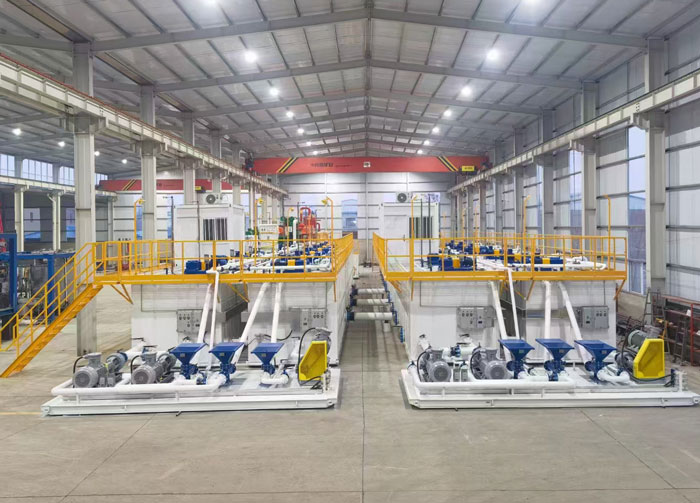
Suction pipe diameter, pipe length, elbows, valves, tank outlet size, and pump elevation help establish the available suction condition and NPSHa.
Running hours and power supply complete the basic duty information, particularly when the pump will operate continuously on a drilling rig.

Address: No.2 Huochang Road, Yangling District,Xianyang City, Shaanxi Province, China
Tel: +86-18509252400
Wechat: 18509252400
Email: info@mudsolidscontrol.com
Contact: Mr.Li
 +86-18509252400