Contact Person: Mr.Li
Mobile: +86-18509252400
Wechat: 18509252400
Email: info@mudsolidscontrol.com
Address: No.2 Huochang Road, Yangling District,Xianyang City, Shaanxi Province, China
Replacing a Mission pump requires more than matching its model number. The replacement must fit the existing skid, match the pipe connections and deliver the required flow and head under actual drilling mud conditions.
If the casing and shaft are in good condition, replacing worn parts may cost less than changing the complete pump. Full replacement is worth considering when major components are damaged, spare parts are difficult to source or the pump no longer meets operating requirements.
The following sections cover pump identification, replacement compatibility and the operating conditions that need to be checked before selecting a replacement.
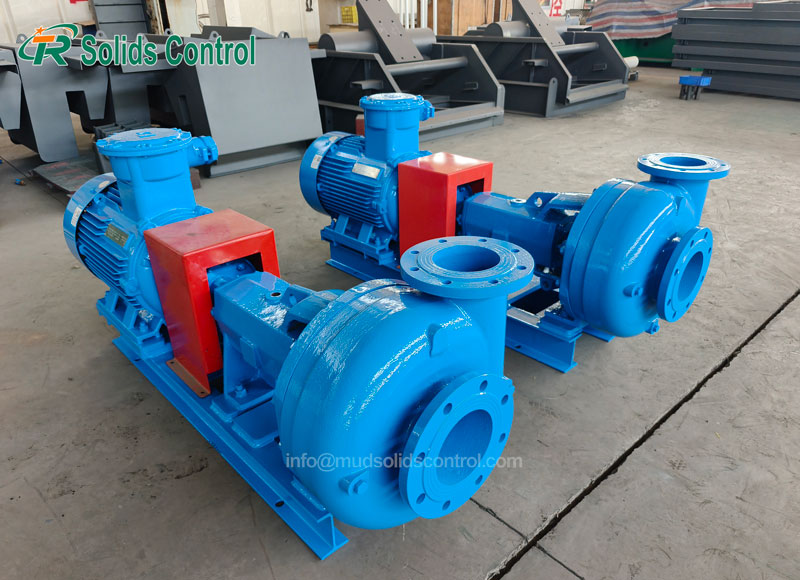
The choice depends on the condition of the main components, spare-part availability and repair costs.
Replacing the impeller, shaft sleeve, bearings or mechanical seal may be enough if the casing and shaft remain serviceable.
However, repairing individual parts may not be practical when major components are damaged or the pump has a history of repeated failures. Consider a complete replacement when:
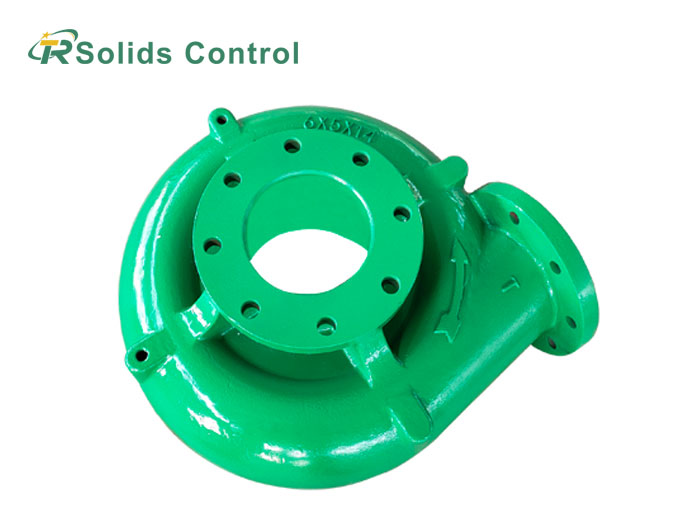
The casing is cracked or severely worn.
The shaft is bent or damaged beyond repair.
Several major components need replacing.
Spare parts have long lead times or are no longer available.
Repeated failures cause unplanned rig downtime.
The pump cannot deliver the required flow or head.
Compare repair costs with the cost of a replacement, including labour, spare parts and downtime.
Start with the nameplate, but do not rely on the model number alone. Previous repairs may have changed the impeller or other components.
For the Mission Magnum I series, 4×3×13 identifies a 4-inch suction, 3-inch discharge and 13-inch impeller configuration. The Mission catalogue lists a 13-inch open impeller for this model. However, the impeller on an existing pump may have been trimmed or replaced during previous repairs. For this reason, measure the fitted impeller diameter where possible rather than relying only on the model designation.
The actual impeller diameter affects the pump curve and can change the flow and head delivered by a replacement.
Collect these details:
Nameplate: Model and serial number.
Suction and discharge: Connection sizes, flange orientation and bolt pattern.
Impeller: Actual fitted diameter.
Bracket and base: Mounting-hole positions and shaft centerline height.
Shaft: Diameter, extension and coupling arrangement.
Seal: Mechanical seal or packing.
Motor: Power, voltage, frequency, speed, frame size and hazardous-area rating.
Send TR Solids Control clear photos of the nameplate, casing, base, shaft connection and flanges, along with available measurements.
Check the replacement against the existing installation and operating duty. Matching the model number or pipe size does not guarantee a direct fit.
| Check point | What to compare | Possible issue |
|---|---|---|
| Frame and connections | Suction/discharge sizes, flange orientation and bolt pattern | Pipework may need modification |
| Bracket and base | Mounting holes and shaft centerline height | Coupling alignment may require adjustment |
| Shaft and seal | Shaft diameter, extension and sealing arrangement | Existing sleeve or gland may not fit |
| Impeller and speed | Fitted impeller diameter and pump rpm | Flow and head may change |
| Motor | kW, voltage, frequency, Ex rating and frame size | Insufficient power or unsuitable site rating |
| Operating duty | Flow, head, mud weight, viscosity and solids content | Pump or motor may be overloaded |
Physical fit is only part of the assessment. The replacement must also meet the required hydraulic performance under the site's actual mud conditions.
Select the replacement for the required flow and head at the actual operating point. Head and discharge pressure are related, but they are not interchangeable.
At the same operating point, higher fluid density produces higher discharge pressure and increases the shaft power required. Check the pump curve against the actual mud density and confirm that the motor can handle the expected load.
Once the required operating point is established, check how impeller diameter and pump speed affect the replacement pump's performance.
Changing from 60 Hz to 50 Hz, with the same pump and impeller and speed proportional to frequency, gives approximate affinity-law estimates:
Flow rate: 83% of the 60 Hz value.
Head: 69% of the 60 Hz value.
Shaft power: 58% of the 60 Hz value.
These are estimates. Actual motor speed is slightly below synchronous speed because of slip. For a four-pole motor, synchronous speed is 1,800 rpm at 60 Hz and 1,500 rpm at 50 Hz.
Use the pump curve at the actual operating speed to check performance and motor power. The original motor rating is a reference, not a substitute for checking the replacement pump's power requirement.
Mud weight, viscosity and solids content affect pump loading and suction performance.
NPSHr, commonly reported as NPSH3, is generally established through clean-water testing. NPSH3 is the value at which pump head drops by 3% during the test. It does not directly establish cavitation risk when pumping weighted or high-viscosity mud.
Check the suction pipe size, line length, bends, tank liquid level and inlet restrictions. Compare available NPSH with the pump manufacturer's requirements under actual operating conditions.
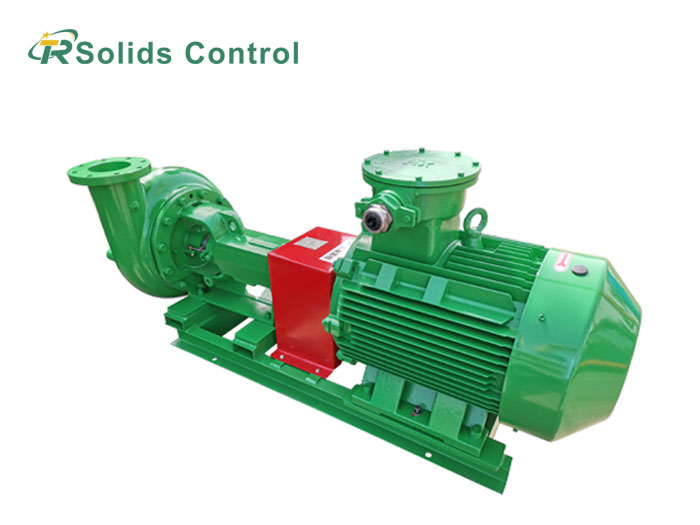
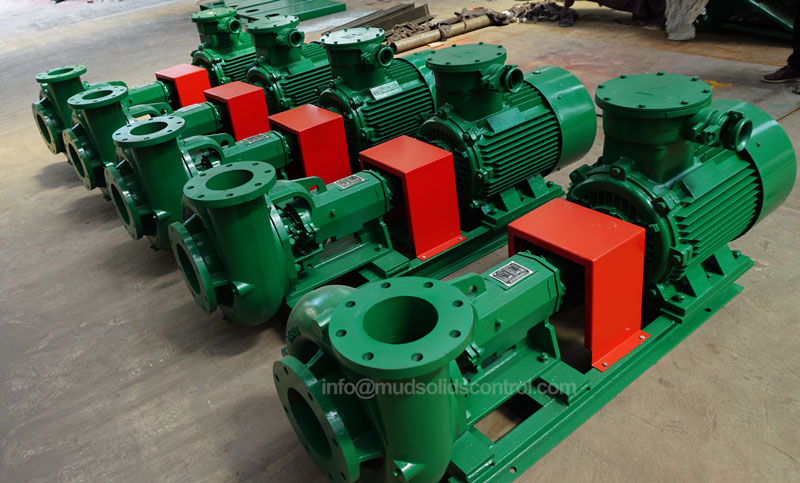
TR Solids Control supplied five TRSB4×3-14J centrifugal pumps to replace Mission 2500 units on a rig solids-control installation in Oman.
Each TRSB4×3-14J centrifugal pump had a 14-inch impeller and a 22 kW certified explosion-proof motor. The recorded operating point was 90 m³/h at 30 m head under the site's operating mud conditions. Motor sizing was checked against the heavier weighted-mud duty before the rating was fixed.
Along with confirming the flow and head, the replacement required checks on the mounting footprint, shaft dimensions, skid interface and piping alignment to confirm fit with the existing installation.
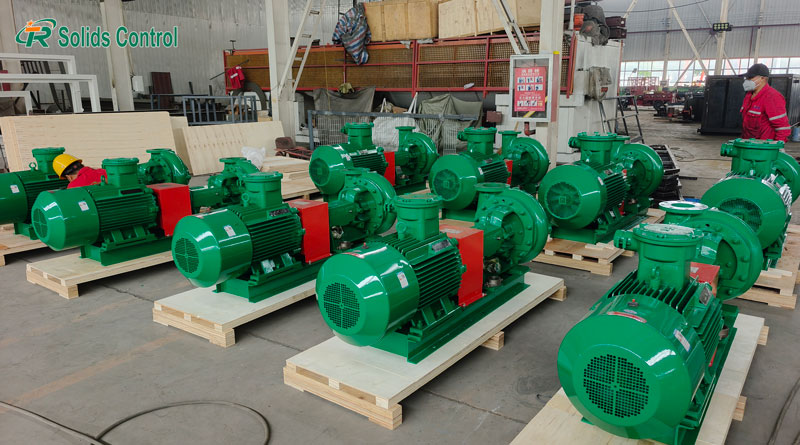
The replacement scope depends on which components are worn and whether the remaining assembly can return to service reliably.
Common wear pump parts include:
Impeller: Wear can reduce hydraulic performance.
Shaft sleeve: Scoring can damage the sealing area.
Mechanical seal: Worn sealing faces can cause leakage.
Bearings: Wear can cause noise, vibration and shaft movement.
Assess the casing separately. Minor wear does not automatically require a new pump, but cracks or severe erosion around the casing and connections may make repair unsuitable.
Compare the cost and lead time of the required parts with a complete replacement. Also check whether the existing shaft, casing and bracket remain serviceable.
Before putting the pump back into service, check:
Mounting and alignment: Confirm secure mounting and correct motor-pump coupling alignment.
Pipe connections: Check flange fit, support and sealing. Pipe loads should not transfer to the pump casing.
Motor supply and rotation: Verify voltage, frequency and rotation direction.
Priming and suction: Confirm proper priming and check for air leaks or restrictions.
Initial operation: Monitor motor current, vibration, leakage, discharge pressure and flow.
If current or vibration is abnormal, or the pump cannot reach the expected pressure, investigate the operating point and installation before continuing operation.
Provide the following information to help assess the replacement:
Existing pump model and nameplate photo.
Photos of the casing, base, shaft and flanges.
Suction and discharge sizes.
Mounting dimensions and shaft centerline height.
Required flow rate and head or discharge pressure.
Mud weight, viscosity and solids content.
Motor power, voltage, frequency and hazardous-area requirements.
Continuous or intermittent duty and expected running hours.
Quantity and delivery destination.
If the model number is unreadable, photos of the casing, discharge flange, base and shaft connection, together with available measurements, may still provide enough information to identify the pump.
TR Solids Control supplies centrifugal pumps and replacement configurations for drilling mud and solids control systems.
Based on the existing pump details and operating conditions, TR Solids Control can check installation dimensions, assess the required duty and recommend a suitable TRSB configuration or replacement spare parts. Material requirements, motor specifications and delivery lead time can also be reviewed during the enquiry.

Address: No.2 Huochang Road, Yangling District,Xianyang City, Shaanxi Province, China
Tel: +86-18509252400
Wechat: 18509252400
Email: info@mudsolidscontrol.com
Contact: Mr.Li
 +86-18509252400