Contact Person: Mr.Li
Mobile: +86-18509252400
Wechat: 18509252400
Email: info@mudsolidscontrol.com
Address: No.2 Huochang Road, Yangling District,Xianyang City, Shaanxi Province, China
When you buy a shale shaker from China, most buyers often start with screen area, G-force, and price. These figures are important, but they do not show how the basket is fabricated, how the motors are selected, or how the machine performs under continuous operating loads.
Basket service life is influenced by several factors, including weld quality, structural design, residual stress control, and the loads encountered during operation. These are worth checking before placing an order, rather than relying on the quoted capacity and motor power alone. When evaluating a China shale shaker manufacturer, ask for records that support the quoted configuration and manufacturing processes. The ability to provide relevant inspection and test documents is more useful than relying on general quality claims.
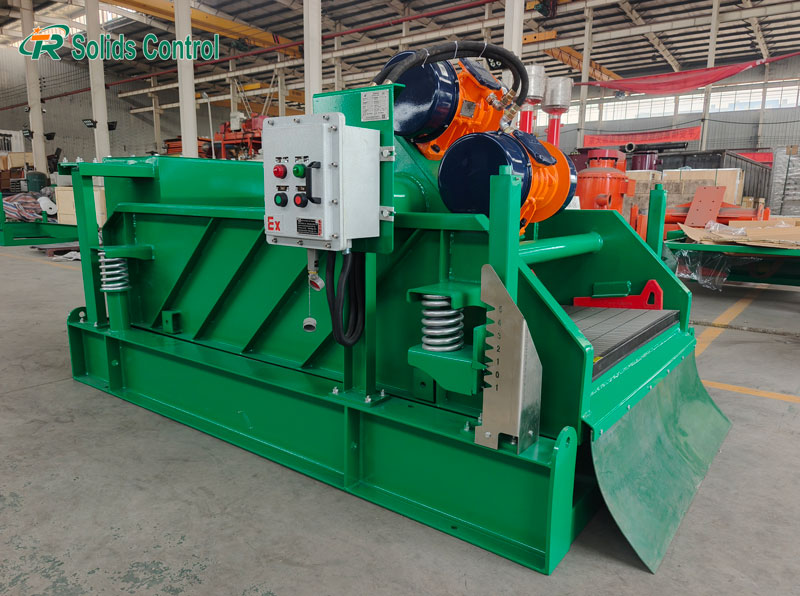
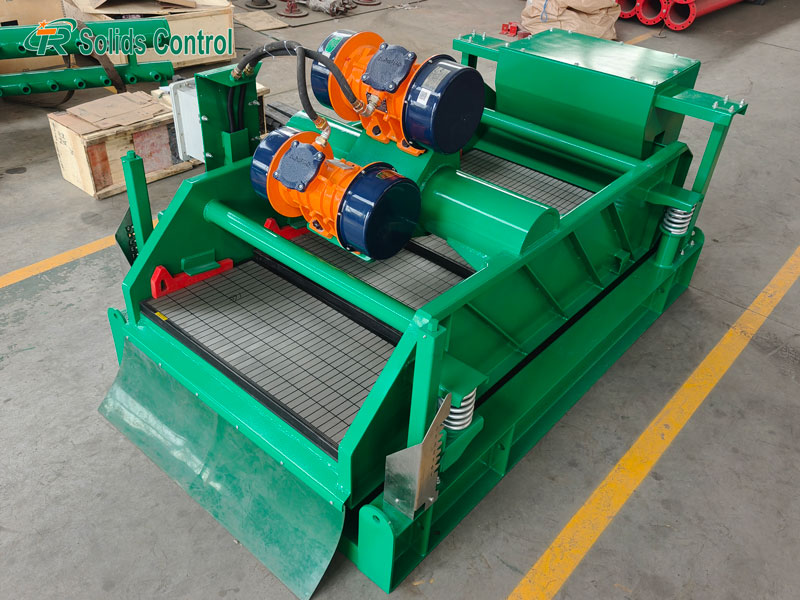
A linear-motion shaker basket supports the vibrating assembly, including the motors and screen deck, while handling the dynamic loads generated during operation. At 1,500 rpm, the frame takes 25 vibratory load cycles every second.
The basket is subjected to repeated cyclic loads during operation. Weld quality, joint geometry, reinforcement, and residual stress all affect how the structure responds to these loads. Repeated operating loads can contribute to fatigue cracking, particularly around highly stressed welded joints such as motor mounts and side-plate connections. Welding-induced residual stress may also affect fatigue performance, so both joint design and fabrication procedures deserve attention.
Coating damage may initially appear minor, but moisture entering through damaged areas can lead to corrosion beneath the paint film. Once moisture or drilling fluid gets under a blister, rust spreads beneath the paint film, forcing abrasive re-blasting on a machine that is hard to pull off the active pit. Motor problems may not appear during initial commissioning. Incorrect motor selection, unsuitable bearing arrangements, or operating conditions outside the rated limits can lead to overheating, bearing damage, or unexpected trips during service.
The following checks can be included in your RFQ to make supplier quotations easier to compare. Everything after it explains what each record actually proves on the shop floor.
| Check | Ask For | What Needs Further Verification |
| Basket heat treatment | Furnace record carrying the basket serial number, temperature cycle, and cooling method | The answer is a general claim with no traceable record |
| Vibration motors | Nameplate photo with type code and serial number, Ex certificate, and distributor invoice | The quote says "same as Italvibras" or "OEM equivalent" |
| Coating system | Coating system sheet with product names, per-coat thickness, and DFT gauge readings | "Marine paint" is named without a defined system or thickness log |
| Screen deck | Deck dimensions, panel layout, fastening design, and sample API RP 13C label | Only one proprietary screen pattern is offered with no test data |
| Factory test & config | Signed configuration sheet plus FAT log (amplitude, bearing temp, current per phase) | A blank test template is sent instead of actual run data |
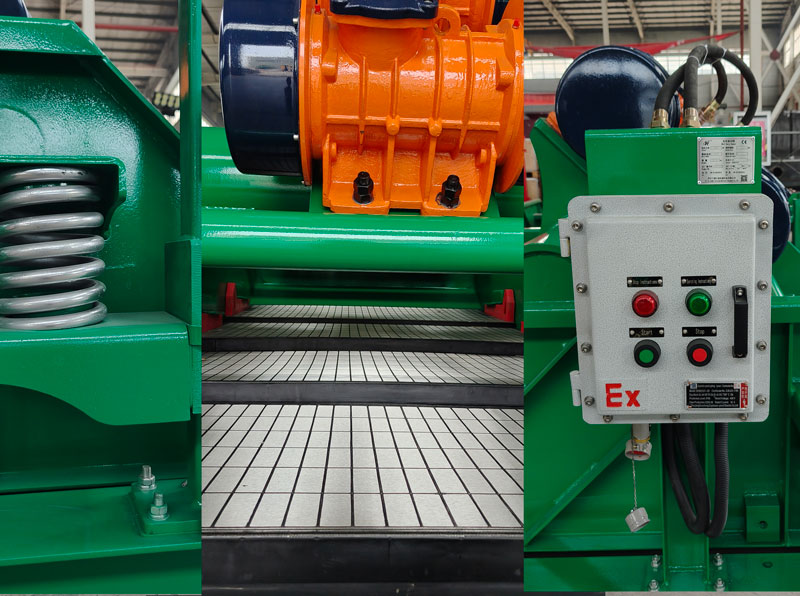
Welding heats and shrinks steel locally, locking residual tensile stress around the joint. On a static skid, that rarely causes trouble. On a shaker basket running millions of cycles a year, operating loads stack directly onto those locked-in weld stresses.
Post-weld stress relief heat treatment reduces that locked-in tension. For carbon steel fabrications,stress relief typically runs in the 595–650 °C range, with soak time set by material thickness and a qualified heat treatment procedure. Heating rate, soak duration, and controlled cooling should follow the steel specification and the factory's approved procedure, rather than a one-size-fits-all rule applied blindly to every basket.
A valid heat treatment record ties directly to the basket serial number, plots the full temperature cycle, and happens before final CNC boring of the motor mounting faces. Check the furnace dimensions, too. Treating a full basket requires a stress-relieving furnace large enough to hold the entire weldment; local heating pads only warm the motor mount zone and leave the rest of the frame as welded.
Vibration stress relief (VSR) is another method used in heavy fabrication, relying on mechanical vibration instead of thermal soaking. Because thermal annealing and VSR work differently, ask the manufacturer for process records and engineering validation showing their chosen method is qualified for that basket structure. Stress relief will not save weak geometry either: if a motor mount sits on a flat side plate without proper gusseting, flexing will still crack the joint. Review the structural drawing right alongside the heat treatment chart.
Italvibras and OLI are widely specified on oilfield shakers because both build motors for continuous vibratory duty and offer Ex-certified models for hazardous areas. Still, the brand name on a quotation only counts if you can verify the motor bolted onto your skid.
Motors with similar appearance or mounting dimensions may still differ in their electrical ratings, bearing arrangements, or certification status. Buyers should verify the exact model and serial number rather than rely on appearance or brand descriptions. For hazardous-area installations, confirm that the motor's Ex marking and certificate cover the required zone, gas group, temperature class, and installation conditions.
Have the factory send a close-up photo of the stamped nameplate before shipment showing the full type code and serial number, paired with the purchase invoice from an authorized distributor so you can check it with the motor brand's regional office. Confirm that both motors match the shaker design in eccentric weight settings, rotation directions, and operating parameters, and verify their rated duty, bearing arrangement, insulation class, and ambient temperature rating against your rig conditions. Whether you go with an import or a qualified domestic motor, certificate scope and serial traceability matter far more than the logo on the housing.
Steel coatings are normally specified under ISO 12944, which groups operating environments into corrosivity categories (such as C3, C4, C5, and CX) alongside target durability ranges. Instead of guessing a single film thickness for every rig, walk through these four steps:
Start with the actual operating environment, accounting for offshore salt spray, coastal humidity, desert temperature swings, condensation, and exposure to water- or oil-based muds.
Match the ISO 12944 corrosivity category and durability range to where the rig will work.
Review the coating system sheet for exact product names, abrasive blast prep, primer/intermediate/topcoat build, and per-coat thickness from the paint maker's Product Data Sheet (PDS).
Inspect the calibrated Dry Film Thickness (DFT) report logged across the basket and skid before crating.
A shop that backs a multi-coat epoxy and polyurethane system with Product Data Sheets and measured DFT logs has real process control.One that simply writes "marine paint" without target thicknesses leaves corrosion life unverified.
The shaker frame is a one-time capital purchase; screens are an ongoing operating cost that can easily pass the price of the machine over a few years of drilling. Checking the screen deck early keeps you out of single-source supply traps.
Before signing off on a deck design, confirm the exact panel dimensions, panel count, and whether the deck uses flat or pyramid screens. Inspect the wedge-block, bolt-down, or pneumatic clamping arrangement to make sure it compresses evenly without mud bypass. Check whether the deck accepts widely available screen patterns or locks you into proprietary frames from a single vendor, and verify local stock and lead times in your operating hub.
On the screens themselves, check the API screen designation, separation potential,conductance, and non-blanked area on the API RP 13C label. API RP 13C data gives you a consistent baseline for comparing screens, even though identical lab numbers do not guarantee identical field performance across every mud system. You can check exact deck dimensions and compatible shale shaker screens by model on our linear motion shale shaker page.
With any new China solids control equipment supplier, the core risk is unclear manufacturing scope: whether the company welds and machines the basket in-house or outsources structural fabrication without direct oversight. Ask for a live video walkthrough of the welding bay, heat treatment area, and machine shop while baskets are actively in production, and review their Welding Procedure Specifications (WPS), welder qualifications, and machining inspection logs.
Before releasing fabrication, lock in a signed configuration sheet covering the exact deliverable: shaker model and motion type, rated capacity, operating G-force, deck angle adjustment, panel count and layout, motor voltage/frequency/Ex rating, and skid installation dimensions.
Next, write a contractual Factory Acceptance Test (FAT) into the order, witnessed in person or by a third-party inspector. A solid FAT runs the assembled unit for an agreed duration (such as four continuous hours at rated speed) and records vibration amplitude at agreed points (specifying single or double amplitude and whether tested dry or under simulated load), along with motor bearing temperatures and current draw per phase against nameplate ratings.Any noticeable discrepancy between measurement points should be investigated before shipment. Understand what each certificate actually covers, too:ISO 9001 and API Spec Q1 govern quality management systems within their stated scopes,API RP 13C applies to screens, and ATEX / IECEx applies to specific certified motors. None of them certifies the complete shaker on its own.
At Xi'an TR Solids Control, serialized furnace charts, distributor motor invoices, DFT logs, and 4-hour FAT records are the standard QA documentation we compile for every shaker built in our Xi'an workshop.
Different drilling environments shift where your engineering review matters most:
Offshore and coastal rigs: Focus first on the ISO 12944 coating system, Sa 2½ blast prep, DFT readings, and Ex motor certifications suited to humid, saline air.
Hard rock and high-G drilling: Put extra scrutiny on basket structural gusseting, weld NDT reports, and verified post-weld stress relief records to guard against fatigue.
Long-term drilling and rental fleets: Prioritize screen deck compatibility with locally stocked API RP 13C screens, simple mechanical tensioning, and standardized spare parts.
Xi'an TR Solids Control Co., Ltd. builds linear and balanced elliptical motion shale shakers alongside complete API standard solids control equipment and systems for oilfield and HDD operations.
If you are comparing manufacturers, send us your required processing capacity and drilling fluid specifications. We can review the application and discuss the shaker configuration, inspection requirements, and available technical documents.
Contact us through the inquiry form or email info@mudsolidscontrol.com.

Address: No.2 Huochang Road, Yangling District,Xianyang City, Shaanxi Province, China
Tel: +86-18509252400
Wechat: 18509252400
Email: info@mudsolidscontrol.com
Contact: Mr.Li
 +86-18509252400