Contact Person: Mr.Li
Mobile: +86-18509252400
Wechat: 18509252400
Email: info@mudsolidscontrol.com
Address: No.2 Huochang Road, Yangling District,Xianyang City, Shaanxi Province, China
When choosing a drilling desilter, start with the maximum drilling fluid flow rate. Then check the hydrocyclone inlet pressure, the mud properties, and how the underflow will be handled.
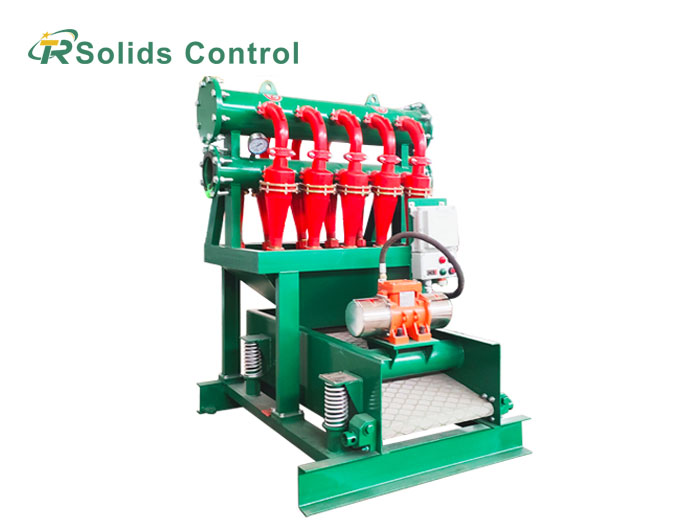
A desilter normally sits after the shale shaker and desander, where it removes the finer solids left in the mud. Cone count is only part of the decision. The unit also has to suit the flow rate and pressure of your mud system, and the way the separated solids and liquid will be handled downstream.
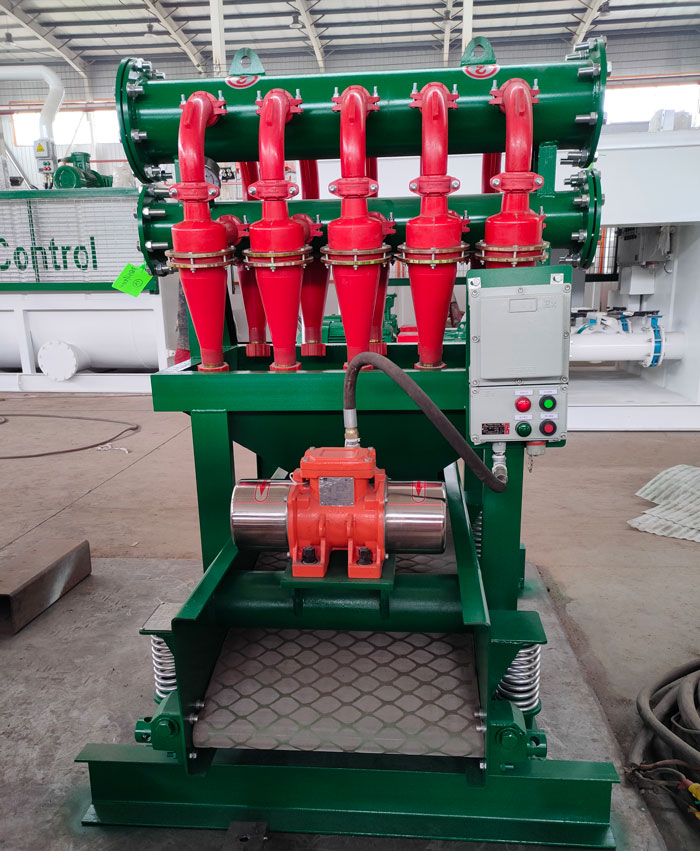
Use the maximum drilling fluid flow rate through the desilter as the starting point. Rate the unit below the actual circulating flow and it is undersized. Go much larger and you add cones, piping and cost without automatically getting better solids separation.
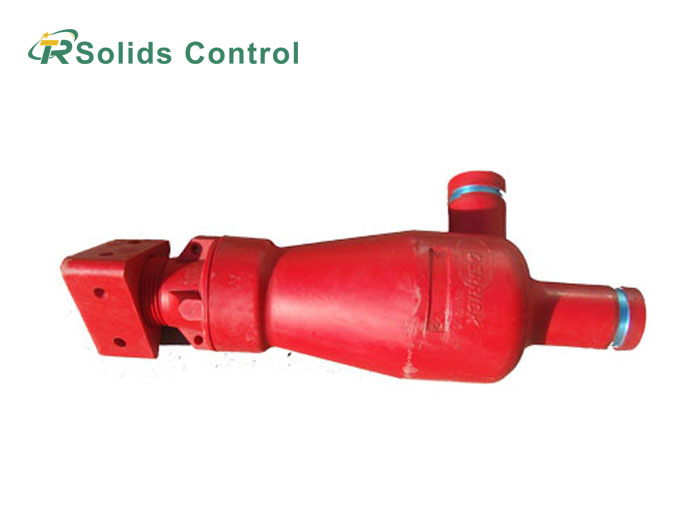
Four-inch hydrocyclones are widely used in drilling desilters, and the number of cones is matched to the required flow. For example, TR's current configurations include:
| 4-inch Hydrocyclones | Rated Flow |
| 8 cones | 120 m³/h |
| 12 cones | 180 m³/h |
| 16 cones | 240 m³/h |
| 20 cones | 360 m³/h |
At a maximum flow of about 200 m³/h, an 180 m³/h unit is too small, so you would normally step up to the next capacity. For a maximum flow of 240 m³/h, the 16-cone configuration is the corresponding option in this range.
Use the highest flow you expect during drilling, not the normal average. Check the feed pump and piping at the same time. A larger desilter will not perform as intended if the feed system cannot supply the required flow and inlet pressure.
A desilter needs pressure as well as flow. Hydrocyclones rely on feed pressure to separate finer solids from the drilling fluid.
TR lists a working pressure of 0.25–0.4 MPa for its desilter configurations. Published operating pressures vary by manufacturer and configuration.
If you are working with an existing mud system, check the pressure at the hydrocyclone inlet while the required flow is running. The mud pump's maximum rated pressure is not the number you need, because pressure is lost through piping, valves and other equipment between the pump and the hydrocyclone manifold.
Replacements are where this gets missed. A pump can have enough rated pressure on paper while the pressure actually reaching the hydrocyclone inlet is too low.
The drilling fluid itself also affects hydrocyclone separation. When you ask for a quotation, give the supplier the mud type, density, viscosity if available, and expected flow rate. Details of the upstream shale shaker and desander help as well.
Published separation ranges need care when you compare them. TR publishes a separation range of approximately 15–44 μm. Those figures do not necessarily come from the same test conditions.
A published separation range is also not the same as a defined D50 cut point. Ask whether the quoted number is a general range or a specific cut point, and ask what flow rate, inlet pressure and mud conditions produced it.
If the mud is weighted, look at the underflow as well. Hydrocyclone underflow contains concentrated solids, but it can also carry drilling fluid and weighting material. That affects how the discharge should be handled downstream.
Quotation comparisons often skip this part.
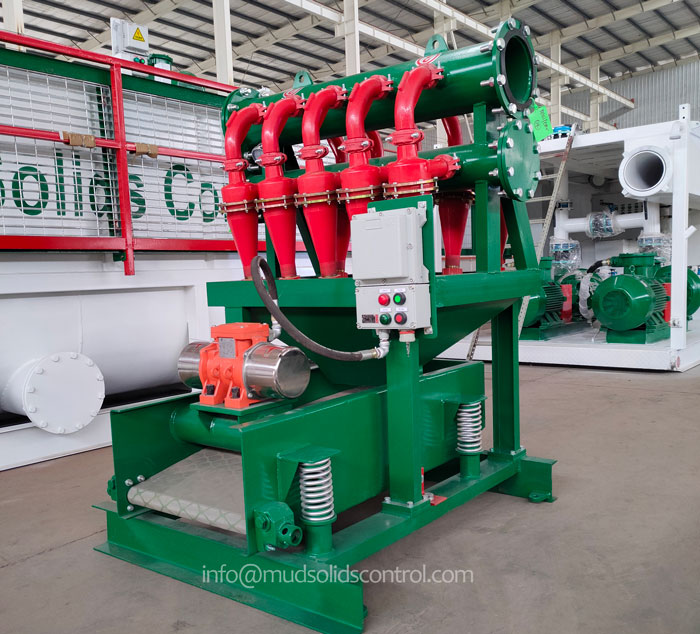
Hydrocyclone underflow is not dry cuttings. It is a solids-rich stream that still contains drilling fluid. Discharged directly, the arrangement stays simple. If recovering more drilling fluid matters, an underflow shaker can be installed to separate additional liquid from the hydrocyclone discharge. TR offers an optional underflow screen arrangement, and other manufacturers also offer desilters with or without an underflow shaker.
Think about where the underflow goes next. A more complicated underflow arrangement only makes sense if the recovered liquid has a useful place to return in the mud system.
This matters most on a replacement job.
Before ordering, check the inlet and outlet sizes, connection locations, overall dimensions and available installation space. A unit with the right capacity can still force piping changes if the connections do not line up with the existing system.
Photos of the current desilter, hydrocyclone manifold and pipe connections are often helpful when requesting a replacement. They give the supplier a much clearer picture of what has to fit.
Also check maintenance access around the hydrocyclone bank. The cones and apexes should be accessible for inspection, cleaning and replacement without major dismantling of the surrounding equipment.
A short list is enough to get a desilter configuration started:
Maximum drilling-fluid flow rate
Normal operating flow rate
Mud type
Mud density
Viscosity, if known
Hydrocyclone inlet pressure
Existing shale shaker and desander
Inlet and outlet pipe sizes
Available installation space
Whether an underflow shaker is required
For a replacement, add photos and the existing equipment nameplate if available.
With this information, a supplier can work out the hydrocyclone quantity, check the required operating pressure, and see whether the proposed unit fits your existing mud system.
The desilter is one stage of solids removal. A typical drilling-fluid flow path is:
Shale Shaker → Desander → Desilter → Centrifuge or Other Downstream Treatment
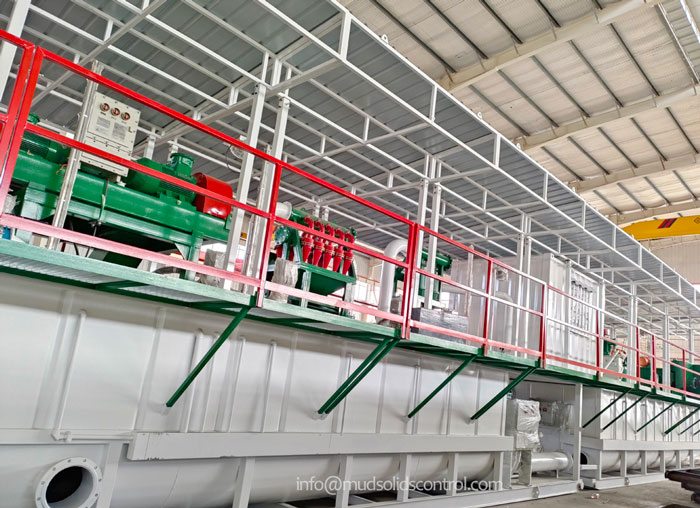
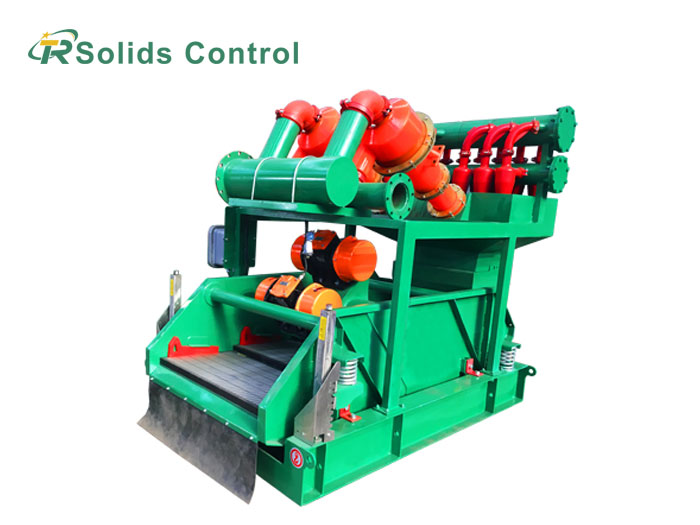
The shale shaker takes out the larger drilled solids first. The desander handles coarser hydrocyclone separation, leaving the desilter to deal with finer solids.
That is why desilter selection should start with the actual flow rate and hydrocyclone inlet pressure rather than the rig model. Mud properties, underflow handling and physical connections then determine the configuration. Actual operating data will get you a better quotation than the rig model alone.

Address: No.2 Huochang Road, Yangling District,Xianyang City, Shaanxi Province, China
Tel: +86-18509252400
Wechat: 18509252400
Email: info@mudsolidscontrol.com
Contact: Mr.Li
 +86-18509252400