Contact Person: Mr.Li
Mobile: +86-18509252400
Wechat: 18509252400
Email: info@mudsolidscontrol.com
Address: No.2 Huochang Road, Yangling District,Xianyang City, Shaanxi Province, China
In oil and gas drilling, drilling mud cools the drill bit, lubricates the drill string, carries cuttings to the surface, and maintains wellbore stability. However, during the drilling process, the mud will be contaminated by the solid substances (rock debris) drilled out, and over time, its effect will gradually decline. The real answer to keeping mud in good shape is solids control equipment. You have to pull out those cuttings and unwanted solids layer by layer.
TR Solids Control has been designing and building solids control systems since 2010. We've been on enough rig sites to know what actually works. So let's walk through the essential pieces of mud cleaning system, what each one does.
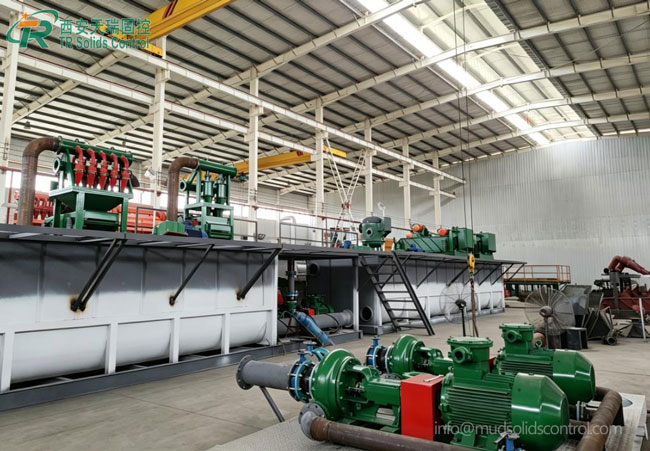
Here's the deal: when mud comes back from the hole, it's loaded with drill solids, sand, sometimes gas. If you send that right back down without cleaning it, your mud properties go bad, you chew up pumps and bits faster, and invite hole problems. Solids control isn't optional, it's a forced sequence.
A standard system follows a fixed order:
Shale shaker → Vacuum degasser → Desander → Desilter / Mud cleaner → Decanter centrifuge
Shale Shaker: First Line of Defense
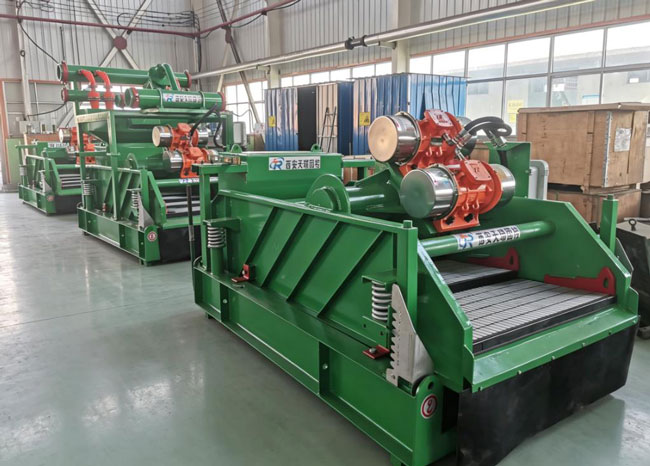
As the primary and most critical component of Solids Control Equipment, the shale shaker acts as the first line of defense against large drilled solids. It uses vibrating screens to make quick cut: large cuttings walk off the end and get discarded; mud and smaller particles fall through.
What mesh size? Anywhere from API 20 up to API 325.
Good modern linear motion shale shakers, better throughput, less blinding. Some come with adjustable angle decks (AWD), so you can tweak the angle on the fly depending on mud viscosity. Saves a lot of fiddling.
TR Solids Control shakers have a good steel, strong vibration, and they hold up even with heavy muds.
Vacuum degasser: when gas gets in
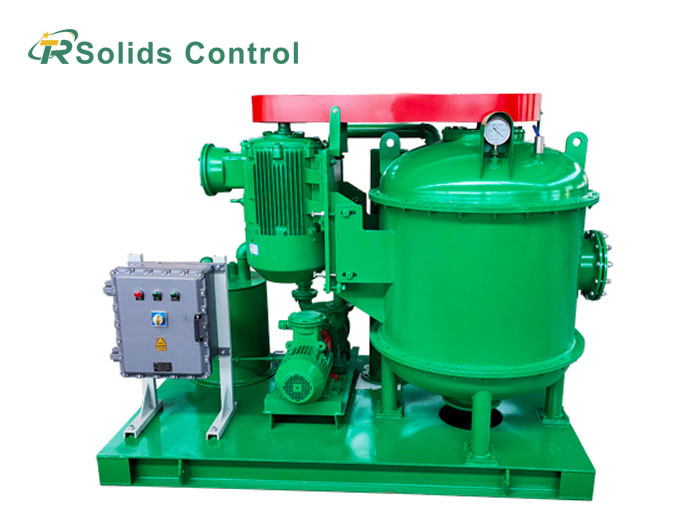
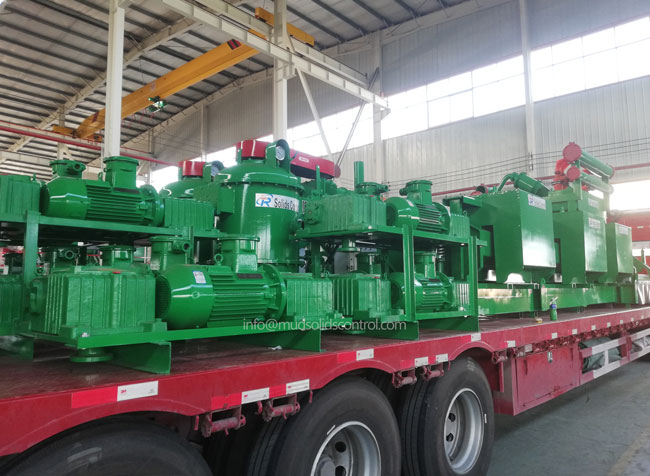
After the shale shaker, if the formation gave gas, those tiny bubbles are already in the mud. That's where vacuum degasser comes in. It pulls mud into tank under negative pressure, the gas bubbles break out and get vented, and the degassed mud flows to the next stage.
No gas? The degasser as high-power agitator to keep solids from settling in the tank. And because most degassers are self-suction, don't need separate feed pump, saves space and power.
TR's vacuum degassers have run in deep wells, geothermal jobs, and sour-gas formations. They just work.
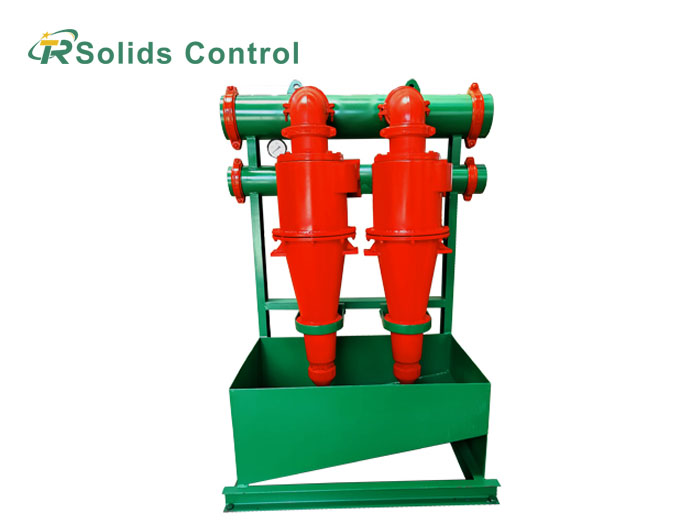
Desander: takes out the medium solids
After passing treatment, the mud still have sand-sized particles(40-75μm). Time for the desander. Typically 10‑inch hydrocyclone. Mud gets pumped in tangentially, spins fast inside the cone. Heavier solids thrown to the wall go down the underflow; cleaner mud comes out the top.
You need to feed it with centrifugal pump at stable pressure. And if shaker screens are coarse (<40 mesh), the desander has to work harder, otherwise the desilter will choke.
TR Solids Control desanders use polyurethane or ceramic liners. They last way longer in abrasive conditions.
Desilter and mud cleaner: Removing Fine Mud Particles
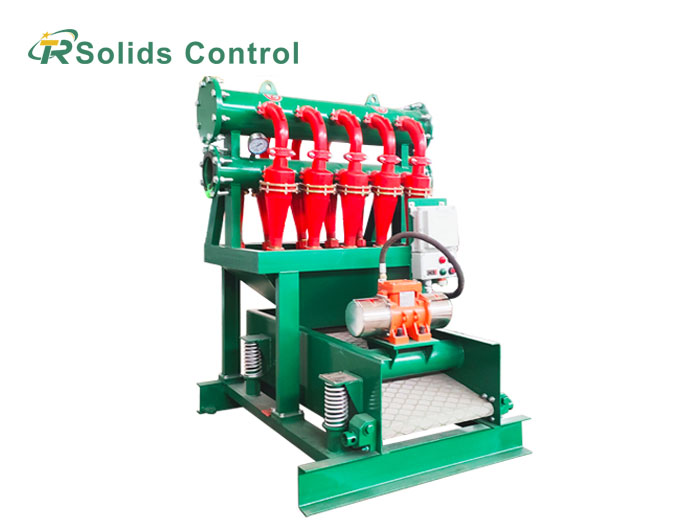
Mud Desilter uses smaller cyclones, usually 4 or 5 inches. It can cut down to about 15 microns. Most desilters have several little cyclones manifolded together. Make sure the total capacity matches 100% to 125% of pump rate. Feed pressure needs about 70–80 feet of head.
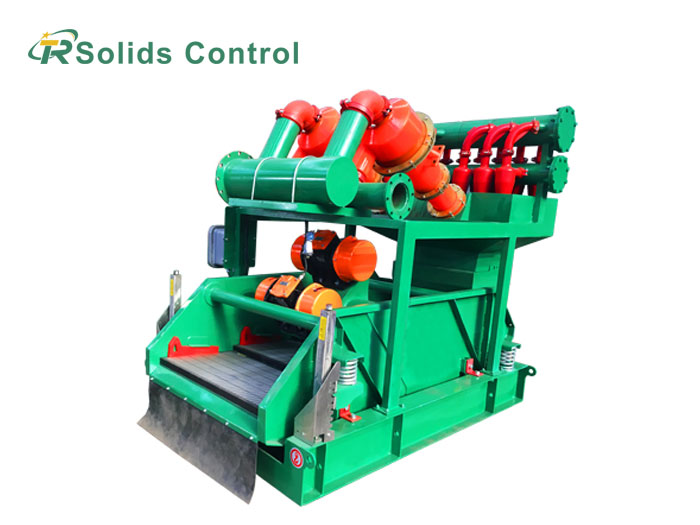
Now, mud cleaner is clever combo. It mounts a set of small hydrocyclones on top of fine-mesh shaker. The cyclones make coarse split, then the underflow solids land on the shaker screen for extra dewatering. This recovers some barite (weighting material) back into the system. Saves money and space. It used in exploration wells, HDD, and coalbed methane drilling.
TR Solids Control builds mud cleaners with customizable cyclone numbers and screen decks. Fits your capacity and your cut point.
Decanter centrifuge: Final Fine Solids Removal
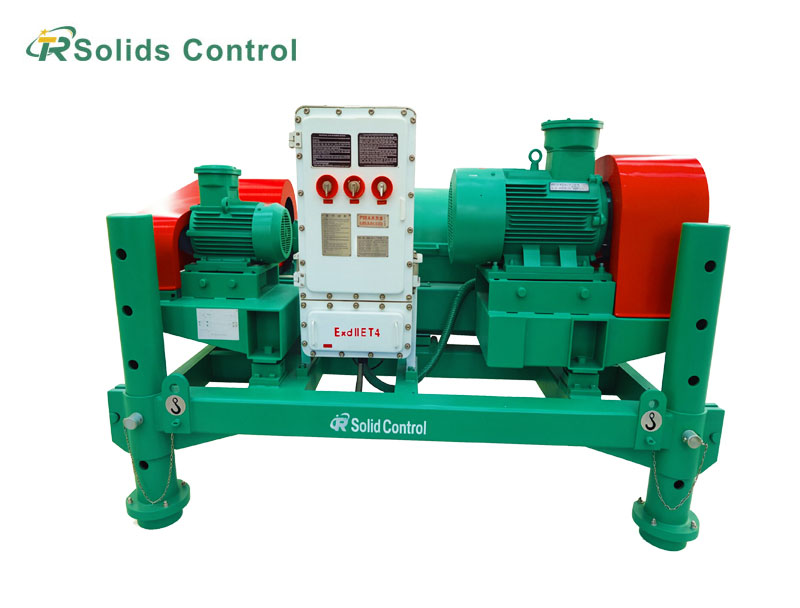
After all the above, the mud still holds ultra-fine solids (<10 microns). Only decanter centrifuge can take those out. It spins at high speed (up to 3000 G or more), slams fine solids against the bowl wall, and screw conveyor pushes the solids to the discharge end.
Two-phase vs. three-phase? Two-phase gives solids + liquid. Three-phase can split solids, oil, and water in one pass, great for oil-based muds and oily cuttings.
Better centrifuges come with VFD control. You can dial in the bowl speed and differential speed right on site, tuning for whatever mud running at the moment.
TR Solids Control centrifuges are solid performers for lowering mud weight, recovering barite, and cutting sand content. They've been used in places with strict mud specs and tough environmental rules, like North America and the Middle East.
The solids control equipment market is moving toward automation. Newer systems monitor mud density and sand content in real time, automatically adjusting centrifuge speed or shaker angle.
Also, environmental rules are getting tighter. Mud recovery systems are becoming the norm. Good solids control now means not just high separation efficiency, but also less waste and more reuse.
TR Solids Control keeps up with these trends. We make everything from single machines to full mud recovery systems, built to international standards. But here's the thing: we'd rather talk about your actual drilling conditions than just sell you a box of iron.

Address: No.2 Huochang Road, Yangling District,Xianyang City, Shaanxi Province, China
Tel: +86-18509252400
Wechat: 18509252400
Email: info@mudsolidscontrol.com
Contact: Mr.Li
 +86-18509252400