Contact Person: Mr.Li
Mobile: +86-18509252400
Wechat: 18509252400
Email: info@mudsolidscontrol.com
Address: No.2 Huochang Road, Yangling District,Xianyang City, Shaanxi Province, China
When a shaker screen needs replacing, the first question is often simple:
"Do you need 100 mesh or 140 mesh?"
That is usually not enough information to choose the right screen.
Flow rate, mud properties, solids loading, cuttings, and the shaker itself all affect how a screen works. A finer screen removes smaller drilled solids, but it also gives the shaker less open area to work with. A coarse screen handles more flow but lets more fine solids stay in the drilling fluid.
Start with the separation you need and the way the drilling shaker is running. Then look at the screen specification.
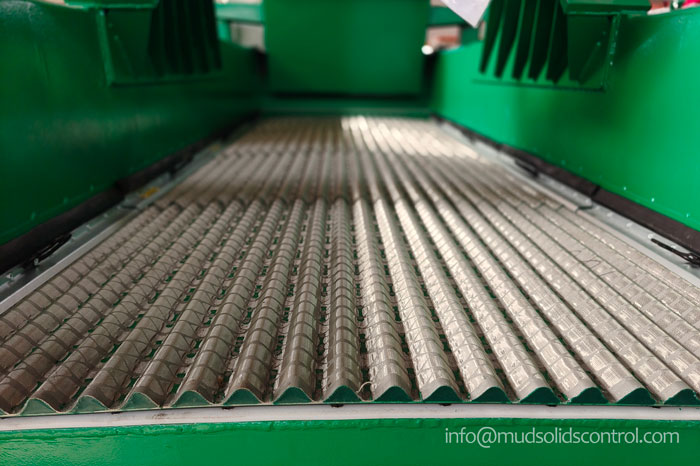
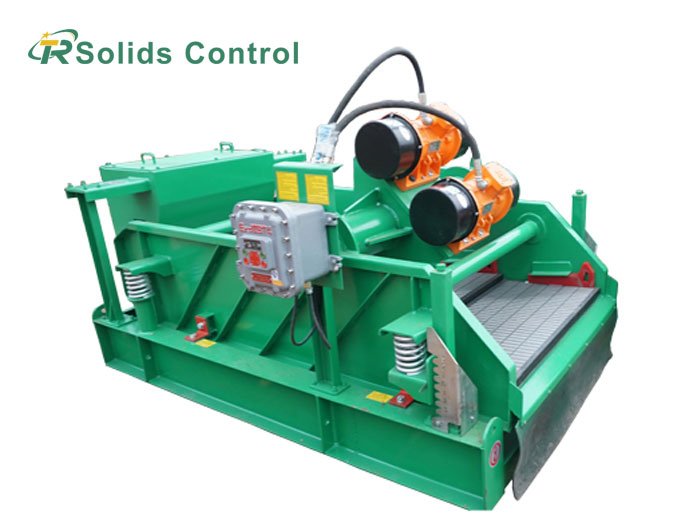
Look at what is actually coming across the shale shaker.
Large cuttings from a high-solids drilling section put a different load on the screen than fine drilled solids from a later section. If too many fine solids remain in the mud, a finer API screen is worth testing. If the deck is already carrying a heavy fluid load, going finer can make the problem worse.
Mud condition also affects screen performance. High-viscosity mud moves through the openings more slowly, while sticky clay can cover the openings and cause blinding. Abrasive formation cuttings can shorten screen life.
Before changing the screen grade, look at the material reaching the screen and how the shaker is handling it. If a screen blinds early or wears quickly, investigate the solids and mud conditions before choosing a different API grade.
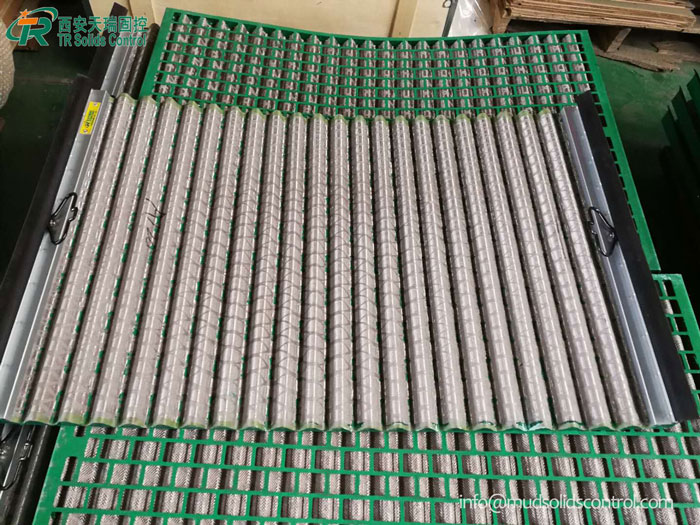
"Mesh" is still widely used when ordering replacement shaker screens, but the number alone does not describe the screen.
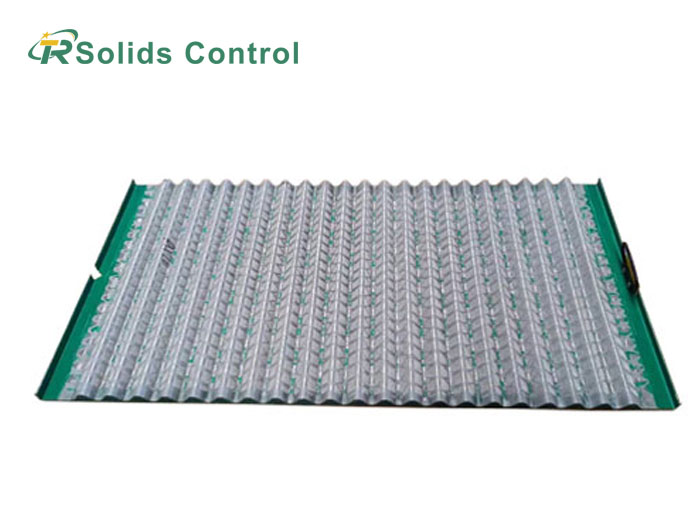
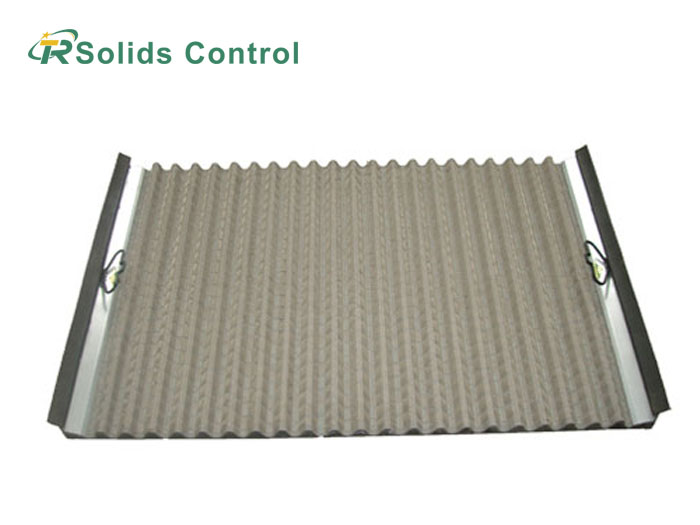
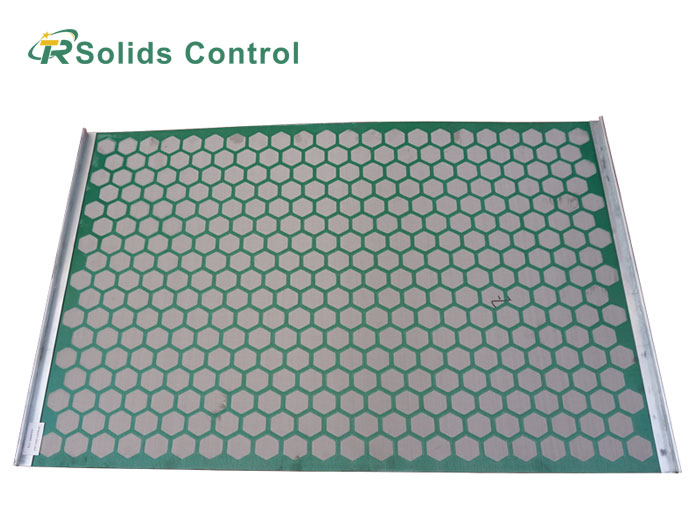
Oilfield shaker screens normally use multiple layers of wire cloth. Wire diameter, weave, open area, and screen construction all affect separation and fluid capacity. Two screens with the same nominal mesh can therefore behave differently on a shaker.
For drilling applications, the API screen designation gives you a better reference point. The API designation is based on standardized screen separation testing, with the D100 cut point describing the screen's separation range. Conductance is also important because it indicates the screen's fluid-passing capacity.
When comparing replacement screens, check:
API screen designation
D100 cut point
Conductance
Open area
Screen dimensions
Manufacturer's designation or part number
These details are more useful for a replacement order than asking for "200 mesh" alone.
A common problem on a drilling site is an increase in fine solids. The first reaction is often to install a finer screen. Before doing that, look at the current deck loading.
If the shaker is already close to its practical capacity, a finer screen can hold more fluid on the deck and increase the risk of blinding. At high flow rates, the finer screen may also increase fluid loss with the discharged cuttings.
Check the deck while the shaker is running:
Is the screen covered with cuttings?
Is the fluid pool getting too deep?
Are the openings starting to blind?
Is good drilling fluid leaving with the discharged solids?
These observations help separate a screen-selection problem from a flow or shaker-capacity problem.
Conductance is useful when comparing screens, but it should be considered together with the available screening area and actual flow rate.
Screen selection is also a mechanical fit issue.
The replacement screen has to match the shaker's dimensions, frame, support arrangement, and tensioning or retention system. The shaker make and model should therefore be included in any replacement-screen inquiry.
This matters even more when replacing screens on equipment from another manufacturer.
"API 140 screen" describes the separation range. It does not tell the manufacturer whether the panel will physically fit a particular shaker.
Send the supplier these details:
Shaker make and model
Screen dimensions
Current API designation
Current screen part number, if available
Flow rate
Mud type
Main operating issue
A photo of the existing screen and mounting arrangement is also useful when the shaker model or fit is uncertain.
A recent shaker screen supply for oilfield drilling in Turkey gives a practical example.
The shaker was a Derrick FLC 503, and the order included six API screen grades:
| API Screen | D100 Cut Point | Quantity |
| API 80 | 165–196 μm | 24 |
| API 100 | 137–165 μm | 60 |
| API 140 | 98–116 μm | 80 |
| API 170 | 74–82 μm | 80 |
| API 200 | 69–82 μm | 48 |
| API 230 | 58–69 μm | 48 |
Total: 340 screen panels
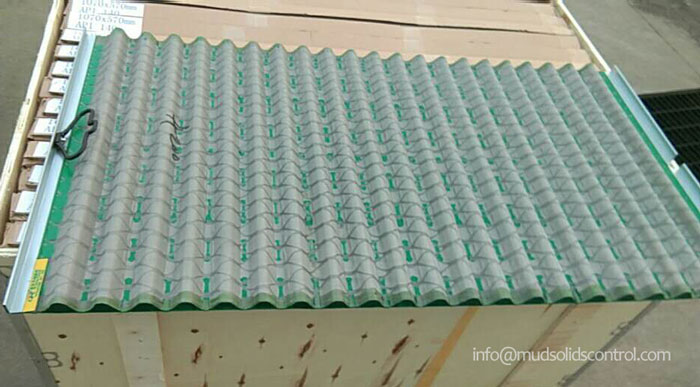
The six grades were supplied as project stock. They were not intended to run as six different grades on one shaker deck at the same time.
As the drilling section and solids characteristics change, the required screen grade can change as well. Keeping several grades available gives the drilling crew more flexibility than buying one nominal mesh and using it for every condition.
The order also shows why "send us 200 mesh" is not enough information for a replacement-screen supplier.
Moving from API 100 to API 140 is a typical change when the crew wants to remove more fine drilled solids.
Suppose the current API 100 screens are handling the flow well, but more fine solids are staying in the mud. API 140 is a reasonable grade to test.
Replace a few panels
Don't change the whole deck immediately. Install API 140 on a few panels and run the shaker under normal drilling conditions.
Watch the deck
Check:
Fluid level
Cuttings conveyance
Screen blinding
Fluid carried out with the discharged cuttings
Compare the result
If API 140 improves solids removal without creating a flow problem, there is a good basis for changing more panels.
If the deck starts carrying excessive fluid or the screen blinds quickly, the finer grade is not a good match for the current conditions.
The shaker's response tells you more than the screen number by itself.
A request such as:
"Please quote 140 mesh shaker screens."
does not give a screen manufacturer enough information to select the replacement correctly.
A better request would include:
Shaker: Derrick FLC 503
Screen size: [L × W]
Current screen: API 100
Flow rate: [m³/h or GPM]
Mud: [WBM / OBM / SBM]
Current issue: [fine solids / blinding / mud loss / short screen life]
A photo of the existing screen is useful too, especially when the shaker model or mounting arrangement is unclear.
These details let the manufacturer check the physical fit and recommend the screen specification instead of matching by mesh number alone.
If you are not sure which API grade or screen panel fits your Derrick or SWACO shaker, see our API shale shaker screen guide for screen specifications and replacement options.
Start with the drilling conditions, then compare API grade, D100 cut point, conductance, flow rate, mud conditions, and screen fit.
If you are moving to a finer grade, test a few panels first and watch how the shaker responds.

Address: No.2 Huochang Road, Yangling District,Xianyang City, Shaanxi Province, China
Tel: +86-18509252400
Wechat: 18509252400
Email: info@mudsolidscontrol.com
Contact: Mr.Li
 +86-18509252400