Contact Person: Mr.Li
Mobile: +86-18509252400
Wechat: 18509252400
Email: info@mudsolidscontrol.com
Address: No.2 Huochang Road, Yangling District,Xianyang City, Shaanxi Province, China
Every drilling operation generates rock cuttings, formation sand, and fine solids. As drilling progresses through varying formations, drill cuttings, formation sand, and colloidal impurities contaminate the circulating mud. This contamination impairs mud rheology, accelerates wear on downhole tools and surface equipment, and raises risks of pipe sticking, wellbore collapse, and well blowouts. Solids separation is critical to drilling mud purification, as it directly impacts drilling system stability and operational efficiency.
Effective solids separation keeps the drilling fluid fit for purpose, reduces barite and chemical consumption, and lowers waste disposal costs. In many wells, a well designed solids control system pays for itself within the first few thousand feet.
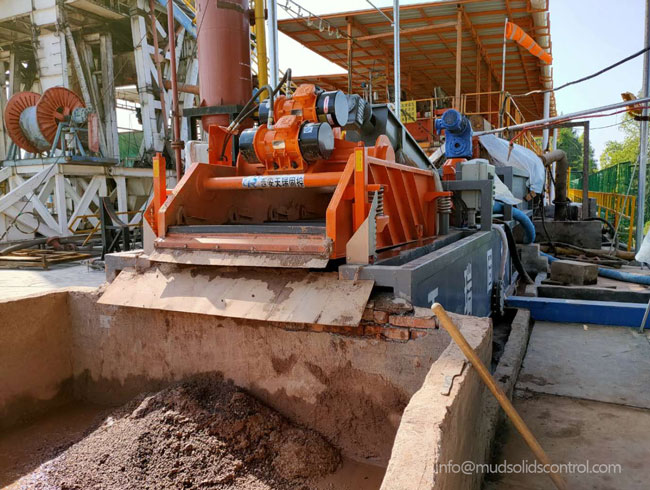
An effective solids separation system operates as closed-loop. This ensures treated mud meets API standards and adapts to changing drilling conditions, from soft shale formations to high-pressure deep wells. The process is customized to the particle size distribution of contaminants, with each equipment stage addressing specific separation needs.
Almost all modern rigs use four stage process: shale shaker, desander, desilter, and centrifuge. Each targets different particle size range.
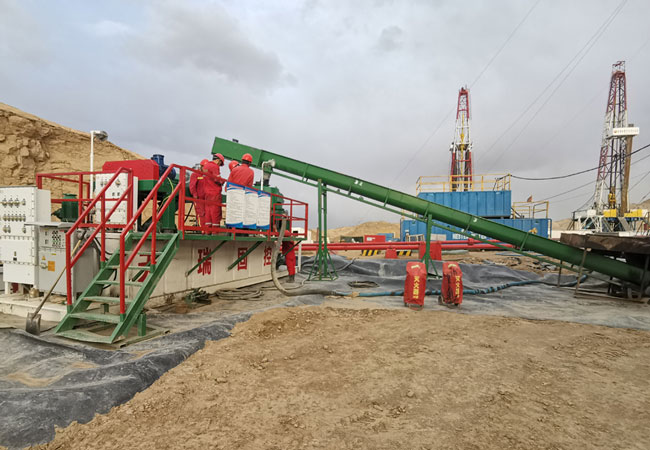
Shale Shaker: First cut. Removes cuttings larger than about 75 microns. Key is to choose the right API screen (API 200 gives D50 around 75 µm). Run the coarsest screen that still gives dry cuttings. Too fine a screen will blind and you lose mud over the side. On high flow rate wells, use dual shakers or a larger deck area. Check shaker screen tension and condition every tour.
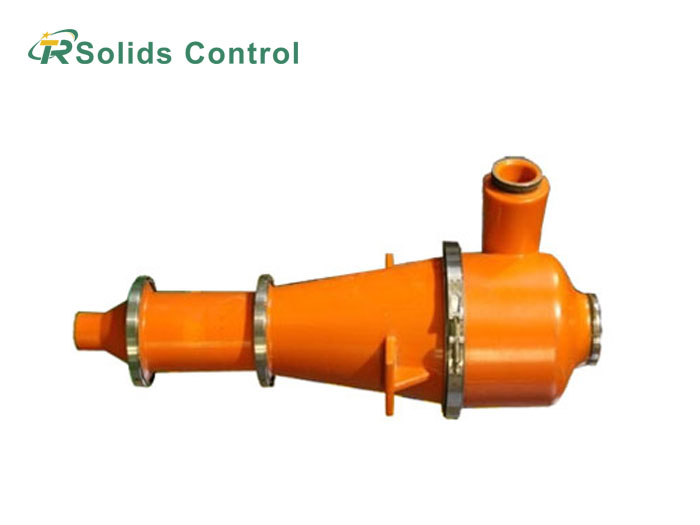
Desander: Uses 6 or 10 inch hydrocyclones to remove sand in the 45–75 micron range. Feed pressure should be 30–40 psi. Lower than 25 psi loses separation; above 50 psi causes rapid wear. The underflow should discharge as hollow cone spray, a solid rope of liquid means the apex is too large. A good desander removes 80–95% of particles above 45 µm.
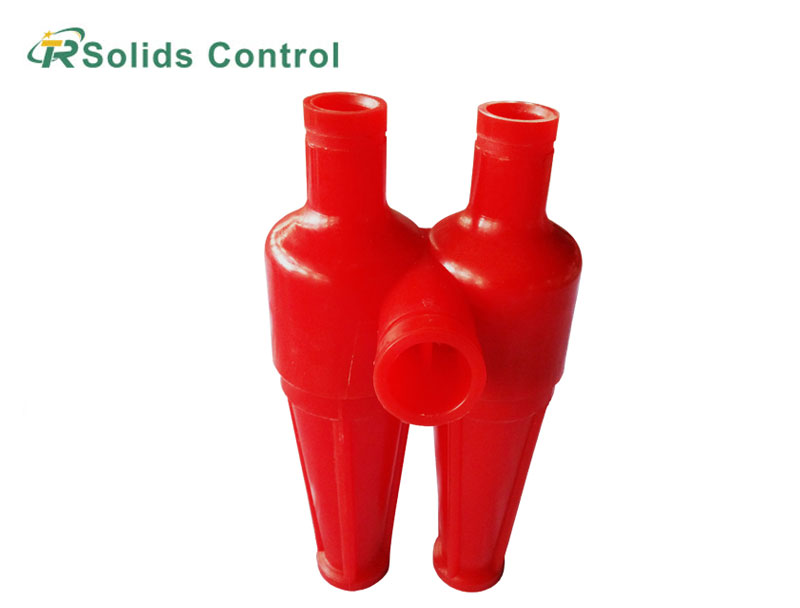
Desilter: Smaller cyclones (4 inch) that cut down to about 15–20 microns. Same pressure guidelines apply. Often mounted over a fine shaker (mud cleaner) to dry the underflow further. If your mud has a lot of fine sand, desilters are essential to protect MWD tools and reduce pump liner wear.
Decanter Centrifuge: The fine polishing tool. Removes particles from 2 to 15 microns. For weighted mud (with barite), you run the centrifuge in barite recovery mode: shallow pool depth, low differential speed (5–10 rpm), bowl speed around 2500–3000 rpm. This keeps barite in the system while throwing out low gravity fines. For unweighted mud, run deeper pool and higher differential (20–30 rpm) to clean up the mud. A properly adjusted centrifuge can recover 85–90% of barite and reduce low gravity solids by 50–70%.
Vacuum degassers: Use negative pressure to remove natural gas and hydrogen sulfide from invaded drilling fluid, restore mud density, reduce well control hazards in high-pressure gas wells, eliminate gas interference with centrifugal separation, prevent equipment cavitation and ensure steady operation of the solids separation system.
Mud tanks: Buffer and store mud; compartment design avoids cross-contamination between raw and treated mud to stabilize mud characteristics.
Mud Agitators: 50–100 rpm to keep solid uniform suspension and ensure stable separation effect.
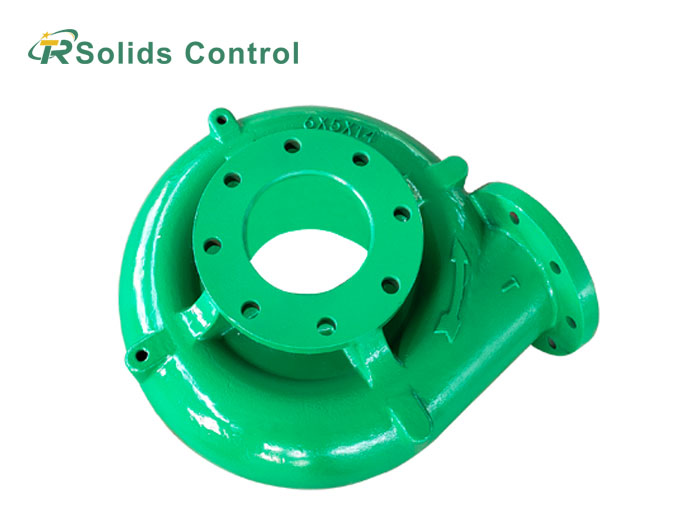
Sand pumps: Supply stable pressure and flow for hydrocyclones and centrifuges.
Intelligent monitoring system: 16–32 channel sensors collect real-time data (solid content, density, temperature) to optimize operation, reduce manual sampling and improve efficiency.
Shaker screens: Start with API 140 or 170, then go finer if you see too many solids passing. If mud loss over the screen exceeds 5% of circulation rate, go coarser or increase deck angle.
Desander/desilter apex: The apex should be 1/3 to 1/2 of the cyclone diameter. If the underflow is too wet (continuous stream), reduce apex size by 1/64 inch increments until you get a narrow spray about 1–2 inches wide. If it plugs, the apex is too small.
Centrifuge tuning: Watch the solids discharge. Wet, sloppy cake means too much feed or too low differential. Dry, dusty cake is fine but check that you aren't losing barite. Use a simple retort or sand test to measure low gravity solids in the mud. If LGS is above 5% by volume in a weighted mud, increase centrifuge bowl speed or reduce pool depth.
Flow balancing: Never feed more than 80% of hydrocyclone's rated capacity. Surge tanks and variable frequency drives on feed pumps help keep pressure steady.
| Problem | What to Check | Fix |
| High sand content in suction pit | Desilter apex size or feed pressure | Reduce apex diameter in steps; verify feed pump impeller size and pressure gauge |
| Centrifuge discharges wet solids | Differential speed too low or feed rate too high | Increase differential by 5 rpm; reduce feed rate by 20% |
| Shaker screens blinding quickly | Deck angle too low or screen mesh too fine | Increase angle to 10–15°; switch to non blinding mesh pattern |
| Hydrocyclone overflow has large particles | Apex worn or feed pressure low | Replace apex; check pump and lines for wear |
| Mud weight keeps rising (weighted mud) | Centrifuge not recovering barite | Reduce pool depth (lower weirs) and increase bowl speed |
API standards matter. Insist that suppliers provide API RP 13C cut point data for screens, and efficiency curves for hydrocyclones at your expected mud viscosity.
Spare parts: Keep extra shaker screens (2 per shaker), apexes for all hydrocyclones, and a complete centrifuge rebuild kit on site. Downtime for solids control is expensive.
When to replace: Shaker screens that show any tear or sagging must be changed immediately. Hydrocyclone apexes wear oval after 500–1000 hours, replace before they affect separation. Centrifuge scrolls last 3000–5000 hours in abrasive mud; track hours and schedule inspections.
Solids separation technology suits all drilling scenarios, boosting operational efficiency, cutting costs, improving wellbore safety and meeting environmental regulations. Its configuration and operation are tailored to formation conditions, drilling modes and site limitations.
Onshore & Offshore Oil and Gas Drilling
Offshore platforms are restricted by limited mud storage space, expensive waste handling and rigorous environmental control standards. With solids separation, mud can be reused in closed circulation system, cutting new mud consumption by over 40% and greatly lowering waste output.
Shale Gas Horizontal Well Drilling
Horizontal sections of 1500–3000 m generate large volumes of cuttings, with complex formation structures and strict requirements on mud filtration loss. Solids separation equipment can be flexibly adjusted according to formation changes.
In soft mudstone formations, reducing shale shaker flow rate and raising centrifuge rotating speed improves fine particle removal. Mud solid content can be kept below 5% and API filter loss within 5 mL, securing wellbore stability and smooth progress of long horizontal section drilling to guarantee shale gas output.
Environmental Protection and Cost Control
Regulations on waste drilling fluid and cuttings discharge have become increasingly strict, especially in North America and Europe. Solids separation separates out heavy metals and harmful substances in mud, lowering pollutant concentration and making treated waste mud meet discharge requirements.
Valuable weighting materials and usable mud can be recovered and reused, reducing raw material purchase and waste disposal expenses. Practical projects in the North Sea have cut waste handling costs by 30% through mature solids separation and mud circulation processes.
Solids separation underpins drilling mud purification and solid control, directly impacting safety, efficiency and cost. Graded treatment and matched equipment remove harmful solids, stabilize mud performance and enable closed-loop recycling, meeting drilling environmental standards and cutting operational expenses.
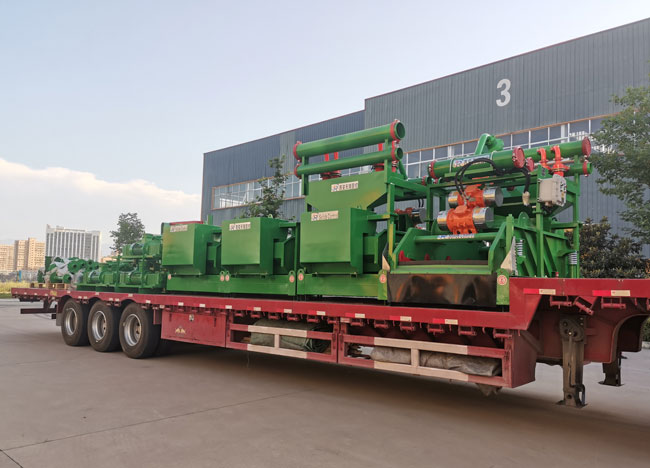
With drilling advancements, solids separation moves toward high efficiency and eco-friendly operation. As a professional solids control manufacturer, TR Solids Control optimizes processes and equipment configuration to adapt to complex field conditions, delivering reliable solutions for offshore, shale gas and onshore deep well drilling, and supporting sustainable development of oil & gas drilling.
Contact us for mud purification system design. Email: info@mudsolidscontrol.com

Address: No.2 Huochang Road, Yangling District,Xianyang City, Shaanxi Province, China
Tel: +86-18509252400
Wechat: 18509252400
Email: info@mudsolidscontrol.com
Contact: Mr.Li
 +86-18509252400