Contact Person: Mr.Li
Mobile: +86-18509252400
Wechat: 18509252400
Email: info@mudsolidscontrol.com
Address: No.2 Huochang Road, Yangling District,Xianyang City, Shaanxi Province, China
Ask any drilling engineer or mud man: the solids control system is what keeps your hole from turning into a mess. It takes the junk the bit cuts out of the formation and gets it out of the drilling fluid so you can send that fluid back down clean. When the solids control system works right, you drill faster, spend less on mud, and avoid a lot of downhole headaches.
This is how a full system does it - stage by stage, the way you see it on drilling rig.
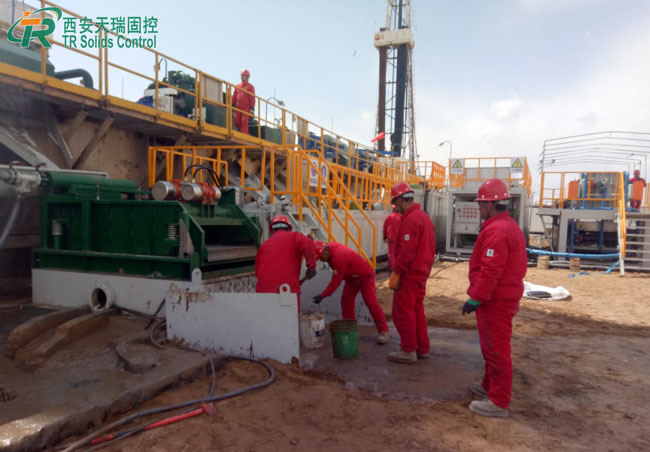
Every time drilling fluid comes up the annulus, it's full of cuttings, sand, silt, and micro‑fines. They just keep circulating and grinding down your bit, thickening your mud, and causing all kinds of trouble.
I've been on jobs where the crew tried to save money by cutting back on solids control. Believe me, they paid for it later. The Solids Control System integrates equipment to remove unwanted solids from drilling fluid, retain useful ones (barite), and recycle purified fluid. Its core goal is maintaining optimal fluid properties—density, viscosity, lubricity, which directly impact efficiency and safety.
The shale shaker is where it all starts. Mud hits the vibrating shaker screen; anything bigger than the mesh flies off the end as cuttings. The cleaned mud drops into the tank below.
Cut size: 75+ microns (depending on mesh - usually 80 to 200 mesh)
What matters in the field: Screen condition, feed rate, vibration angle. Overload the shaker and you're just washing solids right over the screen.
Most rigs run linear or elliptical motion shakers. Bottom line: check shaker screens every tour. A torn screen kills whole system.
Gas from the formation - methane, H₂S, whatever - mixes into the mud and makes it light. That drops your hydrostatic head and can lead to a kick or worse. The vacuum degasser pulls those tiny gas bubbles out of the mud and vents them.
When you need it: Any sign of gas in the returns. Underbalanced drilling. And definitely if you see bubbles coming over the shaker.
How well it works: Gets over 99% of free gas if it's set up right.
Put the vacuum degasser right after shale shaker, before any hydrocyclones. Cyclones and gas don't mix.
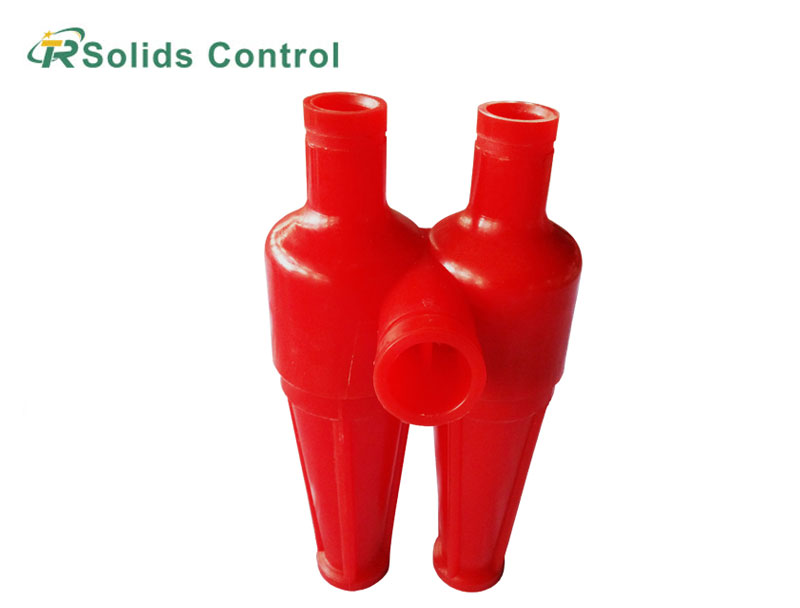
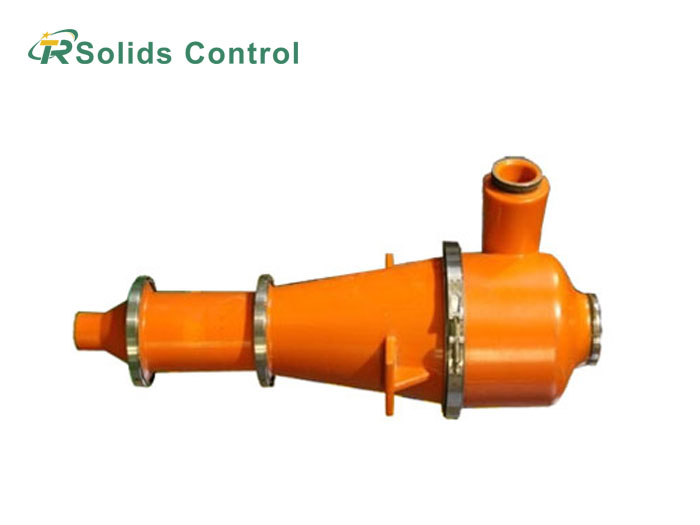
The desander runs on hydrocyclone. Mud goes in at an angle, spins like crazy, and the centrifugal force throws the heavier sand to the wall. It drops out the bottom, clean fluid goes up and out.
Particle size it catches: 45–74 microns
Pressure drop roughly: 0.15–0.3 MPa (22–44 psi)
Rule of thumb: don't use one big cyclone. Run several smaller ones in parallel. Better separation, and if one plugs you've still got the others.
Same idea as the desander, but with smaller cones - usually 4 or 5 inches. That means higher spin speeds and finer separation. A lot of rigs mount the desilter over fine shale shaker screen; that's mud cleaner. It stops any big particles that somehow made it past the earlier stages.
What it pulls out: 15–44 microns
Real‑world catch: If your mud is thick (high viscosity), the desilter won't spin right. You might need to dilute it a bit. A lot of guys ignore that, then they're constantly unplugging cones.
The centrifuge is your precision tool. Inside, bowl spins at 2,000 to 4,000 RPM. Mud hits that bowl and gets thrown hard - up to 3,000 G's. Solids stick to the wall, screw conveyor scrapes them out. You've got two ways to run it:
Clarification mode - Get rid of the ultra‑fines (down to 1–2 microns). Use this to drop viscosity.
Barite recovery mode - On weighted mud, you tune the differential speed so the centrifuge dumps low‑gravity solids but keeps the barite in mud system. That saves serious money.
Here's how it goes from one end to the other:
Well returns → Shale shaker (big chunks gone) → Degasser (bubbles out) → Desander (sand gone) → Desilter (silt gone) → Centrifuge (micro‑fines gone) → Clean mud tank → Mud pump → Back downhole.
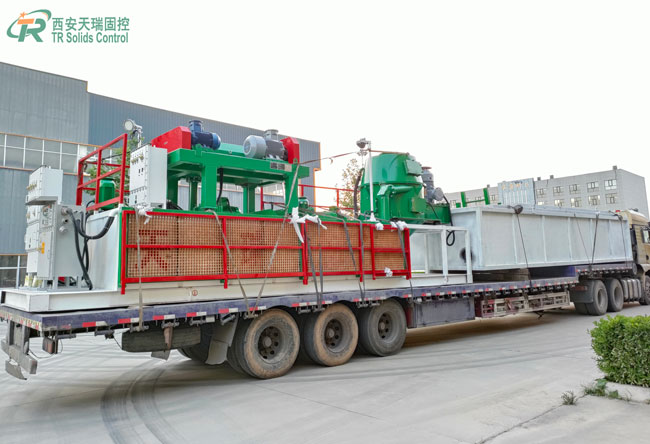
Those solids from each stage go to waste bin. Some rigs use drying shaker to squeeze more liquid out of the cuttings.
Match your stages. Don't put a fine desilter behind shale shaker that's blowing big particles. You'll plug everything.
Watch your viscosity. Heavy mud won't cyclone worth a damn. Add water or thinner as needed.
Don't chase the finest shaker screen all the time. Sometimes a coarser screen keeps the system moving, and that's better than absolute perfection.
Centrifuge speed is not set‑and‑forget. Adjust it when the formation changes or when you switch from water‑based to oil‑based mud.
The old "run whatever came with the rig" days are going away. Now you see:
Smart systems - Sensors measure particle size and adjust screens or centrifuge speed automatically.
Modular skids - Easy to move between wells or fit on offshore platforms.
Cutting Dryers - A second shaker that squeezes more liquid out of cuttings. Less waste volume, lower trucking cost.
Closed‑loop vacuum systems - Keeps fumes from escaping. Environmental guys love that.
Short answer: yes. Real job numbers I've seen:
Fresh mud consumption drops 60–80%
Rate of penetration goes up 15–30%
Waste disposal costs cut by more than 40%
And the big one - way less non‑productive time from stuck pipe or lost circulation
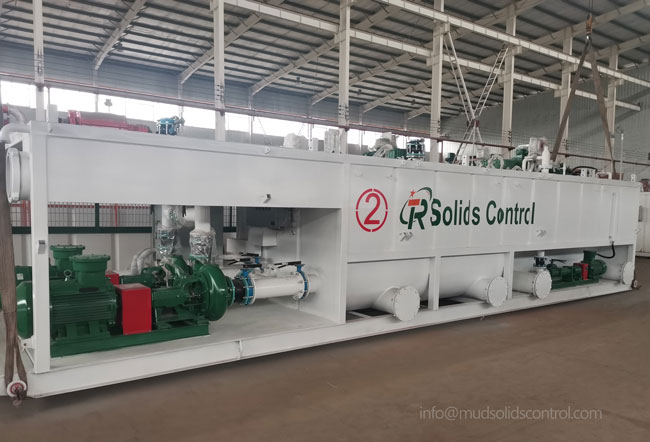
A full solids control system is not just a pile of iron hooked together. It's a process. The shaker does the rough cut, the cyclones take out sand and silt, the centrifuge finishes the job. Skip a stage or run it wrong, and your mud turns to crap. Run it right, and you'll drill faster, cheaper, and safer.

Address: No.2 Huochang Road, Yangling District,Xianyang City, Shaanxi Province, China
Tel: +86-18509252400
Wechat: 18509252400
Email: info@mudsolidscontrol.com
Contact: Mr.Li
 +86-18509252400