Contact Person: Mr.Li
Mobile: +86-18509252400
Wechat: 18509252400
Email: info@mudsolidscontrol.com
Address: No.2 Huochang Road, Yangling District,Xianyang City, Shaanxi Province, China
In solids control equipment, the drilling fluid shale shaker is an indispensable piece of machinery, and shaker screens are the key components that directly determine solids separation efficiency and drilling fluid purification quality. Various types of screens are available on the market, primarily classified by their structure, characteristics, application scenarios, and materials.
.jpg "Derrick FLC503 Flat Shaker Screen For Sale")
Structure: 2–3 layers of 304/316 stainless steel wire mesh bonded onto a perforated metal backing plate, with rigid hooked edges for quick tensioning and installation. The most common basic type in oilfields.
Advantages: Mature manufacturing, moderate cost, easy replacement, flat screen surface, suitable for coarse to medium screening under stable working conditions.
Applications: Conventional onshore oil drilling, primary coarse screening; compatible with most shale shakers (Brandt, Swaco, etc.).
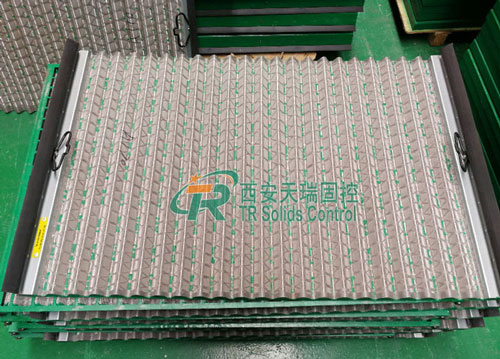
Structure: Screen surface pre-buckled into continuous wave or pyramid shape, multi-layer stainless steel composite with metal backing plate. Effective screening area reaches 125%–150% of flat screens of the same size.
Advantages: Flow rate increased by 25%+, more uniform material distribution, strong anti-clogging performance. Ideal for high-viscosity oil-based / water-based mud and high cuttings load.
Applications: Offshore deepwater drilling, horizontal wells, cuttings drying systems; widely used in Tianrui TRZS 703/585 series and Derrick high-frequency shale shakers.
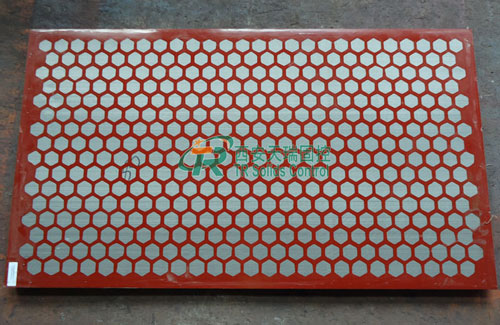
Structure: High-strength square / flat steel welded frame, built-in multi-layer screen cloth and backing plate, high overall rigidity. Available in steel frame and composite frame.
Advantages: High fatigue resistance, long service life, no deformation under high G-force vibration. Suitable for large shale shakers and long-term continuous operation.
Applications: High-power shale shakers, large-scale drilling projects; direct replacement for Derrick, Swaco frame screens.
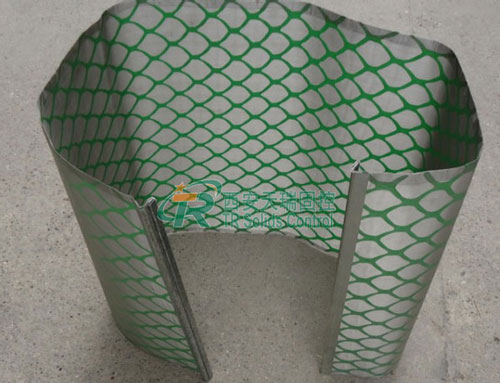
Structure: Only 2–3 layers of composite stainless steel wire cloth, no metal backing plate, flexible hook edge. Light weight, higher effective screening area ratio.
Advantages: Low cost, fast installation, suitable for small-amplitude shale shakers. Short service life, not for high G-force conditions.
Applications: Small solids control units, emergency replacement, shallow drilling.
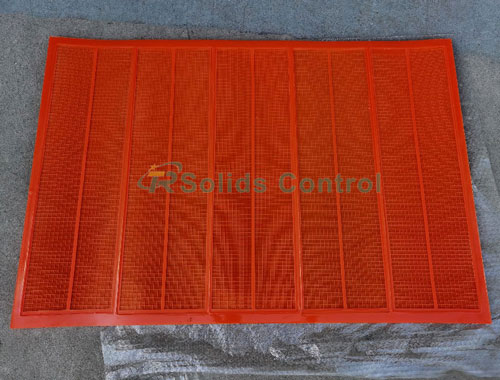
Structure: Integrally molded polyurethane elastomer, or polyurethane frame + composite screen cloth. Oil-resistant, wear-resistant, corrosion-resistant.
Advantages: Low noise (10–15dB lower than metal screens), impact-resistant, service life 3–5 times that of ordinary steel screens.
Applications: Mining drilling, high sand content formations, offshore platforms (seawater corrosion resistance).
Structure: 3–4 layers of wire cloth with different meshes, bottom coarse layer for support, middle layer for classification, top fine layer for precision. Integrated high-temperature bonding.
Advantages: Accurate classification, fine filtration from 100–325 mesh, recyclable expensive drilling materials like barite.
Applications: Fine solids control, zero-discharge mud systems, environmentally friendly drilling platforms.
Working Condition: High cuttings / high-viscosity mud → Wave Screen; High G-force → Frame Screen; Limited budget → Soft Hook / Flat Hook Screen.
Material: Seawater / acidic mud → 316L stainless steel + PU; Conventional → 304 stainless steel.
Mesh: Primary screening 18–40 mesh; Desanding 40–100 mesh; Fine screening 100–200 mesh; Cuttings drying 200+ mesh.
API Standard: Premium screens comply with API RP 13C.

Address: No.2 Huochang Road, Yangling District,Xianyang City, Shaanxi Province, China
Tel: +86-18509252400
Wechat: 18509252400
Email: info@mudsolidscontrol.com
Contact: Mr.Li
 +86-18509252400