Contact Person: Mr.Li
Mobile: +86-18509252400
Wechat: 18509252400
Email: info@mudsolidscontrol.com
Address: No.2 Huochang Road, Yangling District,Xianyang City, Shaanxi Province, China
In industries such as mining, drilling solids control, metallurgy, and building materials, shale shaker serves as the critical piece of equipment for material classification and solid-liquid separation. Its operational stability directly impacts production continuity and product quality. As a key wear part of the shale shaker, shaker screens play the decisive role in screening performance, largely determined by installation quality and application compatibility. With years of deep experience in the solids control field, Xi'an TR Solids Control has summarized key technical points for shaker screen installation and field application, exploring how scientific management can enhance screening performance from both installation practices and application perspectives.
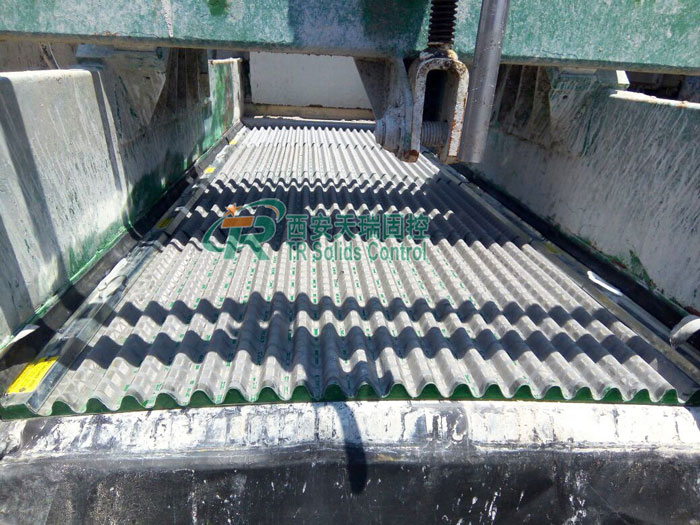
Installing shaker screens is the first step in ensuring reliable shale shaker operation, with tension control being the core factor. If the shaker screen is installed too loosely, the material bouncing on the screen surface can cause the screen to vibrate against the support beams, creating secondary vibrations. This not only reduces throughput but also leads to premature fatigue failure of the screen within short period.
The correct approach is: before installation, first clean up debris and residual materials on the screen frame to ensure the support beam is flat. When laying the shaker screen, use the special tensioning tool to tension it sequentially from the middle to both sides of the screen box. For the bolt pressing plate type fixing structure, the fastening bolts should be tightened in diagonal order to make the shaker screen stress evenly. In on-site services, TR Solids Control emphasizes that only when the shaker screen forms an effective coupling with the vibration direction of the shale shaker can the vibration energy be evenly transmitted to the material layer, avoiding early damage caused by local stress concentration.
In field applications, the selection of shaker screens must be strictly aligned with material characteristics. For high-hardness, large-particle ore screening, polyurethane or woven wire anti-blinding screens are recommended. These screen types offer high wear resistance and can withstand the high-frequency vibration of the shale shaker. For fine, wet, and sticky materials, anti-blinding or self-cleaning screens are preferable. These screens utilize the excitation force of the shale shaker to generate elastic deformation, effectively addressing screen blinding issues caused by sticky materials.
When providing solids control system solutions, TR Solids Control adheres to the philosophy that "the screen is part of the process." By precisely matching screen types to site-specific operating conditions, the company helps customers achieve balance between screening efficiency and operational costs.
Before the use of the shale shaker, it is recommended to conduct no-load test run after the shaker screen is installed, observe the movement trajectory of the screen body and the jumping amplitude of the screen, and judge whether the installation is firm and reliable. Focus on checking the wear of the screen surface, and repair or replace it in time if local damage is found, so as to prevent large-particle materials from entering the downstream process due to screen damage, resulting in equipment damage or product quality accidents.
The installation quality and application compatibility of shaker screens directly determine the screening efficiency and operating costs of the shale shaker. When selecting screens, factors such as open area, wire diameter strength, and support structure must be considered to ensure stable screening performance over long-term operation.
By standardizing installation procedures, optimized operating parameters and regular maintenance, the performance advantages of shaker screens and shale shakers can be fully exerted, achieving dual improvement of production efficiency and equipment service life. Leveraging its deep expertise in solids control, TR Solids Control continues to provide customers with comprehensive technical support, from screen selection to on-site installation, helping enterprises achieve cost reduction and operational efficiency.

Address: No.2 Huochang Road, Yangling District,Xianyang City, Shaanxi Province, China
Tel: +86-18509252400
Wechat: 18509252400
Email: info@mudsolidscontrol.com
Contact: Mr.Li
 +86-18509252400