Contact Person: Mr.Li
Mobile: +86-18509252400
Wechat: 18509252400
Email: info@mudsolidscontrol.com
Address: No.2 Huochang Road, Yangling District,Xianyang City, Shaanxi Province, China
When drilling fluid returns from the wellbore, the shale shaker is the first stop. Its job is simple: separate rock cuttings from the drilling fluid so it can go back down hole for another round. But how well it does that job affects everything downstream. Your desander, your centrifuge, your fluid costs, and even your environmental compliance all depend on it.
At TR Solids Control, we've delivered shale shakers to over 30 countries. So what do you really need to watch when choosing one? After running rigs all over, we've found it boils down to these five hard facts.
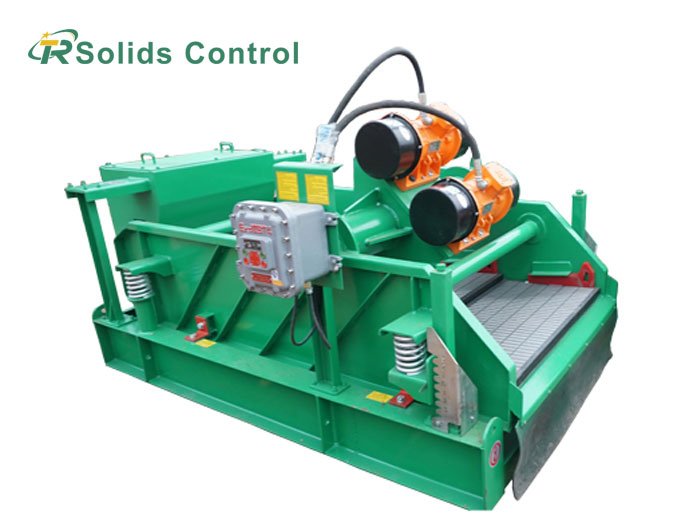
The whole point of a shale shaker is to remove solids. Two motors drive the screen box at high frequency, vibrating the screen surface. Mud hits the screen, and the vibration moves cuttings up and off the screen while liquid passes through.
A properly built shaker will remove more than 90 percent of particles larger than 74 microns. That is the API 200 mesh standard. The cuttings discharge off the end of the screen. The cleaned fluid flows to the next stage in your solids control system.
Why does this matter? If large cuttings aren't caught here, they'll clog and damage your desander cones and centrifuge bowls. We've seen operations where a worn-out shaker screen let cuttings through, and the centrifuge needed a $15,000 rebuild two weeks later. That's the kind of downtime you don't want.
The same principle applies in other industries. In mining, dual-deck linear shakers sort ore by size, reducing the load on downstream mineral processing. In chemical manufacturing, consistent screening accuracy keeps product specs tight. In food processing, the screens need to meet hygiene standards. Different industry, same physics.
By adjusting amplitude, frequency, and screen angle, you can tune a shaker to handle different materials. That flexibility is why one piece of equipment works across so many shale shaker applications.
Shale shakers consume far less power than other solids control equipment. A centrifuge doing similar work might need 30 to 50 kW. A shale shaker? Typically 2 to 4 kW per motor, with two motors per unit. That works out to roughly 1/3 to 1/5 of what a centrifuge uses.
Newer dual mass resonance shakers improve on that even further. They use anti resonance theory and high frequency motors to cut energy consumption by up to 86.8 percent and reduce noise by up to 25% compared to traditional shakers of the same specification. For an operation running 24/7, that adds up fast on the power bill.
There's an environmental angle too. When a shaker removes cuttings efficiently, the cuttings come off the screen dry enough for direct transport. That means smaller mud pits, less waste liquid, and less remediation work when the well is done. The drilling fluid, with bentonite and other additives still in it, goes back into circulation instead of getting thrown out. That's drilling fluid solids control at its most basic level.
Processing capacity varies by model. TR Solids Control's shakers range from 60 to 170 m3/h. For most drilling operations, a single unit handles the flow. For high-volume operations, you can run multiple shakers in parallel.
But throughput is only half the story. The other half is how long the shaker keeps running without breaking down. In continuous drilling, equipment runs 24 hours a day for weeks at a stretch. If your shaker fails at 2 AM, drilling stops.
That is why build quality matters. The screen box on our dual mass resonance shakers uses an all sheet metal segmented arch design. This design holds up under high frequency vibration without developing cracks or abnormal noise. The vibration itself prevents material buildup, and nothing sticks to the screen long enough to cause clogging.
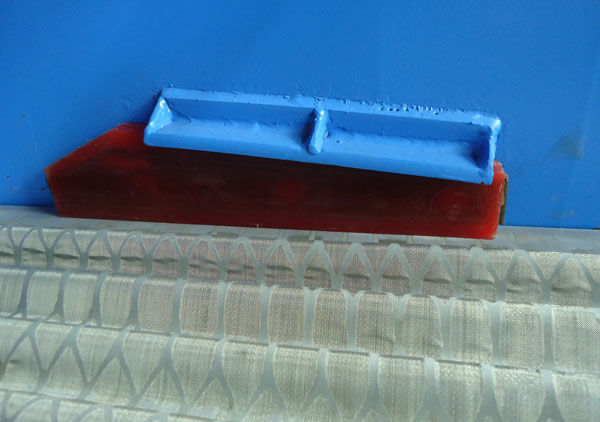
A shale shaker is a relatively simple machine. It has four main components: the screen box, the motors, the shaker screens, and the shock absorbers. No complex electronics, no hydraulics. That simplicity keeps shale shaker maintenance costs low.
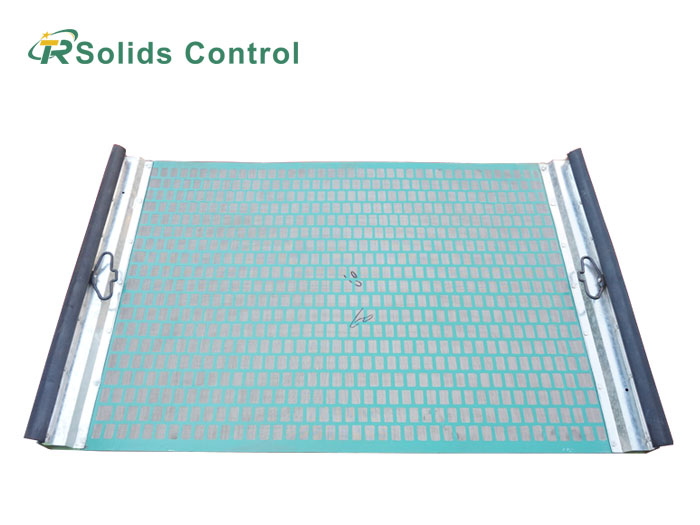
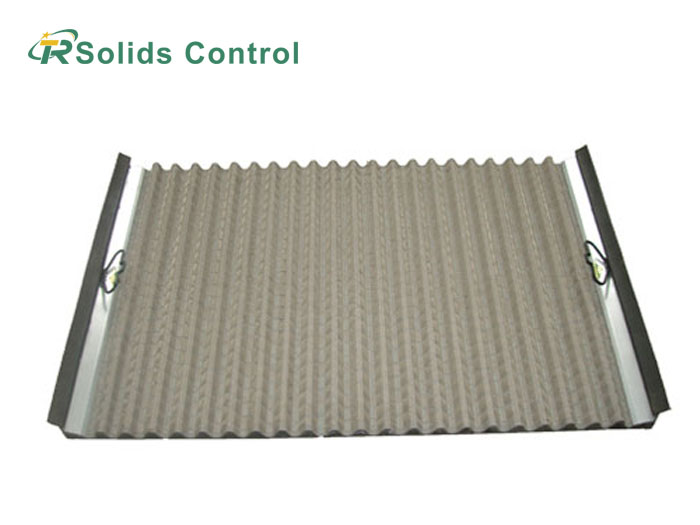
Screens are the most common wear item. You replace them based on condition. You will see when the mesh starts tearing or blinding. Our screens use a modular design, so a shaker screen swap takes about 10 minutes. No special tools needed.
The motors are built-in with heat sinks. Keep an eye on operating temperature, and make sure the cooling fins aren't blocked with mud. Other than that, daily maintenance comes down to three things. Check the screens. Monitor motor temperature. Inspect the shock absorbers for wear.
You don't need a specialist on-site for routine maintenance. A trained rig hand can handle it. That's one less line item in your staffing budget.
Shale shakers started in oil and gas, but they've grown well beyond that. In coalbed methane and shale gas drilling, they stabilize mud performance and reduce reservoir damage. Mining and aggregates operations use them to screen raw material by size. In chemical processing, they handle precise separations. In food production, they meet hygiene standards with easy-clean designs.
The range of available configurations makes this possible. Single-layer, multi-layer, high-frequency, low-frequency. You pick based on what you're processing, how much you're processing, and how much space you have. A narrow site might use a compact single-deck shaker. A large mining operation might need a three-deck linear shaker for multi-stage classification. Our TRZS series also supports balanced elliptical motion for handling sticky formations.
Start with your throughput. How much fluid are you processing per hour? That narrows down the model range. Next, what are you separating? Particle size determines screen mesh. A drilling operation removing cuttings needs API 20 to 325 mesh. A mining operation classifying ore may require something entirely different.
Consider the material too. Corrosive fluids need screens with special coatings. High-temperature applications need motors rated for the heat. And think about installation. Is this going on a fixed platform, a drilling rig, or a portable skid?
For daily maintenance, build a checklist: inspect screens for wear, monitor motor temperature and vibration, check shock absorbers, and keep a stock of replacement screens on-site. A 10-minute screen swap beats a 4-hour drilling stop.
Shale shakers aren't complicated, but they're critical. Get the separation right at the start of your solids control chain, and everything downstream runs smoother. Your centrifuge lasts longer, your mud costs less, and your environmental compliance gets easier.
If you're specifying a shaker for your next project, give us a call. We'll help you match the right model to your conditions. Field-tested equipment from people who've been doing this since 2010.

Address: No.2 Huochang Road, Yangling District,Xianyang City, Shaanxi Province, China
Tel: +86-18509252400
Wechat: 18509252400
Email: info@mudsolidscontrol.com
Contact: Mr.Li
 +86-18509252400