Contact Person: Mr.Li
Mobile: +86-18509252400
Wechat: 18509252400
Email: info@mudsolidscontrol.com
Address: No.2 Huochang Road, Yangling District,Xianyang City, Shaanxi Province, China
Oilfield mud shaker screens (also known as drilling fluid shale shaker screens) serve as a critical filtration barrier in solids control systems for both onshore and offshore oil and gas drilling. They are used to separate drill cuttings and solid particles from the drilling mud, purifying the fluid for recirculation. This directly impacts drilling efficiency, mud costs, and downhole safety. Key performance requirements include wear resistance and fatigue resistance under high-frequency vibration, intense particle erosion, and exposure to acidic/alkaline or high-temperature conditions—properties that determine the screen's service life and overall cost-effectiveness.
Currently, mainstream mud shaker screens are primarily divided into two categories: flat screens and compound frame screens. Wear-resistant technology is achieved through the use of high-quality stainless steel materials and specialized structural designs.
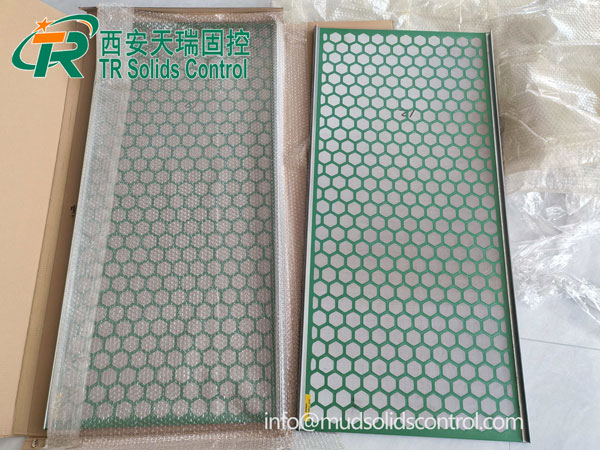
| Core Materials | Primarily made from 304, 316, or 316L high-quality stainless steel. 316L, containing molybdenum, offers superior corrosion resistance and pitting resistance, making it particularly suitable for mud systems with complex chemical environments. |
| Structure & Process | Flat Screen: 2-3 layers of stainless steel mesh bonded to a perforated metal plate. This structure is stable, reducing friction and vibration. Compound Screen: 2 layers of stainless steel mesh with a plastic support mesh in between, bonded together through high-temperature vulcanization for high overall strength. |
| Mesh Range | Typically ranges from 20 mesh to 325 mesh, selectable based on required filtration precision. |
| Service Life | High-quality products can last up to 720 hours or more under normal operating conditions. |
| Dimensions | Common sizes include 1050×700mm, 1165×585mm, etc. Custom sizes are available to fit various shale shaker models (SWACO, Derrick, Brandt). |
Core Advantages
Durability and Cost-Effectiveness: High wear resistance directly reduces the frequency of screen replacements, thereby lowering downtime costs and spare parts procurement expenses.
Efficient Filtration: The stainless steel construction ensures the screen possesses comprehensive resistance to high temperatures, oil, and acids/alkalis. This guarantees stable screening efficiency and solids discharge capacity even under harsh operating conditions.
Selection Guide
Matching Equipment: First, confirm the brand and model of your shale shaker, mud cleaner, desander, etc. Choose screens with the correct hook strip type and installation dimensions for a proper fit.
Define Operating Conditions: Select the appropriate stainless steel grade (e.g., 316L) and screen mesh size based on the drilling fluid properties (acidity/alkalinity, temperature, sand content) and the desired solids control particle size (D50 cut point).
Supplier Recommendation
TR Solids Control is a manufacturer integrating R&D, production, and sales of solids control equipment. They supply replacement shaker screens compatible with brands like Derrick and SWACO and hold API certification. In addition to screens, TR Solids Control manufactures complete mud shale shakers and other solids control systems. For equipment purchases or replacement needs, you can inquire via email: info@mudsolidscontrol.com

Address: No.2 Huochang Road, Yangling District,Xianyang City, Shaanxi Province, China
Tel: +86-18509252400
Wechat: 18509252400
Email: info@mudsolidscontrol.com
Contact: Mr.Li
 +86-18509252400