Contact Person: Mr.Li
Mobile: +86-18509252400
Wechat: 18509252400
Email: info@mudsolidscontrol.com
Address: No.2 Huochang Road, Yangling District,Xianyang City, Shaanxi Province, China
Mud screening equipment is critical for solid-liquid separation in drilling, piling, tunneling, mining and other projects.Selecting the correct equipment directly impacts mud purification efficiency, operational costs, equipment wear, and environmental compliance. The goal is to find the optimal balance between processing capacity, screening precision, and mechanical durability.
.jpg "Oil-based mud does not spill on site - TR Solids Control manufacturer")
Oil & Gas Drilling:This is one of the most demanding applications. Key requirements: high efficiency, stability and safety. Equipment must handle large-volume mud (3000–5000 L/min) and use explosion-proof motors (ATEX/IECEx certified). Recommended options include High-Frequency Linear Shale Shakers, Balanced Elliptical Shakers, or Dual-Motion Shakers, which provide strong excitation force and processing efficiency.
Tunneling (TBM/Shield), Directional Drilling (HDD), & Piling:Focus on mud recycling and environmental compliance. Mud often contains sticky clay and fine particles that are difficult to separate. Modular, transportable systems are preferred. Slurry Separation Systems (coarse shaker, desander cyclones, and fine screen) are the mainstream choice. For extremely fine particles, advanced Combination Motion Dewatering Screens can achieve separation efficiencies above 70%.
Mining / High Wear Conditions:Materials are often large, hard and highly abrasive. Prioritize cost-effectiveness and durability. Heavy-duty Shale Shakers with polyurethane shaker screens are ideal, service life is 2–3 times longer than stainless steel screens.
Once the application scenario is defined, specific numbers are needed to define the equipment. Parameters are key to equipment performance, determining its adaptability and operational effectiveness.
| Key Parameter | Recommended Value / Considerations | Select points |
| Processing Capacity | 20%-30% higher than the maximum mud pump output | This is the primary matching item. For example, if the pump output is 3000 L/min, choose equipment with a capacity of 3600-3900 L/min. Insufficient capacity can lead to mud overflow and affect project progress. |
| Screen Area | Single shaker: > 2.5 m² minimum. Deep wells/high solids: > 3 m² | Larger area means longer retention time and better separation. Dual-deck screens can increase throughput by 30-40%, though fine separation may slightly decrease |
| Screen Mesh | General: 80-120 mes Soft Formations: 60-80 mesh Hard Formations: 120-200 mesh | Mesh count determines the particle size that can be separated. For oil drilling, coarse screens might use 40 mesh, while fine screens use 120 mesh, sometimes in combination (coarse on top, fine below). |
| Vibration Intensity (G-force) | General: 5.0 - 7.3 High Density/Fine Particles: Up to 8.3 G | G-force is a measure of vibration acceleration, directly impacting screening efficiency and material conveyance speed. However, excessively high G-force can accelerate equipment wear. |
| Motor & Materials | Explosion-proof Rating: Ex d IIB T4 (or higher) Ingress Protection: Minimum IP55 | Explosion-proof motors are mandatory for oil & gas scenarios. For high-wear environments (like oil-based mud), polyurethane screen panels are preferred. For water-based mud, stainless steel mesh offers a good balance between cost and corrosion resistance. |
The equipment needs to run stably for the long term. These "soft factors" are equally important:
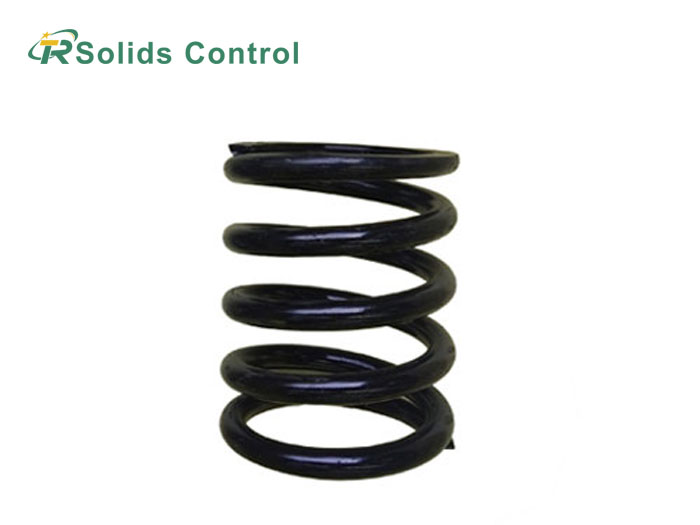
Structural Durability: High-quality equipment features side plates made from single-piece cold-formed steel to eliminate welding stress. Cross beams should be connected to side plates using high-strength bolts rather than welds. For vibration damping, rubber springs (with a lifespan 3-5 times longer than metal springs) are preferred.
Maintenance Convenience: Time on site is valuable. Prioritize equipment with quick-change screen systems and centralized lubrication points, which can significantly reduce downtime.
Intelligence Level: Modern high-end equipment supports IoT remote monitoring and AI-driven parameter optimization, automatically adjusting vibration frequency based on mud properties for precise, "unmanned" control.
Brand and Service: Research the manufacturer's track record with successful projects in similar working conditions. Assess whether their after-sales service team can respond quickly to your needs.
Land Oil Drilling (ZJ50 Rig):Configure 2 linear motion shakers with shaker screen area ≥ 2.7㎡. Ensure capacity matches the pump output, motors are explosion-proof, and screen mesh is adjustable between 80-150 mesh depending on the formation being drilled.
Urban Subway Shield Tunneling:Configure 1 modular slurry separation system with capacity ≥ 200m³/h, including mud shaker, desander cyclones, and fine mesh dewatering screen. Focus on solving clay separation challenges to enable efficient mud recycling.
Xi'an TianRui Petroleum Machinery is a manufacturer specializing in mud separation equipment with years of experience and API certification. We offer a wide range of drilling solids control equipment. If you can provide more detailed information about your specific working conditions—such as your rig model, mud pump displacement, or project type,we can offer a more precise analysis. Contact us: info@mudsolidscontrol.com

Address: No.2 Huochang Road, Yangling District,Xianyang City, Shaanxi Province, China
Tel: +86-18509252400
Wechat: 18509252400
Email: info@mudsolidscontrol.com
Contact: Mr.Li
 +86-18509252400