Contact Person: Mr.Li
Mobile: +86-18509252400
Wechat: 18509252400
Email: info@mudsolidscontrol.com
Address: No.2 Huochang Road, Yangling District,Xianyang City, Shaanxi Province, China
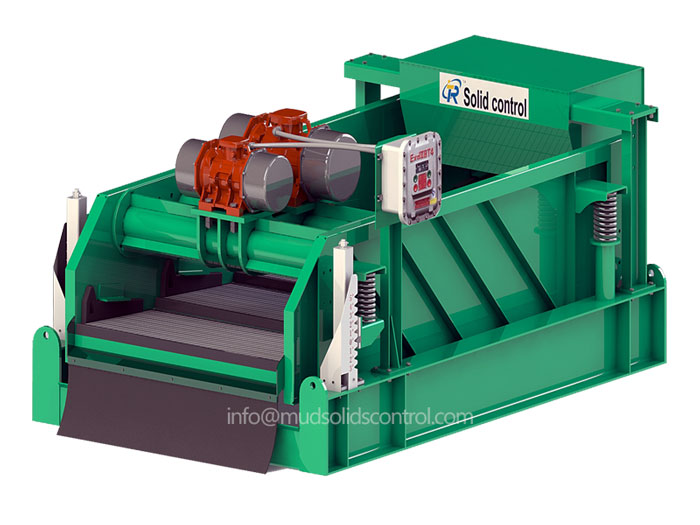
As the core equipment for drilling fluid solid control, the shale shaker design must adapt to diverse drilling environments and application requirements. TR Solids Control has analyzed the differentiated requirements of different drilling environments for shale shaker design, and deeply understood the variation rules of key parameters such as shaker screen type, screen box structure, drive mode, and processing capacity. The research found that offshore drilling platforms require larger and more robust shale shakers with excellent corrosion resistance; shale gas drilling requires high-frequency shale shakers combined with centrifuges to achieve fine screening of more than 200 meshes; deepwater drilling faces extreme high pressure and low temperature, requiring special materials and thermal insulation design. To address special challenges such as high-viscosity drilling fluid, large amounts of cuttings, and extreme temperatures, the shale shaker design adopts innovative strategies such as double-layer screening, water spray cleaning, and flexible adjustment. Shale shakers are developing towards intelligence and greenization, providing technical support for efficient solid control in complex drilling environments.
Onshore Conventional Drilling
Relatively stable environment, processing capacity >200m³/h, temperature adaptability from -20℃ to +55℃
Offshore Drilling Platforms
High salinity corrosion, requiring more robust and corrosion-resistant design, strict space constraints
Shale Gas Drilling
High-frequency shale shakers combined with centrifuges, fine screening of more than 200 meshes, recovery rate increased by 40%
Deepwater Drilling
Extreme high pressure and low temperature (30MPa/0-4℃), requiring special materials and thermal insulation design
Polar Drilling
Low temperature adaptability of -50℃, requiring heating system and special lubrication
High Temperature and High Pressure Drilling
Temperature >150℃, pressure >70MPa, requiring high-temperature and high-pressure resistant materials and intelligent monitoring
Shaker Screen Type
Wire mesh shaker screen: low cost, high flexibility
Polyurethane shaker screen: wear resistance increased by more than 50%
Composite shaker screen: multi-layer structure, fine screening
Screen Box Structure
Single layer: simple structure, low cost
Double layer: graded screening, high efficiency
Multi-layer: multi-stage separation, precise control
Drive Mode
Inertial vibration: simple structure, high reliability
Electromagnetic vibration: high frequency, good adjustability
Composite drive: combining multiple advantages
Processing Capacity
Onshore: >200m³/h
Offshore: modular design
Shale gas: fine screening, efficiency priority
Water-based: low cost, good environmental protection, conventional material requirements
Oil-based: strong inhibition, requiring oil-resistant materials and strong vibration
Synthetic-based: balanced performance, high environmental protection requirements, high cost
High-viscosity Drilling Fluid
Double-layer or multi-layer screening structure for graded processing
Water spray cleaning system to reduce material accumulation
Low amplitude, high frequency ultrasonic vibration technology
Large Amount of Cuttings Handling
Solid-liquid separator technology
Negative pressure shale shaker, solid-liquid separation effect increased by 30%
"Linear + variable ellipse" dual-track vibration design
Extreme Environment Adaptation
High temperature: titanium alloy, nickel-based superalloy materials
Low temperature: GCr15SiMn low-temperature steel, heating system
Corrosion: 316L stainless steel, heavy anti-corrosion coating
Intelligence
Integrate sensing, control, and communication technologies to realize automatic adjustment and fault early warning
Greenization
Low energy consumption, low noise, zero emission, and sustainable development concept
The selection of design parameters for shale shakers produced by TR Solids Control must be adapted to the drilling environment. The shaker screen type needs to select wire mesh, polyurethane or composite materials according to material characteristics and environmental conditions; the screen box structure can adopt single-layer, double-layer or multi-layer design to meet different screening requirements; the drive mode includes inertial vibration, electromagnetic vibration, composite drive and other options; the processing capacity needs to be matched and designed according to drilling displacement and material characteristics.

Address: No.2 Huochang Road, Yangling District,Xianyang City, Shaanxi Province, China
Tel: +86-18509252400
Wechat: 18509252400
Email: info@mudsolidscontrol.com
Contact: Mr.Li
 +86-18509252400