Contact Person: Mr.Li
Mobile: +86-18509252400
Wechat: 18509252400
Email: info@mudsolidscontrol.com
Address: No.2 Huochang Road, Yangling District,Xianyang City, Shaanxi Province, China
Selecting a drilling fluid centrifuge starts with the separation job and the mud entering the machine. The solids to be removed, feed conditions, and treatment rate determine the performance range required from the equipment.
Bowl speed, G-force, differential speed, pond depth, and capacity all affect the result. The right combination depends on the type of solids being handled and the conditions in which the centrifuge will run.
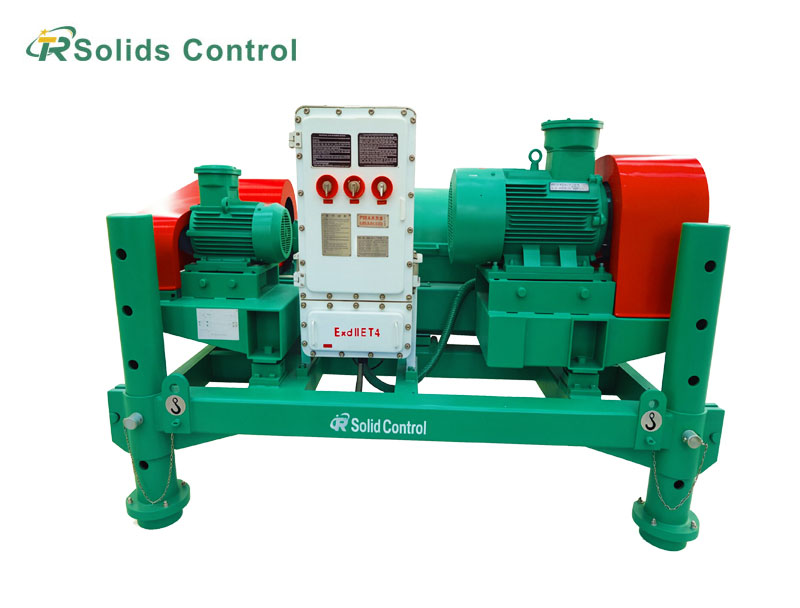
en.jpg "High-speed centrifuge for drilling fluid processing")
Start with what the centrifuge needs to accomplish.
In drilling fluid systems, centrifuges are commonly used for low-gravity solids removal and barite recovery.
For low-gravity solids removal, the aim is to reduce fine drilled solids that remain in the active mud. Barite recovery has a different priority: recover usable weighting material while removing unwanted finer solids.
This distinction affects the required cut point and operating conditions. Define the material to be removed or recovered before selecting equipment.
A centrifuge can perform differently as the feed changes. Mud density, viscosity, solids concentration, and particle size all influence separation and solids conveying.
Useful feed data includes:
Mud density
Viscosity and rheology
Total solids concentration
Particle size distribution
Barite concentration, if applicable
Temperature
Fluid composition
Particle size is particularly important when fine-solids removal is the main objective. If a target cut point is known, include it in the equipment requirements.
The cut point should match the treatment goal, since removing finer particles can also increase liquid or barite losses, depending on the application.
High-viscosity mud can be more difficult to process, while a high solids load increases conveyor load and wear. These conditions affect the capacity and adjustment range needed for the job.
en.jpg "drilling centrifuge manufacturer")
Look at the amount of mud that will actually enter the centrifuge.
The rig's total circulation rate is not necessarily the centrifuge feed rate; in many solids control systems, only part of the circulating mud is sent through the centrifuge.
Consider the normal flow, expected changes during drilling, solids loading, and daily operating time.
Feed rate and separation performance are closely related. Increasing throughput can reduce the time available for solids separation, particularly when the incoming mud carries a high solids load.
When evaluating models, request capacity figures for the expected operating conditions. A maximum flow figure based on water or a different fluid is not enough to judge field performance.
RPM is only part of the picture.
Centrifugal force depends on rotational speed and bowl diameter, so two machines running at the same RPM can produce different G-forces.
Look at the bowl speed, normal speed range, available G-force, and recommended conditions for the intended application.
Higher G-force generally improves fine-solids separation, but maximum G-force is not necessarily required. The useful setting varies with feed rate, mud properties, solids loading, and the desired cut point.
For equipment selection, consider the G-force available during normal operation rather than maximum RPM alone.
Differential speed controls the relative movement between the bowl and conveyor and determines how quickly separated solids reach the discharge.
It affects solids residence time, discharge dryness, conveyor torque, and solids handling.
A lower differential speed gives solids more time in the bowl and can increase discharge dryness under suitable conditions. The trade-off is greater conveyor load when the solids are difficult to convey.
A higher differential speed moves solids through the bowl faster and can be useful with heavier solids loading, although the shorter residence time may reduce separation.
Adjustable differential speed is useful when feed conditions change during drilling because the setting can be adapted to the solids load and treatment requirement.
en.jpg "Drilling Fluid Centrifuge for Oilfield Solids Control")
Pond depth affects liquid residence time, cut point, solids dryness, and liquid recovery.
A shallower pond generally favors drier solids and heavier solids loading, while a deeper pond provides more liquid residence time for separation. The appropriate setting varies with the feed rate, solids loading, separation target, and required liquid recovery.
Pond depth matters most when the centrifuge is being used for barite recovery or when the cut point needs to change with the mud conditions.
Feed conditions rarely remain constant throughout a drilling program. Mud density, solids loading, and flow rate can change between drilling stages, so the centrifuge needs enough adjustment range to maintain the required performance without excessive mechanical load.
The available range of bowl speed, G-force, differential speed, pond depth, and feed rate should cover the conditions expected in the application. This gives operators room to adjust the machine as the mud changes.
Drilling mud is abrasive, particularly when the feed contains a high concentration of drilled solids. Wear on the conveyor, bowl, discharge area, and other exposed components can become a significant operating cost.
For abrasive applications, check the hard-facing coverage on the conveyor and other high-wear areas, as well as the availability of replaceable wear parts. Bearing and seal design, maintenance access, spare-parts availability, and technical support also affect long-term operation.
Power consumption should be included in the cost calculation, especially when the centrifuge will operate continuously.
The purchase price is only one part of the calculation. Wear parts, maintenance, energy use, and downtime can have a larger effect on total cost over the service life of the equipment.
A centrifuge manufacturer needs basic feed and operating data to recommend a suitable model.
| Information | Purpose |
| Treatment objective | Defines whether the priority is solids removal or barite recovery |
| Mud density | Indicates the fluid loading condition |
| Viscosity / rheology | Helps assess separation and solids conveying |
| Total solids concentration | Indicates solids loading and potential wear |
| Particle size distribution | Helps establish the required separation capability |
| Target cut point, if known | Defines the desired fine-solids separation |
| Barite concentration | Important for barite recovery |
| Feed rate | Determines the required processing capacity |
| Temperature | Defines the expected operating condition |
| Fluid composition | Helps with material and seal selection |
Field data is preferable to assumed values. With these details, the manufacturer can assess the required capacity and adjustment range for the actual mud.
For demanding applications, ask whether the supplier can provide test or pilot data using mud with properties close to yours. This provides a more useful basis for judging separation performance than a specification sheet alone.
Actual feed data provides the best starting point for selecting a drilling fluid centrifuge. The main factors are the separation objective, mud conditions, feed rate, and the range of adjustment available during operation.
For applications with demanding separation requirements, test or pilot data can help confirm whether the proposed equipment will perform as expected. TR Solids Control manufactures drilling fluid centrifuges and can recommend equipment based on the operating conditions and separation requirements of the project.

Address: No.2 Huochang Road, Yangling District,Xianyang City, Shaanxi Province, China
Tel: +86-18509252400
Wechat: 18509252400
Email: info@mudsolidscontrol.com
Contact: Mr.Li
 +86-18509252400