Contact Person: Mr.Li
Mobile: +86-18509252400
Wechat: 18509252400
Email: info@mudsolidscontrol.com
Address: No.2 Huochang Road, Yangling District,Xianyang City, Shaanxi Province, China
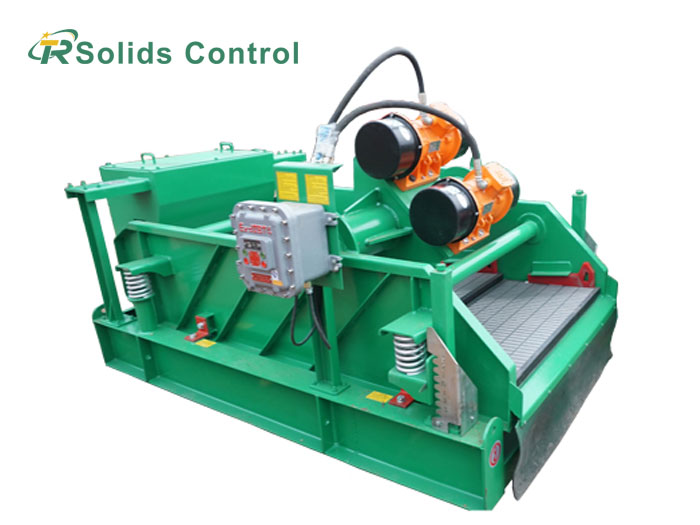
The Derrick FLC503 is a three-panel linear motion shaker built for the first stage of solids removal on a drilling mud system. Derrick rates it at roughly 130 m³/h (560 GPM) with a weir feed, which covers the circulation volume of most medium-depth programs.
One already runs an FLC503 and needs replacement screens that fit and hold up. The other is pricing a shaker for a rig that carries Derrick FLC 500 series decks. Both need the same three things: the specifications that affect fit and throughput, the screen options, and the details a supplier needs before quoting.

| Item | Value |
|---|---|
| Motion | Linear |
| Screen panels | 3 per deck |
| Panel size | 1053 × 697 mm |
| Vibrating motors | 2 × Super G, 1.72 to 1.84 kW each |
| G-force | Up to 7.0 G in continuous duty |
| Deck angle | -1° to +5°, adjustable while running |
| Screen tensioning | Single-side quick tension, under one minute per panel |
| Screen types | PWP (flat), PMD (pyramid), PMD+ |
| Rated capacity | About 130 m³/h (560 GPM) with weir feed |
| Dimensions | 2,867 × 1,600 × 1,659 mm |
| Weight | About 1,700 kg |
The capacity number moves with the screen you fit. Coarse panels and an uphill deck will run past 130 m³/h. Fine ones will have the deck pooling well short of it. If you are matching a shaker to a new section, size it on the flow you expect at the shaker rather than the pump rate, and leave room for the finer screens you will want deeper in the hole.
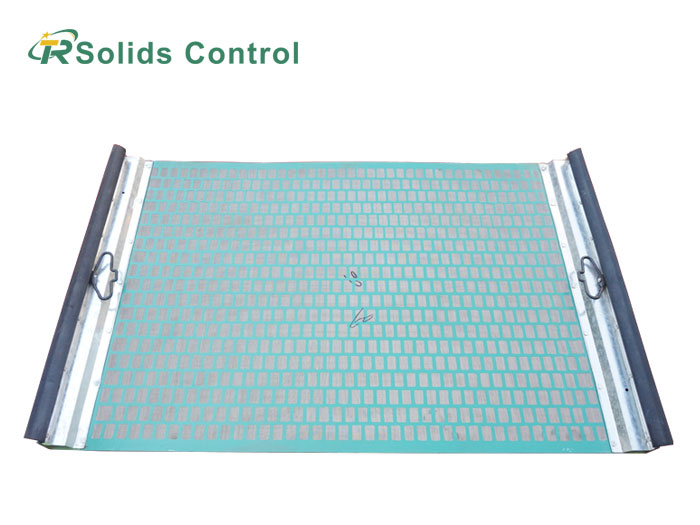
PWP panels are the flat ones: two or three layers of stainless wire cloth bonded to a perforated backing plate. They are the cheapest thing you can put on the deck, easy to read when you walk past, and well suited to conventional water-based mud with a moderate solids load.
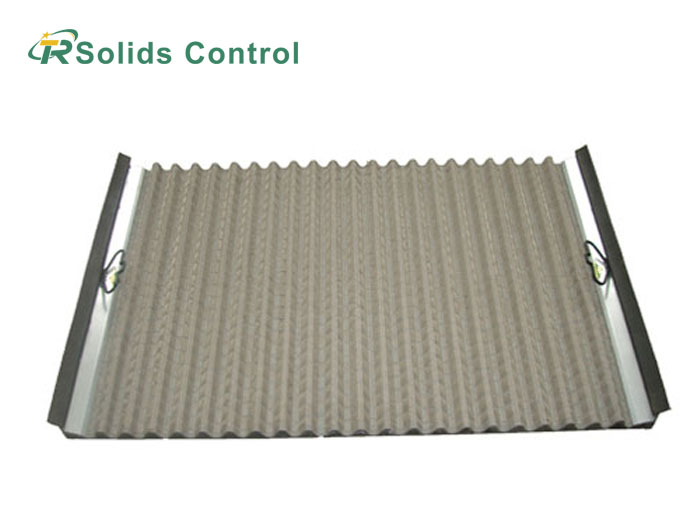
PMD panels take the same cloth and press it into a wave pattern before bonding. Same footprint, more usable screening area, and you spend that area one of two ways: a finer API grade at the flow you already have, or more throughput at the grade you are running. The panels cost more. Both types land near 400 to 450 hours in normal service, so what you are paying for is cut point and capacity.
Start flat. Move to pyramid when the deck floods at the grade you need, or when the mud system keeps carrying fines that a flat panel at a workable mesh lets through.
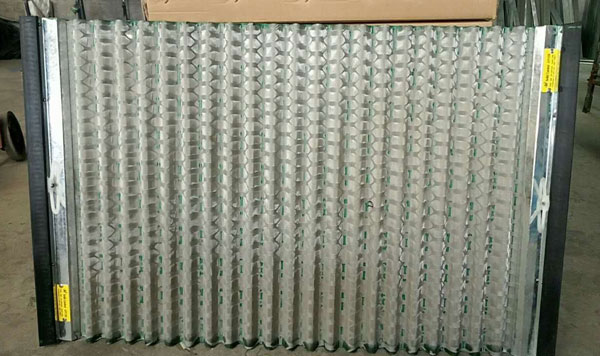
Ask for API RP 13C grades, not mesh counts. Two panels both sold as "200 mesh" can sit at different cut points and pass very different volumes, and the API number stamped on the frame is the only figure that means the same thing across suppliers.
Work from what is on the deck now. If the shaker holds the flow and the mud is behaving, reorder the same grade and stop thinking about it. If fines are climbing and the deck still has room, step one grade finer on one or two panels and live with it for a shift before you commit the whole deck. If the deck pools or the panels blind early, the grade is too fine for the flow, and pyramid panels will buy you area that a coarser flat panel cannot. FLC 500 panels run from API 20 to API 325, so both directions are open.
Five lines gets you a usable quote on the first reply:
Shaker model and panels per deck, for example Derrick FLC503, three panels
What you run now, PWP or PMD
Current API grade, or the part number off the frame
Flow at the shaker, and mud type: WBM, OBM, SBM
What you are chasing, blinding, short panel life, wet cuttings, fines in the system
A phone photo of an installed panel answers most fit questions faster than a dimension sheet, especially on a deck that has been rebuilt.
A panel that blinds within an hour of installation is a flow problem. The mud reaching the shaker is more than the selected conductance can pass, and a coarser API grade fixes that where a fresh panel of the same grade does not.
Tearing along the hook strip is a different thing, and it is usually mechanical. Uneven tensioning, or a deck angle working against the solids load. Check the tension bolts and the angle before you touch the screen specification.
We build replacement screen panels for the Derrick FLC 500 series, flat and pyramid, in 304, 316 and 316L wire cloth, from API 20 through API 325. Panels are made to API RP 13C (ISO 13501) dimensions and labelled with their API designation, so grades can be matched across decks. Standard grades are in stock, anything else is built to order, and lead time follows the grade and the quantity.
Our engineers work with drilling crews on grade selection, installation and troubleshooting, on site or remotely. If you are not sure which grade fits your FLC503, or you need a panel outside the standard range, call or message +86-13186019379.

Address: No.2 Huochang Road, Yangling District,Xianyang City, Shaanxi Province, China
Tel: +86-18509252400
Wechat: 18509252400
Email: info@mudsolidscontrol.com
Contact: Mr.Li
 +86-18509252400