Contact Person: Mr.Li
Mobile: +86-18509252400
Wechat: 18509252400
Email: info@mudsolidscontrol.com
Address: No.2 Huochang Road, Yangling District,Xianyang City, Shaanxi Province, China
The Drilling Fluid Treatment System, more commonly known as the Solids Control System. It is the heart of solids removal in oil & gas drilling operations. Any solids control system failure directly impacts mud properties, downhole stability, and rig safety. TR Solids Control summarizes the root causes and troubleshooting procedures of the most common failures in the mud treatment system, helping field engineers get back to drilling fast.
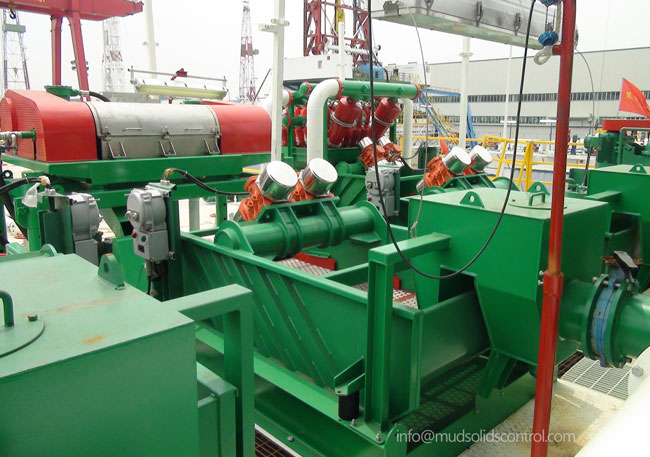
In daily oilfield operation, the Drilling Mud System often encounters unstable processing efficiency, abnormal vibration, liquid leakage, poor solid-liquid separation and other common faults. Timely judgment of fault symptoms is the first step to maintain the stable operation of the Drilling Fluid Treatment System.
We sort out the typical faults, possible causes and corresponding solutions of the Drilling Fluid Processing System in the form of a clear table, which is convenient for on-site engineers to check and operate quickly.
| Fault Symptom | Possible Cause | Solutions |
| No vibration or reduced amplitude | Power trip, burnt motor, loose eccentric weights, broken belt | Check circuit; replace motor; tighten eccentric weights; replace belt |
| Shaker screen fails too fast (<20 hrs) | tramp metal in feed, insufficient screen tension, wrong vibrator rotation | Install magnet; re‑tension screen; swap two power phases to get correct elliptical motion |
| Mud bypasses screen (overflow) | screen too fine, low G‑force, mud too viscous | Use coarser mesh; add weight to increase G‑force; treat mud to lower viscosity |
| Solids pile up, no discharge | overfeeding or uneven flow, shaker not level | Adjust feed gate or install flow splitter; level basket with a spirit level |
| Fault Symptom | Possible Causes | Solutions |
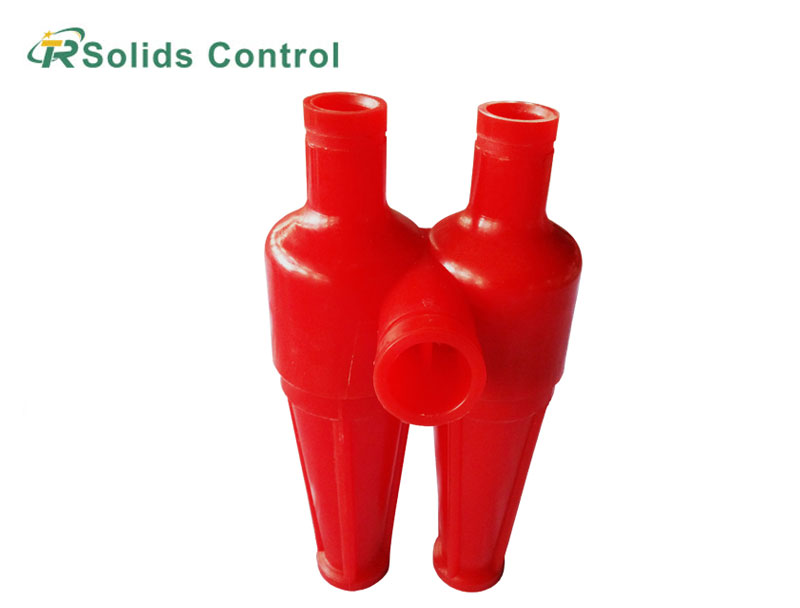
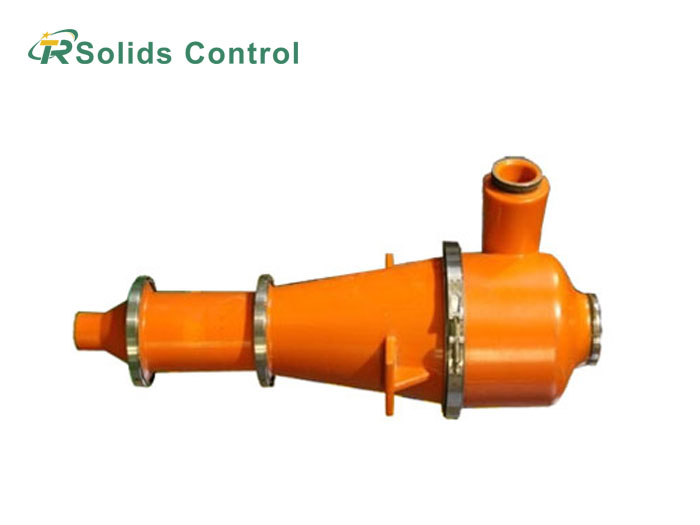
| Poor separation – underflow too dry, overflow carries sand | feed pressure below 0.2‑0.3 MPa (30‑45 psi), worn hydrocyclone liner | Clean inlet strainer, check pump impeller; replace liner or entire cyclone |
| Rope discharge (underflow looks like a string) | solids load exceeds cyclone capacity | Check upstream shaker screen for holes, or reduce ROP |
| No liquid from overflow port | pressure too high, nozzle too small | Adjust pump discharge valve; replace with larger nozzle |
| Fault Symptom | Possible Causes | Solutions |
| Low vacuum (<0.05 MPa / 7 psi) | no water in vacuum pump, broken water ring, air leak in tank or suction line | Fill pump with water and adjust water supply; tighten all bolts, replace gaskets |
| Pump noisy or shaking badly | solids inside pump, excessive impeller clearance | Stop and flush pump and tank; adjust or replace impeller |
| Fault Symptom | Possible Causes | Solutions |
| No solids discharge (plugged) | bowl and screw conveyor packed with solids | ① Bar over by hand – if stuck, it's packed; ② Backflush with water while screw turns slowly; ③ If no luck, disassemble and clean |
| Severe vibration | uneven solids buildup, bad main bearing, loose anchor bolts | Stop and clean; replace bearing; tighten bolts |
| Poor separation – liquid still has high sand | wrong differential speed, too much feed | Adjust differential to 10‑35 rpm; throttle feed valve |
| Main bearing >85°C (185°F) | too much or degraded grease | Clean out old grease, then re‑grease with recommended amount (e.g., 1 oz every 200 hours) |
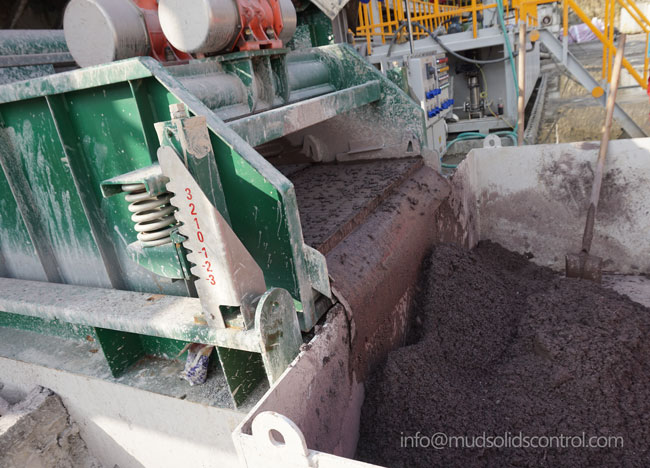
| Equipment | Daily Checks | Weekly / Monthly Tasks |
| Shale shaker | screen tension, exciter temperature, motor amps | Replace worn screens; tighten eccentric weight bolts |
| Desander / Desilter | feed pressure, underflow discharge pattern | Pull and inspect cyclone liners; clean nozzles |
| Centrifuge | bearing temperature, vibration level, gearbox oil level | Add grease; inspect conveyor blade welds |
| Vacuum degasser | vacuum reading, water ring condition | Clean scale from inside the tank |
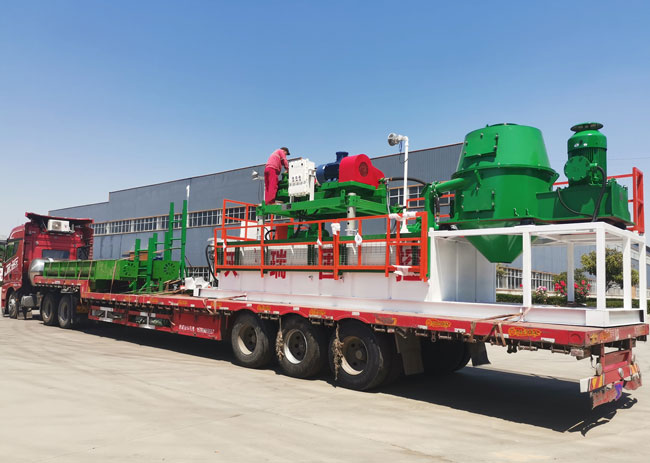
Troubleshooting the Drilling Fluid Treatment System is straightforward if you follow the principle "outside‑in, step‑by‑step isolation". Combined with a daily checklist and a failure log, most problems can be fixed in under 30 minutes. Use the tables above as your quick reference, and you will reduce non‑productive time (NPT) while keeping the downhole environment safe.

Address: No.2 Huochang Road, Yangling District,Xianyang City, Shaanxi Province, China
Tel: +86-18509252400
Wechat: 18509252400
Email: info@mudsolidscontrol.com
Contact: Mr.Li
 +86-18509252400