Contact Person: Mr.Li
Mobile: +86-18509252400
Wechat: 18509252400
Email: info@mudsolidscontrol.com
Address: No.2 Huochang Road, Yangling District,Xianyang City, Shaanxi Province, China
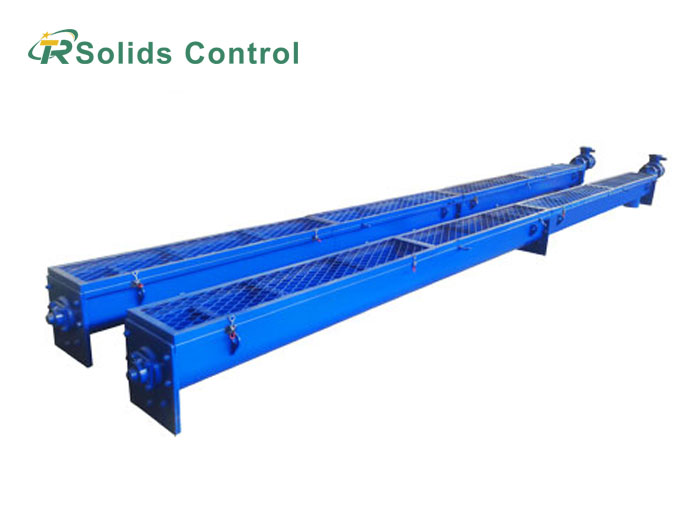
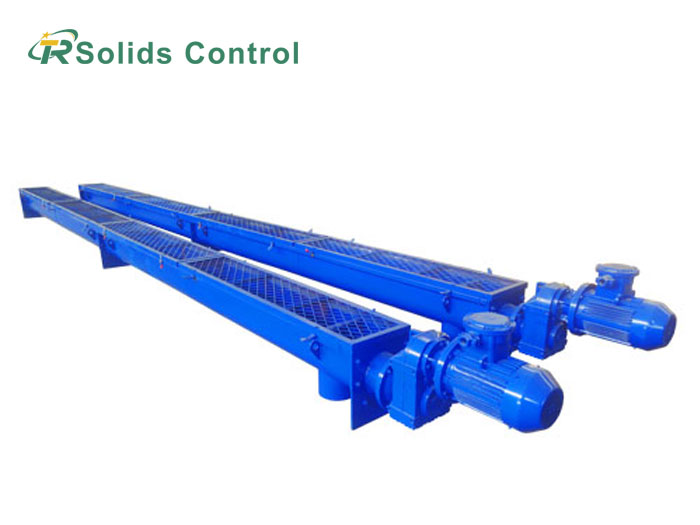
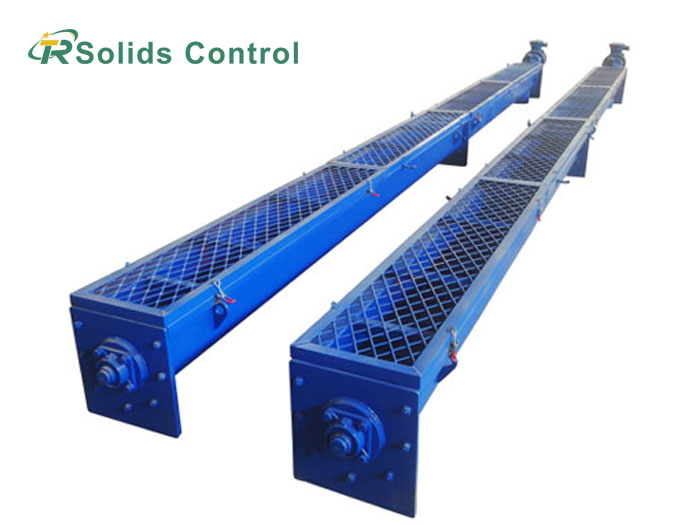
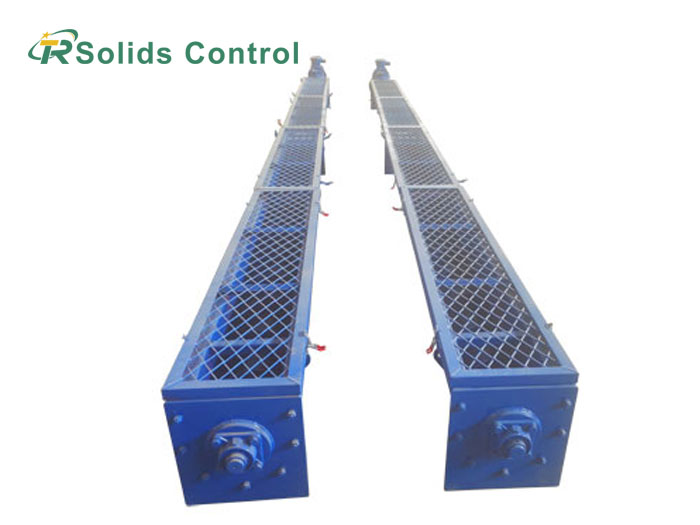
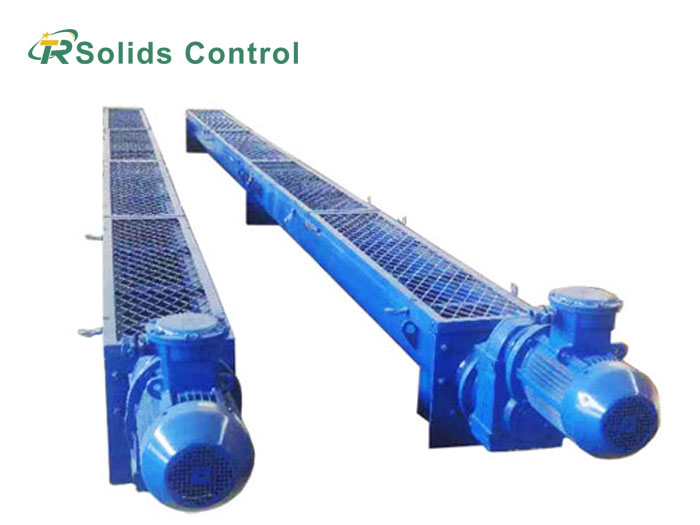
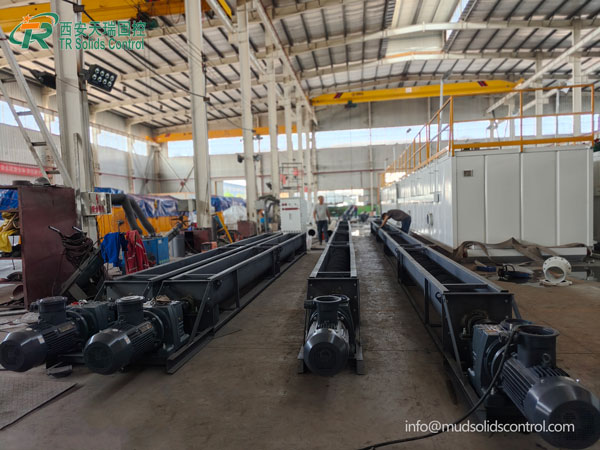
Screw conveyor, also called auger conveyor, uses a rotating helical flight inside a tube or U-shaped trough to move material from one end to the other. It is commonly used to move drilling cuttings, sludge, powders, and other bulk materials continuously.
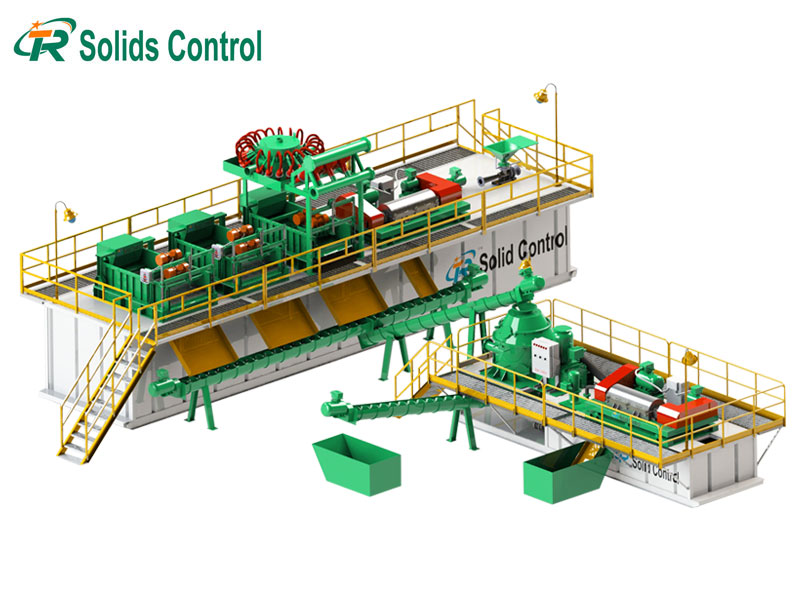
Within drilling solids‑control systems, these units transport drilling cuttings and recovered drilling fluids between processing equipment. It is widely used in drilling waste management systems. They collect material from shale shakers, centrifuges, and other solids control equipment, then move it to cuttings boxes.
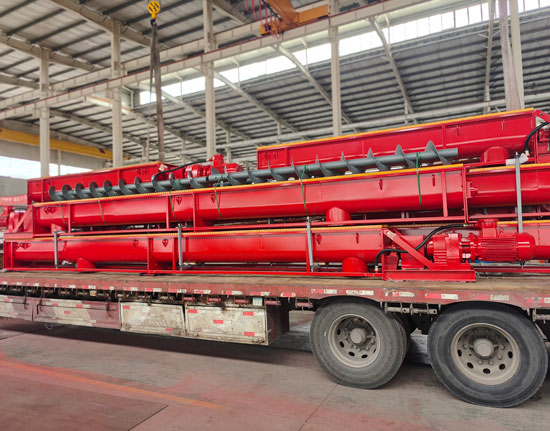
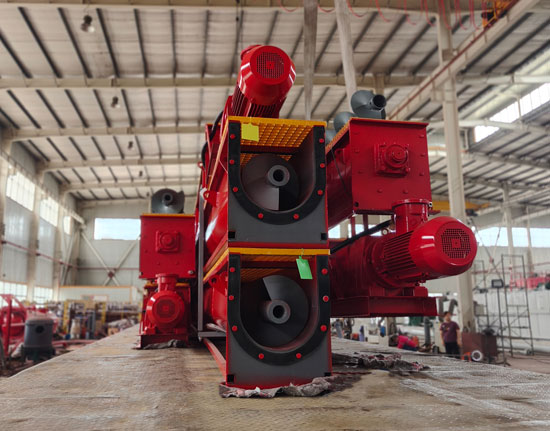
TR screw conveyors are built for reliable performance with minimal maintenance. They can be installed horizontally, inclined, or vertically to suit different site layouts. We offer shafted and shaft‑less versions in U‑trough or tubular housing. Carbon‑steel and stainless‑steel construction options cover different feed materials and field operating environments.
Wear-resistant screw flights extend service life when handling abrasive materials.
NSK or FAG bearings are mounted outside the trough in dust-tight sealed housings.
The shell cover plate is fitted with a rubber sealing gasket to reduce dust leakage during operation.
Safety grating on U-trough models prevents foreign objects from entering the conveyor.
Shafted or shaftless designs to suit different material characteristics.
Standard 12 ft (3.66 m) modular sections allow flexible conveyor lengths.
Optional steam-heated trough for ambient temperatures from -40°C to 60°C.
Suitable for horizontal, inclined, or vertical installation.
| Model | Spiral nominal diameter(mm) | length(m) | Spindle speed(r/min) | Conveying capacity(m³/h) | Motor power(kw) |
| LS 250 | 250 | 6, 9, 12, 15 | 88 | 10 | 3, 4, 5.5, 7.5 |
| 65 | 7.5 | 2.2, 3, 4, 5.5 | |||
| 52 | 6 | 2.2, 3, 4, 5.5 | |||
| LS 315 | 315 | 6, 9, 12, 15 | 65 | 15 | 5.5, 7.5, 11 |
| 52 | 12 | 3, 5.5, 7.5 | |||
| 43 | 10 | 3, 5.5, 7.5 | |||
| LS 400 | 400 | 7.2,10.8,14.4 | 65 | 27.5 | 7.5, 11, 15 |
| 52 | 22 | 7.5, 11, 15 | |||
| 43 | 18 | 5.5, 7.5, 11 |
A rotating screw (auger screw) inside the trough moves material from the inlet to the discharge outlet. The rotating flights move the material forward along the trough. The conveying rate depends primarily on screw speed.
Material enters through the inlet from upstream equipment such as a shaker or centrifuge. As the screw turns, it moves the material along the trough toward the discharge end at the other side. The hanger bearings along the length support the screw and keep it centered.
On U-trough models, the top is open and covered with a grid guard. The open trough provides easy access for inspection and cleaning. Tubular models are fully enclosed and better suited for fine materials or inclined conveying. The enclosed tube keeps material contained and helps reduce backflow.
Material Characteristics
Evaluate material type, moisture content, particle size, abrasiveness and flow behaviour. Abrasive materials demand wear‑resistant flights. Corrosive environments call for stainless steel construction.
Conveying Capacity
Conveyor throughput must match output from upstream equipment: shale shakers, mud cleaners and cuttings dryers. Proper sizing keeps material flow stable and avoids excess power draw.
Conveying Distance
Conveying distance sets required conveyor length. Multiple modular sections can be connected for longer transfer routes.
Installation Angle
Horizontal mounting delivers peak conveying efficiency. For inclined applications, match the screw geometry to the installation angle and material properties to reduce material rollback.
Conveyor Type
Shafted screw conveyors handle most drilling cuttings, sand and free‑flowing materials. Shaftless units work for sticky, viscous or fibrous materials that tend to wrap around a central shaft.
Q: What is the maximum incline angle for a screw conveyor?
A: The maximum incline depends on the material, screw geometry, screw diameter, flight pitch, and feed rate. As the installation angle increases, material rollback and drive torque also increase. TR engineers determine the appropriate incline during conveyor selection.
Q: How do you prevent blockages when conveying wet drilling cuttings?
A: Shaftless screw conveyors are commonly used for wet, sticky drilling cuttings. Larger inlet openings, lower screw speeds, and clean-out ports can further reduce the risk of material buildup and blockage.
Q: What routine maintenance does a TR screw conveyor require?
A: Routine maintenance includes checking bearing lubrication, drive components, screw flight wear, and seal condition. Under normal operating conditions, no frequent disassembly is required.
Q: Can one screw conveyor handle both dry cuttings and wet sludge?
A: Yes, but the conveying capacity will vary with the material. Wet sludge typically requires more drive power and may reduce throughput compared with dry drilling cuttings. TR engineers can size the conveyor accordingly if both materials will be handled.

Address: No.2 Huochang Road, Yangling District,Xianyang City, Shaanxi Province, China
Tel: +86-18509252400
Wechat: 18509252400
Email: info@mudsolidscontrol.com
Contact: Mr.Li
 +86-18509252400