Contact Person: Mr.Li
Mobile: +86-18509252400
Wechat: 18509252400
Email: info@mudsolidscontrol.com
Address: No.2 Huochang Road, Yangling District,Xianyang City, Shaanxi Province, China
Drilling fluid is the backbone of any drilling project. It keeps the wellbore stable, lubricates and cools the drill string and bit, and carries drilled cuttings back to the surface. As mud circulates downhole and returns, it picks up solid cuttings, free gas, and other debris that quickly ruin its performance. Contaminated mud means higher costs, slower drilling, more equipment wear, and potential environmental violations. That's where a mud purification system comes in.
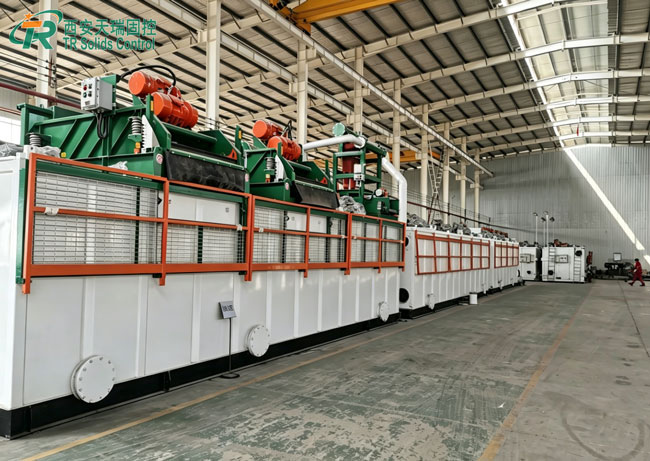
The mud purification system (or solids control system) is simply a lineup of mechanical equipment that separates drilled solids from the circulating fluid. The goal is to keep density, viscosity, and chemistry within the designed range. That gives you good hole cleaning, formation protection, and a smaller environmental footprint. Drilling fluid cleaning system is used for oil & gas exploration, HDD, tunnel drilling and foundation pile drilling. It directly affects site safety, efficiency, and sustainability.
Most mud purification systems use multi-stage physical separation process. This mechanical approach removes solids and gas without changing the mud's base properties so it can be reused.
The process is straightforward. Returning mud flows through a sequence of equipment with contaminants removed from largest to smallest particle size. This "coarse-to-fine" approach prevents downstream equipment overload, ensures thorough cleaning, and keeps the circulation system stable.
Four core mechanical separation methods are used:
Vibratory screening: Uses high-frequency vibration to remove large, coarse drill cuttings
Hydrocyclone separation: Relies on centrifugal force to separate medium and fine sand particles
High-speed centrifugation: Eliminates ultra-fine solids and colloids that other equipment misses
Vacuum degassing: Removes entrained downhole gas that reduces mud density and creates safety risks
Shale shaker: the first line. Vibrating screens remove large cuttings, typically above 75 microns. You can swap screen meshes depending on the formation. It is the gatekeeper of the whole system.
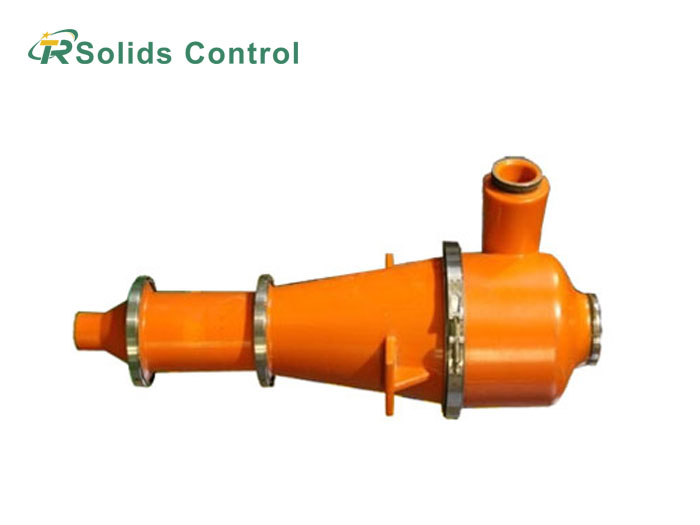
Desander: uses hydrocyclones to take out sand and coarse silt in the 45 to 74 micron range. It protects the downstream desilters and centrifuges from abrasive wear.
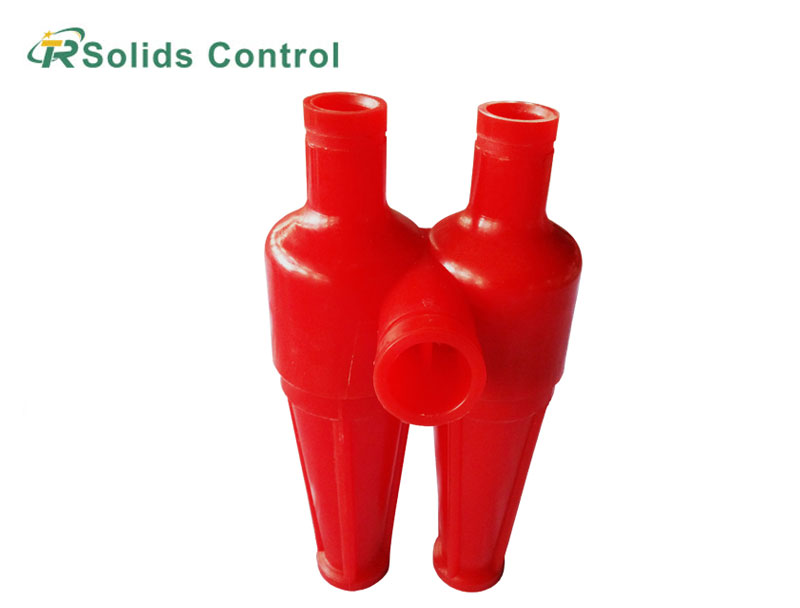
Desilter: smaller hydrocyclones (usually 4 or 5 inches). Cuts down to 15 to 44 microns. Especially important for weighted mud and fine solids management.
Decanter centrifuge: high speed bowl that pulls 2000 to 3000 G. It removes very fine solids (2 to 15 microns) and recovers barite. Essential for oil based mud or when environmental rules are tight.
Mud cleaner: a set of desander or desilter hydrocyclones mounted over a small shaker. It screens the underflow again, which improves overall efficiency.
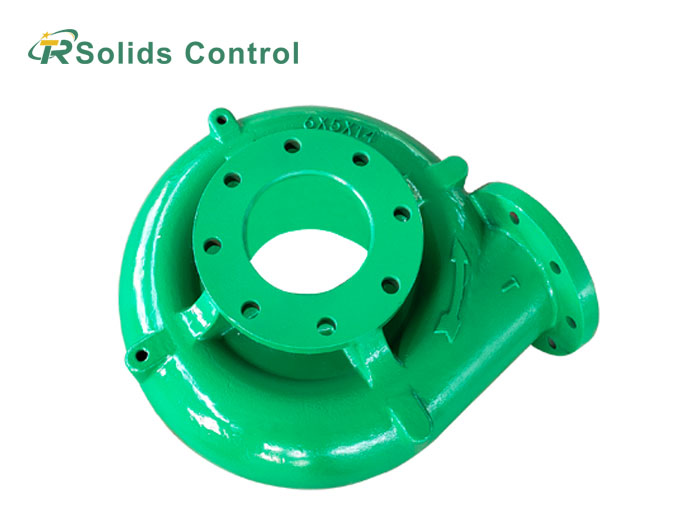
Centrifugal pumps and tanks: provide steady feed pressure to the hydrocyclones and centrifuges. The mud pits also allow chemical treatment and degassing if needed.
Mud coming back from the well hits the shale shaker first. Large cuttings are screened out and discharged. The mud that goes through (the underflow) moves to degasser if there is gas, then to the desander feed pump. The desander removes medium sized solids. Underflow from the desander goes to the desilter for finer particles. On better systems, the desilter underflow then goes to centrifuge for ultra fine solids or barite recovery. The clean mud ends up in the active tank, gets additives, and is pumped back downhole.
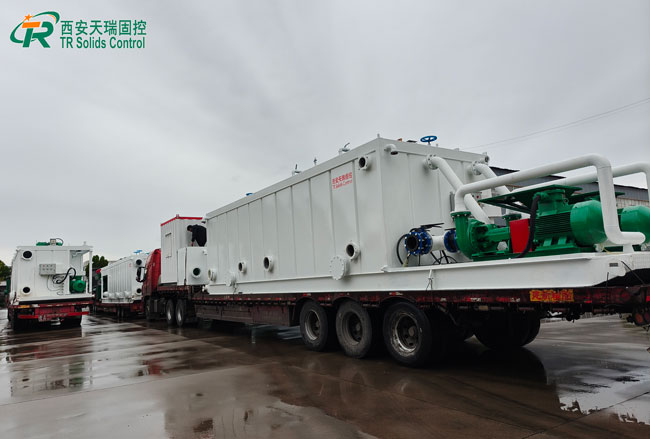
Improved Efficiency & Safety: Eliminates downhole issues, cuts mud-related NPT, boosts drilling efficiency by 10–15%, and reduces bit wear by up to 30%.
Cost Savings: Increases mud reuse to 90–95%, cuts new mud costs by 60–80%, and reduces waste disposal fees, with ROI in 3–6 months.
Environmental Compliance: Lowers suspended solids, cuts slurry waste by over 90%, and ensures compliance with discharge standards.
Versatility: Skid-mounted and modular, suitable for oil & gas, HDD, tunnel, and foundation drilling.
Mud Type: Match to water-based, oil-based, or weighted mud with appropriate materials and features.
Contaminant Profile: Size for expected particle size and gas content.
Flow Rate: Match system capacity to rig mud circulation rate.
Mobility: Choose skid-mounted systems for mobile projects.
Automation & Durability: Prioritize PLC control and wear-resistant construction.
Mud purification system is a key investment for efficient, safe, and compliant drilling. The well designed mud purification system pays back in three to six months. Look at it from cost perspective or an environmental perspective. Either way, it is worth it. Every micron of solids you pull out of the mud is money saved.

Address: No.2 Huochang Road, Yangling District,Xianyang City, Shaanxi Province, China
Tel: +86-18509252400
Wechat: 18509252400
Email: info@mudsolidscontrol.com
Contact: Mr.Li
 +86-18509252400