Contact Person: Mr.Li
Mobile: +86-18509252400
Wechat: 18509252400
Email: info@mudsolidscontrol.com
Address: No.2 Huochang Road, Yangling District,Xianyang City, Shaanxi Province, China
In the oil and gas drilling industry, the drilling fluid control system plays a critical role in ensuring safe, efficient, and cost-effective operations. Also known as solids control system, for managing and recycling drilling mud, removing unwanted solids, and maintaining the fluid properties required for optimal drilling performance.
As the drilling fluid control system manufacturer, TR Solids Control provides high-performance systems designed to meet the demands of onshore and offshore drilling projects. But how exactly does a drilling fluid control system work? Let's break it down.
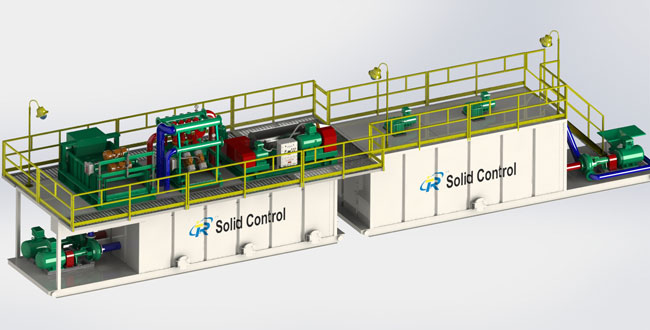
Solid-liquid separation: Removing cuttings and fine solids from the drilling mud.
Mud circulation: Pumping clean mud back into the borehole.
Fluid property adjustment: Adding chemicals or water to maintain viscosity, density, and other properties.
Waste management: Reducing environmental impact by treating or disposing of unwanted solids.
Mud Tank and Mixing System
The process begins in the mud tanks, where fresh or recycled drilling fluid is stored. A mixing hopper and centrifugal pump add bentonite, barite, or polymers to adjust fluid properties. TR Solids Control designs modular mud tanks that can be customized for different well depths and mud volumes.
Shale Shaker (Primary Separation)
The used drilling mud, carrying rock cuttings from the wellbore, first passes through shale shaker. This shaker screen separates large solids (typically >75 microns) from the liquid. The screened fluid falls into the next tank, while the solids are discharged for disposal or further treatment.
Desander and Desilter (Secondary Separation)
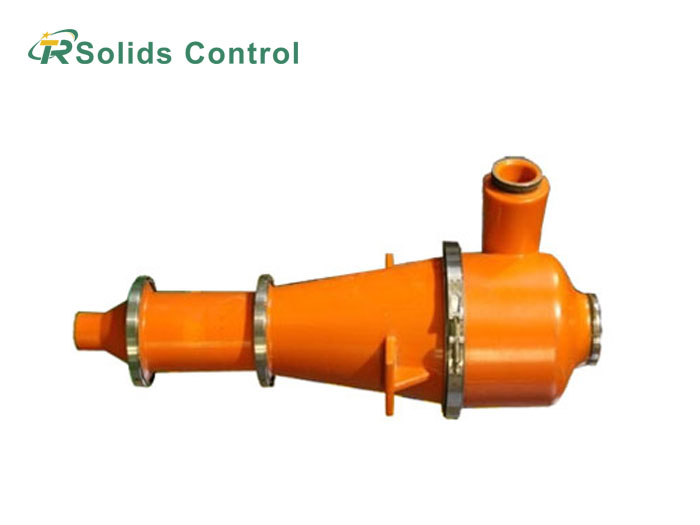
After the shale shaker, the drilling fluid control system uses hydrocyclones to remove finer solids:
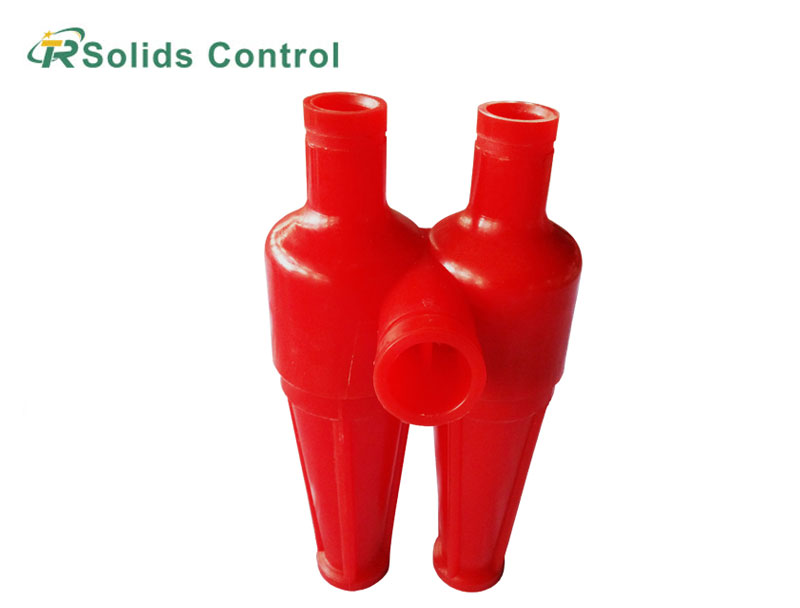
Desander removes particles between 45–75 microns.
Desilter removes particles between 15–45 microns.
These hydrocyclones convert pressure into centrifugal force, throwing heavier solids to the wall and out the bottom, while clean liquid exits from the top.
Mud Cleaner (Combined Efficiency)
The mud cleaner integrates desanders, desilters, and fine-mesh shale shaker. This combination further refines the fluid, reducing the load on downstream centrifuge equipment.
Decanter Centrifuge (Fine Solids Control)
For weighted mud or when ultra-fine solids (<5–15 microns) need removal, decanter centrifuge is employed. It spins the fluid at high speed, generating up to 3,000 G-force to separate microscopic solids. This is essential for maintaining mud density and reducing additive consumption.
Degasser (Gas Removal)
When drilling through gas-bearing formations, entrained gas can reduce mud density and cause blowout risks. Vacuum degasser removes these gases before the mud returns to the wellbore.
Centrifugal Pumps and Agitators
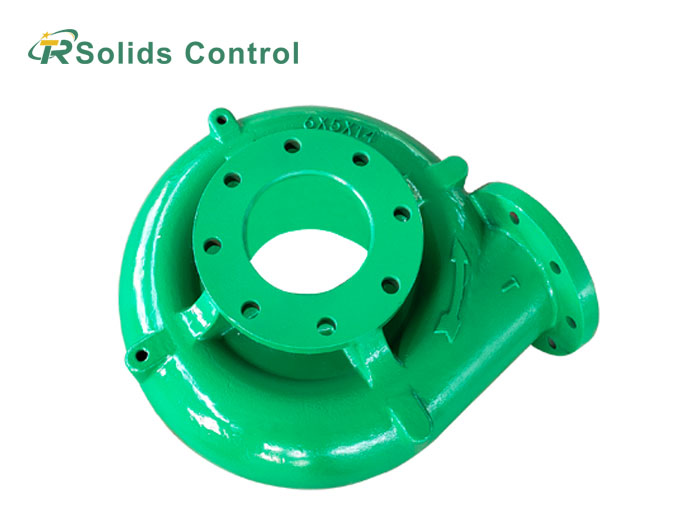
Centrifugal pumps transfer mud between tanks and feed hydrocyclones and centrifuges.
Mud agitators prevent solids from settling at the bottom of the tanks, ensuring uniform fluid consistency.
To help visualize how drilling mud system works, here is the typical circulation path:
Downhole return: Mud plus cuttings come up via the annulus.
Flow line: Mud flows to the shale shaker.
Primary separation: Shale shaker removes large solids.
Tank 1 (sand trap): Larger particles settle by gravity.
Secondary separation: Desander + desilter.
Mud cleaner: Fine screening.
Centrifuge: Ultra-fine solids removal (if needed).
Degasser: Gas extraction.
Conditioned mud tank: Ready for pumping back into the well.
Mud pump: Sends reusable drilling fluid down the drill string.
This continuous loop can recycle more than 90% of the drilling fluid, significantly reducing waste and cost.
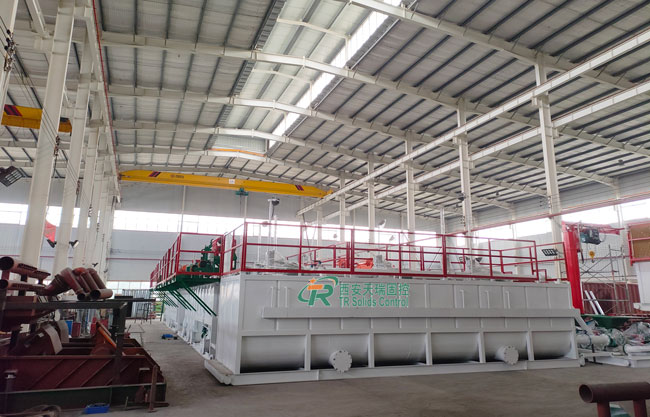
As an experienced mud solids control system manufacturer, TR Solids Control offers:
Customizable systems: From simple 200 GPM units to complex 2000+ GPM setups.
API-compliant equipment: Shale shakers, centrifuges, degassers, and more.
Modular design: Easy transport and quick on-site assembly.
Automated control: Real-time monitoring of tank levels, density, and flow rates.
Global service support: Installation, training, and spare parts supply.
Whether you are drilling a shallow water well or an ultra-deep oil well, a reliable drilling fluid control system from TR Solids Control enhances penetration rate, reduces bit wear, and minimizes environmental liability.
Drilling fluid control system for any drilling operation, improve efficiency and reduce costs. By sequentially separating solids of decreasing size, degassing the fluid, and maintaining proper rheology, these systems keep the drilling process smooth and safe.
If you are looking for trusted drilling solids control system manufacturer, TR Solids Control provides robust, scalable solutions tailored to your project's needs.

Address: No.2 Huochang Road, Yangling District,Xianyang City, Shaanxi Province, China
Tel: +86-18509252400
Wechat: 18509252400
Email: info@mudsolidscontrol.com
Contact: Mr.Li
 +86-18509252400