Contact Person: Mr.Li
Mobile: +86-18509252400
Wechat: 18509252400
Email: info@mudsolidscontrol.com
Address: No.2 Huochang Road, Yangling District,Xianyang City, Shaanxi Province, China
Wave screens (pyramid screens) are key components of shale shakers. The wave-shaped structure is widely used in mining, oil drilling, and other industries. Proper installation directly determines screening efficiency, screen service life, and production stability. This article details the correct installation process, precautions, screening performance, influencing factors, and optimization methods of wave shaker screens.
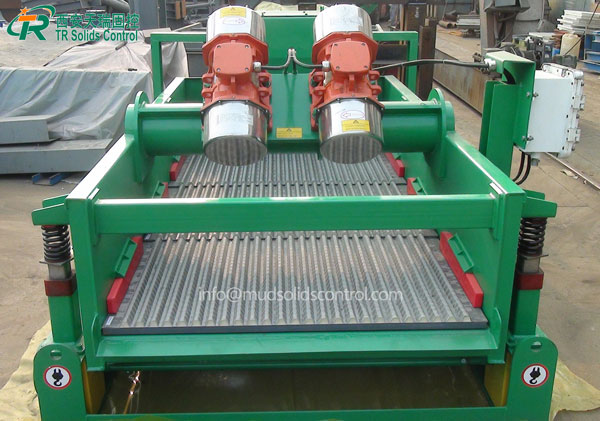
Installation follows the principles of safety first, flat and tight tension, proper sealing, and qualified commissioning, suitable for shale shakers such as Derrick FLC series and mining shale shakers.
Safety Protection:Turn off the main power supply, hang warning signs, and operate only after the equipment stops. Operators must wear anti-slip gloves and safety goggles to avoid scratches or material splash injuries.
Parts Checking & Inspection:Verify that wave shaker screen specifications (mesh count, size, material) match the shale shaker. Ensure screens are free of damage, deformation, or blockage, with intact edges and rubber strips. Clean debris and burrs on the screen frame; correct frame deformation if present to ensure tight fitting.
Tool Preparation:Prepare torque wrenches, screwdrivers, etc. A torque wrench ensures uniform bolt tightening and prevents screen damage.
Screen Placement:Lay the wave shaker screen evenly on the frame with the wave direction consistent with material flow. Align edges without wrinkles or offset. For multi-layer composite screens, install coarse mesh at the bottom and fine mesh at the top.
Tensioning & Fixing (Critical Step):Tighten gradually from the center to both sides and diagonally alternately using tensioning devices and pressure strips. Control torque to ensure uniform tension: Over-tension causes stress concentration, tearing, or edge detachment. Under-tension leads to severe vibration, friction, and reduced screening accuracy. Install sealing strips between the screen and frame to prevent material leakage.
Component Reset:Reinstall pressure plates and guards. Recheck all bolts. For wedge-type shale shakers, adjust positions for stable pressing; use double nuts and spring washers to avoid loosening during operation.
No-Load Test Run:Start the shale shaker and run for 3–5 minutes. Check for abnormal vibration, noise, displacement, edge lifting, or leakage. Verify vibration motor parameters.
Load Test Run:Feed materials gradually after no-load test passes. Adjust feeding speed for uniform material distribution. Observe screening performance and stop for adjustment if abnormal.
Compared with flat screens, wave screens provide 3D screening space. Wave wires produce secondary vibration, effectively reducing adhesion and blockage of viscous or fine particles.
High Classification Accuracy:Wave structure improves material stratification and contact with mesh holes. Classification accuracy is 10%–20% higher than flat screens.
High Processing Efficiency:Effective open area reaches 35%–45%. Screening efficiency increases by more than 22% in iron ore processing.
Excellent Anti-Blocking Performance:Peaks and valleys create self-cleaning effects. Blockage rate is reduced by over 30%, especially for high-moisture and viscous materials (oil-based mud, clayey materials).
Long Service Life:Wave structure distributes stress and reduces wear. With reinforced ribs, service life is 20%–50% longer than flat screens, lowering replacement costs.
Installation Quality:Uneven tension, poor fitting, or inadequate sealing reduce accuracy and accelerate damage.
Screen & Material Matching:Inappropriate mesh count, size, or material shortens service life and reduces performance.
Shale Shaker Parameters:Improper vibration frequency and amplitude cause blocking, damage, or material splashing.
Material Characteristics & Feeding:High moisture, viscosity, uneven feeding, or excessive feed height reduce efficiency.
Daily Maintenance:Blockage, loose bolts, and unrepaired damage severely reduce stability.
Inspect and clean screens regularly; replace damaged or deformed screens.
Adjust vibration parameters and feeding speed according to material properties.
Use anti-stick coatings or anti-blocking wave screens for high-viscosity materials.
Optimize installation and retighten bolts periodically.
Select proper mesh count, material, and structure for working conditions.
Installation quality directly affects the performance of wave shaker screens. Screen specifications, vibration parameters, material properties, and maintenance determine stability. Optimized installation and operation maximize the advantages of high accuracy, high efficiency, and anti-blocking performance, reducing costs and improving productivity.
TR Solids Control is Shaker Screen Factory.TR produces replacement Deriok Shaker screens and Swaco mongoose screens.

Address: No.2 Huochang Road, Yangling District,Xianyang City, Shaanxi Province, China
Tel: +86-18509252400
Wechat: 18509252400
Email: info@mudsolidscontrol.com
Contact: Mr.Li
 +86-18509252400