Contact Person: Mr.Li
Mobile: +86-18509252400
Wechat: 18509252400
Email: info@mudsolidscontrol.com
Address: No.2 Huochang Road, Yangling District,Xianyang City, Shaanxi Province, China
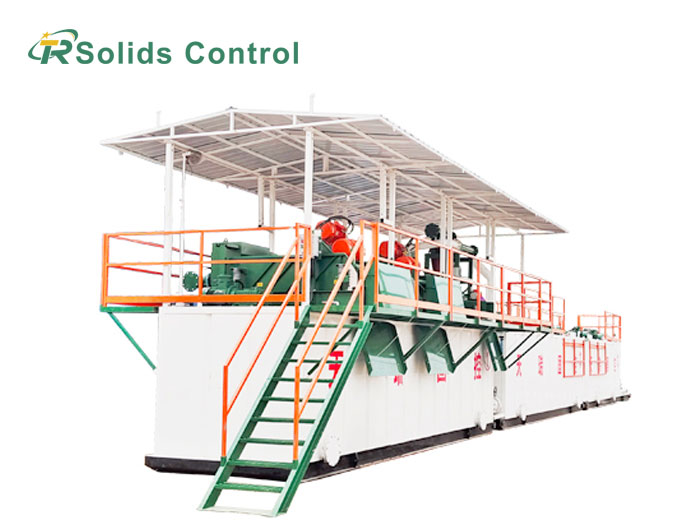
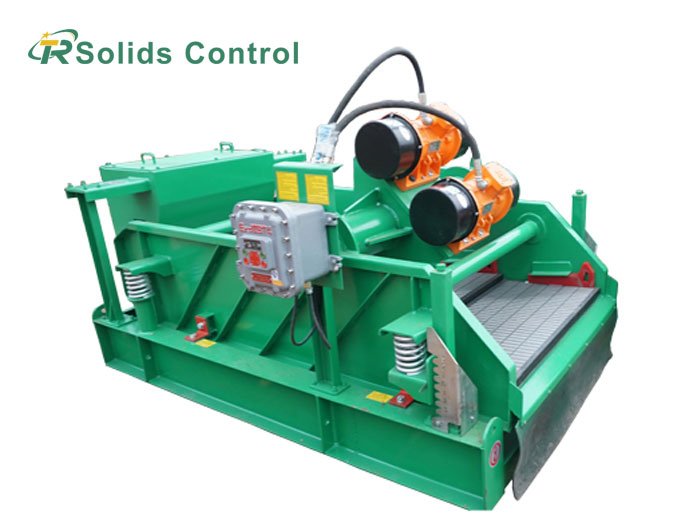
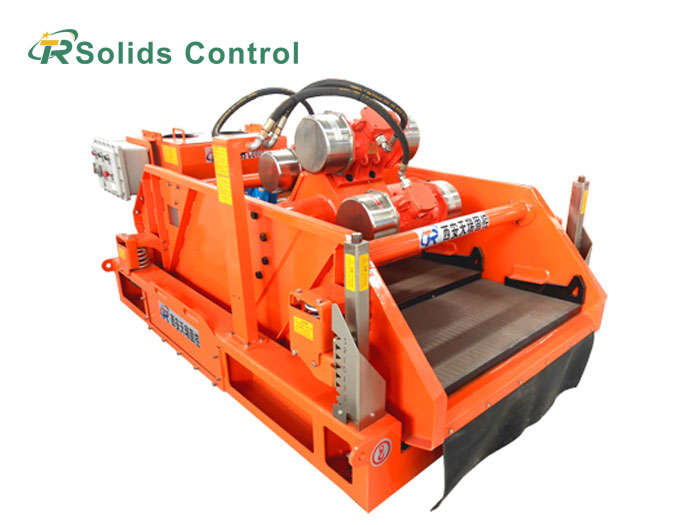
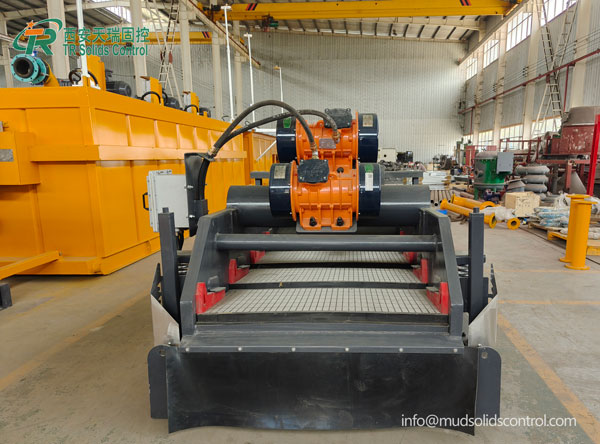
As the "first line of defense" in mud solids control system, the selection of shale shaker model directly determines mud purification efficiency, drilling costs, and construction safety. Choosing a matching shale shaker model for the mud system requires comprehensive matching based on mud characteristics, drilling conditions, and vibration parameters.
Mud Parameters
Mud Capacity:The primary indicator for model selection, determined by integrating drilling displacement, mud circulation speed, and system redundancy requirements. Typically, the shale shaker’s rated processing capacity should be 20%-30% higher than the maximum actual mud displacement to accommodate displacement fluctuations during drilling (e.g., sudden surges in jet drilling). For example, 30m³/h displacement requires equipment with capacity of over 36m³/h; for dual-pump operations, the total displacement should be summed up for calculation.
Solid Phase Particle Characteristics:Focus on the particle size distribution, hardness, and concentration of solid phase particles. For systems dominated by coarse particles (≥74μm), select shale shakers with large mesh sizes and high amplitude for rapid slag discharge. For directional/horizontal wells with high fine particle content (≤44μm), fine screens and high-frequency equipment are required. Meanwhile, if the mud contains hard particles such as quartz sand, prioritize wear-resistant screens and reinforced screen boxes.
Mud properties:Viscosity, density, and sand content directly affect the screening efficiency of shaker screen. High-viscosity drilling fluids (oil-based drilling fluids > 50s) are prone to screen blinding, requiring large-angle, high-frequency shale shakers with anti-clogging mesh; high-density drilling fluids (> 1.8 g/cm³) require equipment with strong excitation force to overcome separation resistance.
Drilling operation scenario
Well type and well depth:For vertical wells, conventional linear shale shakers are used; for directional/horizontal wells, elliptical shale shakers are preferred to improve separation efficiency; for deep wells (>4000m), models with adjustable processing capacity are selected to adapt to variations in the well section.
Drilling fluid type:Carbon steel equipment is used for water-based drilling fluids; stainless steel screen boxes and oil-resistant seals are required for oil-based/synthetic-based drilling fluids. Splash-proof models with cuttings collection tanks are preferred in environmentally sensitive areas.
Construction environment:Extreme environments such as deserts and oceans require special considerations. For deserts, IP65 or higher dustproof motors should be selected; for offshore platforms, salt-spray resistant, lightweight, and modular equipment should be chosen, taking into account weight and installation space limitations.
Shale Shaker parameter matching
After clearly defining the operating condition requirements, the selection process should focus on key parameters such as shale shaker's processing capacity, separation efficiency, and structural stability, ensuring that the equipment performance closely matches the needs of the mud system.
Capacity and Screen Area
The processing capacity of the screen unit for water-based drilling fluid is 8-15 m³/(h·m²), and for oil-based drilling fluid it is 5-10 m³/(h·m²). The calculation formula is: Effective screen area = Maximum processing capacity ÷ Processing capacity per unit area. For example, 50 m³/h of water-based drilling fluid requires 5 m² of screen area, which can be achieved with one 5 m² unit or two 2.5 m² units for backup.
The hook-type screen mesh is easy to replace, making it suitable for applications requiring frequent adjustments to screen mesh specifications.
Vibration parameters
Frequency: High frequencies of 15-25Hz are suitable for separating fine particles (e.g., 18-22Hz for horizontal wells), while low frequencies of 8-15Hz are suitable for coarse particles and high-viscosity drilling fluids (e.g., 10-12Hz for surface wells).
Amplitude and Excitation Force: High-sand/high-density slurries require large amplitude of 5-8 mm and an excitation force of 10-20 kN; fine particle separation uses small amplitude of 2-4 mm to prevent splashing.
Trajectory: Linear screens are suitable for vertical wells; elliptical screens offer 20%-30% higher separation efficiency and are the preferred choice for directional wells; circular shale shakers are mainly used for pre-separation of coarse particles.
Structure and materials
Screening box: ≥8mm steel plate welded structure for improved fatigue resistance; lightweight carbon fiber screening box available for marine/deep well applications.
Motor and Bearings: The motor's explosion-proof rating shall be no lower than Exd II BT4, and the bearings shall be sealed models from brands such as SKF to prevent jamming.
Shock absorption system: Rubber or air spring shock absorption. The air spring can achieve stepless amplitude adjustment to adapt to multiple working conditions.
As a manufacturer of mud shale shakers, TR Solid Control, through years of experience accumulation, can customize shale shakers and mud system equipment according to the working conditions of customers. TR Solid Control holds API certification and has been exported to over 60 countries and regions, earning the trust and support of customers from various industries.

Address: No.2 Huochang Road, Yangling District,Xianyang City, Shaanxi Province, China
Tel: +86-18509252400
Wechat: 18509252400
Email: info@mudsolidscontrol.com
Contact: Mr.Li
 +86-18509252400