Contact Person: Mr.Li
Mobile: +86-18509252400
Wechat: 18509252400
Email: info@mudsolidscontrol.com
Address: No.2 Huochang Road, Yangling District,Xianyang City, Shaanxi Province, China
Anyone who's drilled knows: if the drilling mud is not properly managed, it will cause great trouble. The heart of good mud management is oilfield solids control, getting the drilled solids out of the drilling fluid so they don't keep going around the system. On drilling platforms, the solids control system is equipped with rows of storage tanks, shale shakers and high-speed cyclone separators operating continuously.
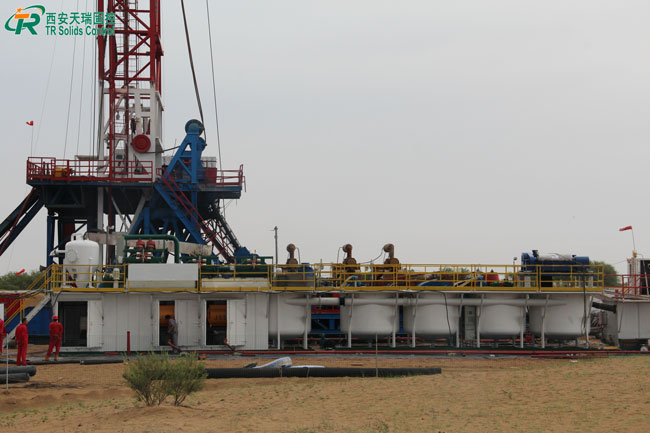
Many people first ask: What equipment is needed for oilfield solids control? Let's talk about them one by one according to the actual process, from inlet to outlet.
Shale Shaker – The First Gate
All the mud coming back from the hole hits the shale shaker first. Simply put, it is a large screening device. Big cuttings get thrown off. Don't underestimate it. If your shaker is undersized or the screen mesh is wrong or torn, every piece of solids control equipment downstream will suffer.
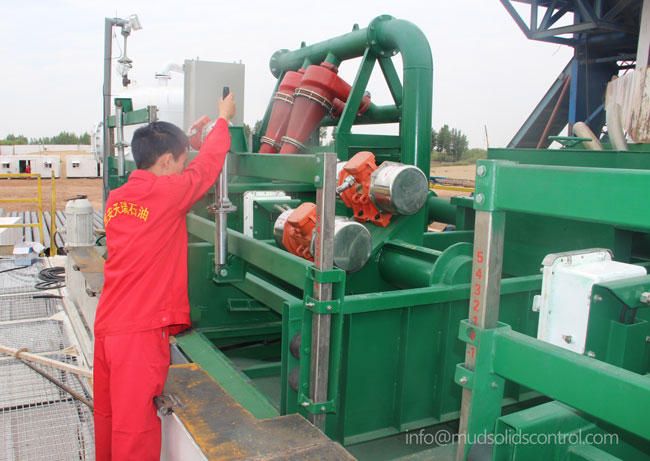
On-site senior workers are picky about screen mesh: coarser for top-hole drilling, finer for deeper sections. If the mesh is too fine, you'll lose flow and the mud will run over the sides. If it's too coarse, too many solids get through. For good oilfield solids control, the shale shaker should be able to block more than 80% of large particles at this stage.
Vacuum Degasser – A Safety Thing
Sometimes natural gas or hydrogen sulfide is brought out from the formation. Gas in the mud makes the pumps unstable, and worse, it reduces the hydrostatic head in the well. That's blowout risk. The vacuum degasser solves this, it creates vacuum to pull the gas out of the mud and vent it.
This device don't always need it on every well. But when you hit a gas zone, you won't sleep well without one. In most oilfield solids control layouts, the degasser sits right before or right after the shaker, to knock out the gas as early as possible.
Desander – Takes Out the Mid-Size Stuff
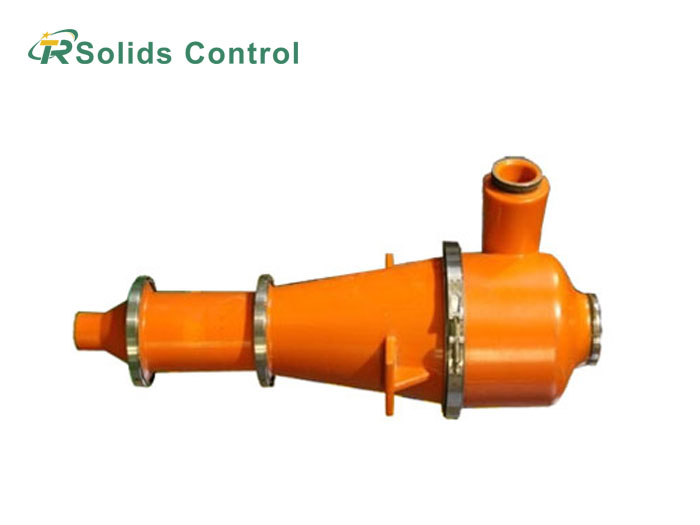
After the shaker, the mud still has medium solids, call it sand-sized, roughly 40 to 100 microns. That's where the desander comes in. Desanders work on hydrocyclone principle: mud goes in tangentially, spins inside cone, heavy solids get thrown to the wall and drop out the bottom, clean mud rises up the middle.
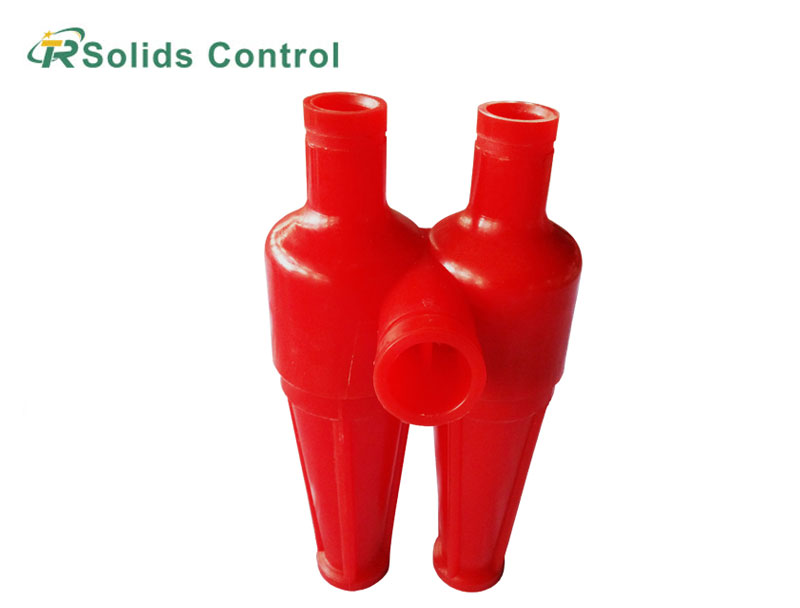
Mud desander usually has several small hydrocyclones (around 4 to 6 inches in diameter) mounted on a common header. The most common field problem? The apex (bottom opening) wears out. When it gets too big, air gets sucked in and efficiency tanks. Senior drillers check the underflow every day, want to see a dry, rope-like discharge.
Desilter – Gets the Fine Particles
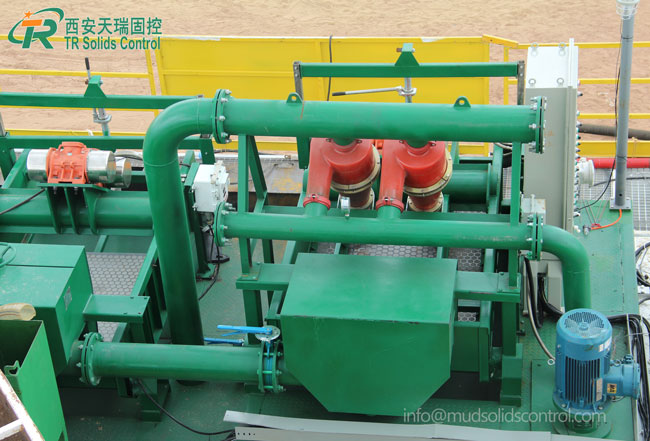
The next finer stage is the desilter. It targets particles from about 15 to 40 microns. Its hydrocyclones are smaller, typically 4 inches. But there's a catch: if you run a standalone desilter on weighted mud (with barite), the underflow will be watery and lose valuable barite. That's why a lot of rigs stack the desilter cyclones on top of fine-mesh shaker, that combination is called mud cleaner. The mud cleaner lets you recover barite while still throwing out the useless fine solids.
These days, many oilfield solids control systems just use mud cleaners instead of desilters alone. Saves space, works better.
Centrifuge – The Final Polisher
If you really want clean mud, you run centrifuge. Shakers and cyclones rely on screens or spin, but Decanter Centrifuge uses high rotational speed (typically 2,000 to 3,000 rpm) to generate forces that can separate particles down to 2–5 microns, even colloidal solids. If don't remove that ultrafine stuff, your mud gets thicker and thicker, and drilling speed falls through the floor.
On the rig, centrifuges are used in two ways on-site:
• For unweighted mud: the centrifuge just throws away the fine solids and keeps the liquid.
• For weighted mud (with barite): you can run two centrifuges in series, the first runs slow to recover barite, the second runs fast to dump the low-gravity fines.
Anyone who really knows oilfield solids control will tell you: the centrifuge is the last line of defense, and it's also where the skill shows. At present, many equipment manufacturers make complete solids control packages. TR Solids Control Equipment Manufacturer, whose centrifuges and mud cleaners equipped in some deep well and shale gas projects, have a low failure rate in on-site use.
Ancillary Equipment – Don't Ignore These
Beyond the big-ticket items, you can't run solids control system without these helpers:
Mud agitators: Solids settle fast in tanks. Without agitators, your pumps and cyclones get uneven feed.
Mud guns: Used for cleaning tanks and stirring up settled solids, mounted on top or sides of tanks, using water or mud as the jet.
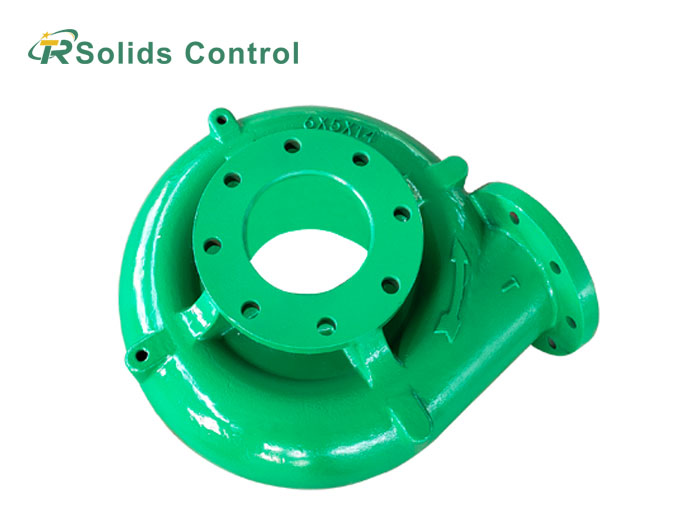
Centrifugal pumps (sand pumps): These provide the pressure and flow for desanders, desilters, and centrifuges. Wrong sizing or worn impellers? Your whole hydrocyclone separation goes to hell.
Mixing hopper: For adding bentonite, chemicals, barite – without making dust or lumps.
None of these are "main equipment" in the brochures, but if any one of them fails, your oilfield solids control system starts having small problems that turn into big ones.
Not every well needs all of the above. Shallow, straight holes with no tricky formations may only need shale shaker plus desander. Anything more is waste. But for deep wells, horizontal wells, shale gas, and high-density mud systems, want the “five-stage solids control” setup: Shaker → Vacuum degasser → Desander → Desilter (or mud cleaner) → Centrifuge.
Some offshore rigs or high-spec onshore jobs run two centrifuges, the low-speed/high-speed pair for barite recovery.
Shaker Screens are not the finer the better. Too fine means you lose flow rate and get mud all over the floor. Pick what works for your flow and solids load.
Check your underflows daily. On desanders and desilters, rope-like dry discharge is good. Liquid discharge means the apex is worn or plugged.
Don't be afraid to run the centrifuge. Some guys avoid it because of power and maintenance. But if you don't run it, mud will thicken until you have to dump it and mix new mud, that costs a lot more.
Track your solids percentage. Run retort at least once a week. You can't tune oilfield solids control if you don’t know where you stand.
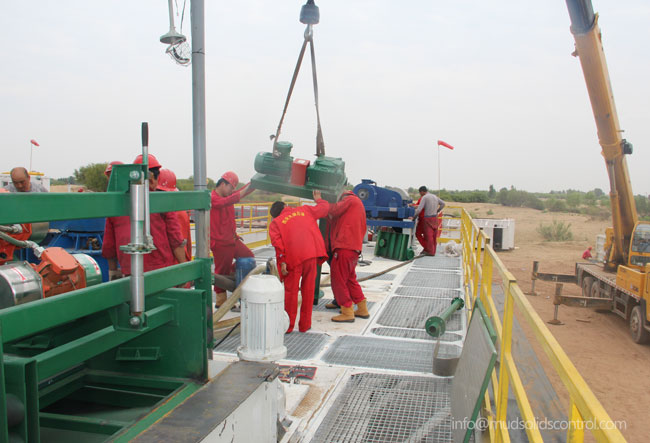
You might think buying all this equipment is expensive. But run the numbers: without good oilfield solids control, drill bits wear faster, pump liners and pistons die young, you burn through chemicals, and the drilling speed is slow. For deep well, the extra money spent may be several times that of a set of solids control equipment. On the contrary, as long as the shale shaker screen, cyclone diameter and centrifuge speed are adjusted properly, the mud can be reused, waste chips can be drained dry, and the environmental protection pressure is also small.

Address: No.2 Huochang Road, Yangling District,Xianyang City, Shaanxi Province, China
Tel: +86-18509252400
Wechat: 18509252400
Email: info@mudsolidscontrol.com
Contact: Mr.Li
 +86-18509252400