Contact Person: Mr.Li
Mobile: +86-18509252400
Wechat: 18509252400
Email: info@mudsolidscontrol.com
Address: No.2 Huochang Road, Yangling District,Xianyang City, Shaanxi Province, China
In modern drilling operations, the mud circulation system is the circulatory system that keeps the entire process efficient. Whether for oil and gas exploration, water well drilling, horizontal directional drilling (HDD), or trenchless construction. The mud solids control system is essential for maintaining wellbore stability, cooling and lubricating the drill bit, carrying cuttings to the surface, and controlling subsurface pressures.
As top solids control equipment manufacturer, TR Solids Control offers customized full mud circulation systems for global drilling projects. Founded in 2010 and based in Xi'an, China, we provide API and ISO certified solutions to optimize drilling fluid performance and cut operating costs.
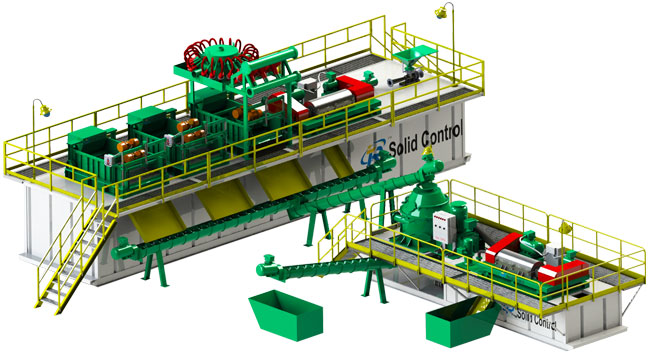
The mud circulation system, also called drilling fluid recycling system or solids control system, is closed-loop unit that continuously circulates drilling mud from the surface down the wellbore and back up for treatment and reuse.
Mud in surface tanks is pumped down the drill string, flows out from drill bit nozzles, carries rock cuttings upward through the annulus, and returns to the surface. It then goes through professional separation equipment before being recycled for repeated use.
TR Solids Control provides each of the following components with high-quality engineering and durable materials:
Shale Shaker (Vibration Screen): The first stage – removes large drill cuttings (>75 microns). TRZS series features linear/elliptical motion, G‑force 0.5–6.5, capacity 200–500 m³/h. TRPZS dual‑motion shakers allow on‑field switching. Polyurethane composite screens (API 20–325 mesh) last three times longer than metal screens.
Vacuum Degasser: Removes entrained gases (natural gas, H₂S, CO₂) from drilling fluid. TRZCQ series processes 240–360 m³/h, vacuum -0.04 to -0.08 MPa, gas removal efficiency >95%.
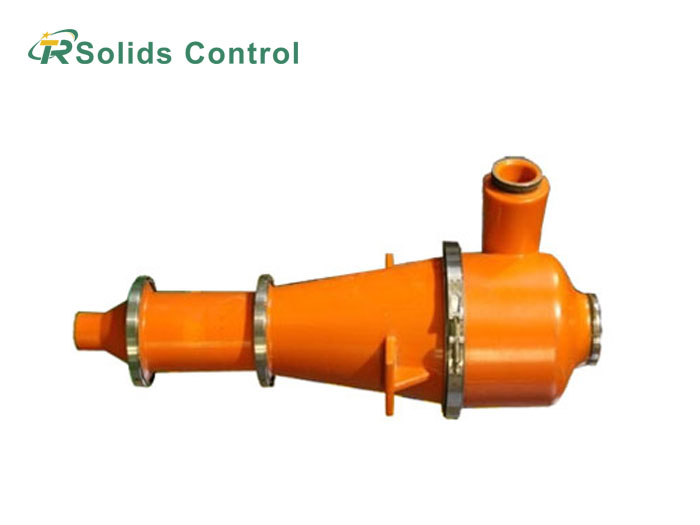
Desander: Uses hydrocyclones to remove particles 44–74 microns. 6‑ to 12‑inch cone designs, processing 150–300 m³/h, carbon‑silicon composite liners lasting over 2,000 hours.
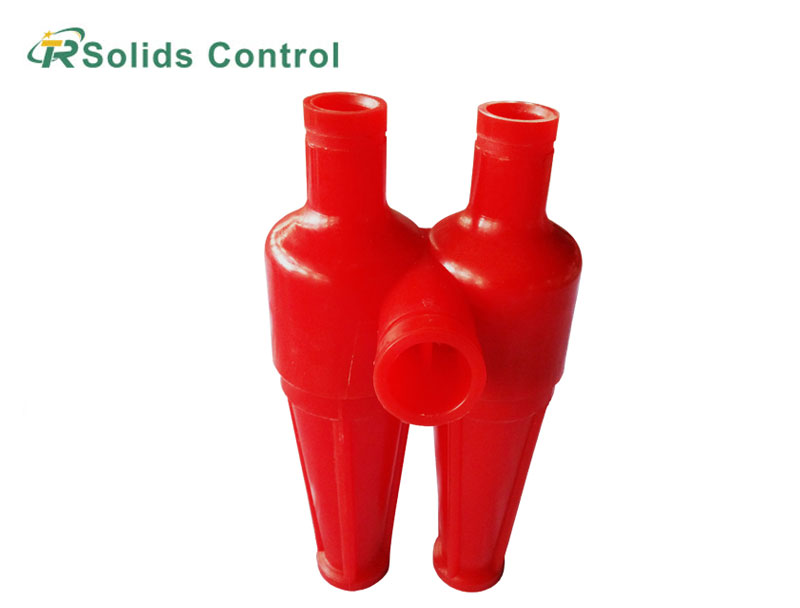
Desilter: Removes finer solids (15–44 microns). 2‑ to 5‑inch hydrocyclones, often integrated into mud cleaner.
Mud Cleaner: Combines desander and desilter cyclones on a fine‑mesh shaker deck. TR Solids Control's version integrates 3 desander and 16 desilter cyclones with bottom‑deck screens up to 325 mesh.
Decanter Centrifuge: Final stage – removes sub‑micron and ultra‑fine solids (2–15 microns). Medium‑speed TRLW355–450 series (40–60 m³/h, 95% recovery) and high‑speed TRLW600 series (3,000–5,000 rpm, precision down to 2–7 microns). Fully hydraulic differential speed control.
Mud Tanks (Sand trap, reserve, suction): Store and stage drilling fluids. The suction tank supplies the mud pump.
Mud Agitator: Prevents solids settling. Direct‑drive, 5.5–37 kW, VFD control, solids suspension rate >98%.
Mud Gun: High‑pressure jets break up settled solids in tank corners.
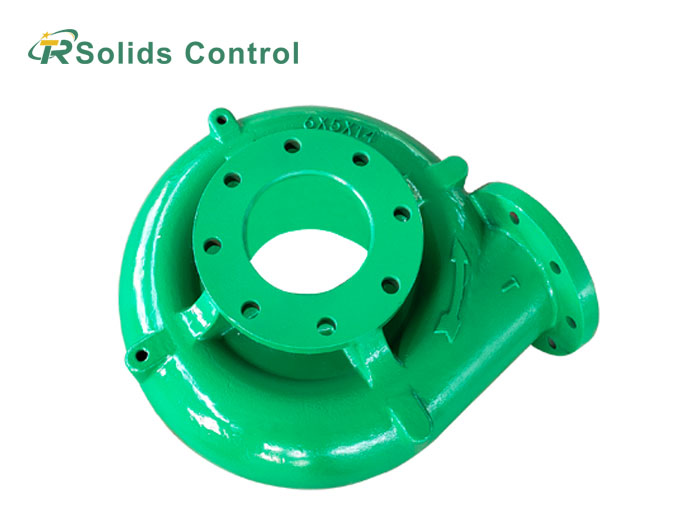
Sand Pump / Transfer Pump / Centrifuge Feed Pump: Provide pressure to hydrocyclones, move mud between tanks, and feed the centrifuge at controlled rate.
Mud Pump (Surface Rig Pump): Piston or plunger pumps pushing mud downhole at pressures exceeding 5,000 psi.
Mud preparation: Fresh water, clay (bentonite), barite, and chemicals are blended in the active tank using jet mixing hopper. TR Solids Control's jet mixers achieve density increase from 1.0 to 1.6 g/cm³ within 10 minutes.
Downhole circulation: Mud is drawn by the mud pump, sent through the drill string, out through bit nozzles, and back up the annulus.
Surface solids control: Returning mud passes through the shale shaker (large cuttings removed), then (if gas present) the vacuum degasser, then desander (45–74 µm), then desilter (15–44 µm).
Fine solids removal: Decanter centrifuge removes ultra‑fine solids (2–15 µm).
Mud reconditioning: Additives and barite are metered back into the clean mud before recirculation.
This closed‑loop process significantly reduces fresh water and additive consumption, directly lowering drilling fluid costs and minimizing environmental waste.
Poor solids separation leads to increased equipment wear, lower ROP, higher dilution costs, and risk of downhole problems. Integrating a high‑quality solids control system delivers:
Enhanced drilling efficiency: Clean mud improves hydraulics and increases ROP by 10–30%.
Reduced equipment wear: Abrasive solids are removed before recirculation.
Lower mud costs: Higher reuse rate reduces fresh water, barite, bentonite, and polymer consumption.
Environmental compliance: Minimizes waste volumes and discharges.
Oil & Gas Drilling (Onshore/Offshore): Full‑scale systems for rigs with depths from 2,000 m to 9,000 m. Modular land‑rig tanks and compact, corrosion‑resistant offshore configurations.
Horizontal Directional Drilling (HDD): TRHDD‑1000 system – capacity 240 m³/h (1,000 GPM), includes shale shaker, mud cleaner (desander/desilter on fine deck), centrifugal pump, jet mud mixer, agitators, and tanks on skid.
Tunneling and Microtunneling: Mud treatment systems for slurry‑shield TBMs, deployable on barges or in urban launch shafts.
Drilling Waste Management (OBM): Vertical cuttings dryer, high‑speed decanter centrifuge, screw pumps, and containment tanks – reduce liquid‑on‑cuttings retention below 6% by weight.
Proven engineering: SRV X smart vibration technology, stainless steel construction, modular designs.
Verifiable performance: Independent tests: TRLW355 centrifuge 95% solids recovery; vacuum degasser >95% gas removal.
Global service & support: Over 1,000 systems deployed in 30+ countries. Remote troubleshooting, spare parts, field service.
Industry certifications: API Q1, API 7K, API 13C, ISO 9001, CE, ATEX, IECEX.
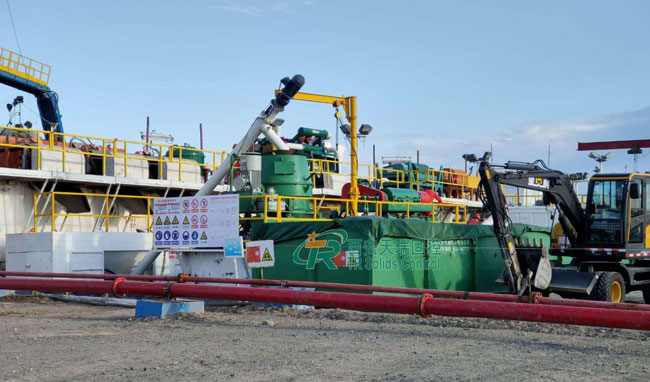
The global solids control equipment market continues to grow, fueled by oil and gas exploration, expanding HDD projects, and tightening environmental regulations.
The complete mud circulation system is fundamental to successful drilling, with every component working in sync to preserve drilling fluid properties, safeguard equipment, and lower environmental impact. TR Solids Control designs, manufactures, and provides full after-sales support for custom systems tailored to oilfield operations, HDD river crossings, and tunneling projects. Get in touch today to discuss your solids control needs.

Address: No.2 Huochang Road, Yangling District,Xianyang City, Shaanxi Province, China
Tel: +86-18509252400
Wechat: 18509252400
Email: info@mudsolidscontrol.com
Contact: Mr.Li
 +86-18509252400