Contact Person: Mr.Li
Mobile: +86-18509252400
Wechat: 18509252400
Email: info@mudsolidscontrol.com
Address: No.2 Huochang Road, Yangling District,Xianyang City, Shaanxi Province, China
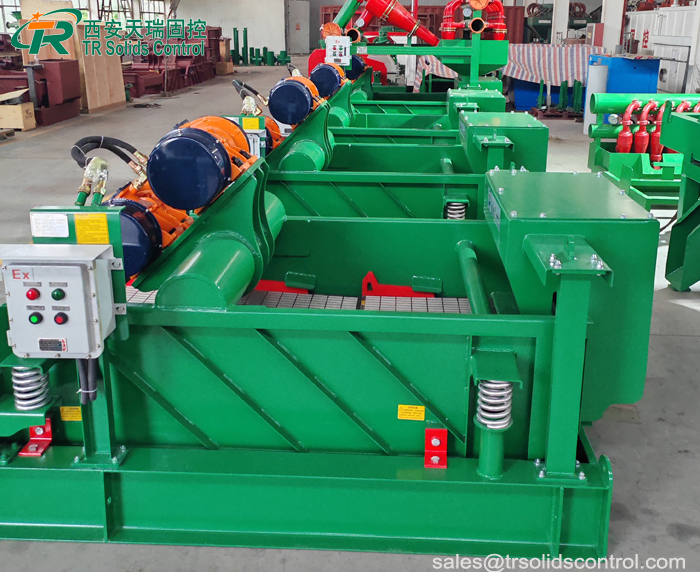
Shale shaker is the first and most critical equipment in drilling fluid solid control system. It separates solid rock cuttings from the returning drilling mud, allowing the cleaned fluid to be reused. As the primary solids separation tool, it removes approximately 74μm or larger particles from the mud, handling up to 80% of the total solids in the drilling fluid.
Used drilling mud flows from the well into feed hopper
The mud is evenly distributed over vibrating screens mounted on an angled frame
High-frequency vibrations (produced by motors) cause:
Liquids to pass through screen openings
Solids to move across the screen surface and discharge at the end
Cleaned mud collects below the screens and flows to mud tanks for further processing
Vibrating Motors: Create the shaking motion (typically 2 motors rotating in opposite directions)
Screen Basket/Deck: Holds the screens and can be tilted at adjustable angles (-1° to +5°)
Screens: Replaceable filters that do the actual separation (API RP 13C certified)
Feed System: Distributes mud evenly across the screen surface
Protects Downstream Equipment: Prevents abrasive solids from damaging pumps and mud motors
Improves Mud Quality: Maintains drilling fluid properties for effective hole cleaning
Reduces Costs: Recycles expensive drilling mud (saves up to 90% of mud costs)
Enhances Drilling Efficiency: Clean mud cools and lubricates the drill bit
Minimizes Environmental Impact: Reduces waste disposal volume
Stage 1: Shale Shaker (removes >74μm solids)
Stage 2: Vacuum Degasser (removes entrained gases)
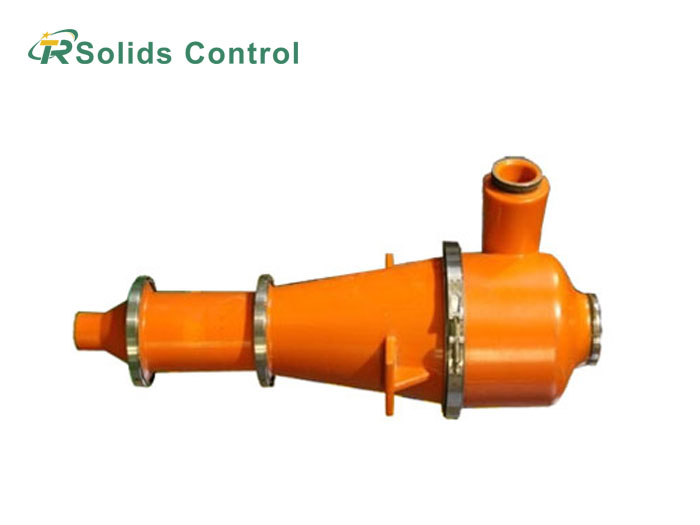
Stage 3: Desander (removes 20-75μm particles)
Stage 4: Desilter (removes 5-20μm particles)
Stage 5: Centrifuge (removes <5μm colloidal solids)
| Parameter | Typical Range | Significance |
|---|---|---|
| Throughput | 70-150 m³/h | Determines how much mud can be processed |
| Vibration G-force | 3-8 G | Higher Gs improve solids removal but increase screen wear |
| Screen Area | 1.5-6 m² | Larger area allows higher capacity and better separation |
| Power Consumption | 2×0.75-2×2.2 kW | Varies with motor size and shaker type |
Intelligent Control Systems: Automatically adjust vibration frequency and deck angle based on mud properties
Vacuum-Assisted Shakers: Increase fluid recovery by 20-30%
Quick-Change Screen Systems: Reduce maintenance time from hours to minutes
Dual-Motion Technology: Switch between linear and elliptical modes at the touch of a button
Drilling Environment: Onshore/offshore, depth, formation type
Mud Type: Water-based, oil-based, or synthetic-based
Flow Rate: High-volume operations need larger capacity units
Solids Content: Heavy solids require balanced elliptical or high-G designs
Space Constraints: Modular designs for limited space
Daily: Inspect screens for damage, check vibration consistency
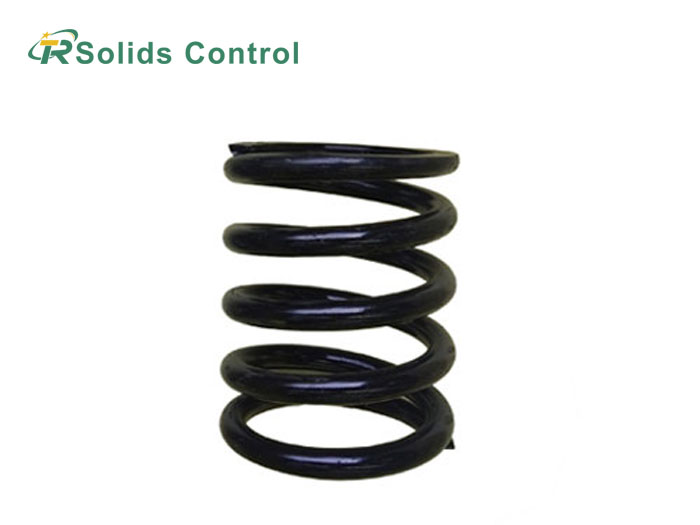
Weekly: Lubricate vibrating motors (every 500 hours), check spring mounts
Monthly: Verify screen tension, inspect for wear on vibrating components
Screen Replacement: When performance drops or visible damage occurs

Address: No.2 Huochang Road, Yangling District,Xianyang City, Shaanxi Province, China
Tel: +86-18509252400
Wechat: 18509252400
Email: info@mudsolidscontrol.com
Contact: Mr.Li
 +86-18509252400