Contact Person: Mr.Li
Mobile: +86-18509252400
Wechat: 18509252400
Email: info@mudsolidscontrol.com
Address: No.2 Huochang Road, Yangling District,Xianyang City, Shaanxi Province, China
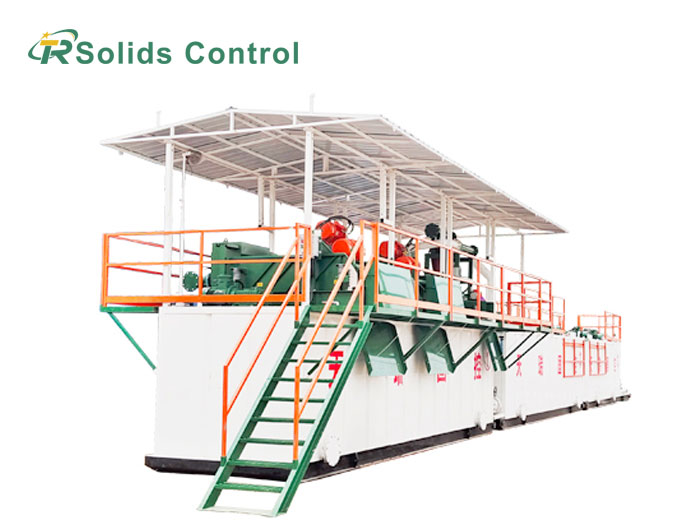
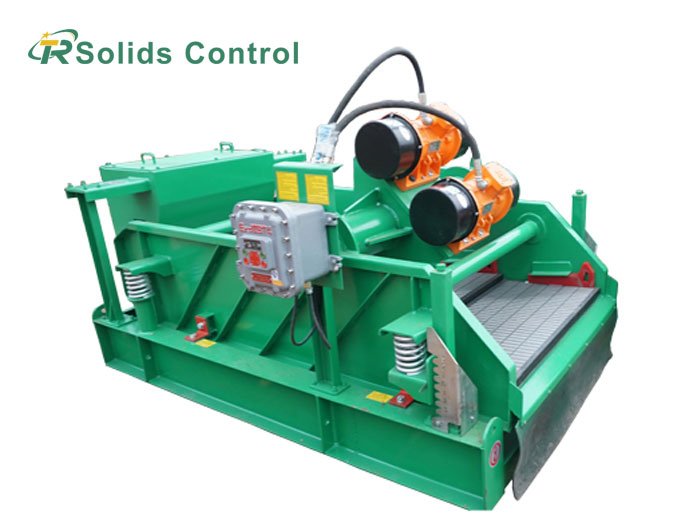
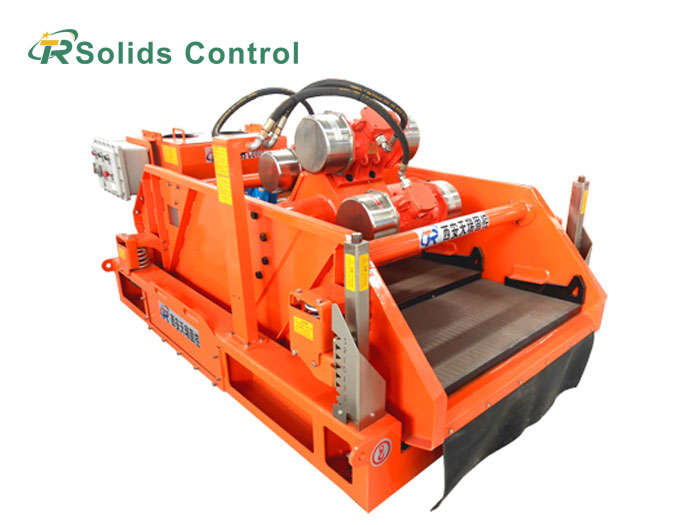
Common problems encountered when operating shale shakers include low screening efficiency, abnormal vibration/noise, screen damage, and material blockage. These can be resolved by inspecting equipment parameters, adjusting operating methods, or replacing components. Below, TR Solids Control summarizes common shale shaker issues and solutions based on actual customer experience.
.jpg "Shale Shaker Delivery-China Shale Shaker Supplier")
Unable to start or amplitude is too small:
Causes: Electrical failure (such as damaged motor or insufficient voltage), damaged circuit components, excessive material accumulation on the screen surface, loose exciter coupling bolts, grease buildup, etc.
Solution: Check the electrical system and replace damaged components; clean the material on the screen surface; tighten the coupling bolts; and clean and replace the grease.
Insufficient speed or weak vibration:
Cause: The drive belt is too loose, or the flywheel weight is incorrectly installed or too light.
Solution: Tighten the drive belt; adjust the flywheel weight.
Inconsistent amplitude at four points:
Cause: Two vibrators on the same axis are operating out of sync or material is segregating.
Solution: Check and adjust the vibrator synchronization; ensure even material distribution.
Poor screening quality:
Causes: Clogged screen holes, severely worn screen holes, uneven feeding, excessively thick material on the screen, insufficient screen angle, etc.
Solution: Clean the screen holes, repair or replace worn screen mesh; adjust the feed chute width for even material distribution; increase the screen angle to improve the screen penetration rate.
Abnormal material flow:
Causes: Insufficient screen box rigidity, loose connection bolts, incorrect horizontal leveling of the screen box, damaged screen mesh, etc.
Solution: Tighten the connection bolts to increase screen box rigidity; adjust the horizontal level of the screen box; replace damaged screen mesh.
Abnormal vibration/noise not only affects the working environment but may also accelerate equipment wear, so the mechanical structure must be checked first.
Excessive noise:
Causes: Bearing damage or lack of oil, loose bolts, broken crossbeam, damaged spring, etc.
Solution: Replace damaged bearings, bolts, crossbeams, and springs; apply restrained damping material to the screen box side panels, rear end panel, and other plate structures to reduce noise.
Excessive vibration or large swing during operation:
Causes: Loose or unevenly installed anchor bolts, detached counterweight on the flywheel, different eccentricities, uneven tension on the suspension bracket and wire rope, etc.
Solution: Reconfigure and balance the vibrating screen; adjust the flywheel eccentricity; and adjust the uniformity of the wire rope tension.
Vibration springs are aged or broken:
Inspect the springs. If cracks or deformation are observed, replace them with springs of the same specifications.
Ensure that the springs are installed symmetrically and evenly (the springs are of the same height on both sides and front and back).
Bearing heating:
Causes: Lack of lubricant, bearing blockage, excessive or inappropriate oil filling, bearing damage, or improper installation.
Solution: Add the appropriate amount of lubricant; clean the bearing and replace the seals; replace the damaged bearing and install it correctly.
Broken crossbeam or screen frame:
Causes: Excessive operation at critical frequency, loose high-strength bolts, severe spring deformation, large eccentric weight error, etc.
Solution: Replace damaged components; tighten bolts; adjust the eccentric weight; and increase screen rigidity.
Shaker Screens are consumable parts, but frequent breakage is often caused by improper operation or installation, rather than simple wear and tear. Examples include linear breaks in the screen wire at pressure plate, low screen penetration, severe clogging, straightening of the edge and resulting in angle distortion, and severe wear in center of shaker screen.
The material contains hard impurities (such as stones or metal pieces).
Solution: Install a magnetic device or screen at the feed inlet to filter out any hard impurities.
The screen is not tightened enough, causing it to collide with screen frame.
Solution: Adjust the screen tensioning mechanism (such as bolts or hooks) to ensure the screen is flat and not loose, and that there are no noticeable indentations when pressed manually.
Burrs on the edge of screen frame are wearing away screen mesh.
Solution: Sand the edges of the screen frame with sandpaper to remove burrs. During installation, place soft rubber strips where the screen mesh contacts the frame to reduce friction.
Blockages often occur when screening fine-mesh screens or sticky materials, requiring both anti-sticking and anti-blocking measures. Other issues include improper vibration motor installation, loose components due to heavy workloads and long operating times, uneven feeding as required, and aging and loosening of components like shock absorber springs.
The material is highly sticky and adheres to shaker screen.
Regularly purge the screen with compressed air (either while the machine is shut down or while it is in operation, in compliance with safety regulations).
If the process permits, heat the screen appropriately (e.g., by installing a heating plate) to reduce material stickiness.
The screen aperture is too small, or the material particles are irregularly shaped (e.g., flake-like).
Replace the screen with slightly larger aperture (needing to balance the screening accuracy).
Install an ultrasonic screen cleaning device below the screen to remove blockages through high-frequency vibration.
Improper vibration direction causes the material to remain on screen for too short or too long.
Adjust the vibration motor mounting angle (for example, from horizontal to a 15° tilt) to optimize the material's movement on the screen and extend the screening time.
.jpg "TR Solids Control System - Shale Shaker - Performance Optimization")
These problems include screen clogging, excessive wear on screens and other components, vibration-related issues, and inadequate solids removal. Proper maintenance measures, such as regular inspections of wear parts, can mitigate these issues. Operating parameters can also be adjusted based on individual circumstances. Additionally, other methods are available for cleaning the screens used in this system.
| Fault phenomenon | Possible reasons | Solution |
| Low screening efficiency and high impurities in finished products | 1. The feed volume is too large; 2. The screen aperture is wrong; 3. The amplitude is too small | 1. Reduce the feed speed; 2. Replace the screen with the corresponding aperture; 3. Increase the angle of the motor eccentric block |
| Equipment abnormal noise + uneven vibration | 1. Loose anchor bolts; 2. Broken/deformed springs; 3. Bearings lacking oil | 1. Tighten the anchor bolts; 2. Replace the spring with the same specification; 3. Add lithium-based grease |
| Frequent screen damage | 1. The material contains hard impurities (stones/metal); 2. The screen is not tensioned | 1. Install a magnetic device/grid at the feed inlet; 2. Adjust the tensioning mechanism and pad with soft rubber strips |
| The sieve hole is blocked and the material does not discharge. | 1. The material is highly viscous/moisture-rich; 2. The screen aperture is too small | 1. Blow/heat the screen with compressed air; 2. Replace shaker screen with slightly larger aperture (balance accuracy) |
| Motor heat (over 80°C) | 1. Excessive load; 2. Motor wiring error; 3. Bearing damage | 1. Reduce the feed rate; 2. Check the wiring (whether the three-phase power is missing phase); 3. Replace the bearing |
Optimizing the performance of shale shaker requires considering multiple aspects such as vibration parameters, material adaptation, equipment structure and daily maintenance, and achieving improved separation efficiency and reduced energy consumption through precise adjustments.
Optimize core vibration parameters
Vibration parameters directly determine the movement trajectory of the material on the screen surface and the screening efficiency, and need to be adjusted according to material characteristics.
Amplitude and Frequency: For coarse-grained materials (such as ore), increase the amplitude (5-10mm) and reduce the frequency (8-12Hz) to ensure sufficient loosening of the material. For fine-grained materials (such as powders), reduce the amplitude (1-3mm) and increase the frequency (15-25Hz) to prevent agglomeration and clogging of the screen mesh.
Vibration Angle: Typically controlled between 30° and 60°. For materials with poor fluidity, increase the angle (50°-60°) to accelerate material discharge. For fine separation, decrease the angle (30°-40°) to extend the material's residence time on the screen.
Adapt material properties and feeding conditions
The physical state of the material directly affects the screening rate during screening, requiring pre-processing and control of the feed process.
Control feed quantity and uniformity: Install feed buffer (such as distributor) to ensure even distribution of material across the width of the screen to avoid local overload and blockage. The feed quantity should match equipment's processing capacity, typically not exceeding 110% of the designed capacity.
Pre-treat high-moisture/sticky materials: If the material's moisture content is too high, pre-drying or adding dispersant (such as talc) can prevent the material from clumping and adhering to screen. For materials with high impurities, pre-processing (such as decontamination screen) is necessary before screening.
Improve equipment structure design
The rationality of equipment's structure is fundamental to optimal performance. Prioritize optimizing screen surface, screen box, and screen cleaning device.
Optimize screen surface configuration: Select the screen surface material based on material hardness. Use manganese steel screens for wear-resistant materials (such as quartz sand), and stainless steel woven screens for fine separation. The screen aperture size should match the separation requirements, typically 5%-10% larger than the target particle size to avoid screening difficulties.
Adjust screen box angle: The fixed screen box angle is generally 15°-25°. A too large angle can lead to premature material discharge and inadequate separation, while too small angle can cause material accumulation. In some scenarios, an adjustable angle design can be used to flexibly adapt to different materials.
Install an efficient screen cleaning device: Fine screens can be equipped with ball, ultrasonic, or airflow cleaning device to instantly remove clogged material from the screen holes. This is particularly suitable for fine particles such as flour and pulverized coal.
Strengthen daily maintenance and management
Regular maintenance can prevent performance degradation caused by component wear and extend the life of the equipment.
Regularly inspect wearing parts: Check the vibration motor bearings, shock absorber springs, and screen mesh for wear weekly. Lubricate the bearings every three months, and promptly replace components with excessive wear (such as the screen mesh and seals).
Keep the equipment clean: Clean the screen surface and screen box after each downtime to prevent material accumulation and hardening, which can affect the next screening efficiency. Pay special attention to clearing material from the edges and corners of the screen mesh.
.jpg "TR Solids Control-Solving Shale Shaker Failures")
Optimizing shaker performance involves selecting the appropriate screen for drilling conditions; performing regular maintenance to ensure the screen is clean and undamaged; adjusting the platform angle and vibration settings to maximize solids separation efficiency; and monitoring fluid flow rates to prevent overflow or bypass.

Address: No.2 Huochang Road, Yangling District,Xianyang City, Shaanxi Province, China
Tel: +86-18509252400
Wechat: 18509252400
Email: info@mudsolidscontrol.com
Contact: Mr.Li
 +86-18509252400