Contact Person: Mr.Li
Mobile: +86-18509252400
Wechat: 18509252400
Email: info@mudsolidscontrol.com
Address: No.2 Huochang Road, Yangling District,Xianyang City, Shaanxi Province, China
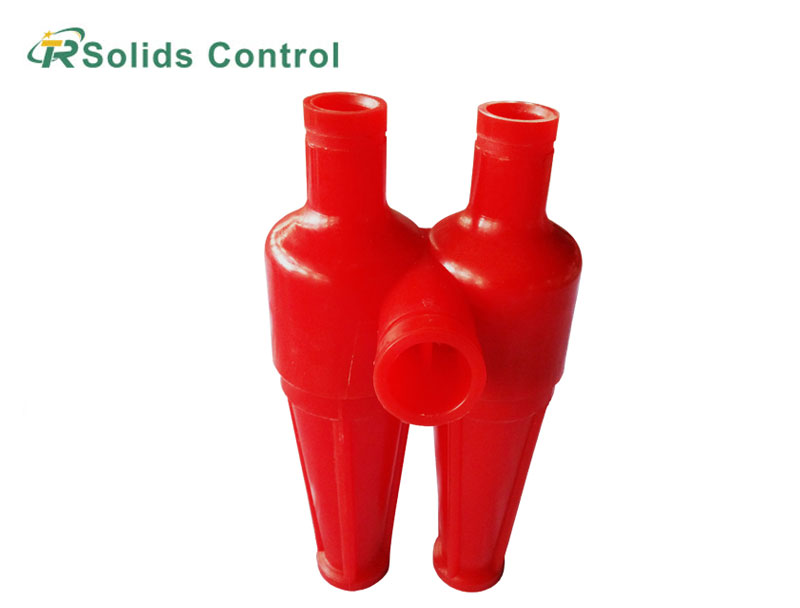
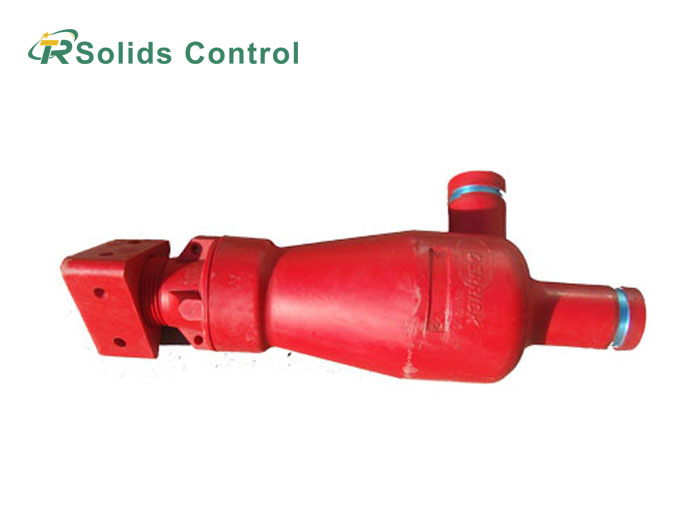
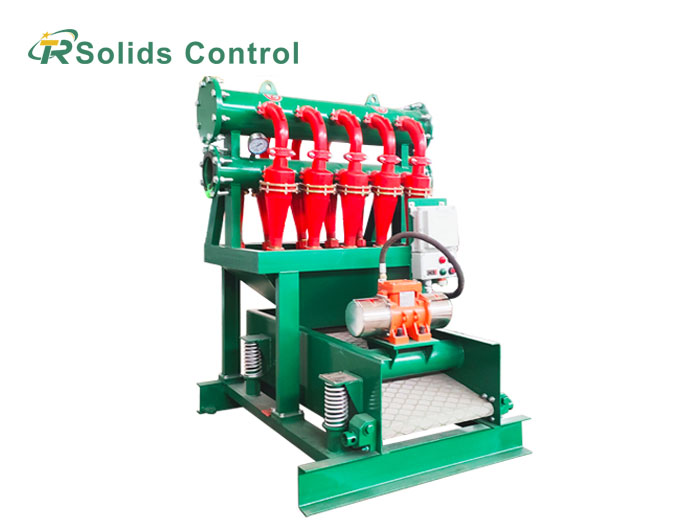
In oil and gas field drilling operations, drilling fluid desilter, tertiary solids control system, uses centrifugal force to force particles sized 15-47 μm down the inner wall of the cone, where they are discharged through an underflow outlet onto shale shaker for secondary separation. Its performance directly impacts drilling fluid stability, drill bit life, and drilling efficiency. Understanding the performance and advantages of desilters in oilfield drilling, TR Solids Control provides more effective and stable solutions for drilling operations.
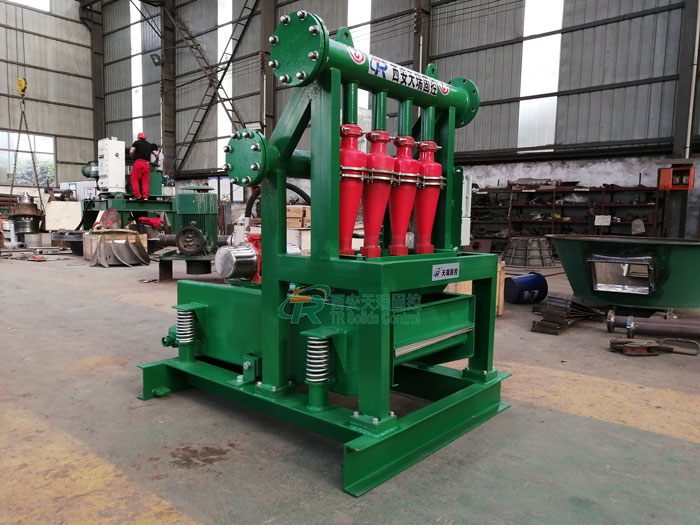
Drilling fluid desilter is a critical solids control device in oilfield drilling operations, responsible for solids control and purification. It effectively separates solid particles with diameter of 15-44μm. If these particles remain in the drilling fluid for long time, they can cause abnormal increases in viscosity and density, affecting the fluid's performance and stability. By precisely separating harmful solids, it ensures efficient recycling of the drilling fluid and reduces drilling fluid material costs. It also reduces wear on drilling equipment (such as the drill bit and drill pipe) caused by solids, extending equipment life. It also prevents drilling accidents such as wellbore shrinkage and stuck pipe caused by solids contamination, ensuring the effective progress of drilling operations.
Separation Efficiency and Particle Size Classification
Particle Size Range: Desilters primarily process solid particles sized 15-47μm. Under ideal operating conditions, the removal rate for particles 20μm and larger should exceed 90%. For example, the TR series desilters effectively intercept ultrafine particles as small as 15μm by optimizing the cyclone cone angle and underflow mesh size.
Classification Accuracy Verification: A laser particle size analyzer is used to check the particle size distribution of the inlet and outlet slurries and calculate the 50% cut-off size (d50).
Processing Capacity and Stress Balance
Processing capacity: The equipment's processing capacity must match the drilling fluid circulation rate, typically requiring 1.2-1.5 times the actual flow rate. For example, the TR Solids Control series desilter can handle up to 240 m³/h (1056 GPM), making it suitable for deep-well ultra-high-pressure drilling fluid systems.
Pressure stability: The operating pressure must be maintained between 0.25 and 0.4 MPa. Pressure fluctuations exceeding ±0.05 MPa can result in drop in separation efficiency of over 15%. Real-time monitoring can be achieved by installing a pressure sensor.
Mud Recovery Rate and Solid Content Control
Liquid loss rate: The high-quality desilter should achieve liquid loss of less than 5%. TR Solids Control has increased mud recovery by over 90% by optimizing the cyclone overflow diameter.
Solids content: Marsh funnel viscometer and densitometer are used to test the treated mud to solids content of ≤8% (by volume), meeting API 13C requirements.
Energy Consumption and Maintenance Costs
Specific energy consumption: The ratio of sand pump power to processing capacity should be ≤0.15 kW·h/m³. For example, TRZQJ100S desilter equipped with an 11 kW sand pump consumes only 0.046 kW·h/m³ at processing capacity of 240 m³/h.
Consumable parts: The lifespan of the polyurethane cyclone should be ≥2000 hours, and the lifespan of Shale Shaker should be ≥500 hours. TR Solids Control uses high-chromium cast iron linings to extend the lifespan of the cyclone by 3000 hours.
Automation and Intelligent Control
Adaptive Parameter Adjustment: The integrated PLC control system automatically adjusts the sand pump frequency and screen box angle based on mud density and viscosity.
Remote Operation and Maintenance Capabilities: The IoT module enables real-time upload of equipment status, with fault warning response time of less than 30 minutes.
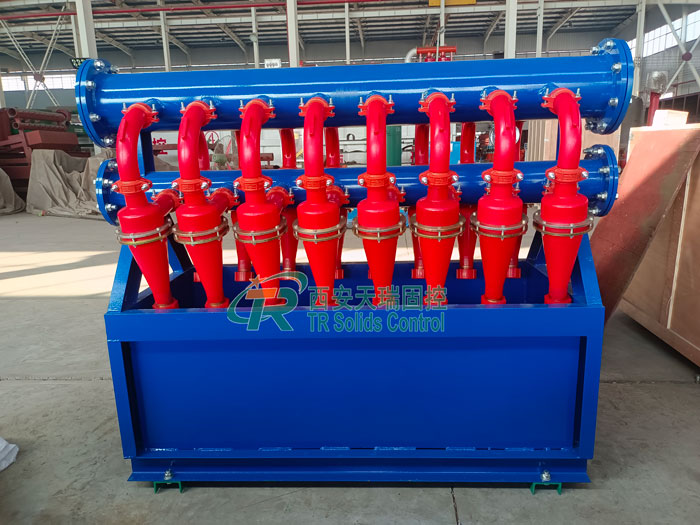
TR Solids Control's Desilter Model Comparison Table
| Model | Capacity | Cyclone Qty | Separation Point | Working Pressure | Bottom Shaker | Dimension(mm) | Weight(kg) | Applicable scene | Technical Advantage |
| TRCN100-4N/6N | 60/90m³/h | 4/6 4-inch cyclones | 15-44μm | 0.25-0.4mpa | TRZS60 | 1510×1360×2250 | 550-560 | Non-weighted drilling fluid | Modular design, adjustable number of cyclones; mechanical fast pressing device, screen replacement ≤ 5 minutes |
| TRCN100-12N/16N | 180/240m³/h | 12/16 4-inch cyclones | 15-44μm | 0.25-0.4mpa | TRZS583 | 1835×1230×1810 | 1150-1950 | Weighted drilling fluid | Pure polyurethane cyclone, wear resistance increased by 5 times; umbrella-shaped bottom flow port blockage rate reduced by 76% |
| TRQJ200X1S-100X4N | 60m³/h | 1 8-inch sand removal + 4 4-inch mud removal | 15-44μm | 0.25-0.4mpa | TRTS60 | 1510×1160×2000 | 600 | Small space work | Double-row linear cyclone group, fluid distribution uniformity of 98%; vibrating screen non-balanced elliptical trajectory, high viscosity processing capacity |
| TRQJ250X3S-100X20N | 320m³/h | 3 10-inch sand removal units + 20 4-inch mud removal units | 15-44μm | 0.25-0.4mpa | TRZS703 | 2419×2150×2147 | 1950 | deep well | The screen frame angle is adjustable by ±15°, and the barite recovery rate is 92%. The PLC pressure adaptive system reduces energy consumption by 30%. |
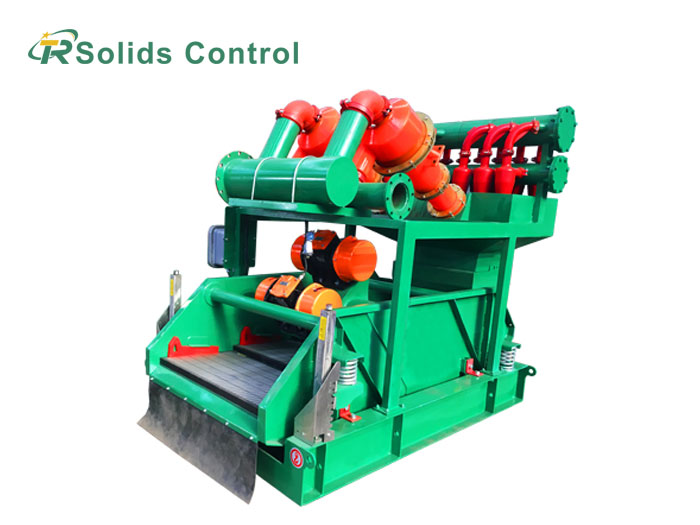
| HMC-200 | 200m³/h | Centrifugal sand and mud removal | 15-47μm | 0.25-0.4mpa | Custom stainless steel screen | 2330×1456×1800 | 2980 | Large drilling platforms | The inner diameter of the drum straight section is 650mm, and the processing efficiency is increased by 23%; frequency conversion control enables remote intelligent monitoring |
| Remark | The above can be adjusted and customized according to actual conditions | ||||||||
Processing Capacity: The TRCN series covers range of 60-240 m³/h, suitable for conventional drilling; the TRQJ series reaches up to 320 m³/h, suitable for deep well operations; and the HMC series reaches 200 m³/h, integrating centrifugal separation and shale shaker functions.
Cyclone Design: The TRCN series utilizes 4-inch cyclones, expandable to 20 units; the TRQJ series combines desander (8-10 inch) and desilter (4 inch) cyclones for graded separation; the HMC series utilizes centrifugal drum, increasing separation efficiency by 23%.
Separation Accuracy: The entire series offers separation particle sizes of 15-47 μm. The TRQJ series can optimize barite recovery to 92% by adjusting the screen frame angle.
Energy Consumption and Intelligent Control: The TRCN series features mechanical quick-clamping device, reducing maintenance time. The TRQJ series integrates PLC adaptive system, ensuring pressure fluctuations of ≤5%. The HMC series supports both variable frequency and industrial frequency modes, reducing energy consumption by 30%.
Applicable Scenario: TRCN-4N/6N is preferred for non-weighted drilling fluids; TRQJ250X3S-100X20N is suitable for weighted drilling fluids. The HMC-200 is suitable for deep and ultra-deep wells. The TRQJ200X1S-100X4N is suitable for operations in confined spaces.
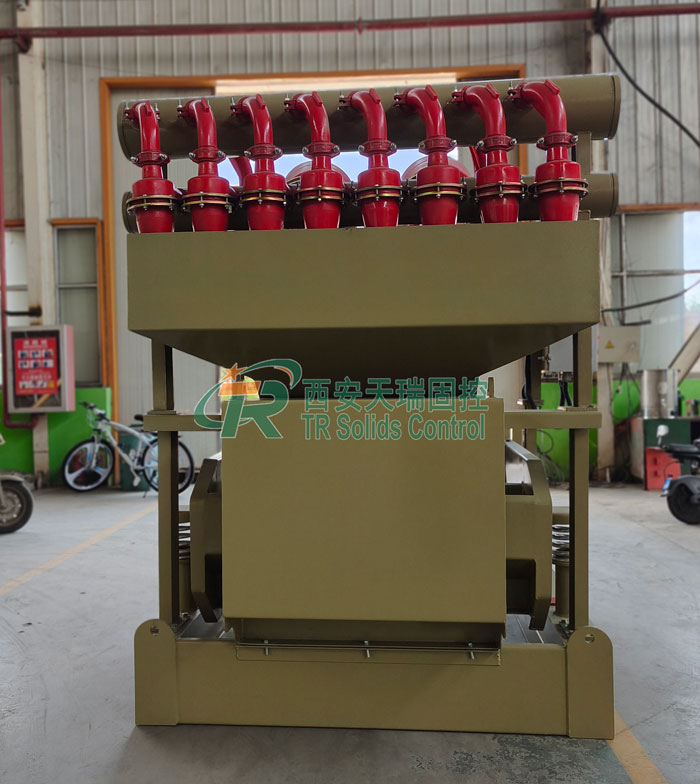
With the growing demand for complex projects such as ultra-deep wells and shale gas development, TR Solids Control's desilter can help users select suitable models and establish preventive maintenance system based on specific formation characteristics, drilling fluid types and cost budgets, so as to gain the upper hand in reducing costs and increasing efficiency.

Address: No.2 Huochang Road, Yangling District,Xianyang City, Shaanxi Province, China
Tel: +86-18509252400
Wechat: 18509252400
Email: info@mudsolidscontrol.com
Contact: Mr.Li
 +86-18509252400