Contact Person: Mr.Li
Mobile: +86-18509252400
Wechat: 18509252400
Email: info@mudsolidscontrol.com
Address: No.2 Huochang Road, Yangling District,Xianyang City, Shaanxi Province, China
In mining or oil extraction, problems such as shale shakers failing to reach their intended processing capacity and exhibiting low screening efficiency may have been encountered. As a crucial screening equipment, the screening efficiency of shale shakers directly impacts product quality and cost.
Amplitude is an important factor affecting the screening efficiency of shale shaker. The screening speed can be controlled by adjusting the amplitude of the shale shaker. So how to adjust it? What causes a small amplitude?
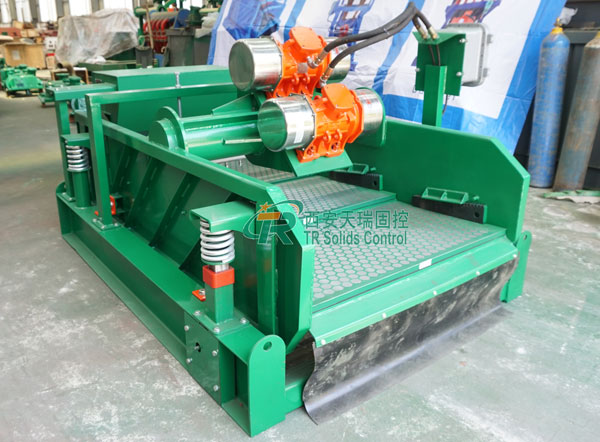
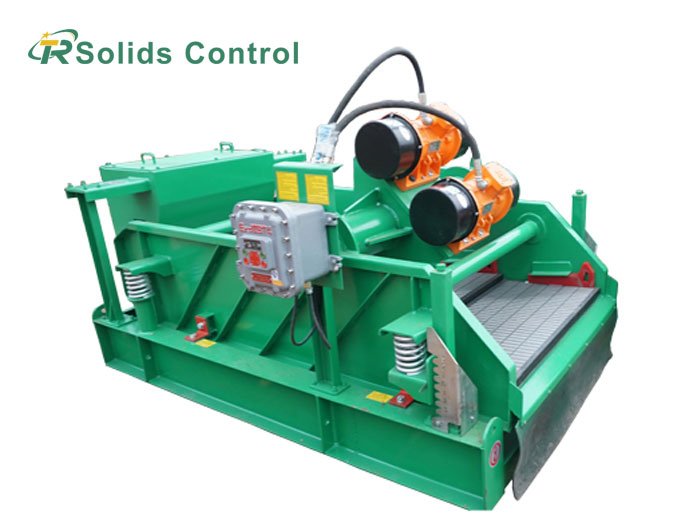
The selection of the vibration amplitude of shale shaker is usually determined by the size and properties of the solid particles. Different screening stages also require the selection of appropriate amplitude and frequency.
Small vibration amplitude of shale shaker is related to low screening efficiency. Insufficient amplitude will directly prevent the material from being "thrown up and stratified" on the screen surface, thus reducing screening accuracy and throughput. Mastering scientific amplitude adjustment methods can fundamentally improve the operating effect of the equipment.
Insufficient power supply voltage
Cause: The shale shaker is designed for 380V three-phase power. If the wiring is not properly connected and the voltage is insufficient, it will directly reduce the amplitude.
Adjustment method: Check the power supply line to ensure that the voltage is stable at the rated value; if the voltage fluctuates greatly, contact the power company for adjustment or to add voltage stabilizing equipment.
Improper configuration of eccentric blocks
Cause: Insufficient number of eccentric blocks, resulting in insufficient excitation force.
The included angle between the eccentric blocks at both ends of the vibratory motor shaft is too small (the excitation force is inversely proportional to the included angle; the smaller the included angle, the greater the amplitude, but excessive adjustment should be avoided to prevent damage to the equipment).
Adjustment method:
Increase the number of eccentric blocks: Add eccentric blocks to the outer layer of each set of balance blocks on the vibrator shaft to increase the excitation force.
Adjust the angle of the eccentric blocks: For the vibratory motor, gradually reduce the angle between the two eccentric blocks (e.g., from 120° to 90°), observe the change in amplitude, and avoid abnormal vibration of the equipment due to the angle being too small.
Precautions: When adjusting, ensure that the adjustment amount of the vibration source (vibrator or vibration motor) on both sides is consistent to prevent equipment damage.
The spring design is unreasonable.
Reason: If the net spring displacement (spring compression) is less than the device height, the amplitude will be insufficient; if the net displacement is too large, it may cause the device to detach from the spring.
Adjustment method: Redesign the spring parameters to ensure that the net variable is within a reasonable range (usually 10%-20% of the device height), and replace the spring with one that meets the standard.
Equipment failure
Causes: Damage to the motor or electrical components (such as contactor or relay failure), loose anchor bolts, improper installation, etc.
Adjustment method:
Inspect the motor and electrical components, and replace any damaged parts.
Tighten the anchor bolts to ensure the equipment is securely installed.
Clean the protective cover regularly to prevent the motor from burning out due to poor sealing.
Optimize feed control
Problem: Excessive feed rate leads to material accumulation, or uneven feed results in uneven load on the screen surface.
solve:
Control the feed rate to avoid exceeding the rated processing capacity of the shale shaker.
Use uniform feeding device (such as vibrating feeder) to ensure that the material is evenly distributed along the width of the screen surface.
Improve screen surface conditions
Problem: Clogged sieve holes, insufficient sieve tension, or severe wear.
solve:
Clean the screen holes regularly to prevent material from sticking together (for materials with high mud content, wet screening or adding a water spray device can be used).
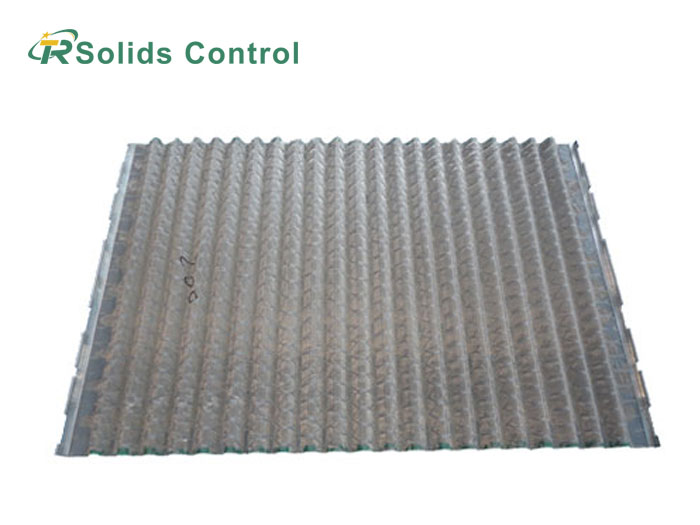
Check the screen tension and replace worn screens promptly to ensure a flat screen surface.
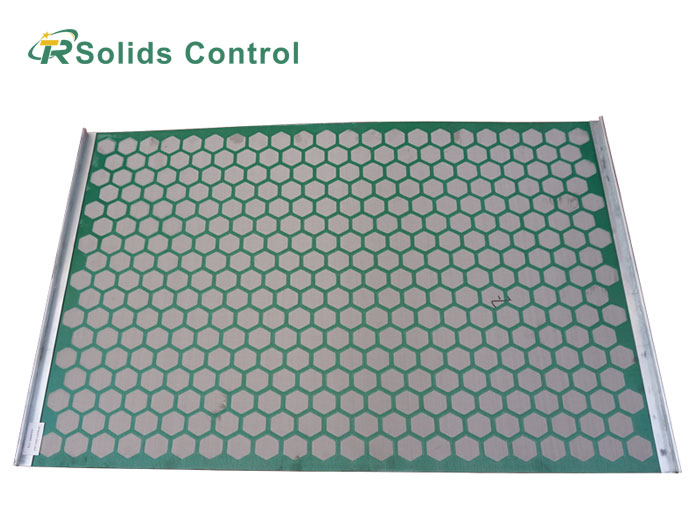
Use high-aperture screen plates (such as stainless steel welded screen plates) to improve material throughput.
Adjusting screening machine parameters
Problem: Insufficient screen inclination angle or mismatch between vibration direction and material movement direction.
solve:
Adjust the screen inclination angle (16°-20° is recommended for circular shale shakers). Increasing the inclination angle can improve material flowability and screening efficiency.
For linear shale shakers, ensure that the two sets of eccentric blocks have the same mass and rotate in opposite directions in a self-synchronizing manner, so that the direction of the excitation force is consistent with the direction of vibration.
Control material properties
Problem: The material particle size is close to the sieve aperture size, the moisture content is too high, or the shape is irregular.
solve:
For particles close to the sieve openings, graded screening or pre-crushing treatment is adopted.
Control the moisture content of the feed (it is recommended that the moisture content be ≤5% for dry screening), and use wet screening if necessary.
For slender or plate-shaped particles, adjust vibration parameters (such as increasing amplitude and decreasing frequency) to promote material stratification.
In drilling operations, the screening efficiency of shale shaker is related to many factors, such as material properties, equipment structure, and various performance parameters. Amplitude, vibration frequency, vibration direction angle, screen surface inclination angle, and projection angle all have a significant impact on the production efficiency of the shale shaker, and these parameters should be carefully monitored during installation and commissioning.
When the shale shaker has small amplitude and low screening efficiency, first check for equipment malfunctions (vibrator, springs, motor, shaker screen), and then adjust the amplitude according to the working conditions. TR Solids Control's shale shakers have been optimized for easy amplitude adjustment and troubleshooting during the design phase. TR Solids Control provides technical services to ensure that the equipment can be quickly restored to normal operation and to guarantee drilling efficiency.

Address: No.2 Huochang Road, Yangling District,Xianyang City, Shaanxi Province, China
Tel: +86-18509252400
Wechat: 18509252400
Email: info@mudsolidscontrol.com
Contact: Mr.Li
 +86-18509252400