Contact Person: Mr.Li
Mobile: +86-13186019379
Wechat: 18509252400
Email: info@mudsolidscontrol.com
Address: No.2 Hu·ochang Rood, Yangling District, Xianyang City, Shaanxi Province, China
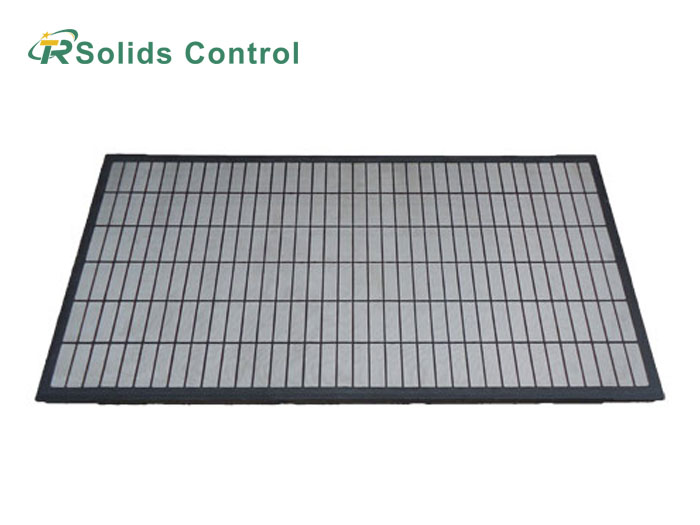
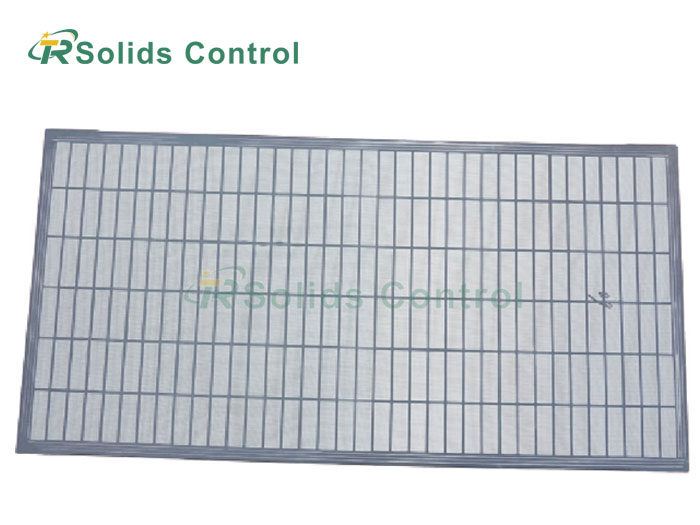
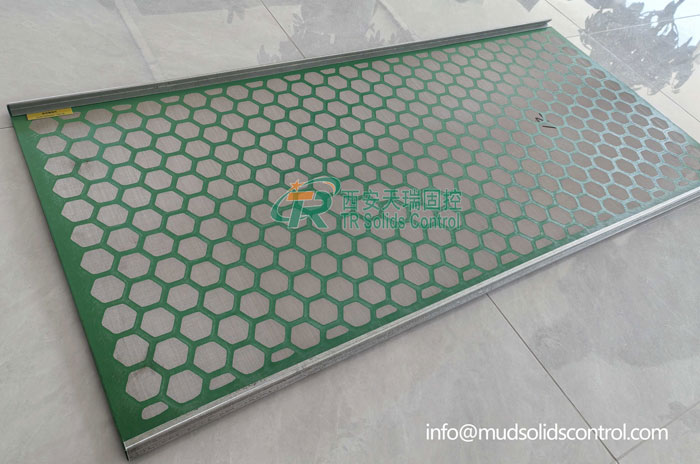
Shale Shaker Screen is core filtration element of an oil shale shaker, directly determining the solids separation accuracy, drilling fluid loss rate, equipment operational stability, and even affecting the working efficiency of subsequent solids control equipment (desanders, centrifuges). Combining different oil drilling conditions (water-based/oil-based/synthetic-based drilling fluids, onshore/offshore/shale gas drilling) with the characteristics of TR solids control shale shaker products, we provide screen selection solutions to avoid problems such as "screen clogging, incomplete separation, and premature damage."
Drilling fluid type
The viscosity, corrosiveness, and adhesiveness of different drilling fluids vary greatly, which directly determines the material and surface treatment process of the screen.
| Drilling fluid type | characteristic | Screen material/process | TR Solids Control Adapter Products |
| Water-based drilling fluid | Moderately corrosive, weakly adhesive | Stainless steel 304/316 (acid and alkali resistant), plain weave wire mesh / wedge wire mesh | TRZS series general purpose sieves |
| Oil-based drilling fluid | High viscosity, strong adhesion, easy to coat with slag | 316L stainless steel (oil and corrosion resistant) + Teflon/polyurethane coating (non-stick) | Oil-based anti-sticking screen |
| Synthetic Drilling Fluid | High lubricity, moderate corrosivity | 316L stainless steel with wear-resistant coating | Synthetic-based custom-made screen |
| Drilling fluid containing weighting agent (barite) | High density, high particle hardness | Thickened wire diameter (≥0.3mm) + high tension design | Wear-resistant screen for weighting agents |
Solid particle characteristics(Determine separation accuracy)
Particle size: Select the sieve mesh size according to the particle size of the solid phase to be separated (the higher the mesh size, the smaller the pore size):
Large rock fragments (≥100μm): 10-40 mesh (protect the fine screen to avoid clogging);
Harmful solid phase (40-80μm): 80-120 mesh (core separation precision, compatible with TR shale shaker double-layer screen design);
Ultrafine solid phase (≤40μm): 150-200 mesh (requires use with a high-frequency shale shaker, such as TR TRZS-H series).
Particle hardness: When the rock chips are hard (such as granite and quartz sand), choose a screen with "high wear-resistant material + coarse wire diameter"; for soft rock chips (such as mudstone), a screen with a regular wire diameter can be selected.
shale shaker equipment parameters
Screen structure adaptation: TR solid control shale shaker supports "single layer / double layer / triple layer" screen design. Double layer screens must follow the combination of "upper coarse screen + lower fine screen" (such as upper 20 mesh + lower 100 mesh). Triple layer screens can achieve three-stage filtration of "pretreatment + fine separation + protection".
Vibration parameter matching: High-frequency shale shakers (50-60Hz) can be paired with higher mesh screens (120-150 mesh) to avoid clogging of fine screens; low-frequency shale shakers (30-40Hz) are suitable for medium and low mesh screens (40-80 mesh) to ensure smooth slag discharge;
Installation method compatibility: TR shale shaker adopts "bolt clamping/quick release" installation. Select the screen with the corresponding interface (quick release screen replacement time ≤ 10 minutes, suitable for high-efficiency drilling needs).
Working condition requirements(Capacity + Environmental requirements)
Capacity requirements: When the drilling pump has large displacement (e.g., 60-100 m³/h), screen with "large opening ratio" should be selected (the opening ratio of wedge wire screen can reach 30-45%, which is much higher than the 15-25% of woven wire). TR wedge wire screen can improve the screening efficiency by 20-30% and avoid drilling fluid accumulation.
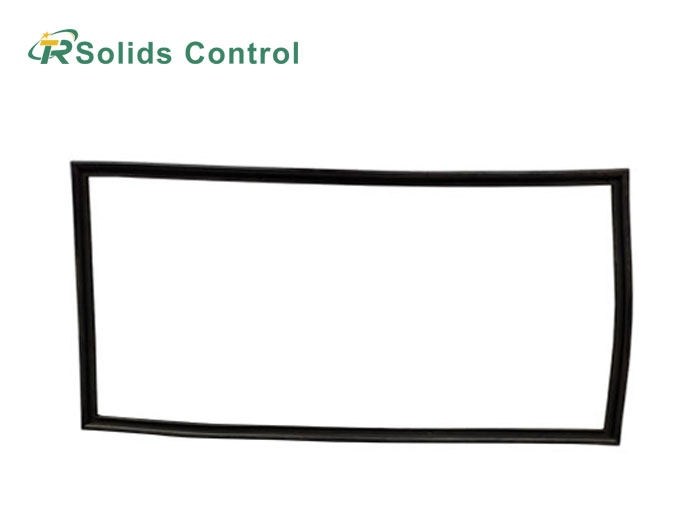
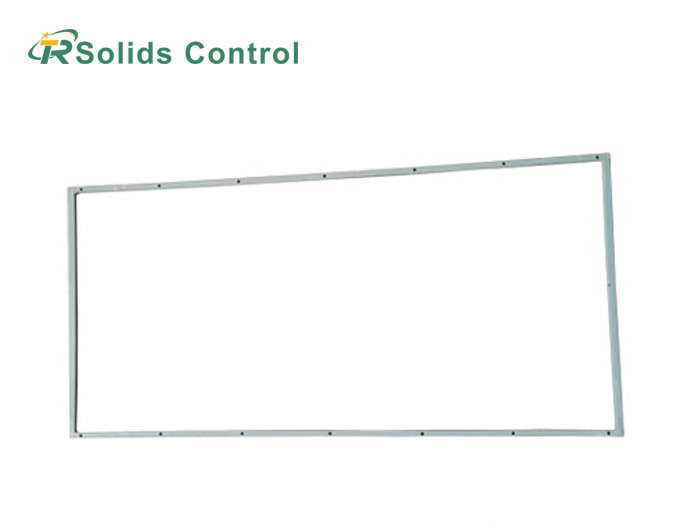
Environmental requirements: For offshore drilling or areas with strict environmental regulations, "leak-proof + high sealing" screens must be selected. TR screens are equipped with polyurethane sealing gaskets on the edges, which fit tightly with the screen frame to prevent drilling fluid leakage.
Balance between service life and cost
For standard operating conditions (water-based drilling fluid, low to medium solids content): choose woven mesh (low cost, easy to replace, short service life).
For harsh operating conditions (oil-based/synthetic drilling fluids, high solids content): choose wedge wire mesh (lifespan 3-6 months, wear-resistant and clog-resistant, lower overall cost);
Temporary emergency response: TR's "Quick-Disassembly Spare Screen" can be selected, with pre-made compatible models for quick replacement in case of sudden damage.
Step 1: Determine the operating parameters
Confirm the drilling fluid type (water-based / oil-based / synthetic-based), density (1.0-2.2 g/cm³), and viscosity (30-150 s);
Determine the target separation accuracy (e.g., "separate harmful solid phases ≥40μm") and the drilling pump displacement (20-100m³/h).
Record the type of rock cuttings (hardness, grain size distribution) and solid content (≤10%/10-20%/≥20%).
Step 2: Match screen parameters
Material selection: Ranked by drilling fluid corrosivity (oil-based/synthetic-based > water-based with salinity > ordinary water-based), the corresponding selection is 316L + coating > 316 > 304;
Mesh type selection:
Coarse separation (≥80μm): Plain woven mesh (low cost) or wedge wire mesh (high wear resistance);
Fine separation (40-80μm): wedge wire mesh (high porosity, not easy to clog);
Oil-based/high-viscosity systems: wedge-shaped wire + anti-stick coating;
Mesh count selection:Table of mesh size and aperture correspondence for oil solids control scenarios
| Separate requirements(Solid particle size) | Recommended mesh size | Corresponding aperture(μm) | Applicable scenarios |
| ≥100μm(coarse screening to remove gravel) | 80-120 mesh | 150-106 | Initial drilling stage, shale shaker primary coarse screen |
| ≥50μm(medium screen for removing mud and sand) | 150-200 mesh | 83-75 | Water-based mud systems, conventional drilling |
| ≥20μm(Fine sieving removes fine powder) | 250-300 mesh | 53-45 | Oil-based mud systems, deep well drilling |
Wire diameter selection: The higher the mesh number, the finer the wire diameter needs to be (to avoid clogging of the sieve holes); when the particle hardness is high, the wire diameter needs to be thicker (e.g., for a 100-mesh sieve: select a wire diameter of 0.15mm for soft rock chips and a wire diameter of 0.2mm for hard rock chips).
Step 3: Match the shale shaker model
TR TRZS Series (General Purpose): Supports single/double layer screens, compatible with 40-120 mesh woven wire mesh/wedge wire mesh, with a processing capacity of 30-80 m³/h;
TR TRZS-Y series (oil-based): Only compatible with wedge wire + anti-stick coating screens (60-150 mesh) to prevent oil-based drilling fluid from being coated with slag;
TR TRZS-H series (high frequency and high efficiency): compatible with 100-200 mesh fine screens, with separation accuracy of up to 20μm, suitable for shale gas drilling;
Multiple parallel systems: Select screens of the same mesh size and material to ensure that each machine processes uniform load.
Step 4: Small-batch trial run
Purchase 1-2 sheets for trial operation (12-24 hours) and observe: ① Separation effect (whether the solid content of the slurry under the screen meets the standard); ② Screen condition (whether it is clogged, damaged, or loose); ③ Slurry loss (whether there is excessive adhesion in oil-based scenarios).
The selection of screens requires first clarifying the type of drilling fluid and the target separation particle size, and then determining the material and mesh size range; then, in combination with the shale shaker model and processing capacity requirements, the screen type, wire diameter, and installation method should be refined; finally, the optimal solution should be determined through small-batch testing.
If you require customized screen selection for specific drilling conditions (such as special drilling fluid composition or extreme environments), you can contact the TR Solids Controls technical team to provide drilling fluid reports, shale shaker models, and other information to obtain one-on-one selection guidance.

Address: No.2 Hu·ochang Rood, Yangling District, Xianyang City, Shaanxi Province, China
Tel: +86-13186019379
Wechat: 18509252400
Email: info@mudsolidscontrol.com
Contact: Mr.Li
 +86-13186019379