Contact Person: Mr.Li
Mobile: +86-13186019379
Wechat: 18509252400
Email: info@mudsolidscontrol.com
Address: No.2 Hu·ochang Rood, Yangling District, Xianyang City, Shaanxi Province, China
In oil-based mud non-landing systems, the shale shaker settings must be tailored to the high viscosity and oily adhesion characteristics of oil-based mud. The operation should focus on "high-efficiency solid-liquid separation + low mud loss + adaptability to continuous non-landing conditions," following four-step process: "selection and matching → core parameter setting → feed adaptation → debugging and optimization." This approach simultaneously avoids solid phase contamination and malfunction risks associated with landslides. Based on the structural characteristics of TR Solids Control's oil-based mud shale shakers (such as TRZS series), step-by-step setup scheme is provided, balancing practicality and specificity.
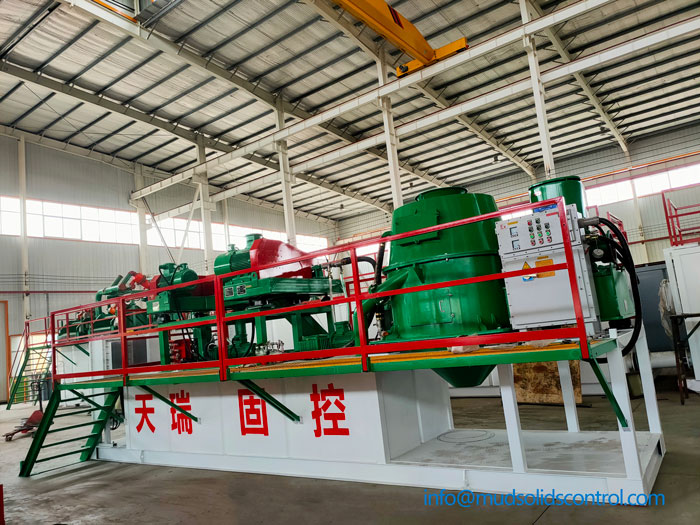
Oil-based mud has special characteristics, and the shale shaker must first meet the working conditions; otherwise, it will be difficult to achieve the expected results even after adjusting the parameters.
Equipment and accessories compatibility check
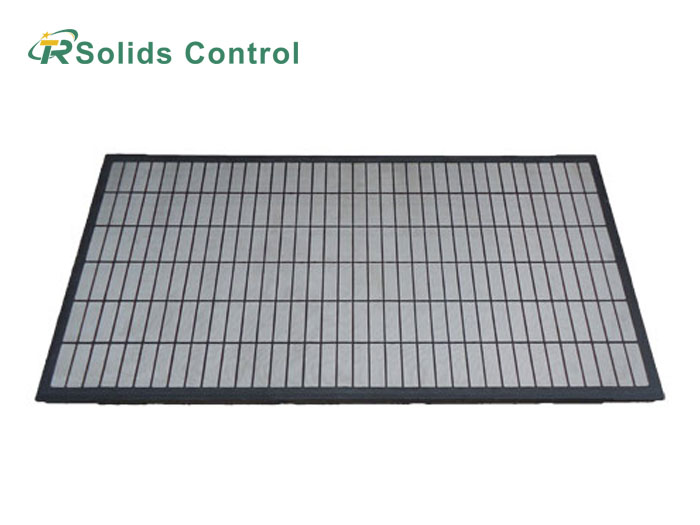
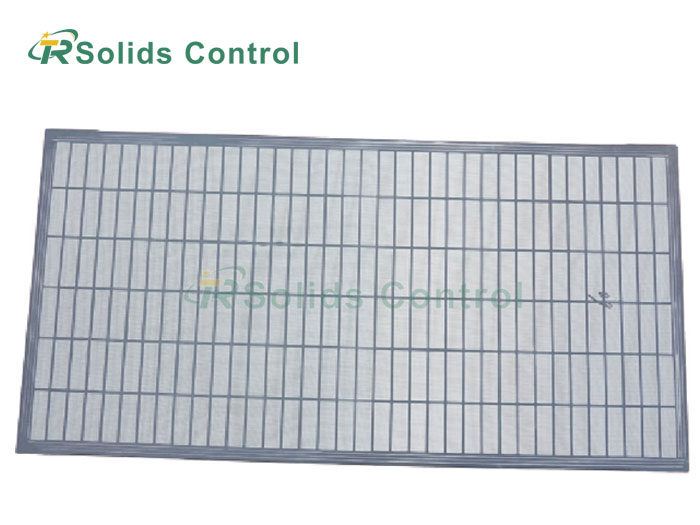
Shaker Screen adapter:Choose oil-resistant and non-sticky material (polyurethane screens are preferred, as they are 30%+ more resistant to oil adhesion than metal screens). Select double-layer screen structure (the upper layer is 40-60 mesh for coarse separation of large solid particles to prevent clogging of the lower layer; the lower layer is 80-200 mesh for fine separation of 75-180μm solid particles, matching the conventional solid particle size requirements of oil-based mud). The screen tension must be uniform (to avoid uneven local stress that could lead to slurry leakage and clogging).
Vibration motor adapter:Protection level ≥ IP65, insulation level ≥ F, resistant to oil mist corrosion; motor power should be matched according to the processing capacity (oil-based mud has high resistance, so the power should be 10%-20% higher than that for water-based conditions. For example, if the rated processing capacity is 100m³/h, select a 3-4kW motor, and for water-based mud, select 2.2-3kW) to avoid motor overload.
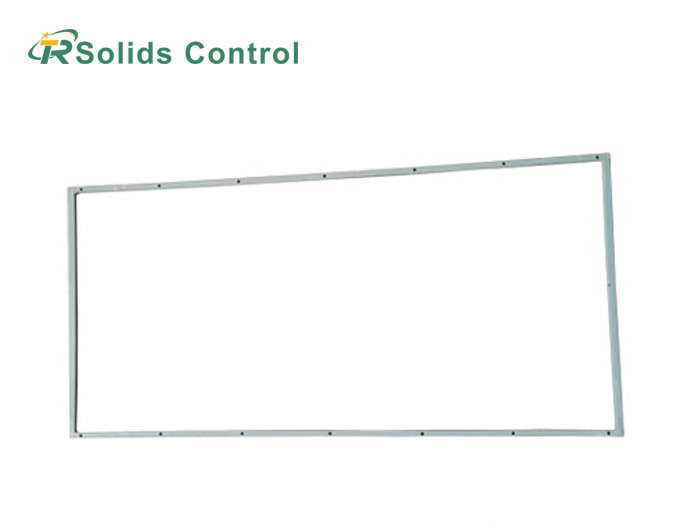
Seal inspection:Confirm that the inlet, side plates, and screen frame seals of the shale shaker are intact to prevent oil-based mud leakage (oil-based mud has high consumption costs and easily contaminates the equipment).
Operating Parameter Matching
Define the characteristics of the drilling fluid: density (typically 1.2-2.0 g/cm³), viscosity (50-150 s), solids content (≤20%), and target separation accuracy of the oil-based drilling fluid.
Confirm system capacity: Match the capacity of shale shaker to the drilling pump displacement (e.g., 30-80 m³/h). The capacity of single Tianrui TRZS series shale shaker can reach 60-120 m³/h, and multiple units can be connected in parallel.
The separation efficiency of shale shaker depends on parameters such as amplitude, vibration frequency, vibration direction angle, and screen inclination angle, and needs to be adjusted specifically in combination with the viscosity of oil-based mud, solid particle size, and feed rate.
Vibration frequency and amplitude
The higher the vibration frequency, the stronger the vibration impact force on the screen surface, and the easier it is to break the cohesion of oil-based mud and throw the solid phase away from the screen surface; however, excessively high frequencies can easily lead to screen damage and equipment vibration overload.
Frequency adjustment:TR shale shakers use variable frequency motors. For oil-based systems, it is recommended to set the frequency to 50-60Hz (3000-3600r/min). High-frequency vibration can overcome the viscous resistance of oil-based drilling fluids and promote the detachment of solid particles from the screen.
Amplitude adjustment:Adjusting the amplitude according to the size of the solid particles determines the projection height of the material on the screen surface. If the amplitude is too small, the solid phase cannot effectively detach from the screen surface; if the amplitude is too large, the oil-based slurry is prone to splashing and loss, and the screen frame is subjected to excessive force.
When the solid particles are coarse (≥100μm) or have high content, select large amplitude of 5-6mm to enhance the slag discharge power, avoid solid particles from adhering to the screen and clogging the holes, and at the same time quickly peel off large particles.
When the solid particles are fine (40-80μm) or the drilling fluid viscosity is high, select medium amplitude of 3-5mm to avoid drilling fluid splashing and loss.
Vibration direction angle
The directional angle is the angle between the vibration trajectory and the horizontal direction of the screen surface. The larger the angle, the faster the material moves and the shorter the residence time; the smaller the angle, the longer the residence time and the more complete the separation (for oil-based materials, sufficient residence time must be ensured to avoid solid phase entrainment of mud).
Drilling operations require large displacement and rapid material discharge:Adjust to 50-55° to accelerate material movement and prevent accumulation on the screen surface;
Deep separation of fine solid phase and reduction of solid content in undersize slurry:Adjust to 45-50° to extend the residence time and improve separation accuracy.
Screen inclination angle
The inclination angle is the angle between the screen surface and the horizontal plane. It works in conjunction with the direction angle to control the material flow rate. Oil-based mud does not require large inclination angle (as it can easily lead to excessive material loss and insufficient separation).
The inclination angle of the shale shaker can be adjusted via hydraulic rod; for oil-based systems, it is typically set to 5-10°.
Too small inclination angle (<3°): The drilling fluid stays on the screen for long time, but the throughput is low and it is easy to accumulate.
Angle of inclination too large (>5°): The throughput is increased, but the residence time is short and the separation of fine particles is incomplete;
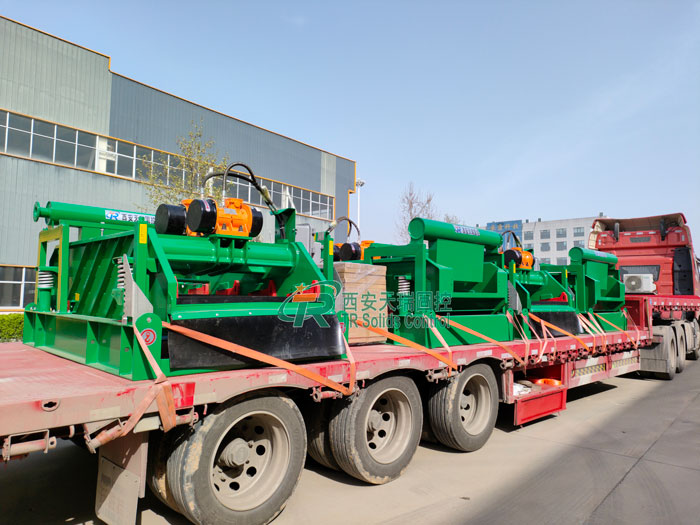
No-load commissioning (10-15min)
Without introducing mud, start shale shaker and confirm that the vibration frequency and amplitude are normal, the screen frame is not offset or makes abnormal noises, the motor temperature is normal (<80℃), and at the same time tighten the screen bolts and ensure that the seals are leak-free.
Load testing (gradual and slow feeding)
Phase 1: Low-discharge trial operation, observe whether the material distribution on the screen surface is uniform, without local accumulation/empty screen, and whether there are obvious solid particles in the slurry under the screen;
Phase 2: Rated discharge operation (30 minutes), check the solid moisture content on the screen (the solid moisture content after oil-based separation should be ≤15%) and the cleanliness of the mud under the screen (solid content ≤3%). If the standards are not met, make fine adjustments in the order of "frequency → amplitude → direction angle → tilt angle".
Phase 3: Full-load trial run (1 hour) to confirm equipment stability, no screen blockage, and no mud splashing. Record the final adaptation parameters (for reuse under the same working conditions in the future).
Abnormal adjustments (solutions to common problems)
Shaker screen clogging: First increase the vibration frequency to 62Hz, then increase the amplitude to 6mm. If clogging still occurs, stop the machine and clean the screen (use special oil-resistant cleaner to avoid damaging the non-stick coating). If necessary, replace with screen with coarser mesh.
The solid content of the sieved mud is too high: reduce the vibration direction angle to 45° and the screen surface inclination angle to 5°, extend the separation time, or replace with a screen with a finer mesh.
Mud splash loss:Adjust the amplitude to 4mm and check if the screen surface seal is intact. You can add splash guard if necessary.
The shale shaker of the oil-based mud non-landing system is key piece of equipment. It is necessary to ensure anti-adhesion, anti-leakage, motor protection, and environmental compatibility in order to achieve better results.

Address: No.2 Hu·ochang Rood, Yangling District, Xianyang City, Shaanxi Province, China
Tel: +86-13186019379
Wechat: 18509252400
Email: info@mudsolidscontrol.com
Contact: Mr.Li
 +86-13186019379